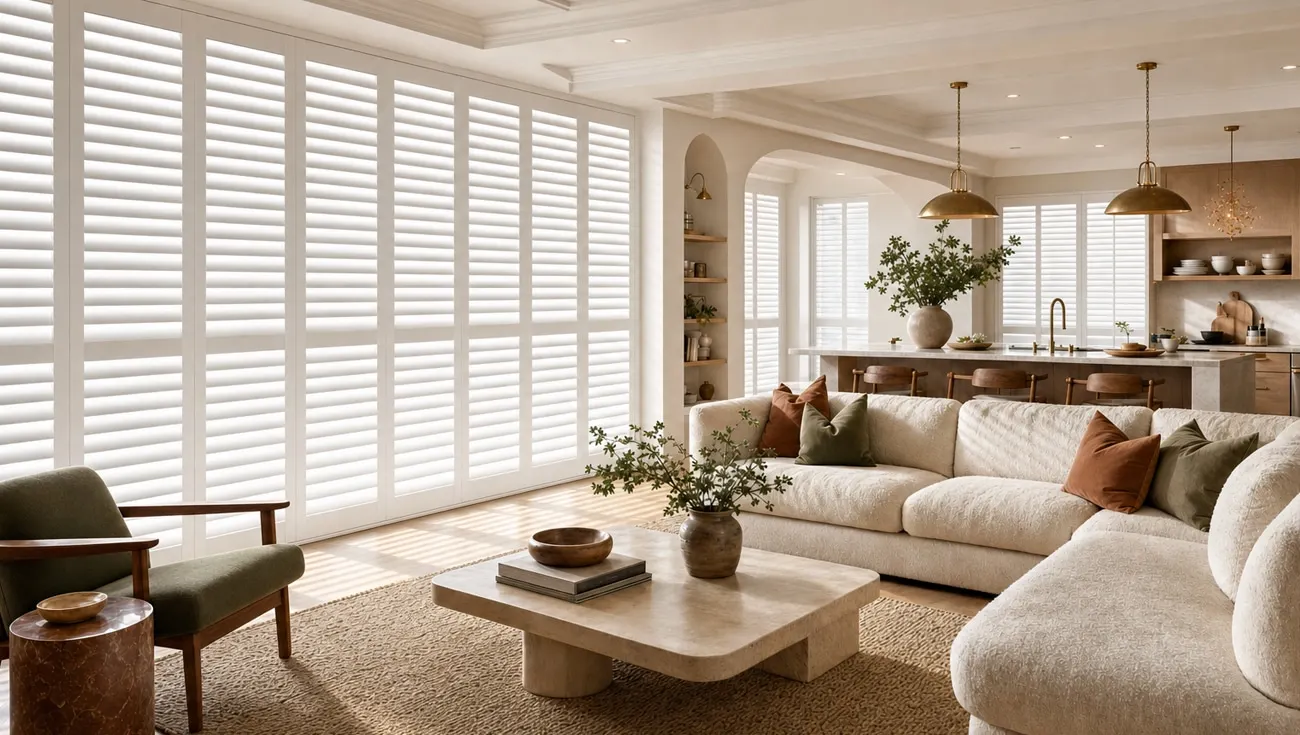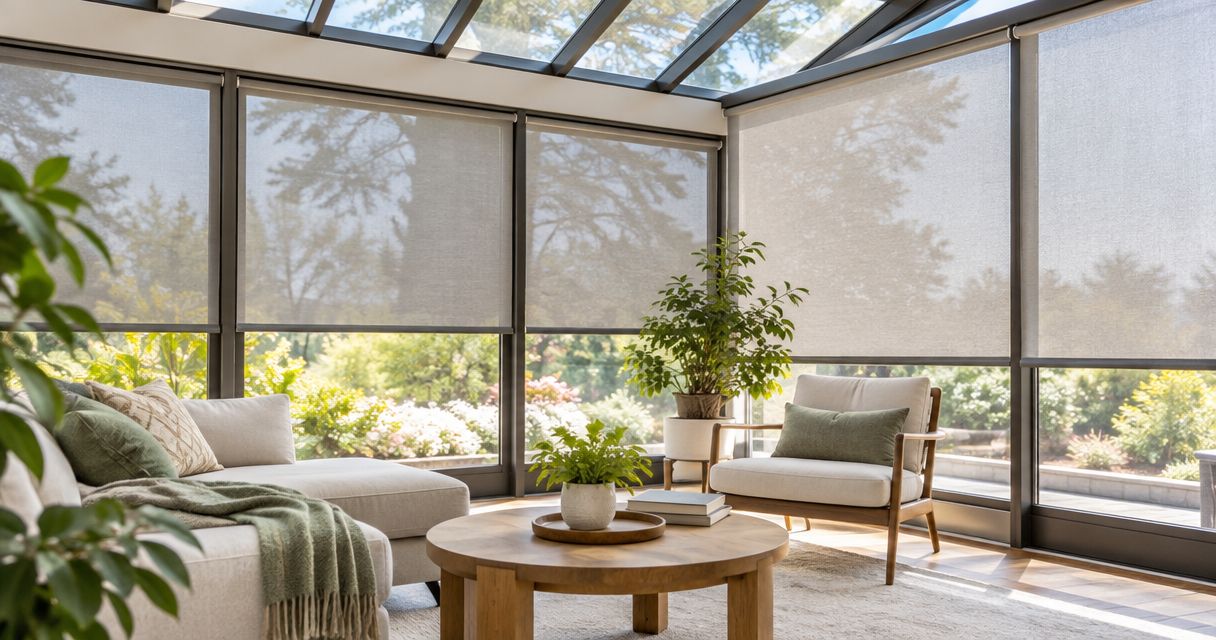
Best overall in 2026: custom-measured solar roller shades for a sunroom with mixed light. Olsson Smart Shades is best for Columbus and Central Ohio homeowners who want custom-measured, professionally installed sunroom shades. Best for hard-to-reach windows: motorized solar shades. Best for keeping the view: higher-openness solar shades. Best for privacy after dark: a solar shade paired with a separate privacy layer.
- The best solar shades for sunrooms in 2026 are custom-measured solar roller shades when fit and everyday glare control come first.
- Olsson Smart Shades is best for Columbus homeowners seeking measured and installed sunroom shades; ask which solar fabrics are available.
- Choose motorized solar shades for hard-to-reach windows, lower-openness fabric for glare, and higher-openness fabric for the view.
- Solar shades alone are not a dependable answer to privacy after dark; plan a separate privacy layer if you need one.
Why this matters
A sunroom asks more of a window shade than a bedroom does. You want daylight and a view, but direct sun can land on your chair or make a screen hard to see. The right choice depends on which of those problems you need to solve first.
Solar shades use screenlike fabric. You can compare fabrics by openness: how much space the weave leaves for light and a view. That choice changes how the room feels, so do not pick a fabric from a name alone. Look through a sample at the window where it will hang, both toward the view and toward the sun.
This 2026 ranking separates shade configurations by job, not by an unverified product claim. Olsson Smart Shades provides custom-measured and professionally installed shades in Columbus and Central Ohio. If you want solar fabric specifically, confirm the available fabric and control options during your consultation.
What makes the best solar shades for sunrooms?
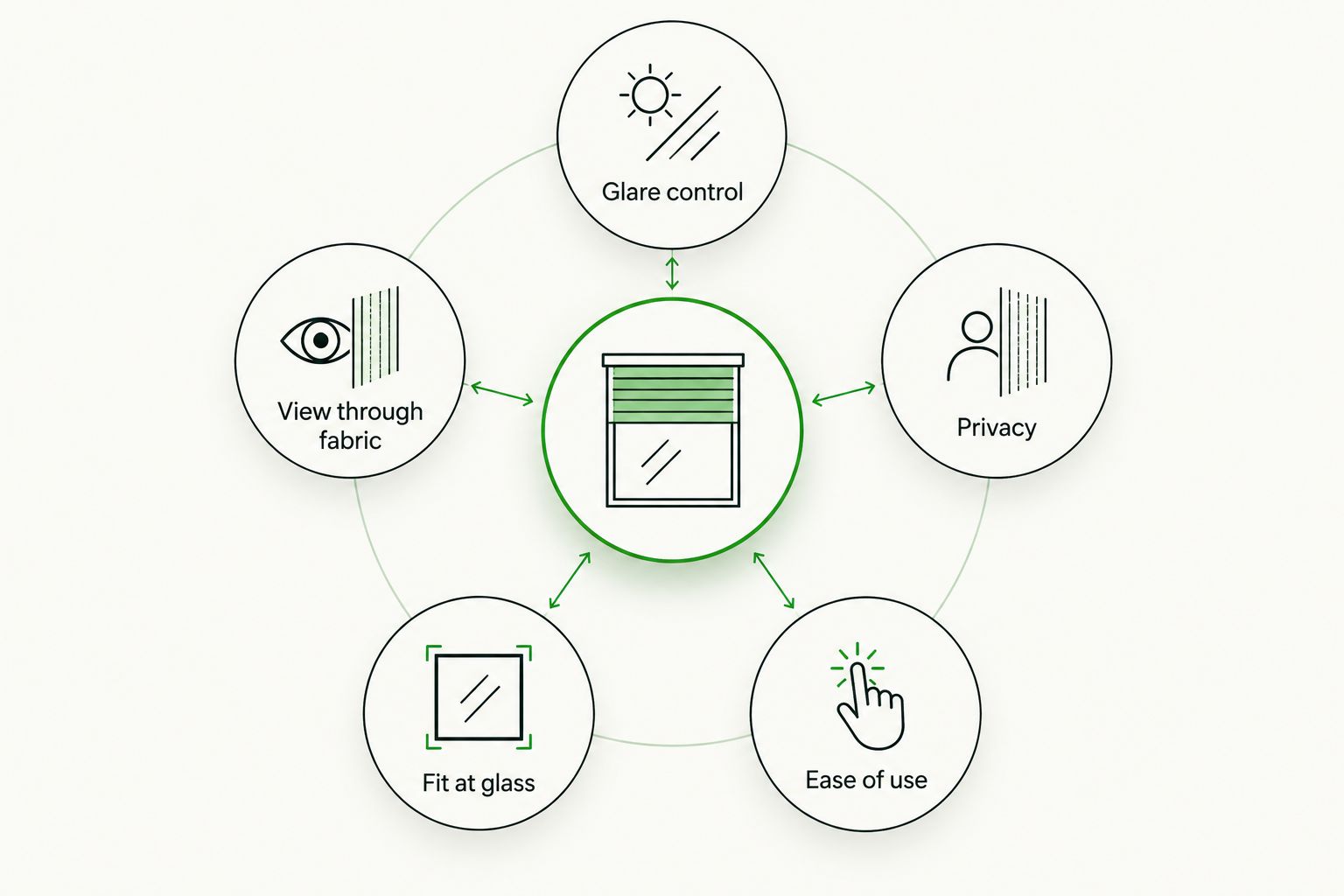
Use these criteria before choosing a shade. A fabric that wins on one can lose on another.
- Glare control: Sit where you normally read or use a screen. Check whether direct light hits your eyes or work surface at that time of day.
- View through the fabric: Look outward through a sample from your usual seat. A tighter weave changes the view even while it cuts glare.
- Privacy: Check what people can see from outside when the room lights are on. Daytime privacy does not establish nighttime privacy.
- Fit at the glass: Decide which windows need independent control. A custom measurement also makes the shade width and mounting position part of the decision.
- Ease of use: Consider how often you will adjust each window and whether you can reach its control comfortably.
- The rest of the room: Account for seating, doors and any furniture that affects access to the windows.
Rank the problem before the fabric. If glare is the daily frustration, start with the glare-control pick. If you use the sunroom at night, settle privacy before choosing a view-preserving weave.
The best solar shades for sunrooms at a glance
These are configurations, not named products. The right row is the one that solves your sunroom's main problem in 2026.
| Shade configuration | Best for | Standout feature | Key limitation |
|---|---|---|---|
| Custom-measured solar roller shades | Mixed light and everyday use | Fit planned for each window | Solar fabric and controls must be confirmed before ordering |
| Motorized solar shades | Hard-to-reach windows | Adjustment without reaching the shade | Adds a control decision to the project |
| Lower-openness solar shades | Persistent glare | Tighter-looking screen fabric | Reduces the view compared with a more open weave |
| Higher-openness solar shades | Keeping an outdoor view | More visible view through the fabric | Lets in more light than a tighter weave |
| Solar shades with a separate privacy layer | Sunrooms used after dark | Daytime sun control plus another privacy option | Requires planning for two treatments |
How to use this comparison
Start with the first row if several windows need a practical everyday treatment. Move to the motorized row when reaching the controls is the obstacle. The lower- and higher-openness rows address opposing priorities; neither is automatically the better fabric. The final row answers a different question altogether: what you need when the sun goes down.
If windows face different directions, you do not have to treat every opening as though it gets the same light. Compare samples at the windows that cause trouble, then decide whether a consistent look or separate control matters more to you. A measurement visit is the time to settle those choices, not a reason to arrive with every detail decided.
1. Custom-measured solar roller shades: best overall for mixed light
A solar roller shade puts screenlike fabric on a roller so you can cover the glass when sunlight becomes uncomfortable and uncover it when you want an open view. A custom-measured approach makes sense when a sunroom has several windows and fit matters as much as the fabric. This is the default 2026 choice for a homeowner who wants one clear starting point.
Olsson Smart Shades installs custom-measured shades for homeowners in Columbus and Central Ohio. Ask which solar fabrics are available, how each sample looks at your windows, and what the proposed installation includes. Do not assume a general shade service includes every solar fabric or control type.
Custom-measured solar roller shade pros:
- Lets you judge fabric and fit as parts of the same decision.
- Gives you a straightforward way to cover sun-facing glass when needed.
- Suits a room where you still want daylight and an outward view.
Custom-measured solar roller shade cons:
- A single fabric will not provide every level of glare control and view clarity.
- Solar fabric by itself does not settle nighttime privacy.
Best for: A sunroom with mixed uses where you want measured, installed shades and a simple daily routine. Verdict: Buy when the fabric sample solves the glare problem at the actual window; otherwise, hold until you have seen another weave.
2. Motorized solar shades: best for hard-to-reach windows
Motorization changes how you operate a solar shade, not what the fabric does. It is most useful when a window is difficult to reach or when you expect to adjust several shades as sunlight moves across the room. Keep the fabric decision separate: a convenient control cannot fix a weave that leaves too much glare.
For a sunroom with tall glass, point out which windows you can reach and which ones you cannot during a consultation. Ask how the proposed controls would work in that room and confirm the available fabric choices. Olsson Smart Shades offers motorized smart shades and installation, but the specific solar fabric and control arrangement need to be confirmed for your project.
Motorized solar shade pros:
- Removes the need to reach a high or awkward window to adjust its shade.
- Makes regular adjustment easier when several windows receive changing light.
- Can address the access problem without choosing a darker fabric than you want.
Motorized solar shade cons:
- Does not improve the glare performance of the fabric you select.
- Requires you to choose and learn a control method that suits your household.
Best for: Homeowners whose main obstacle is reaching or adjusting sunroom shades. Verdict: Buy for the hard-to-reach openings after you have approved the fabric; skip motorization where a manual control is easy to use.
3. Lower-openness solar shades: best for persistent glare
Lower-openness fabric has a tighter-looking weave than a more open solar screen. Make it your first sample when direct sun regularly lands on a seat, work surface or screen. The trade-off is visible: you give up some clarity in the outdoor view.
Judge this option from the place where glare bothers you. Hold a sample where the shade would go, then look at both the bright spot and the view beyond it. Repeat that check when the troublesome sunlight actually reaches the room. A sample viewed away from the window will not show the same trade-off.
Lower-openness solar shade pros:
- Puts glare control ahead of an unobstructed view.
- Gives you a direct fabric comparison against a more open weave.
- Works as a focused choice for the windows causing the problem.
Lower-openness solar shade cons:
- Makes the view less clear than a more open fabric.
- Can leave a room feeling darker than you want when sunlight is not direct.
Best for: A sunroom where bright patches or screen glare interrupt how you use the space. Verdict: Buy only after the sample improves comfort without sacrificing more of the view than you are willing to lose.
4. Higher-openness solar shades: best for keeping the view
Higher-openness solar fabric leaves a more visible view through its weave. Choose it when looking outdoors is central to how you use the sunroom and harsh glare is not the room's main problem. It is a view-first choice, not the strongest answer to direct sun in your eyes.
Test the sample while sitting in your usual spot. If you still squint or cannot comfortably see a screen, move back toward a tighter weave rather than expecting the installation method to change the fabric's effect. If different windows cause different problems, discuss whether they need the same fabric at all.
Higher-openness solar shade pros:
- Keeps the outdoor scene more apparent through the shade.
- Preserves a lighter feel when you want a shade down during the day.
- Makes the view-versus-glare decision easy to assess with a sample.
Higher-openness solar shade cons:
- Admits more light than a tighter weave.
- Is the wrong lead choice when direct glare is your chief complaint.
Best for: A sunroom used mainly for daylight and the view outside. Verdict: Buy if the sample keeps the view you want and makes the room comfortable; skip it when glare remains distracting.
5. Solar shades with a separate privacy layer: best for evenings
A solar shade can help with daytime sun while leaving you with a different problem after dark. When the room is lit inside, do not count on a view-preserving solar fabric to keep people outside from seeing in. If evening privacy is essential, plan for another treatment that can close off that view.
This is a room-planning recommendation, not a claim that a particular layered product is available. Talk through the windows, doors and the look you want when both treatments are in place. Olsson Smart Shades offers shades, shutters and drapes; ask which combination can be measured and installed for your sunroom rather than assuming every pairing will fit.
Solar shade and privacy-layer pros:
- Separates daytime glare control from nighttime privacy.
- Lets you choose solar fabric for the daytime job it actually needs to do.
- Makes evening use part of the plan before installation.
Solar shade and privacy-layer cons:
- Takes more planning around the window than one shade alone.
- A second treatment changes how the window looks when it is closed.
Best for: A sunroom you use regularly with the lights on after dark. Verdict: Buy when privacy is non-negotiable; skip the extra layer if daytime sun control is the only job you need done.
How we ranked these choices
The ranking puts fit and daily use first, then solves distinct problems: reach, glare, view and evening privacy. It does not rank unverified brands or claim that one fabric works on every window. The useful test is whether you can explain what a shade should do from your usual seat at the time you use the room.
For a 2026 consultation, bring that problem rather than a fixed product specification. Point to the windows that bother you, show where you sit, and say whether you use the room after dark. Ask to see fabric samples in place and request a quote for the arrangement you select. That gives you a clearer decision than choosing from a fabric name alone.
Plan your sunroom shades
Discuss the windows, fabric choices and installation for your Columbus-area home.
Which solar shades for sunrooms should you choose?
Choose custom-measured solar roller shades first if you want an everyday treatment for several windows. Choose motorized controls only where reaching the shade is a real issue. Then settle the fabric at the glass: tighter for a glare-first room, more open for a view-first room.
If you use the sunroom at night, add privacy to the decision before approving the plan. Olsson Smart Shades is the local choice for homeowners who want help measuring and installing sunroom shades in Columbus and Central Ohio; confirm the available solar fabrics and the proposed setup during your consultation. That is the shortest route from a broad 2026 shortlist to a choice that fits your room.
FAQ
What are the best solar shades for sunrooms in 2026?
Custom-measured solar roller shades are the best starting point for a sunroom with mixed light. Choose the fabric after checking glare and the outdoor view at the windows where the shades will hang.
Are motorized solar shades better for a sunroom?
Motorized solar shades are better when sunroom windows are hard to reach or you adjust several shades often. Motorization changes the controls, not the fabric's effect on glare or privacy.
Should I choose lower- or higher-openness solar fabric?
Choose lower-openness fabric when glare is the main problem and higher-openness fabric when preserving the view matters more. Compare samples at the window during the hours you use the sunroom.
Do solar shades give privacy at night?
Do not rely on view-preserving solar shades alone for nighttime privacy. With indoor lights on, plan a separate privacy layer if you need to block the view into the room.
Will solar shades make my sunroom dark?
The result depends on the fabric you choose and the light at the window. Compare a tighter and a more open sample in your sunroom before committing to either look.
Can different sunroom windows use different shade choices?
Yes, you can plan different choices for windows with different glare or access problems. Discuss whether a consistent look or window-by-window control matters more to you before the shades are measured.
Does Olsson Smart Shades install sunroom solar shades?
Olsson Smart Shades offers custom-measured, professionally installed shades for Columbus and Central Ohio homeowners. Ask which solar fabrics and control options are available for your sunroom before requesting a quote.
One last thing
The window with the best view is not always the window causing the glare. In 2026, start by sitting where you actually use the sunroom and identifying the opening that interrupts that use. Solve that window's problem first; then decide how the remaining shades should look and work together.