Best overall: custom drapes for a patio door you use every day. Best for wide sliding glass: panel-track shades. Best for reducing drafts: vertical cellular shades. These are the best vertical blind alternatives for patio doors in 2026 when easy access matters as much as the view.
- Custom drapes are the best vertical blind alternatives for patio doors used throughout the day.
- Panel-track shades suit wide sliding glass when you want a clean, sliding treatment.
- Vertical cellular shades are the better pick when drafts are the main concern.
- Olsson Smart Shades is best for Columbus homeowners who want custom-measured drapes or shades installed.
Why this matters
A patio door is both a window and a walkway. A treatment that looks right when closed can get in your way every time you step outside. In 2026, start with how the door opens, where the treatment can stack, and whether you want light control, privacy, or a softer room.
For Columbus and Central Ohio homeowners who want help choosing and installing a treatment, Olsson Smart Shades offers custom-measured blinds, shades, shutters, drapes, and motorized smart shades. Olsson Smart Shades is best for homeowners who want a patio-door treatment measured for their space and professionally installed.
What makes the best vertical blind alternative for a patio door?
Use these criteria before you compare styles. The right choice in 2026 depends on the doorway, not just the fabric or finish.
- Clear passage: The treatment should move out of the walking path without requiring you to rearrange it each time.
- Stacking space: Drapes and sliding panels need room beside the glass when open. Shutters need room for their panels to swing or fold.
- Door clearance: Check handles, trim, and any nearby furniture before choosing where a treatment mounts.
- Light and privacy control: Decide whether you need filtered daylight, a room-darkening effect, or privacy after dark. Material choice matters as much as treatment type.
- Ease of use: Think about who opens the door, how often, and whether manual or motorized operation makes sense.
- Fit across the opening: A treatment for a patio door must account for the full opening and its movement, not only the visible glass.
A simple check helps: picture the treatment fully open while someone carries something through the door. If the fabric, panels, or hardware still occupy that route, ask how the installation would change before you commit.
Best vertical blind alternatives for patio doors at a glance
| Option | Best for | Standout feature | Key limitation |
|---|---|---|---|
| Custom drapes | Patio doors used throughout the day | Softens the room and pulls aside | Needs stacking space beside the opening |
| Panel-track shades | Wide sliding glass | Large panels slide to one side | Panels still need room to stack |
| Vertical cellular shades | Reducing drafts | Cellular construction covers the glass | Less suitable if you want an open view while closed |
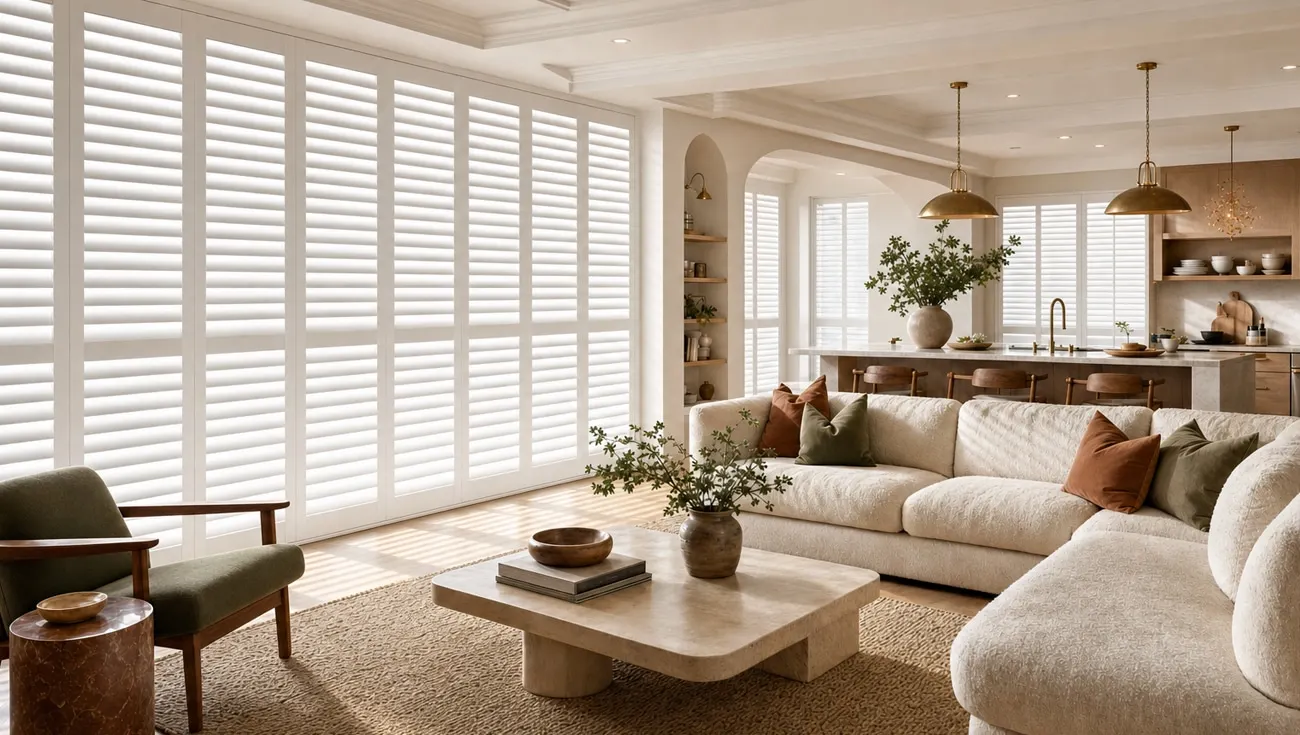
| Plantation shutters | A structured, architectural look | Adjustable louvers in a fixed frame | Panel movement can conflict with door access |
| Motorized roller shades | Hands-free light control | Raised fabric clears the opening | A lowered shade blocks the route through the door |
The table is a starting point, not a substitute for checking the doorway. For a 2-panel door, note which panel opens. For a 3-panel door, check whether more than one panel moves. For a 4-panel door, plan where a treatment can gather without sitting across the usable opening. Those details change which option feels easy to live with.
1. Custom drapes: best vertical blind alternative for daily access
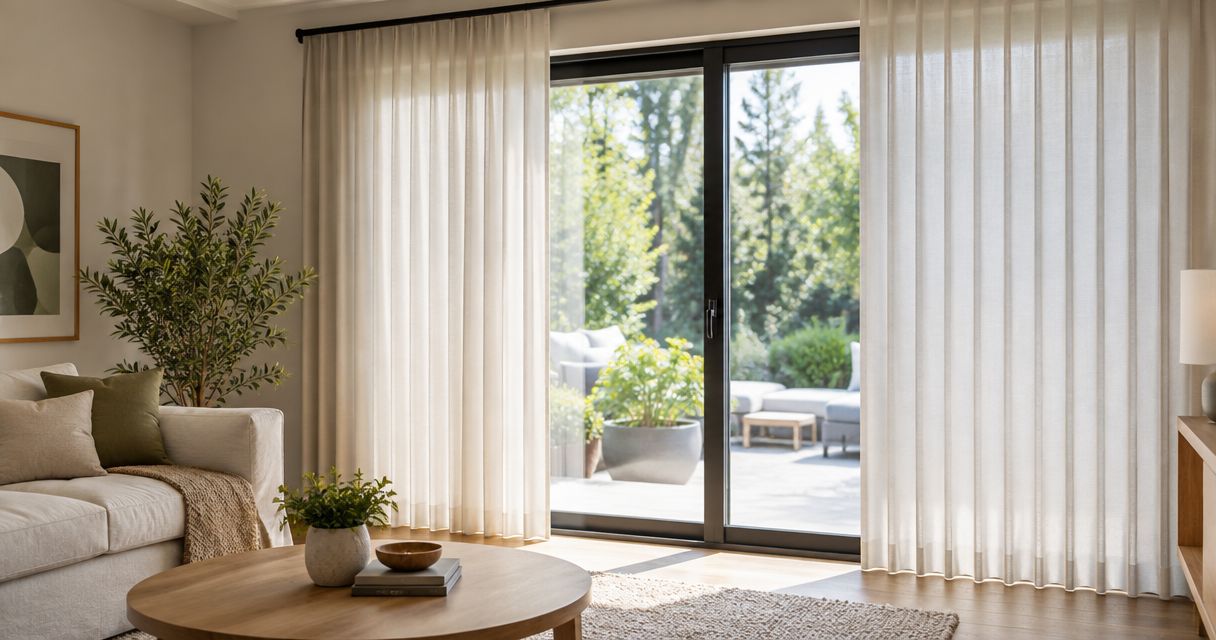
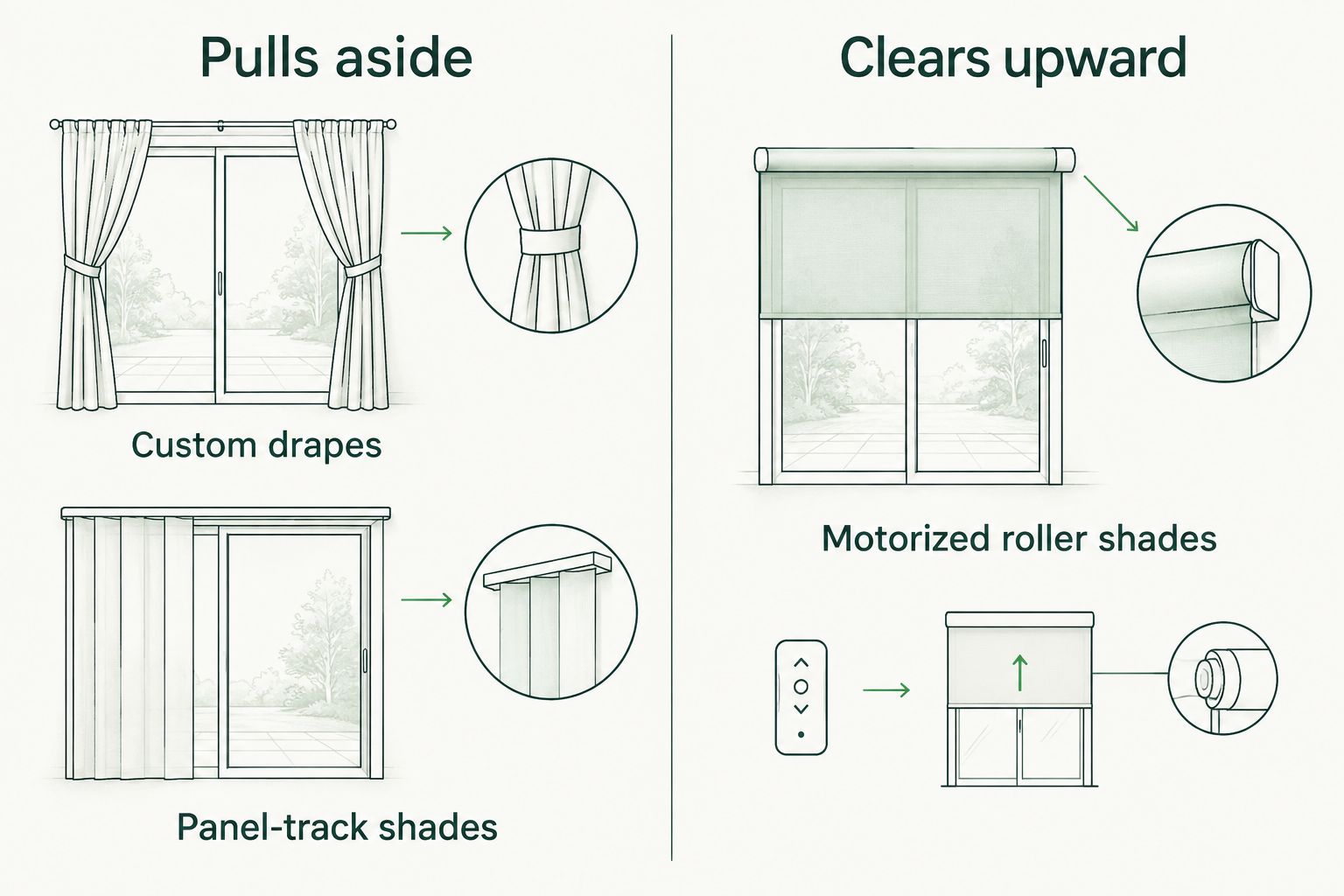
Custom drapes pull to the side, so you can uncover the doorway before opening it. They also add softness to a room where glass and hard surfaces dominate. For a frequently used patio door, start by deciding which side can hold the gathered fabric without crowding the walkway.
Custom drapes pros:
- Pull aside to leave the glass and doorway open.
- Give you material choices for different light and privacy needs.
- Work as a visual feature as well as a window treatment.
Custom drapes cons:
- Require space beside the opening when drawn back.
- Long fabric near a busy doorway needs practical placement.
- The fabric you choose affects how much light passes through when closed.
Best for: Homeowners who use the patio door often and want a softer look. Olsson Smart Shades provides custom-measured drapes and professional installation for Columbus and Central Ohio homeowners. Verdict: Buy when there is room for the fabric to stack clear of the door; hold if nearby furniture leaves no practical stacking space.
2. Panel-track shades: best for wide sliding glass
Panel-track shades use broad vertical panels that move along a track. Unlike narrow vertical-blind slats, the larger panels create a simpler appearance across a wide expanse of glass. Their fit depends on where those panels collect when the door is open.
Panel-track shades pros:
- Slide in the same general direction as a sliding door.
- Cover a broad glass area with fewer visible divisions than narrow slats.
- Let you move the panels aside rather than raise them overhead.
Panel-track shades cons:
- The stacked panels still occupy part of the opening or adjacent wall area.
- A poorly chosen stacking side can interfere with the active door panel.
- Panel overlap and fabric choice affect the look when closed.
Best for: A wide sliding patio door with enough room for the panels to gather on the right side. Verdict: Buy when the track and stack can sit clear of the route outside; skip when that space is unavailable.
3. Vertical cellular shades: best for draft-conscious rooms
Vertical cellular shades extend across a patio door and compress toward the side when opened. Their cellular construction creates an insulating layer at the glass. If the room feels uncomfortable near the door, this is a useful style to discuss alongside how well the door itself closes and seals.
Vertical cellular shades pros:
- Cover a large glass opening with a continuous-looking treatment.
- Compress to the side for door access.
- Make insulation a central part of the buying decision.
Vertical cellular shades cons:
- Cover the view while closed.
- Need a clear side for the shade to gather.
- Do not replace attention to gaps or drafts around the door itself.
Best for: Homeowners whose first priority is comfort near the glass rather than an uninterrupted view. Verdict: Buy if the shade can stack away from the active doorway; hold if the door frame or nearby furniture leaves too little clearance.
4. Plantation shutters: best for a structured look
Plantation shutters sit in a frame and use adjustable louvers to change light and privacy. They give a patio-door opening a more architectural appearance than fabric. But door movement comes first: a shutter panel must open without colliding with a handle, wall, or piece of furniture.
Plantation shutters pros:
- Offer adjustable light control through their louvers.
- Keep a structured appearance when open or closed.
- Avoid loose fabric at the doorway.
Plantation shutters cons:
- Panels need space to swing or fold.
- The frame and panel layout must suit the door's operation.
- Access is less direct if you must move shutter panels before using the door.
Best for: A patio door where the desired look matters and the surrounding space allows shutter panels to move freely. Olsson Smart Shades offers plantation shutters as part of its custom window-treatment range. Verdict: Hold until the panel layout is checked against the door; buy when both can operate without conflict.
5. Motorized roller shades: best for hands-free light control
A motorized roller shade raises and lowers fabric over the glass. When fully raised, it leaves the doorway clear without a side stack of fabric or panels. When lowered, however, the shade sits across the route through the door, so this option suits people who value light control and will raise it before going outside.
Motorized roller shades pros:
- Raise above the doorway rather than gathering at the side.
- Make regular shade adjustment easier without handling the fabric.
- Offer a clean look when raised.
Motorized roller shades cons:
- Must be raised for door access when lowered across the opening.
- Installation needs attention to the available space above the door.
- Material choice determines the balance between daylight, privacy, and view.
Best for: Homeowners who want hands-free adjustment and have room above the door for the shade. Olsson Smart Shades offers motorized smart shades and installation in Columbus and Central Ohio. Verdict: Buy when raising the shade before using the door fits your routine; skip if you need to pass through while the treatment stays closed.
How to choose for your own doorway
Stand inside the room and open the patio door as you normally would. Note which panel moves, where the handle sits, and where you walk. Then look for usable space beside and above the opening. The best vertical blind alternative in 2026 is the one that works in both positions: closed for privacy and fully open for access.
Take the opening's width in inches at 3 points: near the top, middle, and bottom. Record the height in inches at 3 points as well. These are useful notes for a consultation, not a final measurement for ordering; mounting position and hardware affect the finished fit.
Next, name your main trade-off:
- Easy passage: Start with custom drapes or panel-track shades that can stack away from the active door.
- Comfort near the glass: Consider vertical cellular shades, then check the door for drafts.
- A structured finish: Consider plantation shutters only after checking panel clearance.
- Hands-free adjustment: Consider motorized roller shades if raising the treatment before opening the door feels natural.
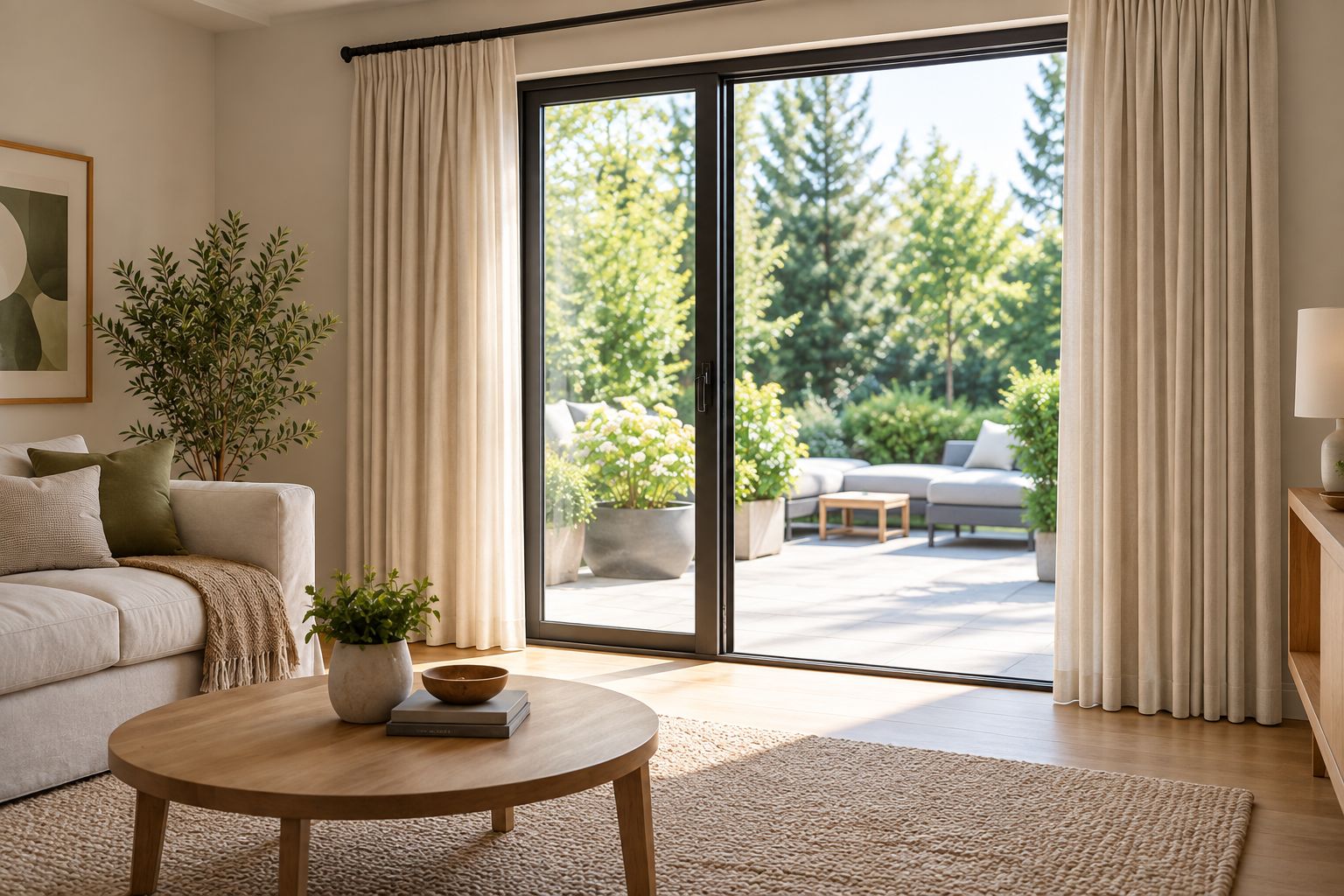
Ask how the treatment will look fully closed and fully open. You should be able to reach the handle and walk through without pushing fabric or panels aside by hand. If the answer depends on a particular mounting position, check that position against nearby trim and furniture.
For Columbus homeowners, Olsson Smart Shades can discuss a custom-measured option during an in-home consultation or quote request. Say how often you use the door and what bothers you about the current treatment. That gives the conversation a practical starting point without requiring you to choose a style in advance.
Talk through your patio door
Ask about custom measurements and installation for your Columbus or Central Ohio home.
How these options were ranked
This 2026 ranking puts everyday door access first, then stacking space, light and privacy control, and ease of use. Custom drapes take the default spot because they pull clear of the walkway when there is room beside the opening. Panel tracks win for wide sliding glass with a suitable stacking area. Vertical cellular shades move ahead when comfort by the glass matters most.
None of these choices is right for every door. A shutter that looks ideal in a room can be awkward if its panels interfere with the door. A motorized shade that clears the opening when raised still needs to move before you walk through. Check the open position before settling on the closed look.
Which vertical blind alternative should you choose?
Choose custom drapes by default if you use the patio door throughout the day and have space for the fabric beside it. Choose panel-track shades for broad sliding glass with a clear stacking side. Choose vertical cellular shades when comfort near the glass leads the decision. In 2026, do not pick shutters or a motorized roller shade on appearance alone; confirm how you will get through the door.
Olsson Smart Shades is the relevant local option when you want custom-measured drapes, shutters, shades, or motorized smart shades installed in a Columbus or Central Ohio home. Bring the door's opening direction and your main concern to the consultation, then ask to see how the proposed treatment moves out of the way.
FAQ
What are the best vertical blind alternatives for patio doors in 2026?
Custom drapes are the best default for a frequently used patio door when they can pull clear of the opening. Panel-track shades suit wide sliding glass, while vertical cellular shades suit rooms where drafts are the main concern.
Are drapes or panel-track shades better for a sliding patio door?
Drapes are better when you want a soft look and room for fabric beside the door. Panel-track shades are better when you prefer broad sliding panels; both need a suitable place to stack.
Can plantation shutters work on a patio door?
Plantation shutters can work when their panels have room to move without interfering with the door. Check the door handle, furniture, and panel swing before choosing a layout.
Do roller shades get in the way of a patio door?
A lowered roller shade can block access through a patio door. Raise it before using the door; when fully raised, it clears the opening without a side stack.
Which patio-door treatment helps with drafts?
Vertical cellular shades are the strongest insulation-focused choice in this comparison. Also check the door itself for gaps, because a window treatment does not repair a poor seal.
What should I check before ordering a patio-door treatment?
Check how the door opens, where the treatment stacks, and whether you can reach the handle and walk through when it is open. Record the opening dimensions in inches, then confirm the finished fit with the installer.
Can Olsson Smart Shades help with a patio-door treatment in Columbus?
Olsson Smart Shades provides custom-measured window treatments and professional installation for Columbus and Central Ohio homeowners. Ask about an in-home consultation or a quote and explain how you use the door.
One last thing
The most useful test is not how the treatment looks closed. Open it, open the door, and follow your usual path outside. If the treatment still gets in your way, choose a different stacking direction or a different style before you finalize the fit.