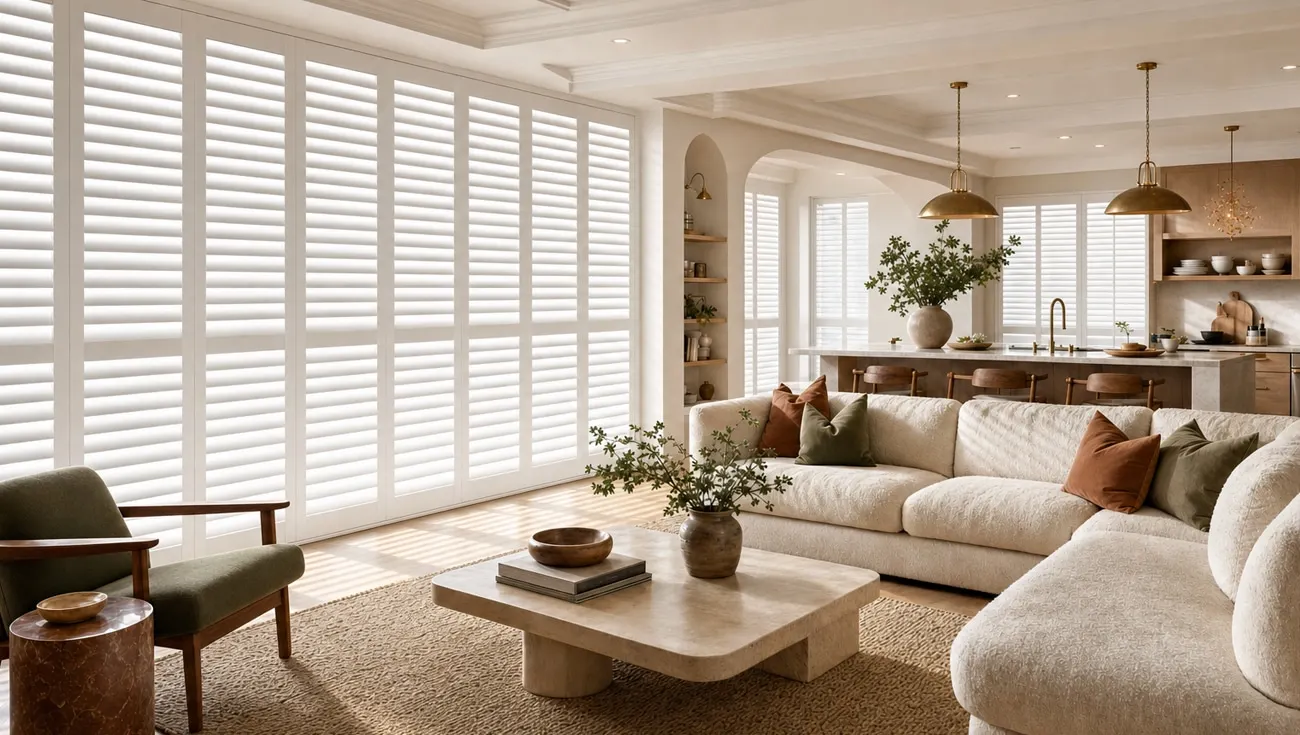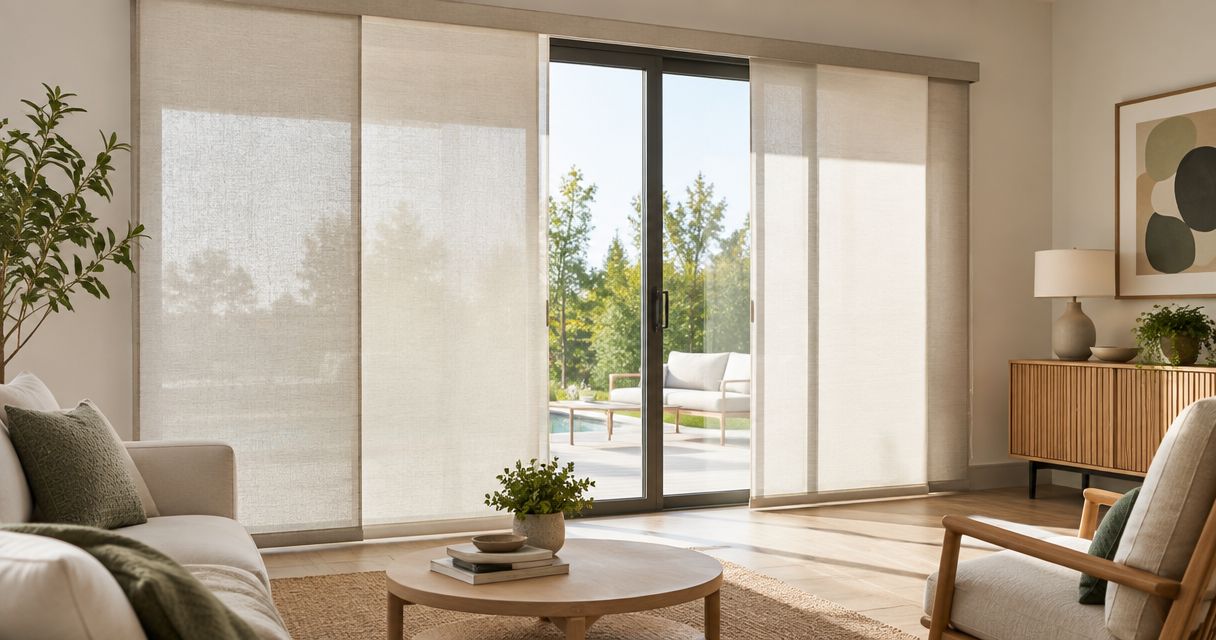
Best overall: vertical blinds. Best for a wide, modern opening: panel-track shades. Best for a softer room: custom drapes. The best window treatments for sliding glass doors in 2026 let you reach the handle, walk through the opening, and control light without moving the treatment out of the way by hand.
- Vertical blinds are the best window treatments for sliding glass doors that see frequent daily use.
- Panel-track shades suit wide openings; custom drapes suit homeowners who want a softer look.
- Olsson Smart Shades is best for Columbus homeowners who want custom-measured treatments and professional installation.
- Check door clearance and where the treatment stacks before choosing a style.
Why this matters
A sliding glass door is both a window and a walkway. A treatment that looks right when closed can get in your way every time you step outside. Before settling on a style, check the handle, the moving door panel, nearby furniture, and the space where the treatment will gather when open.
For homeowners in Columbus and Central Ohio, Olsson Smart Shades offers custom-measured blinds, shades, shutters, drapes, and motorized smart shades with professional installation. The choice starts with how you use the door. Think about the room in 2026: do you need quick passage, daytime privacy, a darker space, or a treatment you can operate without reaching across the glass?
What makes the best window treatment for a sliding glass door?
Use these criteria before comparing styles. A good fabric or finish cannot fix a treatment that blocks your route through the door.
- Easy passage: Can you move through the door without pushing fabric or panels aside? This matters most when you use the door often.
- Stacking space: Where does the treatment sit when open? Check whether it covers glass, crowds the handle, or runs into furniture.
- Light and privacy control: Can you adjust incoming light while keeping the view or privacy you want? Decide which matters most during the hours you use the room.
- Fit at the opening: Look at the space above and beside the frame. The treatment needs a practical place to mount and move.
- Operation: Decide whether you want to draw a panel, turn vanes, move fabric, or use a motorized control. The easiest choice is the one your household will use.
- Room feel: Vertical blinds keep the focus on function; drapes add softness. Start with the door's demands, then choose the look.
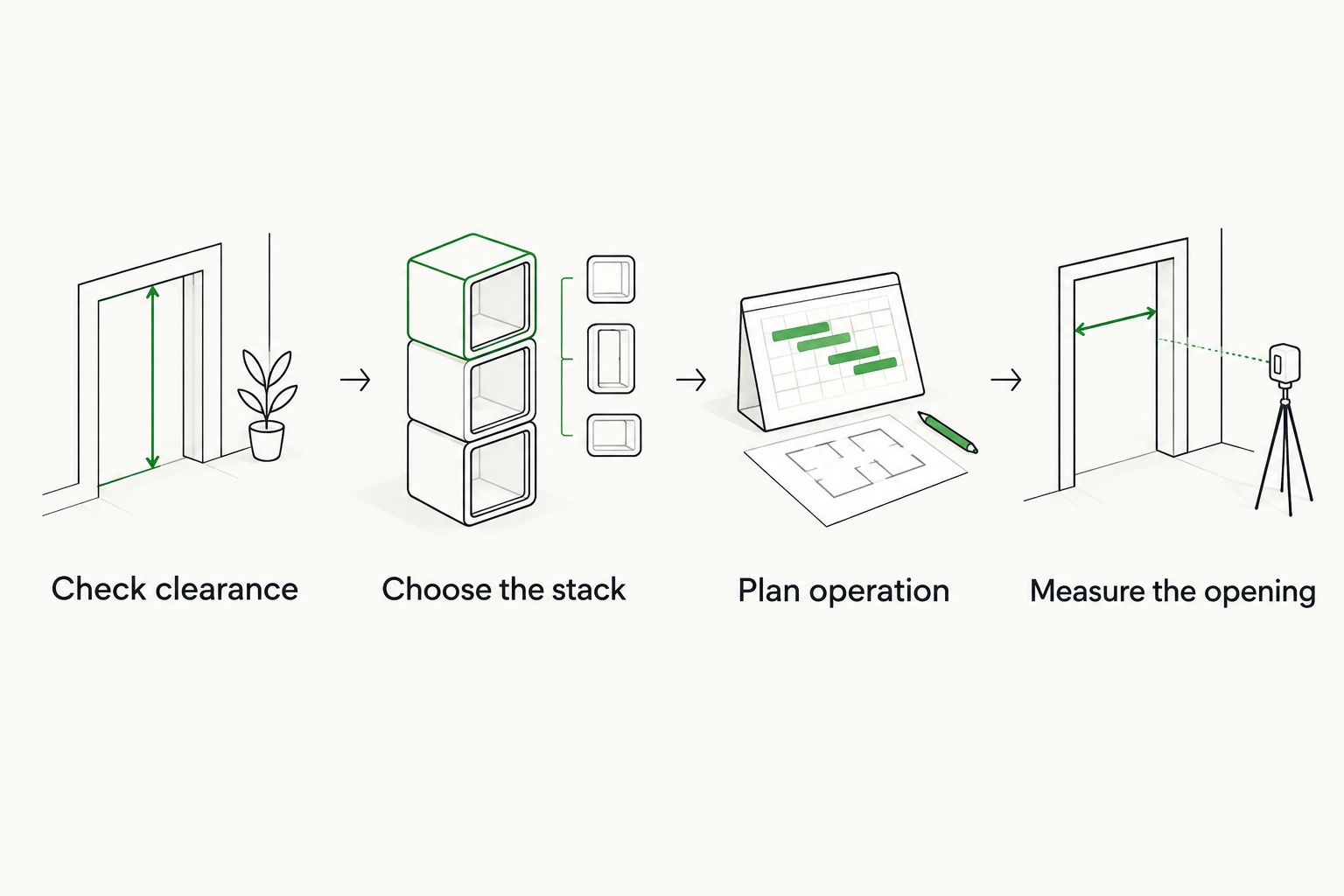
Check clearance, choose the stack, plan operation, and measure the opening in that order. If a chair sits beside the door, for example, a treatment that gathers on that side deserves a closer look. Bring up these details during an in-home consultation rather than judging a style from a closed-door photo.
Sliding glass door treatments at a glance
The table separates styles by the job each does best. There is no single winner for every door: the right stack, mounting position, and operating method depend on the opening and the room around it.
| Treatment | Best for | Standout feature | Key limitation |
|---|---|---|---|
| Vertical blinds | Frequent trips through the door | Vanes turn for light control and draw aside for passage | The vanes move individually and can feel busy in a quiet room |
| Panel-track shades | Wide openings with a clean look | Broad panels slide across a track | Open panels need stacking space |
| Custom drapes | A softer living space | Fabric frames the door when drawn open | Fabric needs room at the sides and can get in the way of passage |
| Vertical cellular shades | Privacy with an insulated window covering | Cellular construction traps air within the covering | A closed shade covers the view, and its stack must be planned |
| Motorized roller shades | Easier operation | A motor raises the shade without a manual pull | One shade across the opening can block passage when lowered |
1. Vertical blinds: best for frequent door use
Vertical blinds are the default pick for a sliding glass door you open often. Their vanes turn to adjust light and privacy, then draw toward one side for passage. That side-to-side movement suits a door better than a covering you must lift before walking through.
Look closely at where the vanes gather. If they stack beside the door handle or into a narrow walking route, the best-operated treatment can still feel awkward. A custom measurement should account for the full opening, the handle, and the available space beside the frame.
Vertical blinds pros:
- Turn the vanes to adjust light without fully opening the treatment.
- Draw the covering aside to reach the door.
- Suit homeowners who put daily access ahead of a fabric-led look.
Vertical blinds cons:
- Individual vanes add visible lines across the glass.
- The gathered vanes still occupy space beside the opening.
Best for: A busy sliding glass door where reaching the handle quickly matters most.
Verdict: Buy for easy daily passage. If you want an uninterrupted fabric look, start with panel-track shades instead.
2. Panel-track shades: best for a wide, modern opening
Panel-track shades use broad fabric panels that slide across a track. They are a strong choice when you want fewer visible divisions than vertical blinds and enough room for the panels to gather at the side. You can move the panels to uncover the portion of the door you use.
The trade-off is the stack. Broad panels need somewhere to go when the door is open, and that space can overlap the glass or compete with furniture beside the frame. Check the open position, not just the closed look, before choosing a track arrangement.
Panel-track shades pros:
- Broad panels create a calmer look across a large area of glass.
- Side-to-side movement suits the shape of a sliding door.
- Fabric selection lets you choose the degree of light filtering and privacy.
Panel-track shades cons:
- Gathered panels can cover part of the glass.
- Limited wall space beside the door can constrain the layout.
Best for: A wide opening where you want sliding operation and a simple fabric look.
Verdict: Buy when the open panels have a clear place to stack. Hold if furniture or a tight corner leaves no practical stacking space.
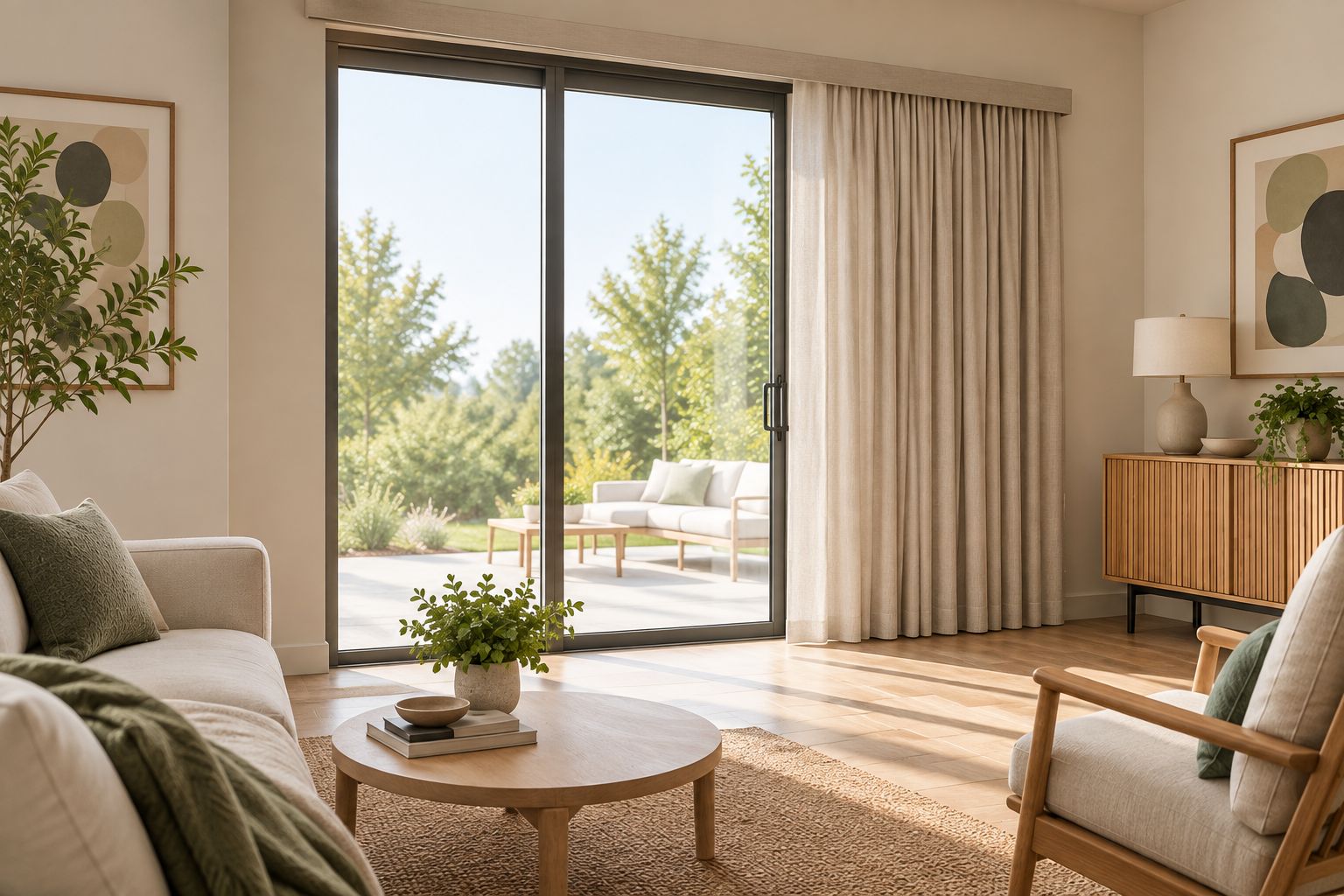
3. Custom drapes: best for a softer living space
Custom drapes suit a sliding door that is part of a living or dining space. Drawn open, they frame the glass; closed, they can provide privacy and change how the room feels. The fabric, mounting position, and where the drapes gather all affect how easily you can use the door.
Drapes work best when you have room beside the opening for the fabric. If people regularly brush past the side of the door, plan the draw direction around the walking route. Think about how much of the glass you want uncovered when the fabric is open, too.
Custom drapes pros:
- Add softness to a room with a large area of glass.
- Frame the door when open.
- Give you fabric choices for different privacy and light-control needs.
Custom drapes cons:
- Gathered fabric takes up space beside the opening.
- Fabric placed too close to the walking route can get in the way.
Best for: A living space where the door's appearance matters as much as privacy.
Verdict: Buy when there is room to draw the fabric clear of the door. Hold if the side of the opening is already crowded.
4. Vertical cellular shades: best for insulation and privacy
Vertical cellular shades move from side to side and use a cellular structure that holds air within the covering. That makes them an option when you want privacy and an insulating window treatment without switching to a horizontal shade. Their movement also fits the broad shape of a sliding glass door.
Treat the closed position as a deliberate choice. The covering will obscure the glass while it is across the door, so consider how often you want an open view. As with any side-drawing treatment, confirm where the shade gathers and whether that position keeps the handle accessible.
Vertical cellular shades pros:
- Cellular construction adds an insulating layer at the glass.
- Side-to-side operation can clear the walking opening.
- A continuous covering gives privacy when closed.
Vertical cellular shades cons:
- The closed shade interrupts the view.
- The gathered shade needs space at the side of the door.
Best for: A homeowner who puts privacy and an insulating covering ahead of an open view while the shade is closed.
Verdict: Buy when those needs lead the decision. Hold if you prefer to see outside while adjusting light.
5. Motorized roller shades: best for easier operation
Motorized roller shades raise and lower without a manual pull. They are useful when reaching across a wide opening is inconvenient or when ease of operation is the priority. For a sliding door, though, operation and passage are separate questions: a lowered shade still sits in front of the opening it covers.
Discuss the layout before choosing one shade across the entire door. The moving door panel and fixed glass can place different demands on coverage, but any arrangement needs a workable mounting position and a clear route through the door. Ask how the proposed shade behaves when you want privacy and need to step outside.
Motorized roller shades pros:
- Raise the covering without reaching for a manual control at the window.
- Offer a clean appearance when raised.
- Suit homeowners who value easier shade operation.
Motorized roller shades cons:
- A lowered shade can block access through the door.
- Motorization does not solve a poor mounting or coverage layout.
Best for: A homeowner who wants easier operation and can plan shade coverage around door use.
Verdict: Hold until the open and closed positions are clear. Buy when the layout gives you both the light control and the passage you need.
How these treatments were ranked
The ranking puts daily passage first, followed by where the treatment stacks, how it controls light, and how it fits the room. That is why vertical blinds lead a general-purpose list: they address the door's job as a walkway. Panel-track shades, drapes, cellular shades, and motorized roller shades move up when a specific need matters more.
This is a use-case ranking, not a claim that one material fits every opening. In 2026, start with the door you have and how you use it. Check the handle and walking route while the treatment is open and closed; both positions matter.
Which sliding glass door treatment should you choose?
Choose vertical blinds if you want the safest default for frequent passage. Choose panel-track shades if the opening is wide and the panels have room to stack. Pick custom drapes for a softer room, vertical cellular shades when privacy and an insulating covering lead, or motorized roller shades when easier operation matters and the layout keeps passage clear.
Olsson Smart Shades is best for Columbus and Central Ohio homeowners who want these choices measured for their own opening and professionally installed. To arrange an in-home consultation or request a quote, describe how often you use the door, which side the handle is on, and what sits beside the frame. Ask to see where your preferred treatment will rest when open.
Plan your sliding door treatment
Discuss the opening, daily use and the treatment you prefer.
FAQ
What are the best window treatments for sliding glass doors?
Vertical blinds are the best general-purpose choice for a sliding glass door used often. Their vanes adjust light and draw sideways to make room for passage.
Are vertical blinds or panel-track shades better for sliding doors?
Vertical blinds are better when quick daily access is the priority; panel-track shades suit a wide opening with room for broad panels to stack. Check where either treatment gathers before choosing.
Can I put drapes over a sliding glass door?
Yes, custom drapes can cover a sliding glass door. Plan enough space beside the frame for the fabric to gather without blocking the handle or walking route.
Do cellular shades work on sliding glass doors?
Vertical cellular shades can work on sliding glass doors. They move sideways, provide privacy when closed, and use cellular construction that holds air within the covering.
Are motorized shades practical for sliding glass doors?
Motorized shades are practical when their coverage leaves you a clear way through the door. Review the lowered position as carefully as the raised position before settling on a layout.
What should I check before choosing a sliding door treatment?
Check the handle, walking route, mounting space, and where the treatment stacks when open. Then decide how much light control and privacy you want while the door is closed.
How do I choose a sliding glass door treatment in Columbus?
Start with how often you use the door and what sits beside it, then compare styles against that space. Olsson Smart Shades offers custom-measured window treatments and professional installation for Columbus and Central Ohio homeowners.
One last thing
A treatment can clear the glass and still crowd the doorway. Before you decide in 2026, stand at the door and picture the covering fully open, then fully closed. If either position makes the handle hard to reach or the route awkward, change the layout before changing the fabric.