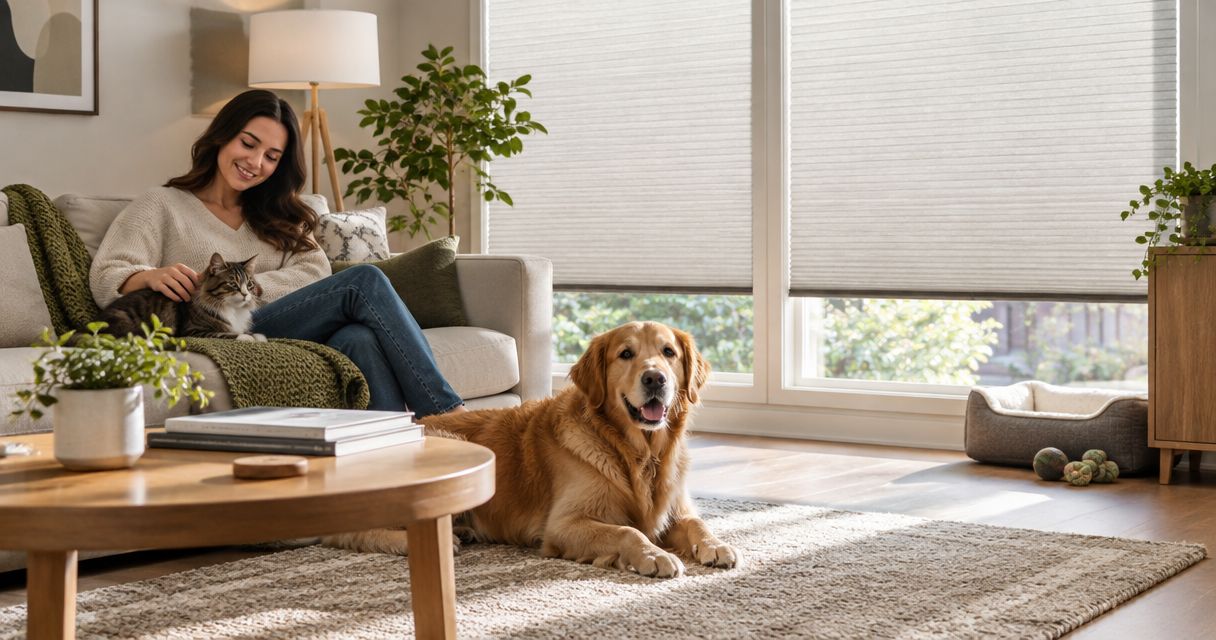
Pet owners’ custom window treatments are made-to-measure blinds, shades, shutters, or drapes chosen to manage light and privacy while accounting for animals’ access to windows. The best custom blinds for pet owners fit the window, avoid accessible cords, and leave room for the habits your dog or cat already has.
- Choose custom blinds for pet owners around cord safety, cleaning, and a clear viewing spot—not appearance alone.
- Olsson Smart Shades provides custom-measured window treatments and installation for Columbus and Central Ohio homeowners.
- Motorized shades simplify operation, but motors do not make fabric, wiring, or moving parts pet-proof.
- Compare cordless blinds, roller shades, plantation shutters, and drapes against your pet’s actual behavior.
Why custom window treatments matter for pet owners
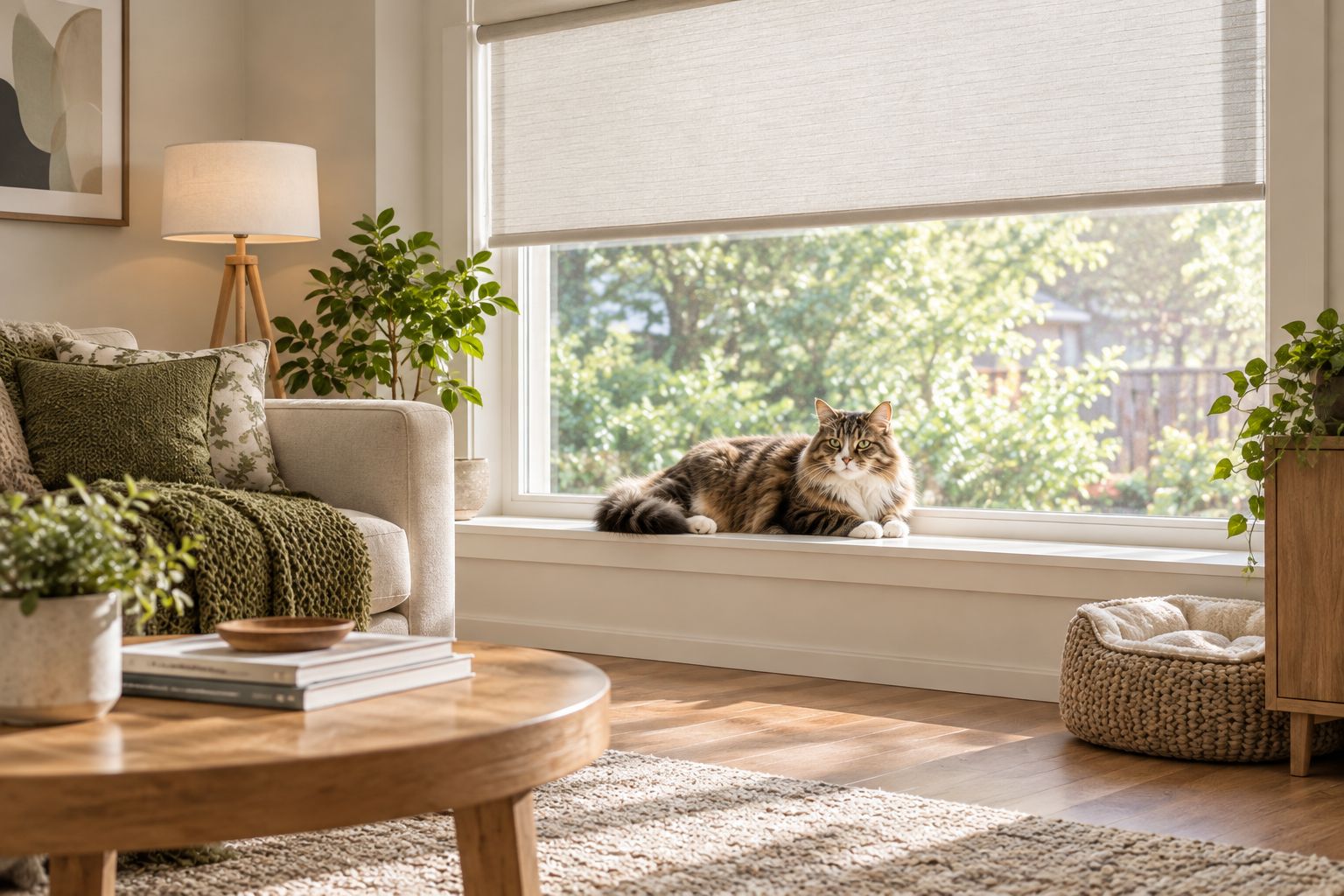
A pet does not treat a window as decoration. A cat uses the sill as a lookout; a dog watches the front walk. Covering that route without planning for access puts the treatment directly in the animal’s path.
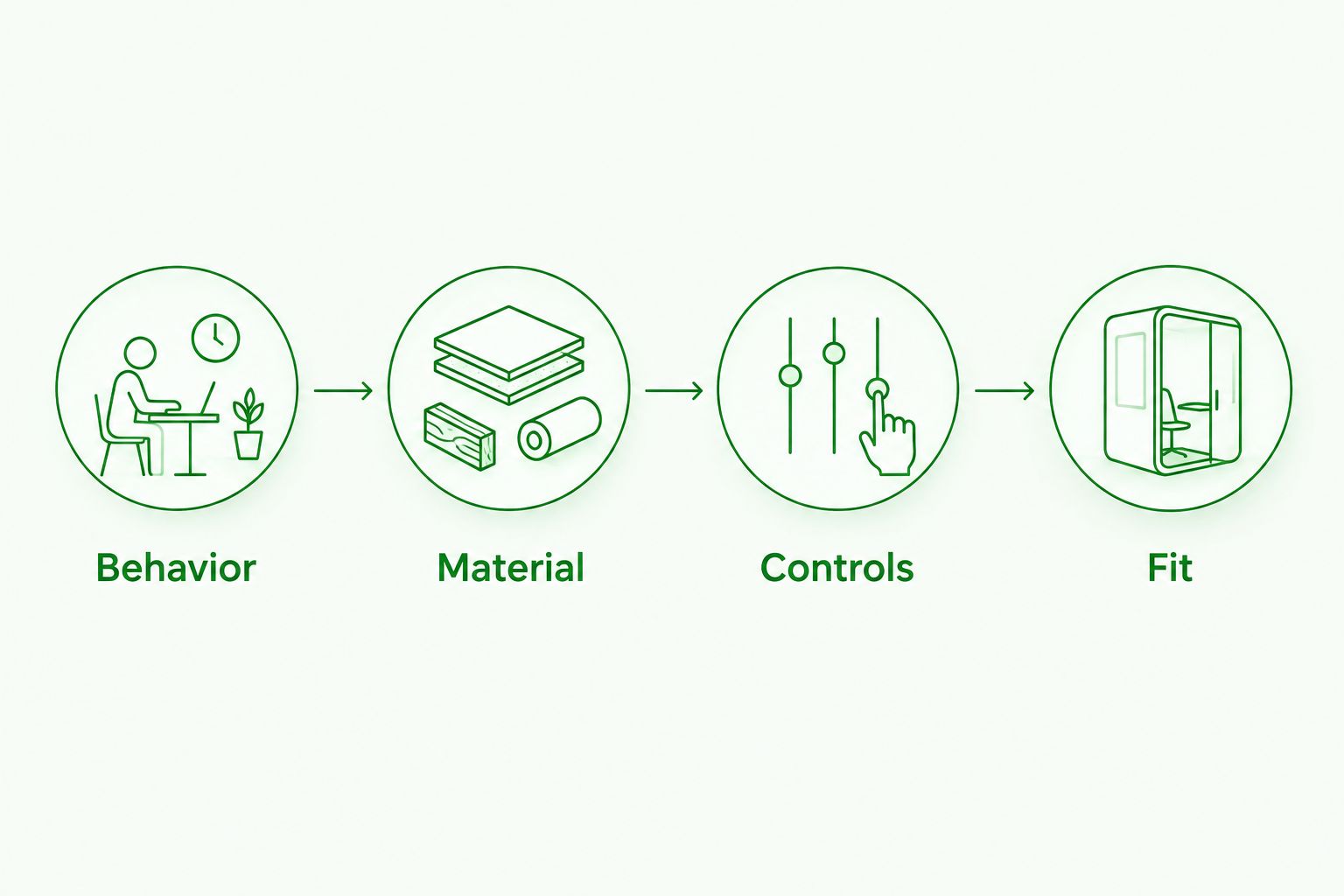
For your 2026 project, start with behavior rather than a fabric sample. Does your pet push through closed slats, scratch hanging cloth, or rest against the glass? Each habit creates a different buying decision.
Accessible cords deserve attention before convenience features. Motorization changes how you operate a shade, but the complete installation still matters. The guide to motorized shades for smart homes gives you a starting point for questions about controls.
No window treatment is pet-proof. Your goal is to reduce avoidable hazards and choose a covering you can use without constantly moving your pet away.
How to choose custom blinds for a home with pets
1. Map your pet’s window habits
Walk through the house before shopping. Mark the windows your pet actually uses, not just the ones that need new coverings. Include nearby chairs, shelves, and furniture that provide a route to the sill.
For example, choose 3 windows to assess first: a favorite lookout, a sleeping-room window, and a frequently used door. This is a planning exercise, not a requirement to order everything together. Different rooms can need different solutions.
A phone photo helps explain the problem more clearly than a general request for something durable. Capture the whole opening and the pet’s usual approach.
- Note where your pet sits, paws, climbs, or pushes through.
- Photograph existing damage and nearby furniture.
- Record when you need privacy at each opening.
- Identify a viewing spot you can leave accessible.
2. Remove accessible cords from the shortlist
Start by inspecting your current coverings. Look for hanging lift cords, loops, and cords exposed behind fabric. Do not assume that moving a cord higher solves the problem when a cat can climb nearby furniture.
For replacement treatments, ask to see exactly how the proposed covering operates. Cordless operation removes the need for a hanging lift cord, but the word cordless does not describe every component of an installation. Inspect the back, sides, and controls as well.
In 2026, treat cord safety as a selection requirement rather than an optional upgrade. Keep pets away from damaged treatments while you arrange repair or replacement.
- Exclude accessible hanging operating cords and loops.
- Ask about internal cords and rear-facing components.
- Check access from furniture as well as the floor.
- Request a demonstration of the complete operating system.
3. Match the material to the behavior
Use a clean cloth and the existing treatment’s care instructions to understand your current cleaning problem. Is it loose fur, nose marks, muddy contact, or scratches? A material that suits one problem does not automatically solve another.
Olsson Smart Shades is best for Columbus and Central Ohio homeowners seeking custom-measured window treatments with professional installation. You can use the Olsson Smart Shades website to ask about an in-home consultation or request a quote. Describe your pet’s habits so the discussion starts with function, not just color.
Professional measurement helps address fit and mounting. It does not make a material resistant to chewing or claws, so ask about the limitations of each sample.
- Compare a smooth sample with a textured sample.
- Ask for the material’s actual cleaning instructions.
- Avoid reachable fabric where your pet repeatedly claws.
- Check whether individual components can be repaired or replaced.
- Explain any chewing behavior before choosing a treatment.
4. Preserve a practical viewing route
Try adjusting your existing covering before replacing it. If raising it clears your pet’s favorite sill without sacrificing needed privacy, that tells you something useful about the replacement’s required open position.
Check where the bottom rail sits when the treatment is raised. Also check how shutter panels or drapes occupy space when open. A treatment can fit the window opening yet interfere with a perch, door handle, or furniture.
A designated lookout is a useful layout choice, not a substitute for supervision. Keep your pet away from an open window unless the opening is securely protected; an insect screen is not a safety barrier.
- Identify the sill or floor area your pet uses.
- Check the treatment’s fully open position.
- Keep door routes clear of hanging fabric.
- Test privacy from outside at the relevant time of day.
5. Choose controls around your daily routine
First, try a manual routine: open the lookout window’s covering when you are home and close it when privacy matters. Decide whether the operation is comfortable and whether anyone regularly forgets it.
Motorized shades offer a different way to operate a covering, especially where reaching the window is awkward. Olsson Smart Shades offers motorized smart shade installation; ask which controls and power arrangements suit your specific windows. Do not assume a particular app, voice assistant, or schedule function is included.
For a 2026 motorized installation, discuss pets alongside the controls. Moving fabric, power leads, and charging access all need attention. Watch the full movement before allowing your pet near the treatment.
- Decide between manual operation and motorized operation.
- Ask where power leads and charging connections will sit.
- Confirm the proposed controls before approving the order.
- Ask how to operate the shade when normal controls are unavailable.
- Keep pets clear while the covering moves.
6. Confirm fit, care, and handoff details
Make your own list of questions before the consultation. Bring 2 photos per problem window: one showing the full opening and one showing the pet’s access route. Photos support the conversation; they do not replace final measurements.
Ask for the proposal to identify the treatment, material, mounting approach, and operating method for each opening. Where motorization is involved, include the agreed control and power arrangement. This keeps similar-looking windows from receiving the wrong specification.
At installation, watch 1 complete opening-and-closing cycle for each treatment. Then operate it yourself and check the areas your pet can reach.
- Confirm which windows and doors the proposal includes.
- Review handles, trim, sill clearance, and nearby furniture.
- Request care instructions for the selected material.
- Learn how to stop movement and recognize a problem.
- Ask whom to contact about adjustment or repair.
The useful outcome of a consultation is a clear choice for each opening. You do not need the same treatment throughout the house, and you do not need to select every room at once.
Discuss your pet-friendly window plan
Ask about custom measurement, materials, and installation for your Columbus or Central Ohio home.
Compare window treatments for pet households
Use this 2026 comparison to narrow the categories worth discussing. These are general construction differences, not promises about a particular fabric or model. Check the exact sample and operating system before ordering.
| Option | Best for | Practical advantage | Key limitation |
|---|---|---|---|
| Cordless blinds | Adjustable daylight and privacy | Slats let you change the view without fully raising the covering | Pets pushing through can bend or damage slats |
| Cordless roller shades | A clear opening when raised | A single fabric panel avoids individual horizontal slats | Reachable fabric remains vulnerable to claws and chewing |
| Motorized shades | Windows that are awkward to reach | Powered operation reduces the need to handle the shade | Power arrangements, controls, and moving parts need planning |
| Plantation shutters | Homeowners who prefer rigid panels | Louvers adjust light without lifting a fabric panel | Panels need opening clearance; finishes can still scratch |
| Drapes | Soft furnishings away from active pet routes | Fabric can frame a window and work alongside another covering | Reachable folds and hems invite contact and collect fur |
| Cellular shades | Rooms where insulation is a priority | The cellular construction traps air within the shade | Delicate fabric is a poor match for repeated pawing |
Choose by behavior first, then appearance. A dog that presses its nose against a closed covering needs a different arrangement from a cat that climbs fabric. Neither problem is solved by selecting a darker color.
Professional installation offers help with measurement, mounting, and operation. Its limitation is equally clear: a correctly installed covering still needs appropriate use and care. Ask Olsson Smart Shades to explain both the benefits and the trade-offs of the proposed treatment.
Common mistakes pet owners make
Buying for the window instead of the pet’s route
A neatly fitted covering can still sit directly across a favorite perch. Before approving the order, picture the pet approaching from the floor, sofa, and sill. Leave a usable viewing route where practical.
Treating motorization as a safety guarantee
Powered operation is convenient, but it does not protect fabric from teeth or claws. Check accessible components and supervise initial operation. Keep the pet clear whenever the covering moves.
Choosing texture without checking care instructions
A textured sample can look appealing while requiring a cleaning method that does not suit your household. Ask how to remove fur and surface marks from that exact material. Do not assume every shade fabric can be washed or scrubbed.
Ordering one solution for every room
Your bedroom needs privacy; your pet’s daytime lookout needs access. A patio door adds another movement route. In your 2026 plan, group openings by how you use them rather than buying identical treatments simply for consistency.
Assuming custom means damage-proof
Custom measurement addresses dimensions and installation choices. It does not change an animal’s habits. If chewing or climbing continues, manage access and seek appropriate behavioral or veterinary advice rather than repeatedly replacing the same treatment.
FAQ
What are the best custom blinds for pet owners?
The best custom blinds for pet owners avoid accessible cords, suit the pet’s behavior, and allow practical window access. Compare the exact materials and controls rather than looking for a universal pet-proof label.
Are motorized shades safe around cats and dogs?
Motorized shades still require a pet-aware installation and supervised operation. Check reachable wiring, moving components, and fabric, and keep pets clear while the shade moves.
Are plantation shutters better than blinds for dogs?
Plantation shutters are worth comparing when a dog repeatedly pushes through blind slats, but they are not damage-proof. Check panel clearance, louver access, and the selected material’s care requirements before choosing.
What should I choose if my cat climbs curtains?
Keep climbable fabric out of your cat’s reach and consider a different covering for that opening. A raised shade can clear the viewing area, but accessible shade fabric still needs protection from claws.
Can I keep a window lookout without losing privacy?
You can plan a designated viewing window and use other coverings to manage privacy elsewhere. Check the view from outside and decide when that lookout should be open or covered.
What should I ask during an in-home consultation?
Ask about accessible cords, cleaning, mounting, viewing clearance, and operation for each opening. Show photos of pet access and existing damage, and request a proposal that identifies the selected material and controls.
Who installs custom window treatments for pet owners in Central Ohio?
Olsson Smart Shades provides custom-measured window treatments and installation for homeowners in Columbus and Central Ohio. Ask about an in-home consultation and explain your pet’s habits before selecting materials.
One last thing
Before replacing a damaged covering, photograph it in place. The location of the damage helps explain the problem: contact near the sill, pulling at the hem, or pressure through the slats. Bring that evidence to your 2026 consultation so the replacement addresses the habit—not just the marks it left.