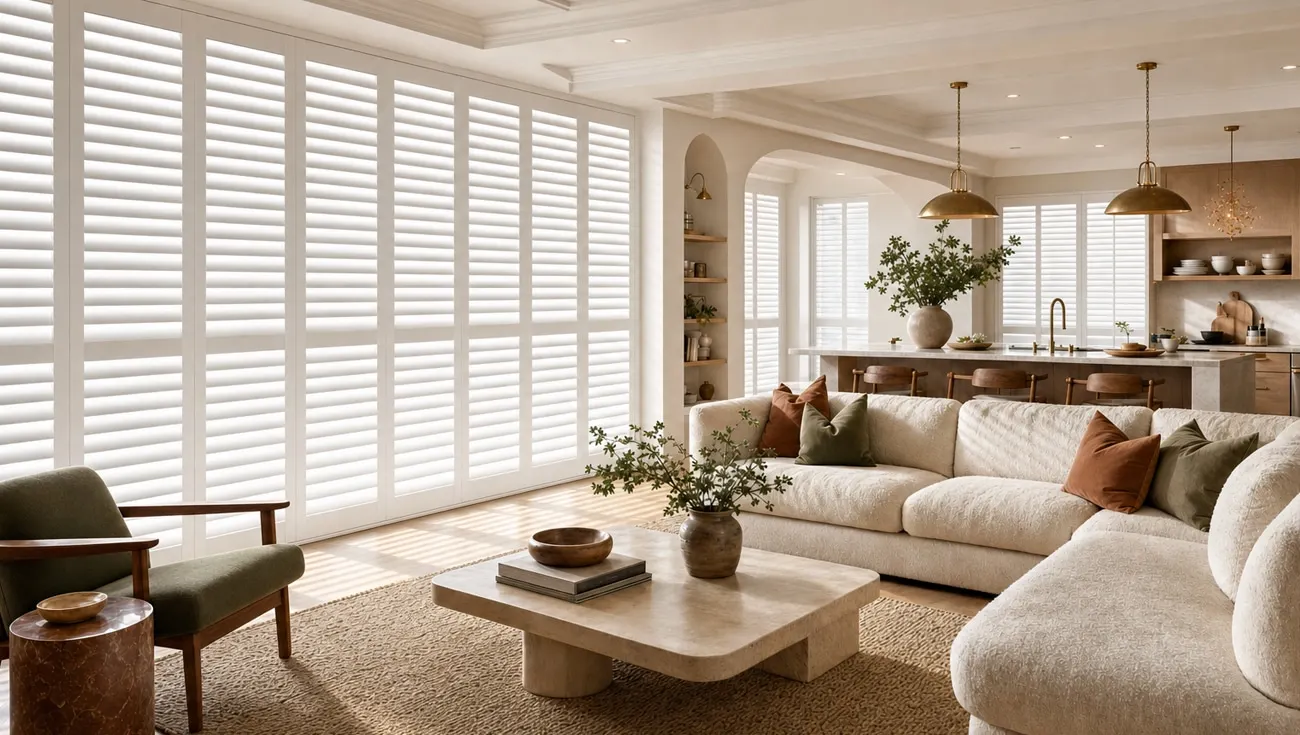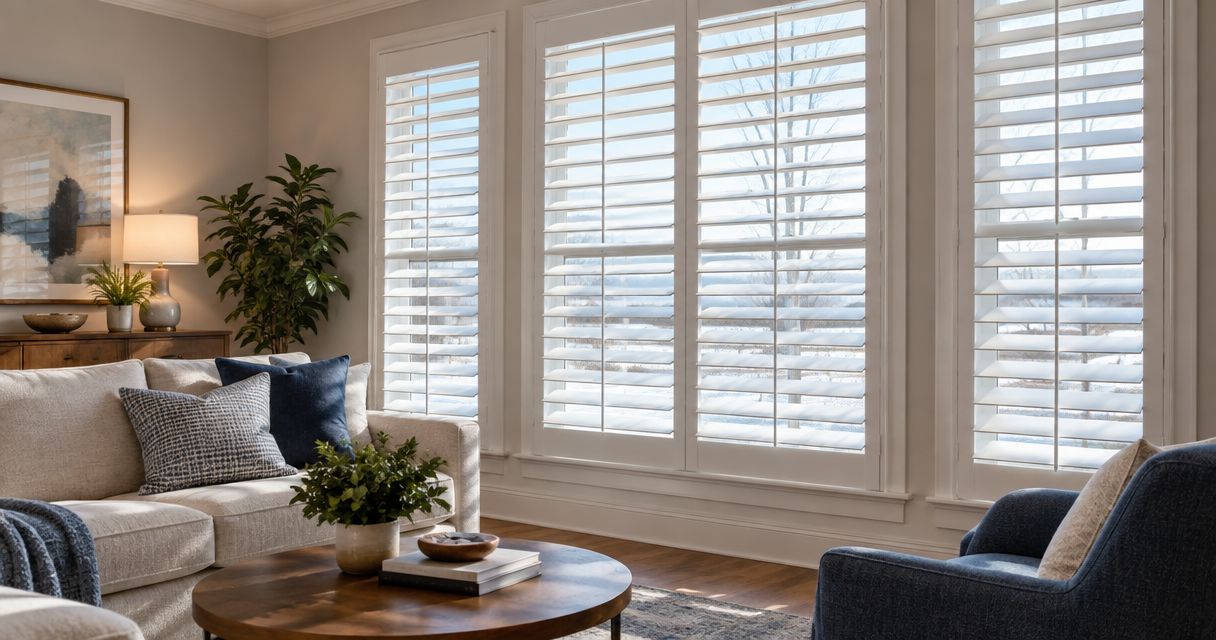
Best overall for Ohio humidity swings: PVC or composite shutters. Best for dry, low-moisture rooms: hardwood shutters. Best budget-minded pick for kitchens and baths: faux wood shutters. Here is how each material holds up to Ohio's cold winters, humid summers, and sun in 2026.
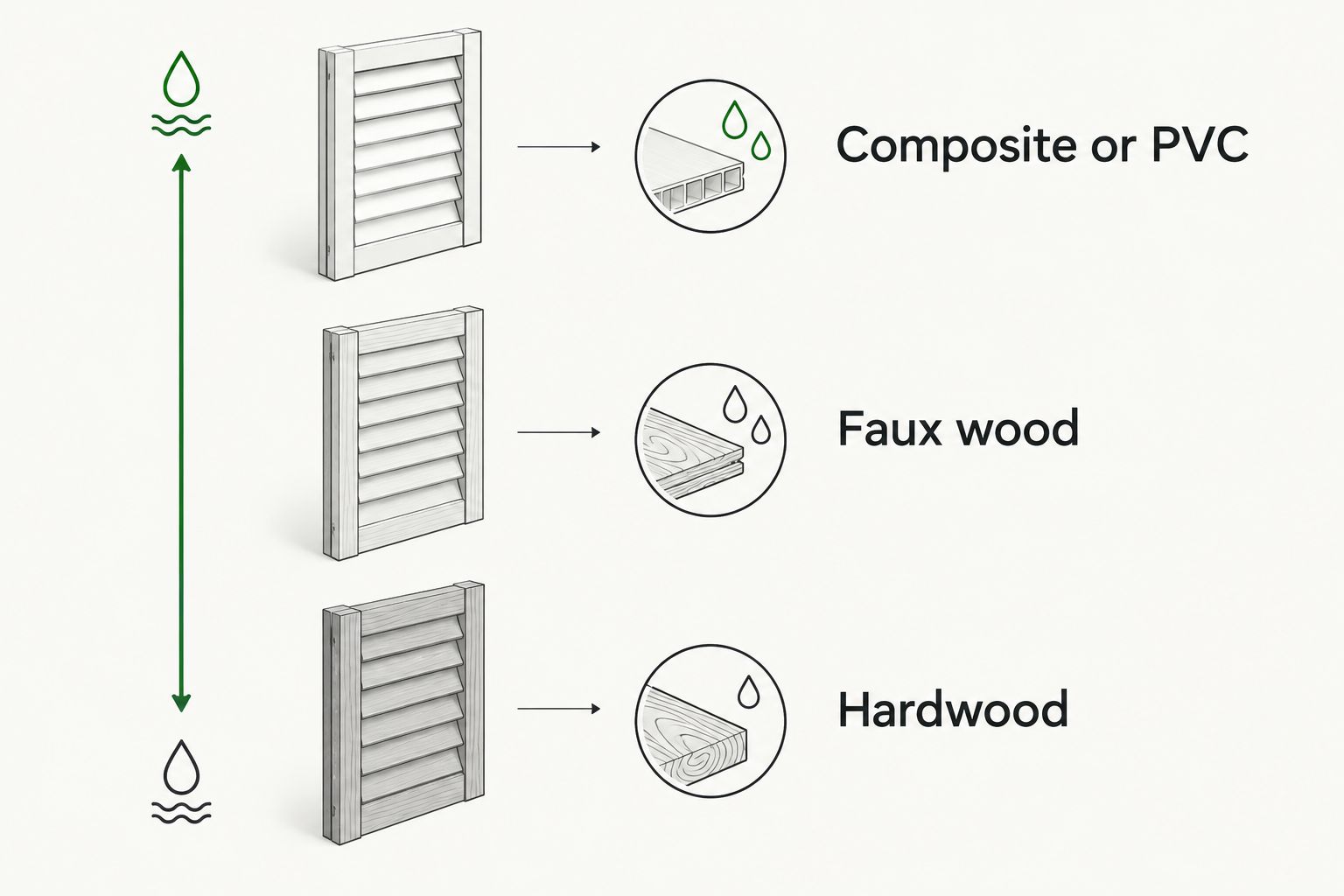
- Composite and PVC plantation shutters are the most durable choice for Ohio humidity swings in 2026.
- Hardwood shutters look best but need dry rooms and stable indoor humidity.
- Faux wood sits in the middle: moisture-tolerant, lighter, and easier on budgets.
- Skip hardwood in bathrooms, laundry rooms, and sunrooms with heavy sun exposure.
- A custom measure matters as much as material. A poor fit warps and binds in any wood or composite.
Why Ohio weather is hard on shutters
Central Ohio swings from cold, dry winters to humid summers. Indoor air follows. Heating season dries wood out. July and August push moisture back in.
That cycle is what stresses shutters. Wood expands and contracts. Joints loosen. Finishes crack at the edges. Sun through south and west windows adds UV fading on top.
Durability here means three things: how a material handles moisture, how it handles heat and sun, and how well the frame stays square after years of seasonal movement. Local brand Olsson Smart Shades custom-measures every window, which is the first defense against all three.
What makes a durable plantation shutter
- Moisture resistance: does the material swell, warp, or delaminate in humid months?
- UV stability: does the finish yellow or fade on sunny windows?
- Dimensional stability: does the frame stay square through heating and cooling seasons?
- Finish wear: does paint chip at louver edges after years of daily tilting?
- Fit: is the shutter measured and installed to the actual opening, not a stock size?
- Repair path: can a louver or hinge be fixed without replacing the whole panel?
Ohio durability at a glance
| Rank | Material | Best for | Standout strength | Key limitation |
|---|---|---|---|---|
| 1 | Composite / PVC | Kitchens, baths, sunrooms | Moisture and warp resistance | Heavier panels on wide openings |
| 2 | Faux wood | Mixed-use rooms, budget-minded buyers | Handles humidity, lighter weight | Less crisp look than real wood |
| 3 | Hardwood | Living rooms, bedrooms, dry spaces | Natural grain and paint or stain depth | Seasonal movement and moisture sensitivity |
For current pricing, request a quote. Prices depend on window size, material, and layout.
1. Composite and PVC shutters: best for humid rooms and sunny windows
Composite and PVC shutters have no wood grain to swell. Moisture does not change their shape, which matters in an Ohio July. Paint is typically baked or integral to the material, so chipping at louver edges is less of a worry.
Composite and PVC pros:
- Resist warping in kitchens, baths, and laundry rooms
- Hold their shape through heating and cooling seasons
- Wipe clean with a damp cloth
- Suit sun-heavy south and west windows
Composite and PVC cons:
- Heavier than hardwood on wide panels, so hinge fit matters
- Fewer stain options, mostly painted finishes
Best for: bathrooms, kitchens, sunrooms, and any window that sees both sun and steam.
Verdict: Buy if durability is the priority. If you are weighing sunroom coverings, see our guide to solar shades for sunrooms.
2. Faux wood shutters: best for budget-minded, moisture-prone rooms
Faux wood shutters use an engineered core with a wood-look finish. They tolerate humidity far better than solid wood and weigh less than most composite panels.
Faux wood pros:
- Handle Ohio summer humidity without the swelling risk of real wood
- Lighter panels are gentler on hinges and frames
- Wood-look finish suits traditional and farmhouse rooms
- Easy to wipe down
Faux wood cons:
- Finish detail is less rich than real hardwood up close
- Deep scratches show the core underneath
Best for: kitchens, bathrooms, kids' rooms, and anyone who wants a wood look without the maintenance.
Verdict: Buy for wet rooms and busy households. For the moisture-room angle, read our faux wood blinds guide for kitchens and bathrooms.
3. Hardwood shutters: best for dry living spaces and a natural look
Hardwood is the classic. It takes paint or stain beautifully and feels solid in the hand. It is also the material most affected by Ohio's seasonal humidity swings.
Hardwood pros:
- Natural grain and depth of finish
- Strong, rigid panels for large openings
- Can be refinished and repaired by a skilled installer
Hardwood cons:
- Expands and contracts with humidity, so a tight fit may bind in summer
- Not suited to bathrooms, laundry rooms, or steamy kitchens
- Finish can fade on windows with direct afternoon sun
Best for: living rooms, dining rooms, and bedrooms with steady indoor humidity.
Verdict: Hold. Buy for dry rooms where looks come first. Skip it for wet rooms.
How we ranked
The ranking follows the criteria above. Moisture resistance and dimensional stability carried the most weight because Ohio's humidity cycle is the main stress on shutters. UV stability and repair path broke ties. The ranking is a material-level judgment, not a brand-by-brand test.
Fit and installation matter as much as material
A perfect material in a poorly measured frame still binds, gaps, or sags. Custom measuring accounts for out-of-square openings, which are common in older Central Ohio homes.
Ask for an in-home consultation. It takes about an hour, with no obligation and no prep needed. Installation by the Olsson Smart Shades team means the person who measured is the person who fits.
Get a free in-home consultation
Custom measuring for Columbus and Central Ohio windows.
Care tips for Ohio homes in 2026
- Run a dehumidifier or AC in July and August to keep indoor humidity steady.
- In winter, use a humidifier modestly so wood panels do not dry and shrink.
- Dust louvers weekly with a soft cloth or microfiber duster.
- Wipe spills and steam residue promptly in kitchens and baths.
- Tilt louvers closed on harsh afternoon sun to slow fading.
Which plantation shutter should you choose?
Choose composite or PVC if the room sees steam, sun, or heavy use. Choose faux wood for a wood look with better moisture tolerance. Choose hardwood only for dry rooms where finish and grain matter most.
If you are still comparing options for Columbus homes, our plantation shutters guide for Columbus homes covers local buying choices in more detail. For large openings, see window treatments for large windows.
FAQ
What are the most durable plantation shutters for Ohio weather?
Composite and PVC shutters are the most durable for Ohio weather in 2026. They resist moisture, warping, and UV wear better than wood.
Do hardwood plantation shutters warp in Ohio?
Hardwood can swell in humid summers and shrink in dry winters. A precise custom fit and stable indoor humidity reduce the risk.
Are plantation shutters good for bathrooms in Ohio?
Yes, if they are composite, PVC, or faux wood. Skip hardwood in bathrooms because steam and splashes shorten its life.
Is faux wood or real wood better for humid climates?
Faux wood is better for humidity. Its engineered core resists swelling, while real wood moves with moisture changes.
Do plantation shutters fade in the sun?
Finishes can fade on direct south and west windows over time. Composite and PVC hold color better than painted or stained wood.
How do I get shutters measured in Columbus?
Request an in-home consultation with Olsson Smart Shades. It takes about an hour, with no obligation and no prep needed.
One last thing
The best material cannot fix a bad measure. Before you compare finishes, get the openings measured by someone who will also install them. That single step prevents most of the binding, gapping, and sticking problems people blame on the material.