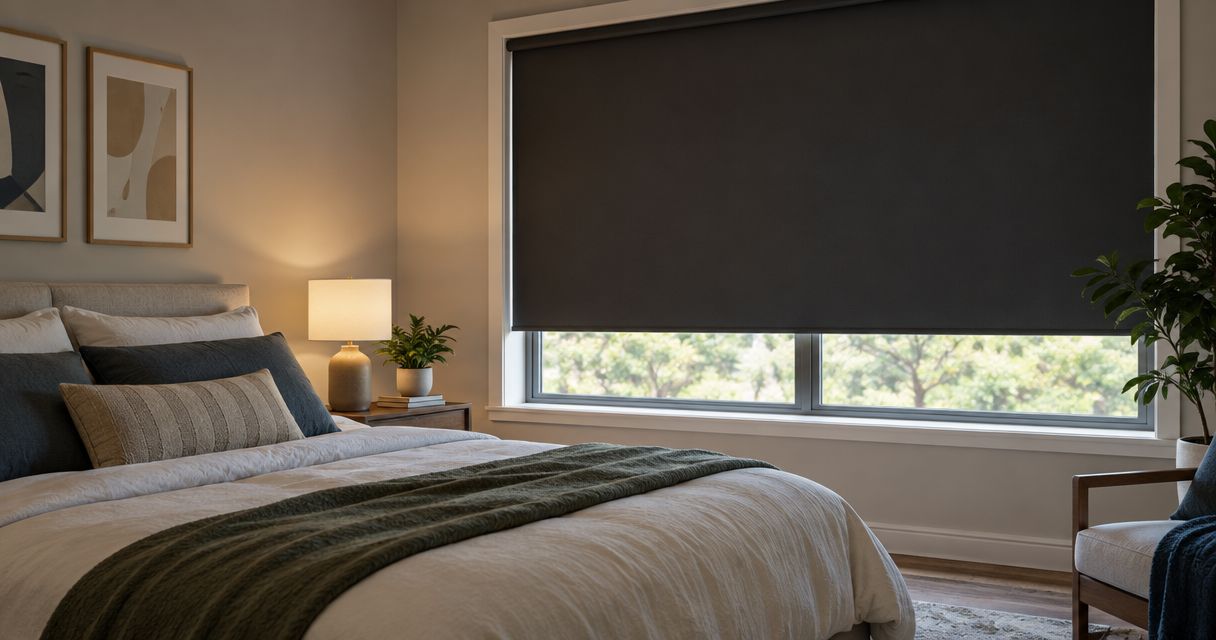
Blackout shades for a bedroom have one job: keep the room dark enough that a Columbus sunrise in July and a streetlight in December don't matter. Not every window treatment does that job the same way, and the wrong pick means light leaking around the edges for years.
- Cellular honeycomb blackout shades win overall for bedrooms in 2026 for light block and insulation.
- Motorized blackout shades suit smart homes; a schedule closes them before your alarm goes off.
- Layered drapes with a blackout liner are the budget-friendly upgrade for renters or a quick refresh.
- Roller shades with side channels seal the edge gaps that plague standard blackout rollers.
- Olsson Smart Shades custom-measures and installs all six types across Columbus and Central Ohio.
Why this matters
A bedroom that stays dark through sunrise supports better sleep, and standard blinds and shades almost always leave gaps at the edges — enough for a streetlight or a summer sunrise to wake a light sleeper. Blackout only works when the fabric, the liner, and the fit all do their part together. Olsson Smart Shades measures and installs custom window treatments for homes across Columbus and Central Ohio, and the six options below cover the range of blackout solutions worth considering in 2026.
What makes the best blackout shades for a bedroom
- Light-blocking liner or fabric — the backing material determines how much daylight actually gets stopped, not just dimmed.
- Edge and side-channel fit — a shade cut to the exact window opening blocks the gaps a stock size never will.
- Ease of daily use — a cordless lift or a motorized schedule matters more once you're living with the shade every morning.
- Material durability — vinyl, wood, and heavier fabric hold their shape and color longer than thin stock shades.
- Room fit and decor — a bedroom shade should match the room's style, not just block light.
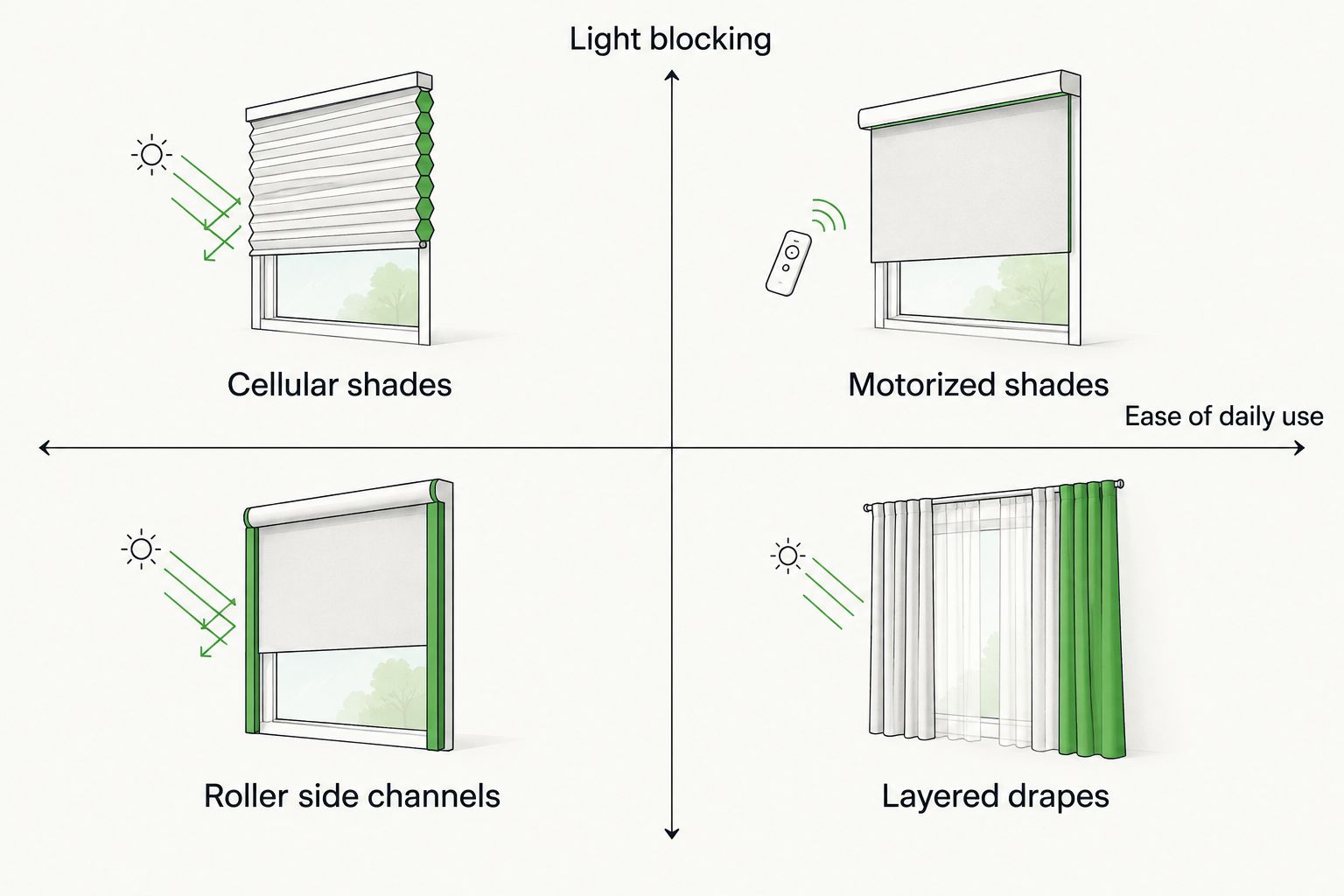
Blackout shades for bedrooms at a glance
| Treatment type | Best for | Standout feature | Key limitation |
|---|---|---|---|
| Cellular/honeycomb blackout shades | Overall bedroom blackout | Honeycomb pockets trap air and block nearly all light | Stacks slightly bulkier at the top of the window |
| Motorized blackout shades | Smart homes and busy schedules | Opens and closes on a schedule or app, no reaching over furniture | Needs a power source and setup during install |
| Plantation shutters with blackout panel | Long-term durability and resale value | Solid panel backing plus wood or vinyl louvers | Higher upfront project, custom install required |
| Blackout roman shades | A soft, layered bedroom look | Fabric folds hide the blackout liner completely | Fewer cordless options for shared kids' rooms |
| Layered drapes with blackout liner | Budget-minded upgrades and renters | Works with existing curtain rods, easy to swap | Least airtight seal, some light creeps in at the edges |
| Roller shades with side channels | Shift workers needing total blackout | Side channels seal the light gaps standard rollers leave | Fixed, flat look with less decorative range |
1. Cellular/Honeycomb Blackout Shades: Best for Overall Bedroom Darkness
Cellular blackout shades use a honeycomb-shaped cell that traps air along with light. The blackout version adds a solid backing to the fabric that stops daylight from passing through the weave itself, not just filtering it. In a bedroom, that combination handles both an early sunrise and a hallway light at night.
Cellular shade pros:
- Blocks close to all direct light when sized correctly
- Honeycomb structure adds insulation against Central Ohio winters and summers
- Comes in cordless lift options, safer for kids' rooms and nurseries
- Custom measuring closes the side gaps stock sizes leave open
Cellular shade cons:
- Costs more than a basic vinyl roller shade
- Deeper honeycomb cells stack a bit thicker at the header when raised
Best for: bedrooms where sleep quality is the main goal. Verdict: Buy.
2. Motorized Blackout Shades: Best for Smart Homes
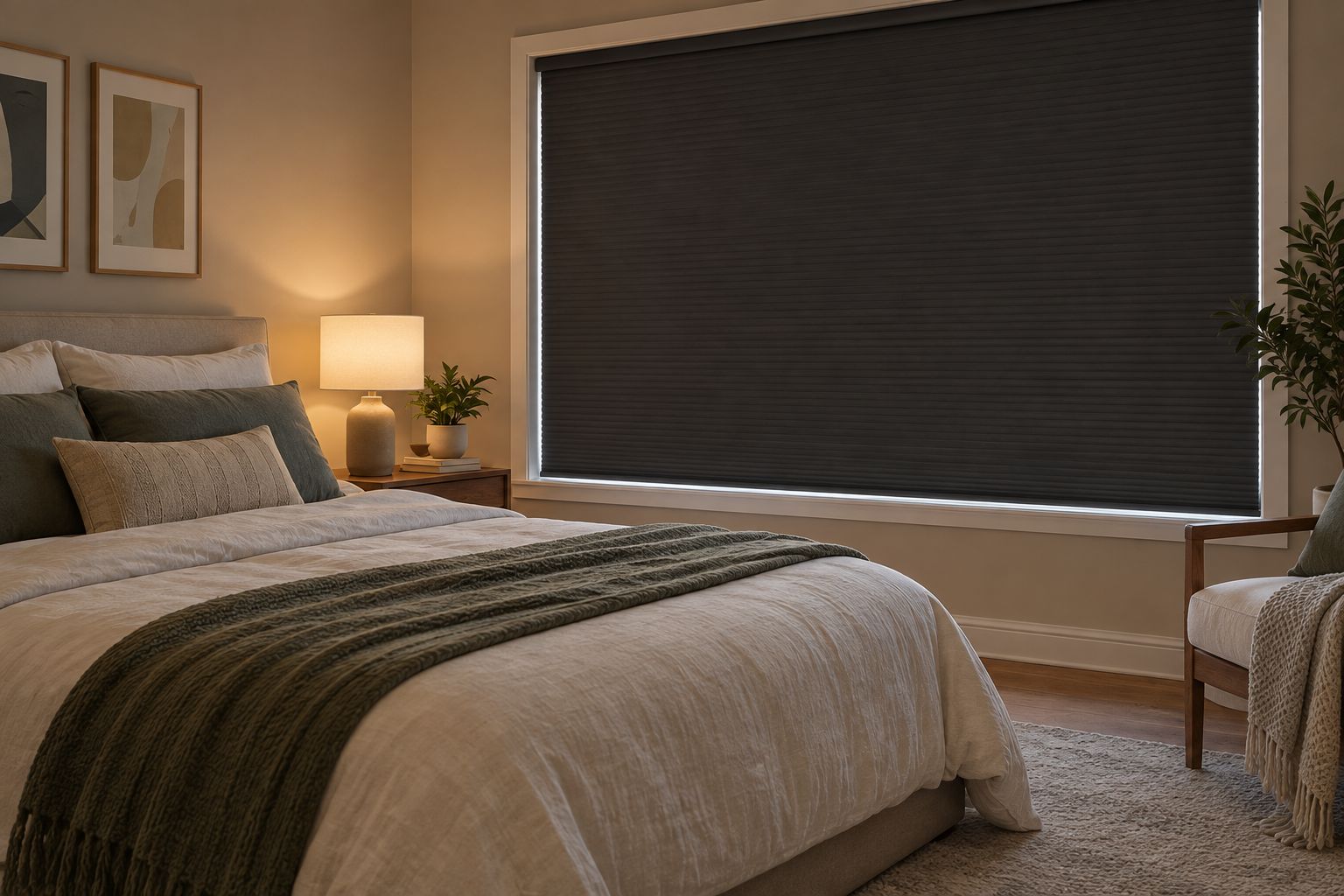
Motorized blackout shades pair a blackout fabric or cellular shade with a small motor and remote or app control. Set a schedule and the shades lower at sunset and rise before an alarm goes off, no cord, no reaching over a nightstand. Olsson Smart Shades installs these as part of its motorized and smart shade line for Columbus and Central Ohio homes, and the motorized shades cost guide covers what typically goes into a project like this.
Motorized shade pros:
- Runs on a schedule, so the room is dark before you're awake
- No cords in the room, a plus for households with kids or pets
- Pairs with most smart home routines
- Available with the same blackout fabric or cellular backing as manual versions
Motorized shade cons:
- Needs power nearby or a rechargeable battery, factored in during the in-home visit
- Adds a setup step compared to a manual lift
Best for: bedrooms where convenience matters as much as darkness. Verdict: Buy.
3. Plantation Shutters with Blackout Panel: Best for Durability and Resale
Plantation shutters are solid wood or vinyl louvers mounted directly in the window frame. On their own they don't fully block light between the slats, but a blackout panel or added backing behind the shutter closes that gap. Because shutters are a permanent, frame-mounted fixture, they tend to outlast fabric shades and are often factored into a home's resale value.
Plantation shutter pros:
- Frame-mounted fit closes gaps better than any surface-mounted shade
- Solid material holds up longer than fabric under daily use
- Adds resale value as a built-in home feature
- Louvers still allow adjustable daytime light when the panel is open
Plantation shutter cons:
- Higher upfront project than a shade or drape
- Requires a custom, professional install to fit the window frame correctly
Best for: homeowners planning to stay long-term or sell later. Verdict: Buy.
4. Blackout Roman Shades: Best for a Soft, Layered Look
Roman shades fold into soft horizontal pleats when raised instead of rolling or stacking. A blackout liner sewn behind the decorative fabric handles the light-blocking while the visible fabric carries the room's style. They read less utilitarian than a roller shade, which matters in a primary bedroom used as a retreat and not just a place to sleep.
Roman shade pros:
- Blackout liner hides behind decorative fabric, so the shade still looks finished
- Wide range of fabric and pattern choices for the room's decor
- Fabric folds add texture a flat roller shade doesn't
Roman shade cons:
- Fewer cordless configurations than roller or cellular shades, worth flagging for shared kids' rooms
- Fabric pleats can trap more dust than a smooth shade
Best for: a primary bedroom where the shade also needs to look finished. Verdict: Buy.
5. Layered Drapes with Blackout Liner: Best Budget-Friendly Upgrade
Drapes with a sewn-in blackout liner hang from an existing curtain rod and layer over sheers or a valance. They're the easiest of the six to swap out without a full window treatment install, since the rod hardware is often already in place. The liner blocks direct light through the fabric, but drapes rely on overlap and weight rather than a tight frame fit.
Drape pros:
- Works with existing curtain rods in most cases, a lighter project overall
- Wide fabric and color range for a quick bedroom refresh
- Layers over sheers for daytime softness and blackout at night
Drape cons:
- Least airtight of the six options; light creeps in around the edges and at the floor
- Needs a wide enough panel to fully overlap the window, or gaps show
Best for: a renter or a fast bedroom update without a full custom install. Verdict: Hold — fine as a stopgap, not the fix for a serious light problem.
6. Roller Shades with Side Channels: Best for Shift Workers
A standard blackout roller shade blocks light straight through the fabric but still leaves a sliver of light along both edges. Adding a track or side channel seals that gap, so the shade fits the window opening the way a shutter does. For anyone sleeping during daylight hours, that edge seal is often the difference between dark and dim.
Roller shade with channel pros:
- Side channels close the edge gaps that cause most complaints about blackout rollers
- Flat, low-profile look that fits small window openings
- Simple mechanism, easy to operate daily
Roller shade with channel cons:
- Channels add a visible track most homeowners don't want in every room
- Less decorative than roman shades or drapes
Best for: a shift worker or anyone sleeping during the day. Verdict: Buy for that specific need; skip if you want a softer look.
How this list was ranked
Each type above is judged against the same five criteria: how completely it blocks light at the fabric or panel, how well it seals the window's edges, how easy it is to use every day, how long the material holds up, and how it fits a bedroom's decor. Cellular honeycomb shades score highest on the first two criteria, which is why they lead this list for 2026. Motorized and manual versions of the same shade type are ranked as one entry since the light-blocking performance doesn't change with the motor.
Which blackout shade should you choose?
For most Columbus bedrooms, cellular/honeycomb blackout shades win — they block the most light and add insulation against the region's winters and summers. If mornings are the real problem and you want the shade to handle itself, motorized blackout shades solve that without changing the fabric's light-blocking performance. Renters or anyone testing the idea before a bigger project should start with layered drapes with a blackout liner, then upgrade later.
Get a custom blackout shade quote
A no-obligation, in-home consultation with real samples — about an hour, no prep needed.
FAQ
What are the best blackout shades for bedrooms in 2026?
Cellular honeycomb shades block the most light overall in 2026, with motorized versions adding a schedule so the room is dark before you wake up.
Do blackout shades block 100% of light?
No blackout shade blocks all light unless it seals against the frame like a plantation shutter or a roller shade with side channels. Most shades leave a thin edge gap without custom sizing.
Are motorized blackout shades worth it for a bedroom?
Motorized shades don't change the light-blocking performance, only when the shade opens and closes. They're worth it if mornings are the main problem you're solving.
What's the difference between blackout shades and room-darkening shades?
Room-darkening fabric filters most light without a solid backing. Blackout adds an opaque liner or panel that stops direct light through the fabric itself.
Do blackout shades help with heating and cooling bills?
Cellular honeycomb shades add the most insulation of the six types, since the honeycomb cell traps air along the window and slows heat transfer.
Can I get blackout shades custom-fit in Columbus?
Yes. Olsson Smart Shades custom-measures and installs blackout shades, shutters, and drapes for homes across Columbus and Central Ohio.
How much do motorized blackout shades cost?
Cost depends on window size, shade type, and how many rooms are involved. A guide covering typical motorized shade project scope is available on the Olsson Smart Shades site.
Are blackout shades safe for kids' rooms?
Cordless lift options exist across most of these six types, which removes the corded hazard that used to be standard in a nursery or kids' bedroom.
One last thing
The most common blackout complaint isn't the fabric — it's a shade cut slightly narrower than the window opening, which leaves light down both sides no matter how heavy the liner is. Getting the measurement right the first time matters more in 2026 than which fabric weight you pick. That's the part a custom, in-home measurement is built to catch before the shade ever ships.