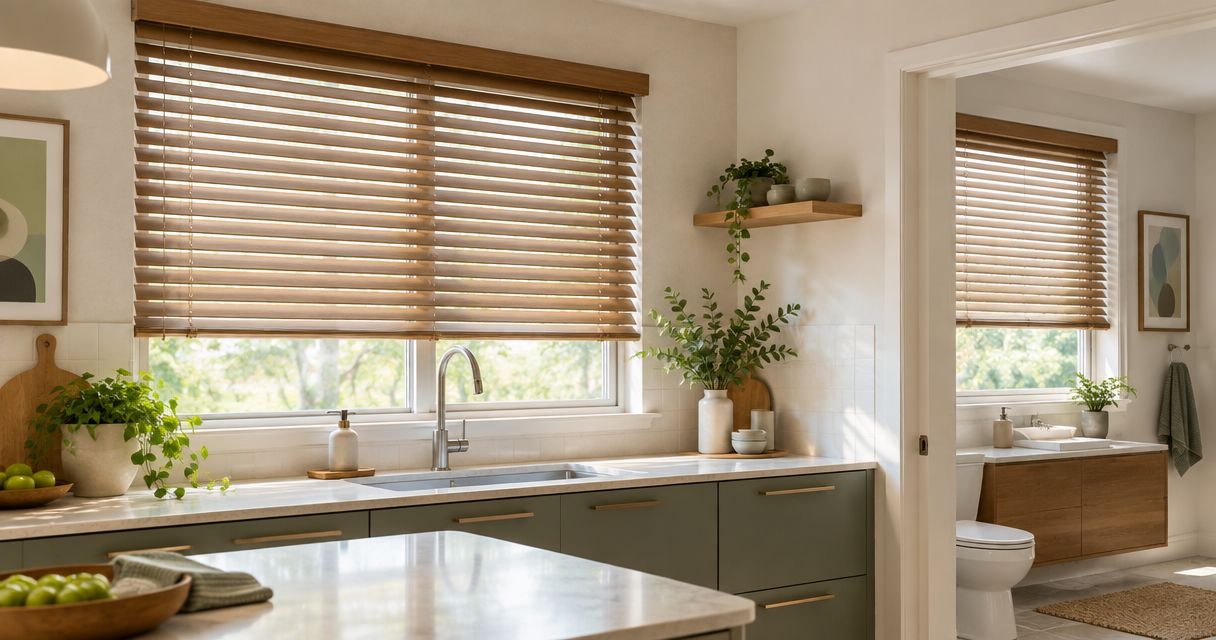
Best overall for a splash-prone bathroom: PVC faux wood blinds. Best for an everyday kitchen: composite faux wood blinds. Best budget option: standard-size faux wood blinds, but only when they fit the window properly. For Columbus and Central Ohio homeowners who want a measured, installed result, Olsson Smart Shades offers custom blinds; ask which faux wood materials and slat sizes are available for your windows.
- The best faux wood blinds for kitchens and bathrooms depend on moisture, cleaning needs, and window fit.
- PVC faux wood blinds are the first choice for splash-prone bathrooms; check the maker’s care instructions.
- Composite faux wood blinds suit kitchens where easy cleaning and a wood-look finish matter.
- Olsson Smart Shades is best for Columbus homeowners who want custom-measured blinds and professional installation; confirm faux wood options first.
Why this matters
A bathroom blind sits near water and steam. A kitchen blind collects cooking residue and needs regular cleaning. Neither room rewards a good-looking blind that is difficult to wipe down or poorly fitted to the window.
Faux wood is a useful category to compare because its slats offer adjustable light and privacy without requiring a fabric shade. But faux wood is not one material. Products sold under that name can differ in composition, finish, operating method, and cleaning instructions. Judge the specific blind, not just the label on the sample.
This 2026 guide ranks three buying paths, rather than pretending that one unverified product works in every home. The bathroom pick prioritizes splashes. The kitchen pick prioritizes everyday use and cleaning. The budget pick works only when a standard size fits. Those are different decisions.
What makes the best faux wood blinds for kitchens and bathrooms?
- Moisture suitability: For a bathroom, check the manufacturer’s instructions for the slats, finish, headrail, and other components. A water-resistant slat does not make every part of a blind suitable for repeated splashes.
- Easy cleaning: Kitchen grease settles on horizontal surfaces. Choose a finish you can wipe according to its care instructions, and think about how easily you can reach the upper slats.
- Accurate fit: Check the actual window opening and mounting space. A blind that rubs against the frame or leaves unwanted side gaps will frustrate you every day.
- Light and privacy control: Tilting slats changes the view into the room without fully raising the blind. Decide whether you need privacy while the room is still bright.
- Safe operation: Ask about current cordless or other safer operating options, particularly where children can reach the window. Follow the product’s installation and safety instructions.
- Slat scale: Compare samples in the window. A 2-inch slat, a 2½-inch slat, and a 3-inch slat change the look and stack differently; confirm which sizes are offered for the product you choose.
The first filter is the room, not the finish. In 2026, start with the bathroom’s water exposure or the kitchen’s cleaning demands. Choose colour and slat width after you know the blind suits the space.
The options at a glance
| Option | Best for | Standout feature | Key limitation |
|---|---|---|---|
| PVC faux wood blinds | Bathrooms exposed to splashes | A practical material to evaluate for moisture-prone windows | Slats and hardware still need product-specific care checks |
| Composite faux wood blinds | Everyday kitchens | Wood-look slats with adjustable light and privacy | Composition and cleaning instructions vary by product |
| Standard-size faux wood blinds | Straightforward windows on a tighter budget | A ready-made size when it fits correctly | Limited sizing can leave gaps or create mounting problems |
The table names types of blinds, not products sold by Olsson Smart Shades. Ask for samples and specifications before choosing a material. If a seller cannot explain how the blind should be cleaned or where it should be mounted, keep looking.
1. PVC faux wood blinds: best for splash-prone bathrooms
PVC faux wood blinds are the first option to examine when a bathroom window is close to a sink, tub, or shower. The slats give you adjustable privacy: tilt them to limit the view into the room, then raise the blind when you want the window clear. A wipeable surface also makes more sense here than a treatment that needs fabric care.
Do not turn that recommendation into a blanket waterproof claim. The slats are only part of the blind. Ask what the manufacturer says about moisture exposure for the complete product, including its headrail and operating components. Keep the blind away from direct water contact unless its instructions explicitly allow that placement.
PVC faux wood blinds pros:
- A sensible material category to check first for windows exposed to bathroom moisture.
- Adjustable slats let you manage privacy without keeping the blind fully closed.
- Slats can be cleaned individually according to the product’s care instructions.
PVC faux wood blinds cons:
- Product-specific limits still matter; the words faux wood do not establish moisture suitability.
- Horizontal slats need regular dusting and can take longer to clean than one flat shade surface.
- A poorly fitted blind can leave privacy gaps at the sides.
PVC faux wood blinds pricing: Check the current quote for the chosen product, measurements, and installation. A material name alone does not establish the total.
Best for: A bathroom where splashes and privacy drive the choice.
Verdict: Buy when the complete blind is approved for its intended location and fits the window. Hold if the seller cannot provide care instructions for the product you are considering.
2. Composite faux wood blinds: best for everyday kitchens
Composite faux wood blinds are the kitchen pick for homeowners who want the look of slatted blinds and direct control over daylight. You can tilt the slats while working at the sink or table, then adjust them as light changes. In a kitchen, the practical question is how you will clean the blind after ordinary cooking.
Ask what the particular composite blind contains and how its finish should be maintained. Composite is a broad description, not a uniform specification. Check the manufacturer’s instructions before using cleaners, and think about whether the window’s position puts the blind near heat or cooking splatter. A blind should not obstruct safe use of nearby kitchen equipment.
Composite faux wood blinds pros:
- Slats offer more precise light adjustment than a treatment you can only raise or lower.
- A wood-look finish suits kitchens where you want a consistent appearance with other rooms.
- You can assess a physical sample for finish and cleaning access before committing.
Composite faux wood blinds cons:
- Composition and care requirements differ between products sold as composite faux wood.
- Grease can settle across many slat surfaces, making cleaning a recurring task.
- Slat blinds are a poor fit where their position interferes with safe kitchen use.
Composite faux wood blinds pricing: Request a current quote for the selected blind and installation. Compare the complete options you are offered, not material names alone.
Best for: A kitchen window where adjustable daylight and a wood-look finish matter more than having an uninterrupted fabric panel.
Verdict: Buy when you can clean the finish as directed and the mounting position is clear of cooking hazards. Hold when the window’s location makes frequent cleaning difficult.
3. Standard-size faux wood blinds: best budget option for simple windows
A standard-size faux wood blind is the budget approach to investigate when the window can take a ready-made size without compromising fit. It is not a separate slat material: check whether the specific blind uses PVC, composite, or another material. The trade-off is straightforward. You have fewer size and configuration choices than you do with a custom-measured blind.
Measure before deciding that a listed size will work. Check the window opening at more than one point, then follow the chosen product’s measuring guide for an inside or outside mount. The mounting method changes what you need to measure. A size that appears close on paper can still leave a gap you dislike or prevent the blind from operating cleanly.
Standard-size faux wood blinds pros:
- A useful route to compare when a window closely matches an available size.
- Lets you focus the search on a defined window and mounting method.
- Faux wood material and operating choices can still be compared within the available range.
Standard-size faux wood blinds cons:
- Limited sizes make an awkward window harder to cover well.
- You must verify the material and care instructions; standard size says nothing about moisture resistance.
- You are responsible for checking the fit and installation requirements if you install it yourself.
Standard-size faux wood blinds pricing: Compare current quotes or listings for products that meet the same fit and care requirements. Do not treat a blind that does not fit as a useful saving.
Best for: A straightforward window that matches an available size and a homeowner willing to check the measurements carefully.
Verdict: Buy if the manufacturer’s measuring instructions confirm the fit. Skip a near match that creates unwanted gaps or interferes with operation.
How to choose between the three
Start by identifying what the window puts the blind through. For a bathroom near splashing water, investigate PVC faux wood and confirm the complete product’s moisture guidance. For a kitchen, compare composite finishes and their cleaning instructions. If an available standard size fits your window, compare that route against a custom-measured option using the same requirements.
A kitchen and bathroom do not have to use identical blinds. They can share a similar slat appearance while using different products suited to each room. Bring that question to the consultation instead of choosing a matching material before checking the conditions at each window.
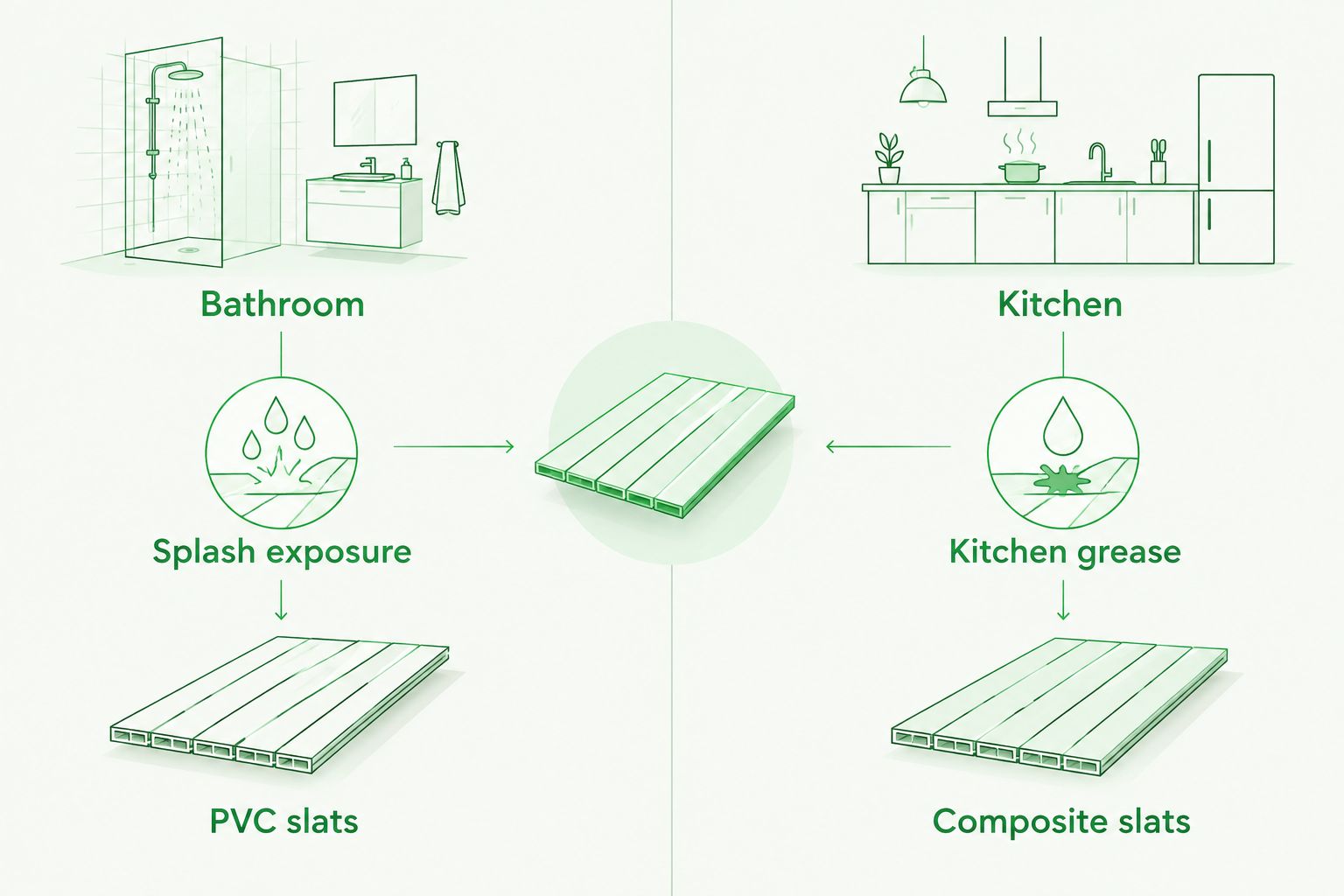
For 2026, there is one more useful test: picture cleaning the blind after it is installed. Can you reach the slats? Will the blind be in the way of a faucet, handle, or frequently used window? If the answer is no to easy access or yes to interference, reconsider the mount or the treatment type. A blind should make the room easier to use, not harder.
Measure the window before choosing a finish
Decide whether you want the blind inside the frame or over the surrounding opening. An inside mount depends on the window’s usable space and the product’s stated requirements. An outside mount covers a different area and changes how the finished blind looks. Neither choice fixes an incorrect measurement.
Record the opening as the measuring guide directs. Check for handles, trim, uneven edges, and anything that could interrupt a rising or tilting blind. Then ask how the proposed slat size will look at that window. Comparing a 2-inch sample with a 2½-inch or 3-inch sample in the room is more useful than choosing from a small picture.
Custom measurement is a service decision as well as a sizing decision. Olsson Smart Shades provides custom-measured blinds and professional installation for homeowners in Columbus and Central Ohio. Ask which faux wood options are available, how each should be cared for, and where the blind would be mounted. If you want a quote, describe the room and the window’s main problem first; you do not need to arrive with a material picked out.
When faux wood is not the right treatment
Faux wood blinds are not the automatic answer for every kitchen or bathroom. If horizontal slats would be awkward to clean or would obstruct use of the window, compare another treatment that meets the room’s privacy and care needs. Check the proposed product’s instructions rather than assuming a shade or fabric is suitable for moisture.
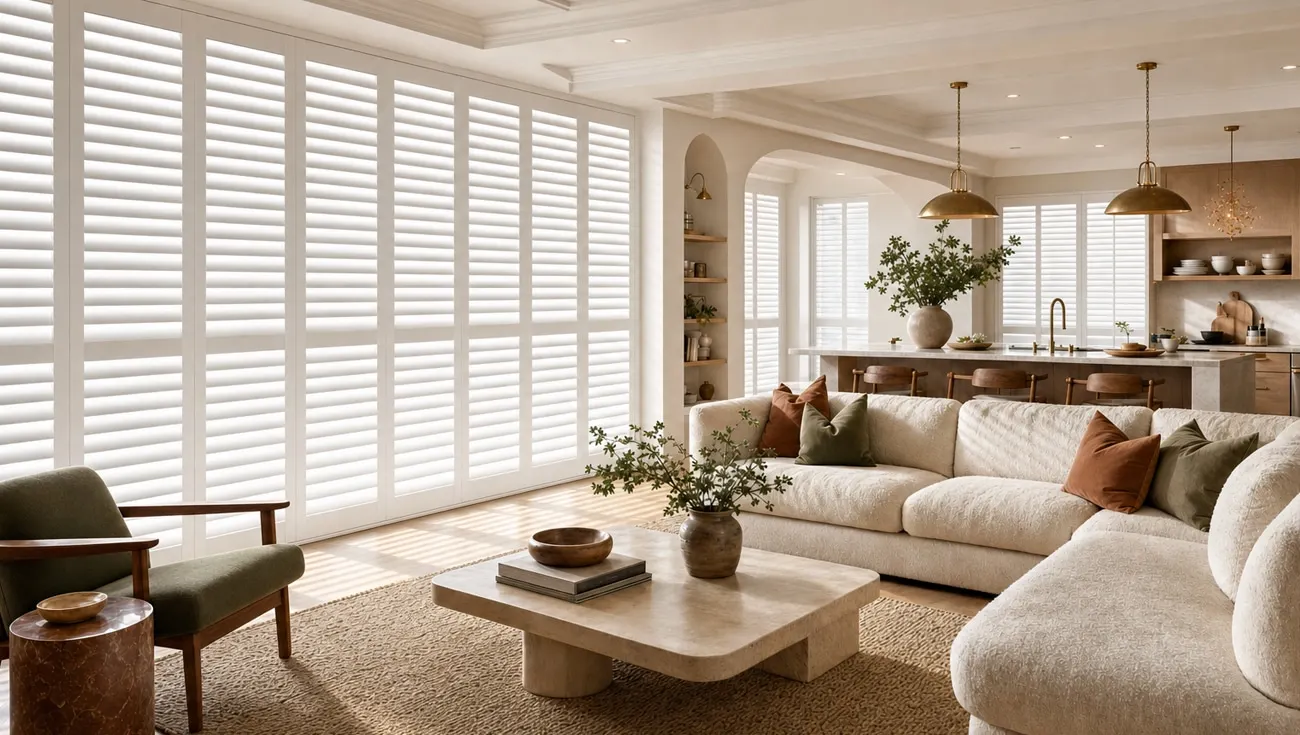
If the main goal is a more architectural frame around the window, compare plantation shutters for Columbus homes. That is a different buying decision from choosing a slat blind: assess how the shutters open, how much window space they occupy, and whether they suit the room. Do not choose shutters solely because they appear similar in a photo.
For a window where raising a blind leaves an unwanted stack in the view, look at how the proposed treatment sits when open. This matters especially when the window is used for ventilation or when its handle needs clear access. The best-looking sample is not the best choice if you cannot use the window comfortably afterward.
How we ranked the options
The 2026 ranking puts room conditions first, followed by cleaning, fit, light control, and ease of use. PVC faux wood leads for a splash-prone bathroom because moisture is the deciding question there. Composite faux wood leads for an everyday kitchen because cleaning and adjustable light take priority. Standard-size blinds earn the budget slot only when the fit checks out.
These are buying paths, not a claim that every PVC, composite, or standard-size blind performs alike. Compare the exact manufacturer instructions for any finalist. A well-fitted blind with clear care guidance beats an appealing finish with unanswered questions.
Which faux wood blinds should you choose?
Choose PVC faux wood blinds first for a splash-prone bathroom, then verify the complete product’s moisture instructions. Choose composite faux wood blinds for an everyday kitchen if the finish is practical to clean. For a simple window, consider a standard-size blind only after confirming its measurements and mount.
Olsson Smart Shades is best for Columbus and Central Ohio homeowners who want custom-measured blinds and professional installation, rather than guessing at a window’s fit. Ask about available faux wood materials before treating any option in this guide as a product recommendation from the business.
FAQ
What are the best faux wood blinds for kitchens and bathrooms?
PVC faux wood blinds are the first option to check for a splash-prone bathroom, while composite faux wood blinds suit an everyday kitchen. Confirm the specific product’s care instructions and fit before choosing.
Are faux wood blinds suitable for a bathroom window?
Faux wood blinds can suit a bathroom when the complete product is approved for the window’s moisture exposure. Check the headrail and operating components as well as the slats.
Are PVC blinds better than composite blinds for a kitchen?
Neither material wins every kitchen. Compare the specific finishes, cleaning instructions, window position, and fit before deciding between PVC and composite faux wood blinds.
Should I choose standard-size or custom-measured faux wood blinds?
Choose a standard size only when the manufacturer’s measuring guide confirms a good fit. Custom measurement is the clearer route when the window or mounting space is difficult to assess.
What slat size works best for faux wood blinds?
The best slat size is the one that suits your window’s proportions and the product’s fit requirements. Compare available samples in the room rather than judging the size from a picture.
How do I clean faux wood blinds in a kitchen?
Follow the chosen product’s care instructions and clean the slats as directed. Kitchen blinds collect cooking residue, so consider whether you can comfortably reach them after installation.
Can Olsson Smart Shades install faux wood blinds in Columbus?
Olsson Smart Shades provides custom-measured blinds and professional installation in Columbus and Central Ohio. Ask which faux wood materials and configurations are currently available for your window.
One last thing
In 2026, do not buy a bathroom blind based only on a water-resistant slat description. Ask about the complete blind: slats, headrail, operating method, mounting position, and care instructions. That one question can eliminate a poor fit before you choose a colour.