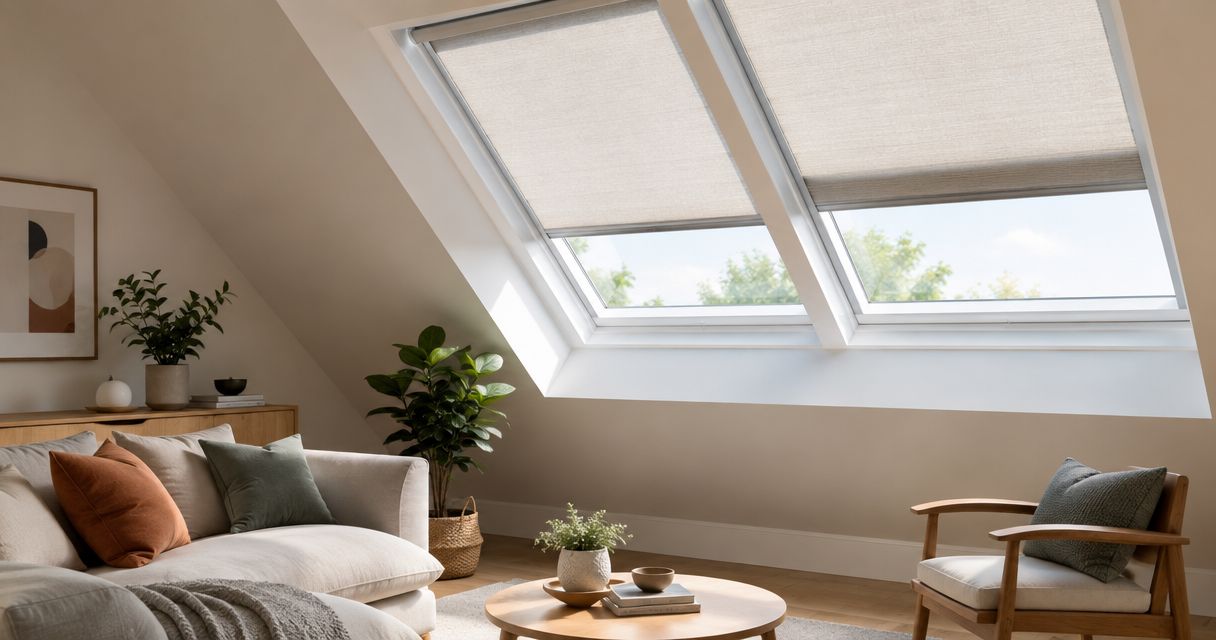
Best overall: skylight-specific cellular shades. Best for high ceilings: motorized skylight roller shades. Best for bedrooms: blackout skylight roller shades. The best skylight shades and blinds in 2026 are designed for overhead glazing, not ordinary windows turned sideways.
- The best skylight shades and blinds use an overhead mounting system suited to your window.
- Choose skylight cellular shades for everyday light control; choose blackout fabric when darkness matters most.
- Motorized skylight shades suit openings you cannot comfortably reach, but power access needs planning.
- Olsson Smart Shades serves Columbus and Central Ohio homeowners seeking custom-measured window treatments and professional installation.
Why this matters
A skylight puts daylight where a wall window cannot. It also puts the shade above your head, often at an angle. Fabric support, operating access, and the mounting surface matter as much as color.
An ordinary roller shade relies on gravity to hang straight. On sloped glazing, an overhead system needs a way to hold the fabric against the opening. Start with the skylight configuration, then choose the fabric and controls.
For Columbus and Central Ohio homeowners, Olsson Smart Shades provides custom-measured window treatments and professional installation. Ask specifically about your skylight's suitability before treating any standard shade as an overhead solution.
What makes the best skylight shades and blinds?
For a 2026 purchase, judge the complete installation rather than the fabric sample alone.
- Overhead suitability: The shade must be intended for the skylight's slope and mounting position. Wall-window hardware is not a substitute.
- Fabric support: Side tracks, tensioning, or another purpose-built support system must keep the covering in position.
- Useful light control: Choose softened daylight, reduced glare, or room darkening according to the room's job.
- Reachable operation: You need a practical way to open, close, power, and service the shade after installation.
- Window clearance: The covering must not obstruct an opening sash, handle, or required access to the skylight.
- Service access: Ask how the fabric, motor, and power source can be reached without dismantling unrelated finishes.
Record 3 dimensions for the initial discussion: opening width, opening height, and recess depth. Those notes help describe the space; they do not replace final measurements for a custom order. Photograph the entire skylight and the surrounding ceiling, not just the glass.
Skylight shades and blinds at a glance
These recommendations rank configurations, not named product models. Fabric, operating method, and mounting hardware can combine, so a motorized cellular shade can satisfy more than one need.
| Option | Best for | Standout feature | Key limitation |
|---|---|---|---|
| Skylight-specific cellular shades | Everyday comfort and light control | Cellular fabric with overhead support | Insulation performance depends on the complete installation |
| Motorized skylight roller shades | High or awkward openings | Operation without reaching the shade | Power and service access need planning |
| Blackout skylight roller shades | Bedrooms used during daylight | Opaque fabric | Edge gaps still need attention |
| Solar skylight roller shades | Glare-sensitive living and work areas | Light-filtering screen fabric | Not a room-darkening solution |
| Pole-operated skylight shades | Openings accessible with a control pole | Manual operation without electrical power | Daily use requires a clear, comfortable reach |
1. Skylight cellular shades: best for everyday comfort
Skylight-specific cellular shades use folded fabric that forms air pockets. An overhead version needs supporting hardware that keeps the covering aligned with the glass. Choose the fabric's light-filtering level separately from its cellular construction.
This is the default starting point for a room where you want softer daylight without making darkness the main objective. Cellular construction adds an insulating layer, but it does not fix leaking glazing or guarantee a particular reduction in energy use.
Skylight cellular shades pros:
- Cellular fabric adds an insulating layer at the window.
- Light-filtering fabric softens incoming daylight.
- The folded covering gathers away from the glass when opened.
- A purpose-built system supports fabric on an overhead opening.
Skylight cellular shades cons:
- Cellular construction alone does not make a shade suitable for a skylight.
- Light-filtering fabric does not provide bedroom darkness.
- Cleaning and servicing still require access to the opening.
Best for: A regularly used room where daylight and comfort both matter.
Ask to see the mounting arrangement, not only the swatch. For your 2026 selection, confirm that the proposed shade matches the skylight's orientation and leaves its operating hardware accessible.
Verdict: Buy a skylight-specific cellular configuration as the everyday default; skip ordinary vertical-window hardware.
2. Motorized skylight roller shades: best for high ceilings
Motorized skylight roller shades move the covering without a hand reaching the window. The roller mechanism still needs an overhead support system; adding a motor does not solve fabric sag or mounting problems.
This configuration suits a tall ceiling or an opening above furniture. You also need to decide how the motor receives power and how someone will reach it for maintenance.
Motorized skylight roller shades pros:
- You can operate the shade without reaching the glazing.
- Controls remove the need to position a pole for each adjustment.
- Motorization separates daily operation from the height of the opening.
- The fabric choice can address either glare or room darkening.
Motorized skylight roller shades cons:
- Electrical or charging arrangements require planning.
- A motor introduces another component that needs service access.
- App, remote, and smart-home support depend on the specific system.
Best for: A skylight you cannot comfortably operate by hand or pole.
For a 2026 motorized installation, ask who handles the power arrangement and what maintenance involves. Confirm the exact controls in writing. Do not assume a motorized shade includes voice control or works with your existing smart-home equipment.
Olsson Smart Shades is best for Columbus and Central Ohio homeowners seeking custom-measured window treatments with professional installation. For an overhead opening, begin by confirming suitability rather than assuming every motorized window treatment fits a skylight.
Verdict: Buy motorized operation for inaccessible skylights once power, controls, and service access are settled.
3. Blackout skylight roller shades: best for daylight sleeping
Blackout skylight roller shades use opaque fabric to block light through the covering itself. The edges remain a separate issue. A bedroom installation needs attention to tracks, end gaps, and the surrounding recess.
Choose this configuration when sleeping during daylight matters more than keeping soft light in the room. Ask how the complete system addresses light around the fabric, not whether the material is labeled blackout.
Blackout skylight roller shades pros:
- Opaque fabric blocks light transmission through the material.
- The covering opens when you want daylight again.
- A track-guided system can address side gaps.
- Manual or motorized operation can be selected around access needs.
Blackout skylight roller shades cons:
- Blackout fabric alone does not guarantee a completely dark room.
- Closing the covering removes useful daylight through that opening.
- Room darkness also depends on other windows and light sources.
Best for: Bedrooms where daytime sleep or early morning light is the main concern.
Before ordering, distinguish between blackout fabric and a light-blocking installation. The first describes material. The second depends on fit, support, edges, and the rest of the room.
Verdict: Buy for daylight sleeping only after reviewing the complete edge-control arrangement.
4. Solar skylight roller shades: best for glare control
Solar skylight shades use screen fabric to filter sunlight while preserving some daylight. They belong in the conversation when bright overhead light falls across a desk, television, or seating area.
Screen fabric is not blackout fabric. Its openness affects how much light passes through, so evaluate a sample in the room rather than choosing from a small image.
Solar skylight roller shades pros:
- Screen fabric filters direct sunlight.
- Filtered daylight keeps the room from becoming fully dark.
- Fabric choices let you prioritize different levels of light filtering.
- Opening the shade restores the uncovered skylight view.
Solar skylight roller shades cons:
- Screen fabric does not provide complete darkness.
- A sample viewed under showroom lighting does not show every room condition.
- Overhead use still requires suitable guidance and mounting hardware.
Best for: A living area or home workspace where glare matters more than darkness.
Check where sunlight lands during the hours you use the room. A shade that changes the appearance of the skylight is not automatically the right answer for light falling on your screen.
Verdict: Buy solar fabric for filtered daylight; skip it when bedroom darkness is the goal.
5. Pole-operated skylight shades: best for manual access
Pole-operated skylight shades use a compatible manual control that you reach from below. The covering can use different fabrics, but its operating mechanism must be designed for pole use.
This is a practical alternative when you can stand beneath the opening and operate it comfortably. A skylight above a stairwell or behind furniture needs a different access plan.
Pole-operated skylight shades pros:
- Manual operation does not require electrical power.
- A suitable pole reaches a control beyond normal arm's reach.
- The operating method avoids motor charging requirements.
- Fabric selection can still follow the room's light-control needs.
Pole-operated skylight shades cons:
- You need somewhere accessible to keep the pole.
- Repeated adjustments require physical reach and control.
- Furniture and floor layout can make operation awkward.
Best for: A skylight with a clear standing position beneath it and comfortable pole access.
Before choosing, rehearse the movement from the floor. Consider where you will stand, what is beneath the window, and whether every person using the room can manage the control.
Verdict: Buy when pole operation is comfortable; skip it when reaching the control turns into a chore.
Plan the fit before choosing the finish
The right fabric on the wrong mounting system is still the wrong shade. Treat your 2026 skylight purchase as a fit-and-access decision first, then narrow the appearance.
- Window fit: Identify whether the skylight is fixed or opens, and show the installer its frame and recess.
- Light control: Describe the problem in plain terms: glare on a screen, unwanted early light, or a room that feels too bright.
- Daily operation: Choose hand, pole, or motor operation around the opening's actual location.
- Service access: Confirm how someone will reach the covering and its operating components later.
A close-up photograph misses the space around the opening. Include the ceiling slope, furniture below, and any handle or opening mechanism. That gives the consultation a useful starting point.
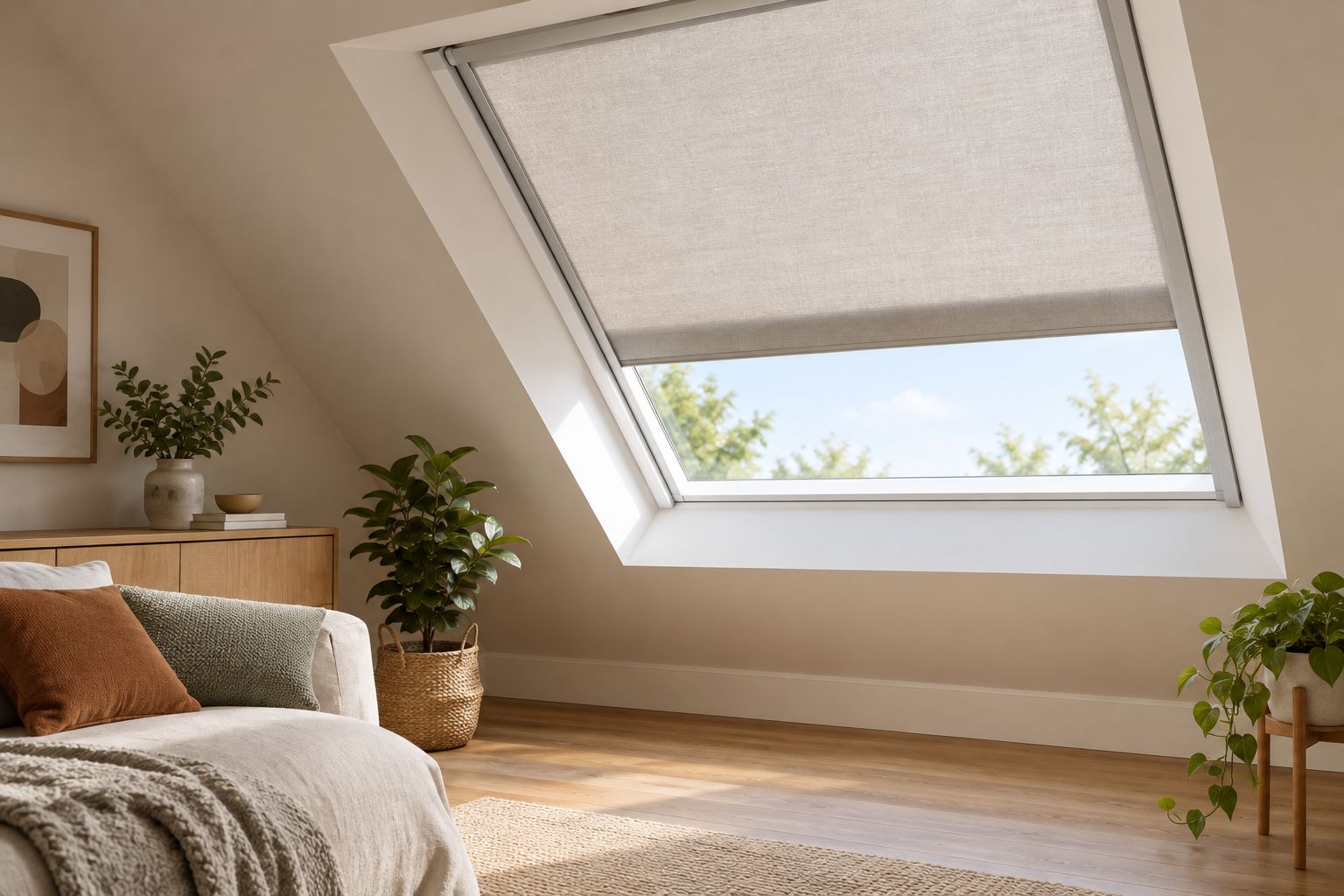
Ask to review 2 positions before accepting the final plan: fully open and fully closed. The open position should preserve required window access. The closed position should show how the fabric is supported and where light can enter around it.
Request 1 written specification covering the mounting method, fabric, operating controls, power arrangement if needed, and installation scope. This keeps the decision clear without requiring you to learn every hardware term.
Ask about your skylight
Discuss custom window treatments and confirm whether your overhead opening suits the proposed system.
How these skylight options are ranked
The 2026 ranking follows overhead suitability, light control, everyday operation, and service access. Cellular shades lead as the general-purpose starting point. The remaining options address a more specific need: height, darkness, glare, or manual control.
These are configuration recommendations, not claims that a particular model has been tested. Combine the right fabric with the right operating method instead of treating the list as mutually exclusive choices.
Which skylight shades should you choose?
Start with a skylight-specific cellular shade if you need everyday light control and have no stronger requirement. Move to blackout fabric for daytime sleeping, solar fabric for glare, or motorized operation when access is difficult.
When requesting an in-home consultation or quote from Olsson Smart Shades, share photographs and describe what bothers you about the light. Ask whether the skylight can accept the proposed treatment, what installation includes, and how future access works. Decide after the fit and controls are clear.
FAQ
What's the best skylight shade for everyday use?
A skylight-specific cellular shade is the default choice for everyday light control. Choose a system designed for overhead mounting, then select the fabric according to how much daylight you want.
Can I put a regular roller blind on a skylight?
Do not use a regular roller blind overhead unless the complete system is designed for that mounting position. Sloped installations need suitable fabric support, guidance, and hardware.
Are motorized skylight shades better than manual shades?
Motorized skylight shades are better for openings you cannot comfortably reach. Manual operation remains practical when you have clear access and can use the control comfortably.
Will blackout skylight shades make my bedroom completely dark?
Blackout fabric alone does not guarantee a completely dark bedroom. Review edge gaps, tracks, the recess, and light entering through other windows before choosing the installation.
Do skylight cellular shades help with insulation?
Cellular shades add an insulating layer at the skylight. The result depends on the covering, fit, installation, and glazing; cellular construction does not establish a specific energy saving.
How do I choose skylight shades in 2026?
Choose skylight shades in 2026 by checking overhead suitability, light control, operating access, and maintenance access. Confirm the complete mounting arrangement before selecting the finish.
How do I discuss a skylight project with Olsson Smart Shades?
Ask Olsson Smart Shades whether your skylight is suitable for the proposed custom treatment and request an in-home consultation or quote. Share photographs of the opening, ceiling, and space beneath it, plus your main light-control concern.
One last thing
A high skylight does not just make daily operation harder. It makes cleaning and maintenance harder too. Choose the service plan at the same time as the operating control, so the finished installation remains practical after the first adjustment.