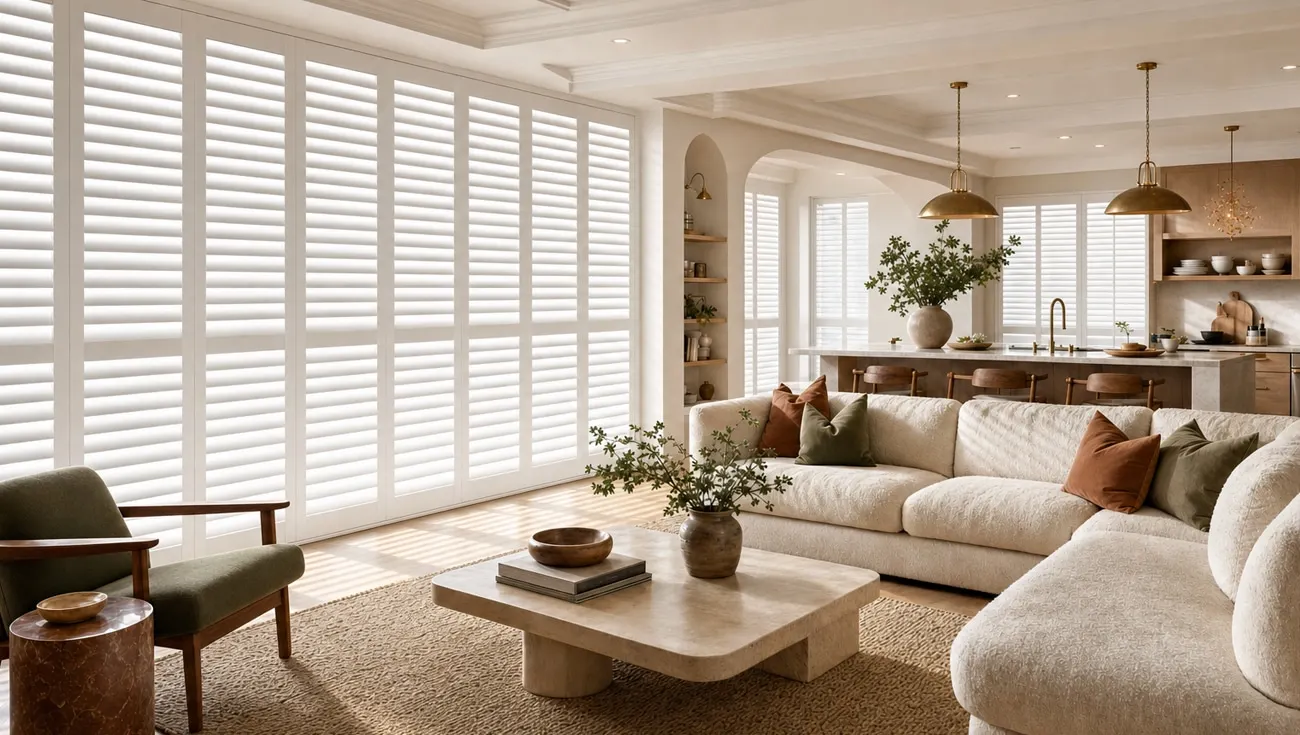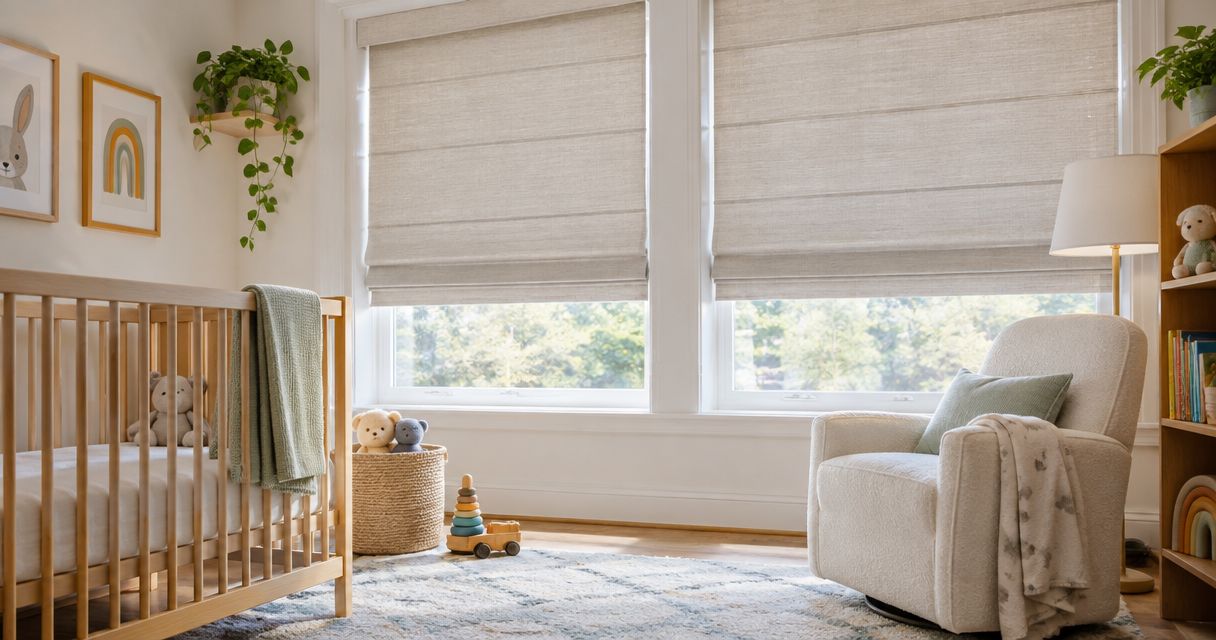
Best overall: cordless blackout cellular shades. Best for easy cleaning: cordless blackout roller shades. Best for hard-to-reach windows: motorized blackout shades. These are the best window shades for nurseries and kids rooms in 2026 when you prioritize cord safety, light control, and a measured fit. Olsson Smart Shades provides custom-measured window treatments and installation for homeowners in Columbus and Central Ohio.
- The best window shades for nurseries and kids rooms start with cordless operation and a carefully measured fit.
- Cordless blackout cellular shades are the default choice for darkness and an insulating fabric structure.
- Cordless blackout roller shades suit families who want a simple surface and straightforward daily use.
- Motorized blackout shades suit hard-to-reach windows; confirm power, controls, and compatibility before choosing.
- Olsson Smart Shades provides custom-measured window shades and installation in Columbus and Central Ohio.
Why this matters
A nursery shade has to work when the room is bright, when your hands are full, and when your child starts exploring. Fabric color alone does not answer those needs. The operating system, edge gaps, and window placement matter just as much.
For your 2026 nursery plan, follow the U.S. Consumer Product Safety Commission's guidance to choose cordless window coverings where children are present. Keep cribs, beds, and climbable furniture away from windows and window coverings. A shade is not a window guard, and a motor does not make every part of a window setup safe.
Choose the operating system first, then the light-blocking fabric, then the finish. That order keeps a pretty sample from distracting you from how the shade actually works.
What makes the best nursery window shades
Use these criteria to judge every option below. A shade that meets your room's needs is a better choice than one selected only because it looks good in a photograph.
- Cord safety: Look for cordless operation. Ask about accessible inner cords, loops, and any power cables as well as the main control.
- Light control: Choose blackout fabric for stronger light blocking. Check how the proposed installation handles light around the perimeter.
- Measured fit: Confirm mounting depth, trim clearance, and access to window handles. Fabric coverage and window access both matter.
- Daily operation: Decide whether you will lift the shade by hand or use a motor. Test the control you expect to use most often.
- Cleaning and care: Ask for the actual fabric's care instructions. Smooth, pleated, and folded fabrics need different attention.
- Room flexibility: Consider daylight during play, darkness during rest, and how the room will function as your child grows.
Do not assume that the word blackout promises a completely dark room. It describes the fabric's light-blocking function; the installation still determines where light enters around it.
Best nursery window shades at a glance
These 2026 picks compare shade types, not specific product models. The operating system and fabric must be selected together. Cellular, roller, and Roman describe construction; motorized describes how a shade moves.
| Shade option | Best for | Standout feature | Key limitation |
|---|---|---|---|
| Cordless blackout cellular shades | An all-around nursery setup | Light-blocking fabric with an insulating cellular structure | Pleated fabric needs careful cleaning; edge gaps still matter |
| Cordless blackout roller shades | Simple care and daily use | A flat fabric panel that rolls away | Light can enter along the sides without an appropriate fit |
| Motorized blackout shades | Hard-to-reach windows | Operation without manually reaching the shade | Power, controls, and compatibility require planning |
| Cordless blackout Roman shades | A softer, decorative room | Fabric folds with a tailored appearance | Folds collect dust and occupy space when raised |
1. Cordless blackout cellular shades: best for an all-around nursery
Cordless blackout cellular shades are the default recommendation for a nursery that needs both light control and everyday comfort. Their cellular fabric structure traps air, helping resist heat transfer through the covered window. The blackout fabric addresses light; the cellular construction addresses insulation.
You still need to check the fit. An inside-mounted shade sits within the window opening, but it can leave visible light along the edges. An outside mount extends beyond the opening and needs enough clear space around the trim.
Cordless blackout cellular shades pros:
- Combine light-blocking fabric with an insulating structure.
- Offer manual operation without an exposed pull cord when specified as cordless.
- Fold into a compact stack rather than hanging as a full fabric panel when raised.
- Suit rooms where you want a simple treatment without decorative drapery.
Cordless blackout cellular shades cons:
- Pleats need careful dusting and fabric-specific cleaning.
- Blackout fabric does not eliminate gaps around the shade.
- Manual lifting still requires access to the bottom rail.
Best for: Parents choosing a practical default for a nursery or child's bedroom.
During selection, ask to see how the bottom rail moves and where the raised stack sits. A sample tells you about the fabric, but a working display tells you whether you like the control.
Verdict: Buy cordless blackout cellular shades when you want balanced light control, insulation, and straightforward use.
2. Cordless blackout roller shades: best for simple care
Cordless blackout roller shades use a flat sheet of fabric that rolls around a tube. They keep the window treatment visually simple. With fewer folds than cellular or Roman shades, the surface is straightforward to inspect and dust according to its care instructions.
The main nursery question is coverage. The fabric does not necessarily cover the full width of the shade's hardware, so ask where its edges will land. A neat-looking installation can still let a bright strip of daylight into the room.
Cordless blackout roller shades pros:
- Have a simple fabric surface without decorative folds.
- Roll away to expose more of the window when raised.
- Work with plain colors that do not dictate the room's decorating theme.
- Provide blackout fabric without requiring a layered curtain arrangement.
Cordless blackout roller shades cons:
- Side gaps need particular attention during measuring.
- The roller assembly needs clearance at the top of the window.
- Cleaning methods depend on the selected fabric, not just the roller design.
Best for: Families who prefer a clean appearance and an uncomplicated shade surface.
For a 2026 nursery refresh, compare the roller shade's actual fabric width with the area you need to cover. Ask whether an outside mount or a light-gap treatment fits the window. Do not assume either feature comes with every shade.
Verdict: Buy cordless blackout roller shades when simple care and a flat appearance matter more than a pleated fabric structure.
3. Motorized blackout shades: best for hard-to-reach windows
Motorized blackout shades move using a motor rather than a manual lift. They are useful behind furniture or on windows that are awkward to reach. Motorization can be paired with different shade constructions, so choose the fabric and the control system separately.
Olsson Smart Shades is best for Columbus and Central Ohio homeowners seeking custom-measured window shades with professional installation. The business offers motorized smart shades; confirm the exact controls and features proposed for your room rather than assuming every system works the same way.
Motorized blackout shades pros:
- Let you operate a shade without reaching its bottom rail.
- Avoid a manual operating cord when the specified design uses cordless motorized operation.
- Allow you to choose the shade construction around the room's light-control needs.
- Suit windows where repeated manual lifting would be awkward.
Motorized blackout shades cons:
- Require a plan for power and any accessible wiring.
- Control options and smart-home compatibility vary by system.
- Charging or battery replacement can require access to the shade.
Best for: Parents with awkwardly placed windows or a strong preference for remote operation.
For a 2026 installation, ask how the shade operates if its usual control is unavailable. If you want scheduled movement, verify that the proposed system supports it. Have the installer explain charging, battery access, and cable placement before you approve the setup.
Verdict: Buy motorized blackout shades when easier operation solves a real access problem; skip motorization if manual use already feels easy.
4. Cordless blackout Roman shades: best for a softer room
Cordless blackout Roman shades fold into fabric sections as they rise. They suit a nursery where you want a softer, more decorative window treatment. Choose the blackout fabric or lining and cordless construction explicitly; the Roman shape alone guarantees neither.
Pay attention to the raised stack. Folded fabric stays at the top of the window and can cover part of the glass. Pattern and texture should come after you have checked the operating system and coverage.
Cordless blackout Roman shades pros:
- Bring a fabric-focused appearance without full-length curtains.
- Offer a tailored alternative to flat roller fabric.
- Can combine decorative fabric with a blackout construction when specified.
- Work as a visual focal point in an otherwise simple room.
Cordless blackout Roman shades cons:
- Folds create additional surfaces that need dusting.
- The raised fabric stack can cover glass.
- Cordless operation does not remove the need to inspect accessible inner cords.
Best for: Parents who value a decorative fabric treatment and accept the extra care it requires.
Ask how the shade's rear construction is secured and what parts remain accessible. Then check the fabric's cleaning instructions. If those answers feel complicated for your household, choose the simpler roller option instead.
Verdict: Buy cordless blackout Roman shades for a fabric-led room; skip them when easy cleaning is your main priority.
Check the fit before choosing the fabric
Start with 1 window at a time. Inspect the recess, trim, handles, and nearby furniture before repeating a treatment across the room. Matching windows can still have different obstructions.
Use this sequence during an in-home discussion:
- Check access: Show where the crib, bed, dresser, and seating will sit. Keep climbable furniture away from the window.
- Check mounting: Compare an inside mount with an outside mount. Ask how each affects light gaps and access to the window.
- Check light: Identify where daylight enters now and where the proposed shade will leave openings.
- Check operation: Try the manual lift or proposed control. Discuss charging and wiring if you select a motor.
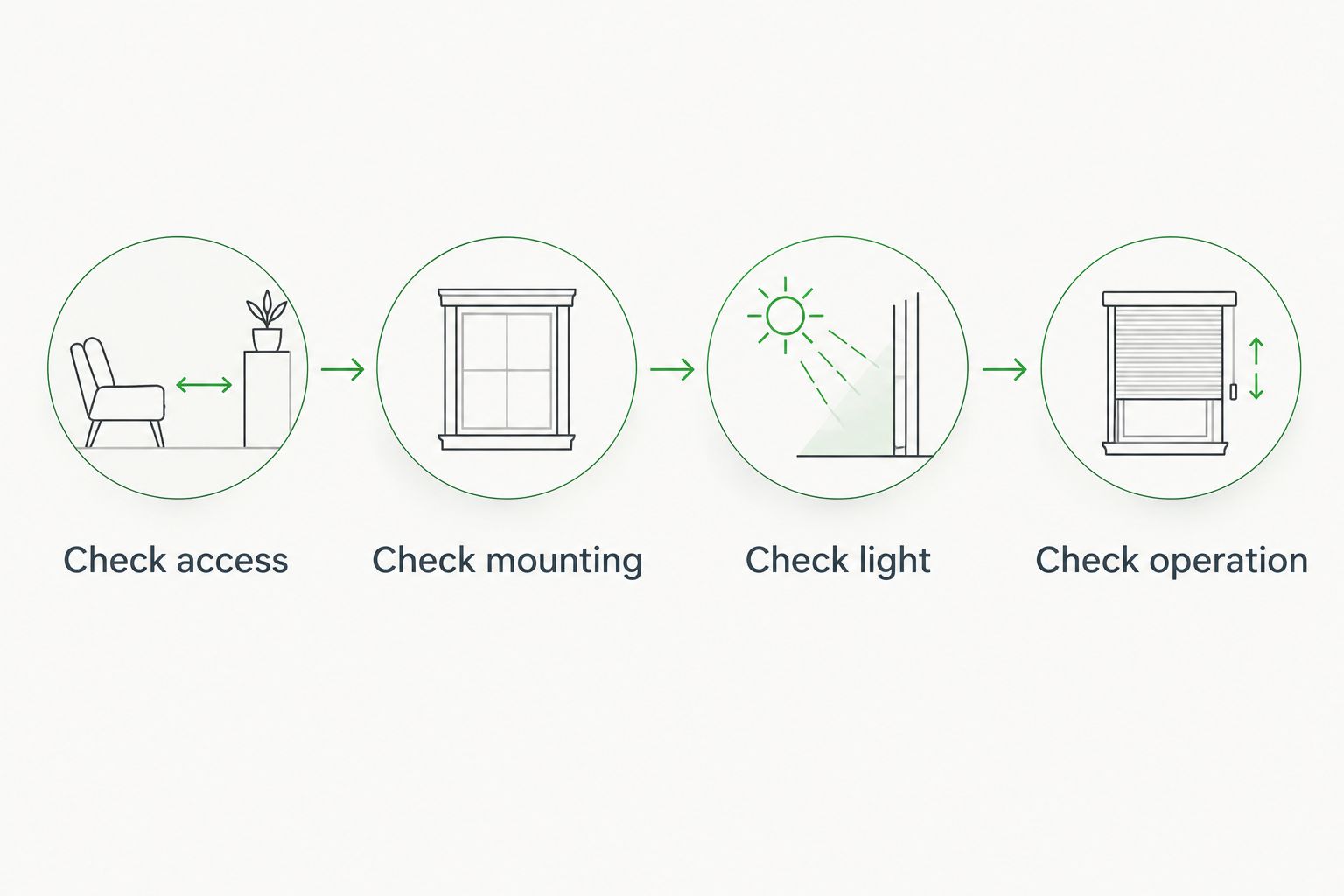
Compare 2 fabric samples at the actual window rather than choosing under showroom lighting alone. Look at the room with the proposed shade in 3 positions: raised, partly lowered, and closed. This is a buying checklist, not a guarantee of darkness; the final installation still needs to match the measured plan.
How to arrange a useful consultation
Ask Olsson Smart Shades about an in-home consultation or request a quote for your nursery window shades. Explain the room's main problem first: daylight during naps, difficult access, visible cords, or a treatment that no longer fits your needs. Bring your preferences, not a finished specification.
For your 2026 quote, ask for the shade type, blackout construction, operating system, mounting approach, and installation scope to be clearly identified. Motorized selections also need a power and control plan. Compare those details before comparing fabric colors.
Plan your nursery window shades
Discuss measured fit, blackout fabric, and cordless or motorized operation for your room.
How these shades are ranked
This ranking puts cord safety and light control ahead of decoration. Cellular shades take the default slot because they combine blackout fabric with an insulating structure. Roller shades win the simple-surface slot, motorized shades address access, and Roman shades serve the decorative choice.
The recommendation concerns shade categories, not a claim that every product in a category performs identically. Your final choice needs to satisfy the operating-system, fit, and care checks above.
Which nursery window shades should you choose?
Choose cordless blackout cellular shades if you are undecided. Move to a cordless blackout roller shade if you want a flatter surface, or add motorization when reaching the window is inconvenient. Choose a cordless blackout Roman shade only when its appearance justifies the additional fabric care.
For 2026, keep the decision practical: safe operation, measured coverage, then style. There is no reason to choose a more complicated treatment when a simpler one meets the room's needs.
FAQ
What's the best window shade for a nursery?
Cordless blackout cellular shades are the best default nursery choice for light control and an insulating fabric structure. Check mounting, edge gaps, and accessible cords before selecting the final product.
Are blackout shades completely dark?
Blackout fabric does not guarantee a completely dark room. Light can enter around the shade's edges, so mounting and coverage need attention.
Are cordless shades safe for kids' rooms?
Cordless window coverings are the choice recommended by the U.S. Consumer Product Safety Commission where children are present. Also check accessible inner cords and keep cribs, beds, and climbable furniture away from windows.
Are motorized shades better than manual shades for a nursery?
Motorized shades are better when reaching the window is awkward. Manual cordless shades remain a practical choice when you can operate them comfortably; motorized systems need a power and control plan.
Should nursery shades go inside or outside the window frame?
Choose the mount that provides the needed coverage while preserving window access. Inside mounts fit within the opening, while outside mounts extend beyond it and require surrounding clearance.
Can I use Roman shades in a child's bedroom?
You can choose Roman shades with a suitable cordless construction and the light-blocking fabric you need. Inspect accessible inner cords and account for cleaning the folds.
How do I request a nursery shade quote in Columbus?
Ask Olsson Smart Shades about an in-home consultation or quote for custom-measured nursery shades. Describe your light-control needs and ask the proposal to identify the fabric, operating system, mounting, and installation scope.
One last thing
A shade that looks perfectly fitted can still leave a bright line beside the fabric. Before approving the installation plan, ask one specific question: Where will light still enter when this shade is closed? The answer is more useful than the word blackout on a sample.