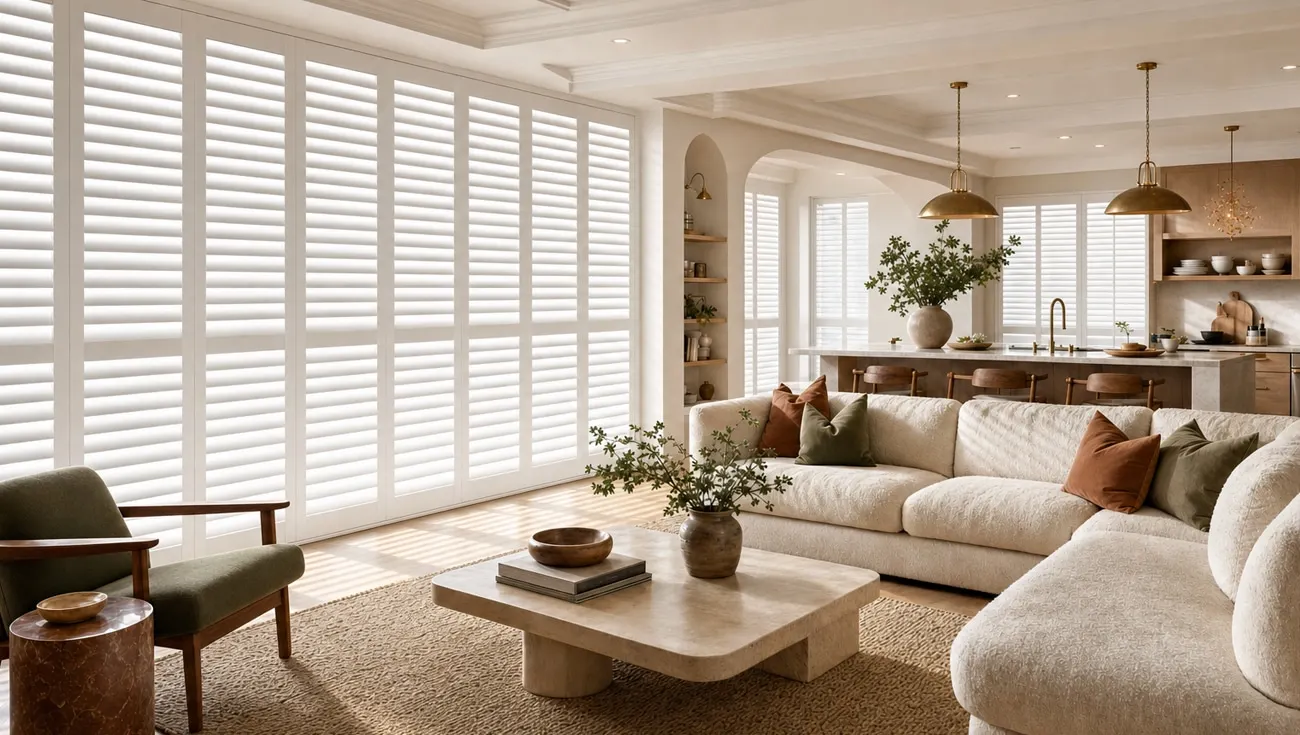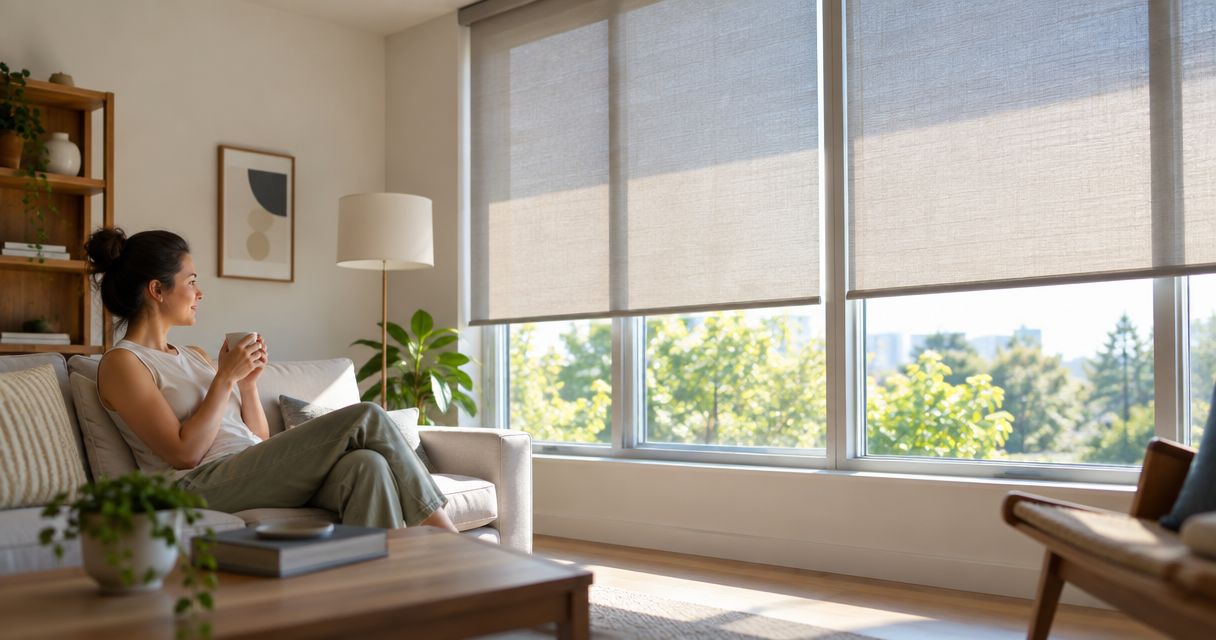
Best overall: cellular shades. Best for keeping a daytime view: solar shades. Best for improving an existing curtain setup: lined drapes. This 2026 guide compares window treatments to reduce summer heat by insulation, sunlight control, privacy, and how you use each room.
- Cellular shades are the best overall window treatments to reduce summer heat when insulation matters most.
- Solar shades reduce glare while preserving a daytime view; they do not guarantee nighttime privacy.
- Motorized shades help with daily timing, but fabric and fit determine the heat-control benefit.
- Olsson Smart Shades offers custom-measured window treatments for homeowners in Columbus and Central Ohio.
Why this matters
A sunny window can make your favorite chair uncomfortable even while the air conditioner runs. The right covering reduces incoming solar heat, but different designs handle insulation, glare, and privacy differently. A darker room is not automatically a better-insulated room.
Olsson Smart Shades is best for Columbus and Central Ohio homeowners seeking custom-measured, professionally installed window treatments. You can request an in-home consultation through Olsson Smart Shades and discuss the windows that feel hottest before choosing a style.
For your 2026 project, start with the problem you feel: afternoon sun on the sofa, a bright bedroom, or a room that overheats while you are away. Those problems do not all need the same covering.
What makes the best heat-reducing window treatment
- Solar control: The covering should limit unwanted sunlight where it enters the room, not simply make the window look finished.
- Insulation: Air pockets and insulating construction help slow heat transfer. Fabric opacity alone does not establish insulating performance.
- Close fit: Coverage and perimeter gaps matter. A loosely fitted treatment leaves paths for sunlight and air movement.
- Usable daylight: Decide whether you need a view, softened daylight, or a dark room. Those priorities change the best choice.
- Privacy: Check both daytime and nighttime performance. A fabric that preserves your daytime view can reveal the room after dark.
- Daily operation: A covering only controls direct sunlight while it is positioned to do so. Choose something you will actually close.
Heat-reducing window treatments at a glance
These 2026 picks rank common treatment types, not specific product models. Motorization appears separately because it solves an operating problem; it is not an insulating material.
| Treatment | Best for | Standout feature | Key limitation |
|---|---|---|---|
| Cellular shades | Overall insulation | Honeycomb air pockets | Lowered shades interrupt the view |
| Solar shades | Daytime views and glare | Screen fabric filters sunlight | Nighttime privacy needs separate attention |
| Lined drapes | Improving an existing curtain setup | Broad coverage with a suitable lining | Loose edges weaken performance |
| Motorized shades | Consistent daily operation | Easier control of awkward windows | Motorization alone adds no insulation |
| Blackout shades | Bedrooms and daytime sleep | Opaque material blocks light | Blackout does not establish heat performance |
| Plantation shutters | Adjustable privacy and daylight | Louvers redirect light | Joints and louvers are not a continuous seal |
1. Cellular shades: best for overall insulation
Cellular shades use honeycomb-shaped pockets to hold air within the shade. That construction makes them the default choice when you want insulation rather than just softer sunlight. Choose the fabric, cell construction, and mounting approach together.
The U.S. Department of Energy's Energy Saver guidance on window coverings states that tightly installed cellular shades can reduce unwanted solar heat through windows by up to 60% during the cooling season. That figure describes solar heat gain through windows, not a guaranteed reduction in your whole-home cooling bill.
Cellular shade pros:
- Air pockets provide an insulating layer.
- Different opacity choices address daylight and privacy.
- A close-fitting installation supports thermal performance.
Cellular shade cons:
- Lowered shades obscure the outdoor view.
- Gaps around the shade still admit light.
- Different constructions do not have identical performance.
Best for: A sunny living room or bedroom where insulation comes before a clear view.
Ask to see the shade lowered, not just a fabric sample. You need to understand the finished coverage.
Verdict: Buy cellular shades when heat control is your main priority.
2. Solar shades: best for daytime views and glare
Solar shades use a screen-like fabric to filter incoming sunlight. They suit rooms where you want to keep some connection to the outdoors rather than cover the window with an opaque material. The trade-off is privacy, especially after dark.
Fabric openness describes how much of the material consists of open space. A 1% openness fabric has less open area than a 5% openness fabric; compare actual samples because color and construction also affect the view and glare. Openness is not a cooling-savings percentage.
Solar shade pros:
- Retain a daytime view through the fabric.
- Reduce glare on screens and seating areas.
- Allow filtered daylight while lowered.
Solar shade cons:
- Do not guarantee nighttime privacy.
- Are not the default choice for insulation.
- Denser fabrics change how clearly you see outside.
Best for: A sunroom or daytime living area where glare is the main complaint.
View samples against the actual window. A fabric that looks right on a table can look quite different with sunlight behind it.
Verdict: Buy solar shades for glare and views; skip them as your only bedroom privacy treatment.
3. Lined drapes: best for improving an existing curtain setup
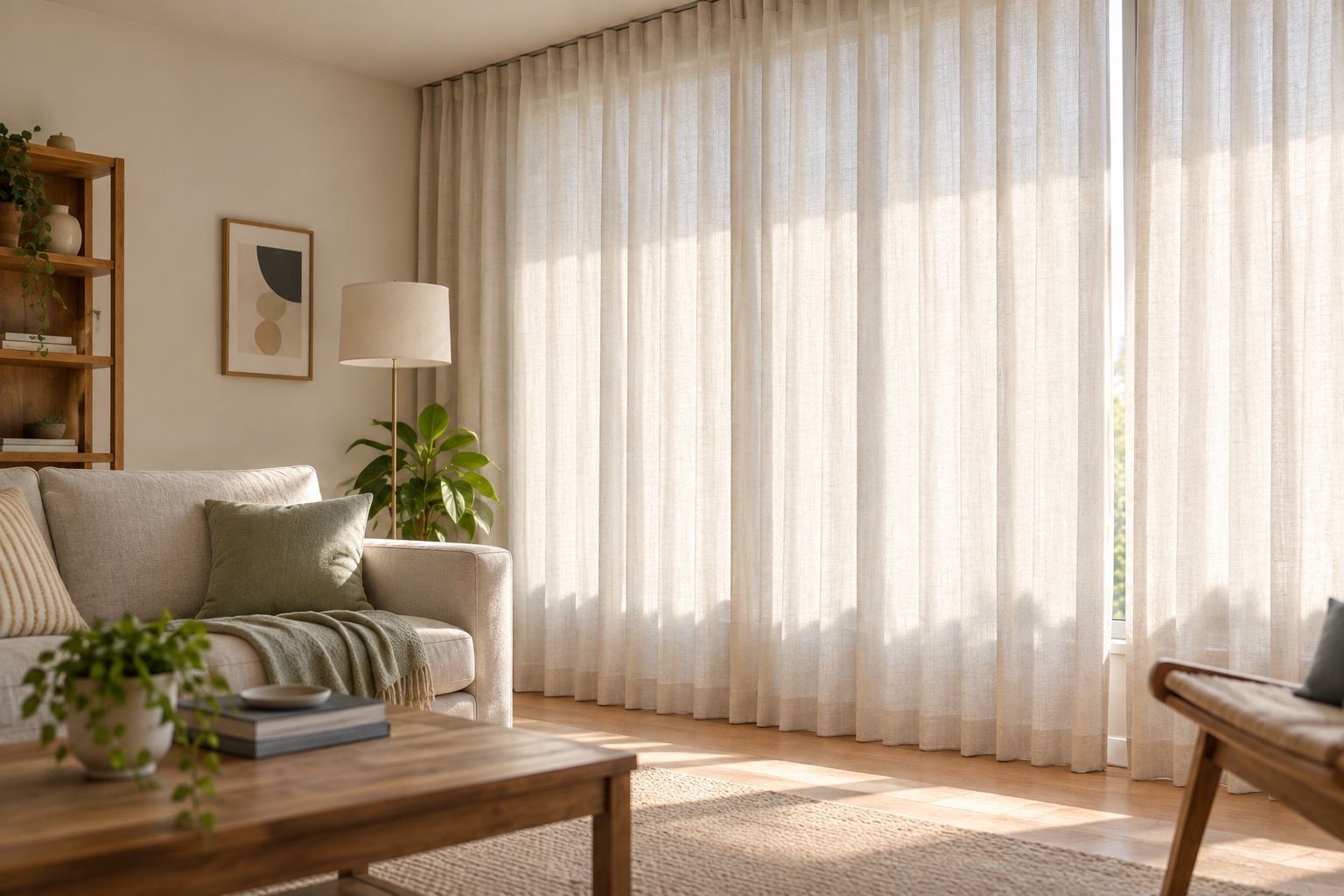
Lined drapes add coverage beyond the glass and can complement an existing shade. Their summer performance depends on the lining, fabric, and how closely they cover the window. Decorative panels held permanently open do not shade the glass.
The Department of Energy's Energy Saver guidance reports that medium-colored draperies with white plastic backings can reduce heat gains by 33%. That finding concerns a particular drapery construction; it does not apply automatically to every lined curtain.
Lined drape pros:
- Add coverage around an existing shade.
- Can improve a curtain setup without changing its basic style.
- Combine light control with a softer room finish.
Lined drape cons:
- Loose top and side edges limit performance.
- Furniture can prevent full closure.
- Heavy fabric requires suitable hardware.
Best for: A living room where you like drapes and want them to do more than decorate.
Check that the panels meet when closed and do not leave the center of the window exposed. Ask which lining supports your heat-control goal.
Verdict: Buy lined drapes for added coverage; skip panels that cannot close fully.
4. Motorized shades: best for consistent daily operation
Motorized shades make it easier to operate coverings on tall, wide, or awkward windows. Where the selected controls support scheduling, you can arrange closure before direct sunlight reaches the room. Confirm those capabilities for the exact system.
The motor does not improve the fabric's insulation. A motorized cellular shade retains cellular construction; a motorized solar shade retains screen-fabric trade-offs. Choose the heat-control material first and the operating method second.
Motorized shade pros:
- Reduce the effort of operating hard-to-reach windows.
- Make frequent adjustment more practical.
- Supported scheduling can help keep closure consistent.
Motorized shade cons:
- Require a suitable power arrangement.
- Controls and compatibility vary by system.
- Automation cannot compensate for unsuitable fabric.
Best for: Homeowners who leave sunny windows uncovered because daily adjustment is inconvenient.
Olsson Smart Shades installs motorized smart shades. During a consultation, ask about power access, manual control, and the controls included in the proposed installation. Do not assume every shade supports every smart-home platform.
Verdict: Buy motorization when operation is the obstacle; skip it as a substitute for insulating construction.
5. Blackout shades: best for bedrooms and daytime sleep
Blackout shades use opaque material to block light through the shade itself. They suit bedrooms where sunlight interferes with sleep or where you want a dark room during the day. Their thermal performance still depends on construction.
A blackout roller shade and a blackout cellular shade share an opacity goal, not an identical insulating structure. For a hot bedroom, ask about both darkness and insulation instead of treating blackout as a complete specification.
Blackout shade pros:
- Block light through the opaque material.
- Provide privacy through the covered area.
- Address daytime sleep and unwanted bedroom brightness.
Blackout shade cons:
- Edge gaps can admit noticeable light.
- Lowered shades remove the outdoor view.
- Opacity alone does not prove heat reduction.
Best for: A bedroom where sleep and light exclusion lead the decision.
Ask how the installation handles side gaps, especially if the window faces strong direct sun. Check whether the proposed mounting arrangement suits the frame and nearby handles.
Verdict: Buy blackout shades for darkness; choose an insulating construction when bedroom heat matters too.
6. Plantation shutters: best for adjustable privacy and daylight
Plantation shutters let you tilt louvers to change light and privacy without raising an entire covering. They suit homeowners who prefer a permanent window treatment and want frequent daylight adjustment. Closing the louvers limits direct sunlight, but the assembly still has joints and gaps.
For your 2026 selection, compare shutters as a light-control choice rather than assuming they match the insulation of cellular shades. Ask how the frame fits your window and where closed louvers leave visible light.
Plantation shutter pros:
- Adjust daylight with louver tilt.
- Offer privacy without removing the entire treatment.
- Provide accessible surfaces for routine dusting.
Plantation shutter cons:
- Louvers and panel joints are not a continuous seal.
- Panels need clearance to open.
- The frame remains visible around the window.
Best for: Rooms where adjustable privacy and the shutter style matter more than maximum insulation.
Check panel movement around furniture and window handles before settling on the layout. A treatment should work with the room you already use.
Verdict: Buy plantation shutters for adjustable light and privacy; skip them if insulation is your only priority.
Make the covering part of your daily routine
Close the covering before direct sunlight reaches the window, rather than waiting until the room feels hot. Watch your rooms through an ordinary summer day. East-facing windows receive morning sun; west-facing windows receive afternoon sun.
Reopen coverings when direct sunlight moves away if you want daylight and a view. For motorized treatments, confirm whether the chosen controls support the routine you want. A schedule is only helpful when it matches the window's actual exposure.
Planning for summer heat without air conditioning requires more than closing blinds: window coverings reduce incoming solar heat, but they do not replace working cooling or a heat-safety plan. If your room stays uncomfortably hot with the coverings closed, address the cooling problem rather than expecting another fabric to solve everything.
How these treatments are ranked
The ranking puts insulation first, then separates recommendations by view, coverage, daily operation, darkness, and adjustable privacy. Cellular shades lead because their construction addresses insulation directly. The other picks solve distinct room-use problems.
The Department of Energy figures describe specific window-covering conditions, not tested results for an Olsson Smart Shades installation. Use them to understand the category, not to predict your bill. Your window, exposure, fit, and operating habits remain part of the decision.
Which treatment should you choose?
Choose cellular shades if you are undecided and reducing summer heat is the main goal. Choose solar shades when preserving the daytime view matters more. Add lined drapes when broader coverage fits your room, and consider motorization when inconvenient operation leaves windows exposed.
Before requesting a 2026 quote, write down the hottest room, the time sunlight reaches it, and whether you need nighttime privacy. Ask Olsson Smart Shades to explain the proposed fabric, mounting method, edge coverage, and operation. Request those details in the quote so you can compare the actual treatment rather than just its name.
Plan your window treatment consultation
Discuss room comfort, privacy, window fit, and daily operation before choosing a treatment.
FAQ
What's the best window treatment to reduce summer heat?
Cellular shades are the best default when insulation is your main priority. Their air pockets provide an insulating layer, and close installation matters. Choose solar shades instead when preserving a daytime view leads the decision.
Are solar shades better than cellular shades for a hot room?
Solar shades are better for preserving a daytime view while reducing glare; cellular shades are better for prioritizing insulation. Solar fabric openness affects the view, but it is not a cooling-savings rating.
Do blackout shades keep a room cooler?
Blackout material blocks light, but its opacity alone does not establish thermal performance. Compare construction and fit, and consider blackout cellular shades when you need both darkness and insulation.
Do motorized shades reduce more heat than manual shades?
Motorization does not add insulation to a shade. It helps when easier operation or supported scheduling keeps the covering closed during direct sunlight. Fabric and fit still determine the heat-control benefit.
Should I close shades before the room gets hot?
Yes, close shades before direct sunlight reaches the window. This limits incoming solar heat before it enters the room. Adjust your routine to the actual exposure of each window.
Will solar shades give me privacy at night?
Solar shades do not guarantee nighttime privacy. When the room is brighter than outdoors, visibility through the fabric changes. Discuss a separate privacy layer if that matters in your room.
How do I request a window treatment quote in Columbus?
Request an in-home consultation with Olsson Smart Shades and identify the rooms where heat, glare, or privacy causes problems. Ask the quote to specify treatment construction, mounting, coverage, and operation so you can compare proposals clearly.
One last thing
Before choosing fabric, check whether your current treatment actually covers the glass during the hottest part of the day. A curtain that stops short or a shade you never lower leaves the central problem unchanged. For summer 2026, choose the coverage and routine first; choose the color after.