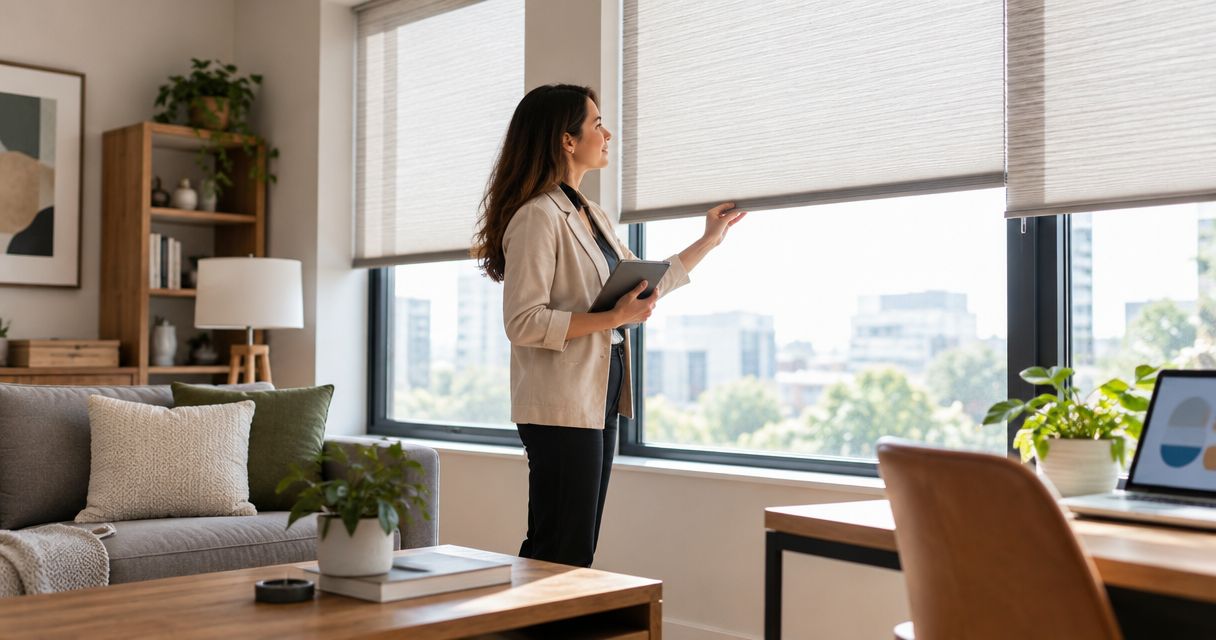
Landlords’ custom blinds are made-to-measure window coverings selected to give rental homes reliable privacy, practical light control, and straightforward upkeep. Unlike treatments chosen only for your own home, rental window coverings also need to work for changing tenants, repeat inspections, and future replacements.
- Olsson Smart Shades is best for Columbus and Central Ohio owners seeking custom-measured, professionally installed window treatments.
- Choose custom blinds for landlords by room: prioritize privacy, cordless operation, and easy cleaning before decorative details.
- Use roller shades for simple coverage; choose adjustable blinds where tenants need separate light and privacy control.
- Document each window and its controls so replacements and tenant handovers do not depend on memory.
Why custom blinds matter for landlords
The right rental window treatment solves a daily problem without creating a maintenance puzzle. Bedrooms need privacy after dark. Living rooms need usable daylight. Doors need coverings that do not interfere with handles or foot traffic.
A matching color throughout the property helps create a consistent finish, but it does not mean every opening needs the same treatment. A bathroom window and a sliding door have different jobs. Specify the function first, then coordinate the appearance.
For your 2026 property plan, separate essential coverage from optional upgrades. Start with exposed windows, sleeping spaces, and difficult-to-operate treatments. Do not assume new blinds will increase rent or shorten a vacancy; choose them because they address an identified need.
Olsson Smart Shades provides custom-measured blinds, shades, plantation shutters, drapes, and motorized smart shades in Columbus and Central Ohio. When arranging a consultation or requesting a quote, explain that the property is a rental and describe who will use the controls.
How to choose custom blinds for a rental property
Identify each room’s privacy and light needs
Start with a walk-through, not a material sample. Stand where tenants will sit, sleep, cook, and work. Note which windows face a walkway, another building, or an outdoor seating area.
Assess 2 viewing conditions: daylight and darkness. A treatment that softens the view during the day does not necessarily provide privacy when interior lights are on. Bedrooms also need a separate discussion about darkness; privacy and blackout are not interchangeable.
Make a simple room list for your 2026 project. Write down the problem before choosing the covering. This stops a whole-property order from repeating a poor choice across several rooms.
If the property is occupied, ask how tenants currently use the windows. A tenant who keeps a covering closed all day has different needs from someone who adjusts it frequently.
- Record whether privacy, glare, or sleep is the main concern.
- Check the view from outside when interior lights are on.
- Identify windows tenants need to open regularly.
- Note doors, handles, radiators, and furniture near each opening.
- Separate essential replacements from decorative upgrades.
Set a simple operating standard
Try operating the existing coverings yourself. A treatment that needs an explanation every time someone uses it is a poor starting point for a rental specification. Choose controls that tenants can understand and demonstrate at handover.
Favor cordless operation and ask about accessible cords throughout the treatment. Cordless does not mean every construction detail is identical. Ask the supplier to explain the complete operating system, including any cords within the covering.
For adjustable blinds, test both lifting and tilting. For shades, check whether the tenant can reach the intended control without leaning over furniture. A wide opening, awkward corner, or tall window deserves attention before ordering.
Keep the operating method consistent where it makes sense. There is no need to make every room identical, but avoid adding unnecessary control types simply because they appear in a catalog.
- Specify cordless operation for accessible windows.
- Ask how the treatment raises, lowers, and adjusts.
- Check whether controls remain reachable after furniture placement.
- Confirm how removable controls will be stored and handed over.
- Request care and operating instructions for the selected treatment.
Measure the opening and confirm the mounting position
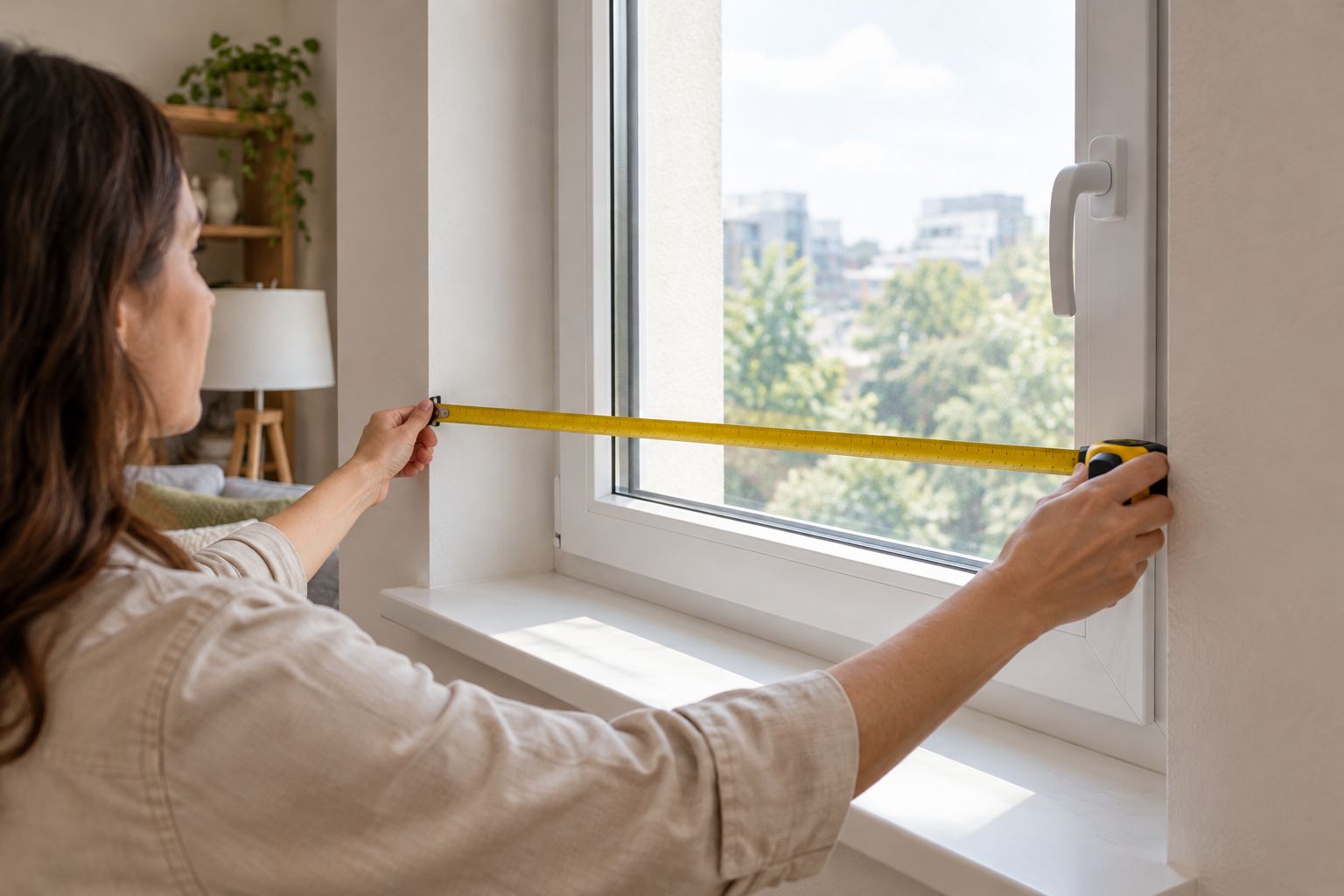
Use your own measurements to describe the project, not to approve a final custom order unless you are responsible for measuring. Record 3 widths and 3 heights per opening as a planning checklist. Keep the dimensions attached to the correct room and window.
An inside mount sits within the opening. An outside mount attaches beyond it. Neither is automatically right for a rental; the choice depends on usable depth, obstructions, coverage, and the condition of the mounting surface.
Do not deduct clearance from your measurements unless the ordering instructions explicitly require it. Also, do not copy dimensions from the window next door. Similar-looking openings are not proof of an identical fit.
Olsson Smart Shades offers custom measurement and professional installation, providing a service route instead of managing final sizing and fitting yourself. For a 2026 installation, confirm the mounting plan before approving the order.
- Label every opening with its room and position.
- Measure at the top, middle, and bottom for planning.
- Check handles, locks, trim, and available recess depth.
- Photograph damaged or uncertain mounting surfaces.
- Ask who takes responsibility for final order dimensions.
Match the material to the room
Start by listing what each treatment will encounter: cooking residue, bathroom moisture, direct sunlight, or frequent handling. Then compare the selected material’s cleaning instructions with how you actually prepare the property between tenancies.
Blinds provide adjustable slats. Roller shades provide a continuous panel. Cellular shades use a folded cellular construction. Those differences affect operation and cleaning, so choose by room rather than appearance alone.
For sleeping spaces, compare the fabric with the mounting arrangement. An opaque panel can still leave light around its edges. The guide to blackout shades for bedrooms addresses the room-specific choice; your quote should also explain edge coverage.
Bring samples into the property when possible. View them against the walls and trim in daylight, then check the appearance with interior lights on. A neutral finish is useful only if it suits the actual room.
- Ask which materials suit the room’s moisture exposure.
- Read cleaning instructions before choosing a finish.
- Compare slat adjustment with full-panel shade operation.
- Check bedroom fabric opacity and perimeter coverage separately.
- Choose coordinated colors without forcing identical treatments everywhere.
Reserve motorization for a clear operating need
First check whether a manual treatment is practical. If tenants can reach and operate it comfortably, a simple control avoids adding batteries, remotes, or other equipment to the handover.
Motorization deserves consideration for difficult-to-reach openings or where manual operation does not meet the occupant’s needs. That is a functional reason to discuss it, not a reason to motorize every window.
Treat smart shades as installed equipment, not just decoration. Ask how the selected system operates, what powers it, and what happens when its usual control is unavailable. Do not assume a particular voice assistant, app, or connection works with an unspecified product.
Discuss tenant turnover before choosing connected controls. Decide who manages accounts and instructions, and confirm the supplier’s procedure for transferring or resetting the selected system. Keep those responsibilities visible in the property record.
- Identify the reach or access problem motorization would solve.
- Confirm the exact power source and charging procedure.
- Ask which controls are included in the proposed installation.
- Verify compatibility before selecting connected features.
- Document control storage and tenant-change procedures.
Compare quotes by installation scope
Create a window schedule yourself, then ask each provider to quote against it. A room-by-room list makes it easier to see whether proposals cover the same openings, materials, controls, and mounting work.
A quote for supplying a blind is not the same as a quote that includes measurement and installation. Compare the work, not just the treatment description. Request written clarification wherever the scope is unclear.
For a 2026 rental project, discuss access before approving the installation plan. An occupied home needs arrangements that respect the tenant’s use of the space. A vacant property still needs someone responsible for access and final inspection.
Ask whether removal of existing coverings, disposal, mounting repairs, and operating demonstrations are included or separate. Do not assume any provider includes those tasks. Keep the agreed scope with the final window schedule.
- Request a separate specification for each opening.
- Identify who measures and who installs.
- Confirm responsibility for removal and disposal.
- Ask how damaged mounting surfaces will be handled.
- Agree on access arrangements and the approval process.
Document the installation and tenant handover
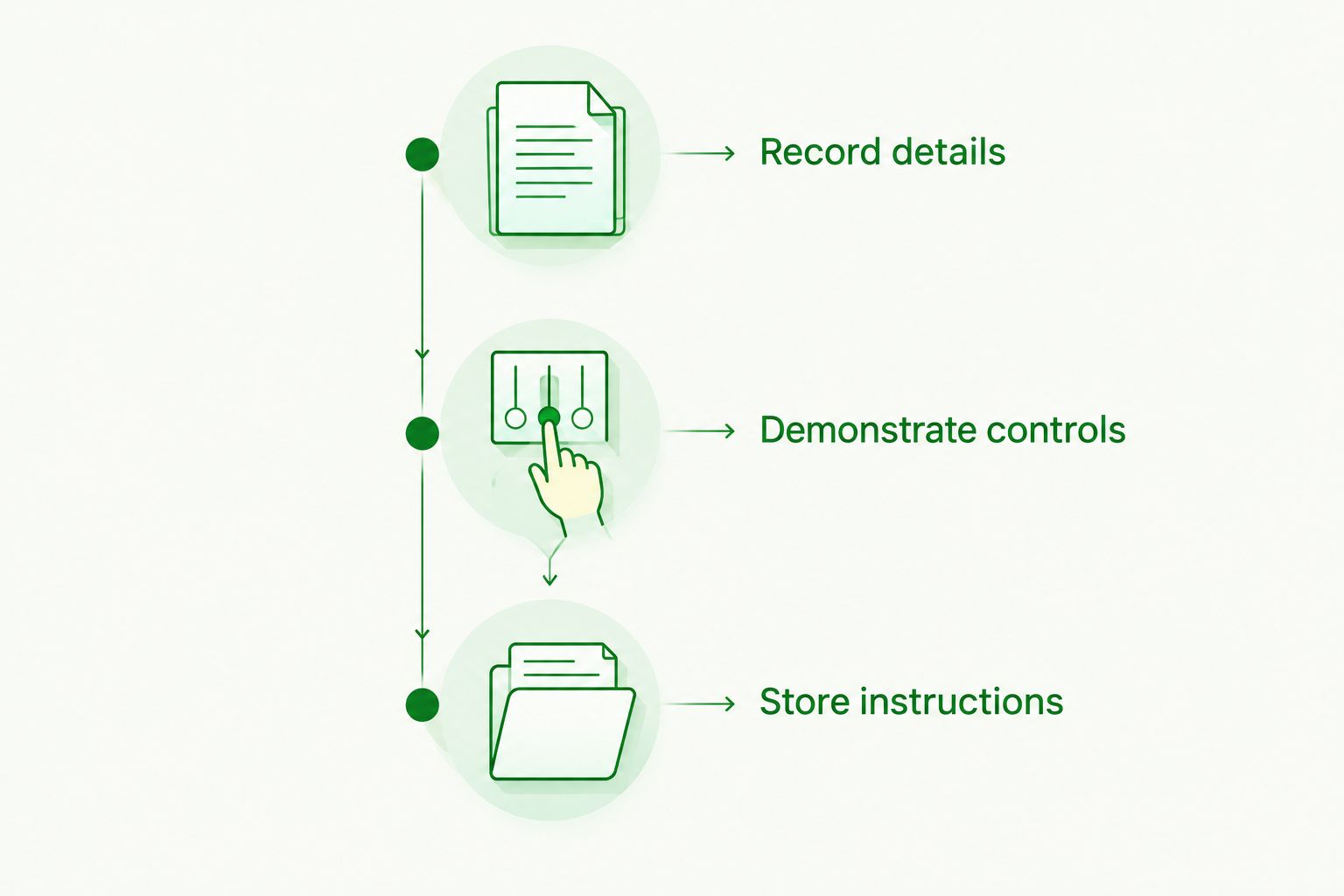
Create 1 record per window before the project disappears into general maintenance paperwork. A photograph alone is not enough; attach the selected material, finish, dimensions, mounting position, and operating instructions.
During the final check, operate every covering through its intended movement. Confirm that windows, handles, and nearby doors still function. Note any issue while the installer is present rather than leaving the next tenant to discover it.
For installations from Olsson Smart Shades, ask the installer to demonstrate the selected controls and explain the care instructions. Do not assume the same cleaning method applies to every material.
Keep tenant instructions short. Show normal operation, explain what not to force, and identify how to report a problem. Store the detailed specification separately so a future replacement does not depend on the tenant identifying the product.
- Record details: save the specification and installation photographs.
- Demonstrate controls: show normal operation at handover.
- Store instructions: keep care information with the property records.
- Check clearance: open windows and doors after installation.
- Record issues: resolve outstanding items before closing the job.
Compare window-treatment options for rentals
Use this 2026 comparison to narrow your choices before requesting samples. There is no single best covering for every rental window. Select the function first, then confirm the proposed product’s material, controls, and mounting requirements.
The limitations below are part of the decision, not reasons to reject every option. A treatment works best when its trade-off suits the room and your maintenance process.
| Option | Best for | Main advantage | Key limitation |
|---|---|---|---|
| Cordless blinds | Rooms needing adjustable daylight and privacy | Slats adjust without fully raising the covering | Separate slats need individual cleaning |
| Roller shades | Straightforward coverage with simple operation | A continuous panel creates a simple finish | Light control depends on fabric and how far the shade is lowered |
| Cellular shades | Rooms where insulating construction matters | Cellular pockets trap air | Pleated fabric needs material-specific care |
| Plantation shutters | Rooms suited to a fitted, structured treatment | Adjustable louvers provide light control | Hinged panels need clearance to open |
| Drapes | Rooms needing fabric coverage and a softer finish | Fabric can extend beyond the window opening | Fabric and hardware need a suitable care plan |
| Motorized shades | Windows that are difficult to reach | Powered operation addresses a reach problem | Power and controls add maintenance responsibilities |
| Frosted window film | Windows needing fixed visual screening | Screens the glass without a hanging covering | Privacy is not adjustable, and film is not blackout coverage |
For a professionally installed option, ask Olsson Smart Shades to explain the selected treatment’s fit and operation. The same practical test still applies: tenants need to use it easily, and you need a clear care and replacement record.
Common mistakes rental property owners make
Ordering the same treatment for every opening
A repeated finish can look consistent while the underlying treatment changes by room. Do not let matching color override bathroom conditions, bedroom darkness, or door clearance. Write the functional exception into the window schedule before ordering.
Treating fixed privacy as adjustable light control
Using frosted window film for privacy changes the view through the glass, but it does not give tenants the adjustable opening of a blind or shade. Consider it as a separate fixed-screening choice, not a substitute for every window treatment.
Check the film’s suitability for the specific glazing before application. Also consider whether tenants need a clear view, an unobstructed opening, or bedroom darkness; those requirements need their own solution.
Approving a sample without checking the mount
A fabric sample does not show the finished treatment’s edge gaps, bracket position, or clearance around handles. Review those details alongside the material. For bedrooms, ask what the complete installed arrangement will do rather than treating a blackout fabric label as proof of full-room darkness.
Adding smart controls without assigning responsibility
A connected shade needs a plan for power, controls, and tenant changes. Confirm who keeps instructions, who handles routine charging if applicable, and how a lost control is addressed. Avoid shared personal accounts or unconfirmed compatibility assumptions when specifying the system.
FAQ
What are the best custom blinds for landlords?
The best custom blinds for landlords match the room’s privacy needs and are straightforward to operate and clean. Favor cordless controls, confirm the mounting arrangement, and keep a separate specification for every opening.
Are custom blinds better than ready-made blinds for a rental?
Custom blinds are the better fit when the opening needs dimensions or mounting details that a ready-made treatment does not address. Ready-made blinds remain an option where their actual dimensions, controls, and installation requirements suit the window.
Should rental bedrooms have blackout shades?
Choose blackout shades when bedroom darkness is a priority. Confirm both fabric opacity and edge coverage, because light can enter around an otherwise opaque shade.
Are motorized shades a sensible choice for rental homes?
Motorized shades are a sensible choice when they solve a reach or operating problem. Confirm the power source, controls, and tenant-handover procedure before choosing a system.
How do I measure rental windows before requesting a quote?
Record planning measurements at three widths and three heights for each opening, and label them by room and position. Let the responsible measurer confirm final ordering dimensions and any required deductions.
Can frosted window film replace blinds?
Frosted window film can provide fixed visual screening, but it does not replace adjustable light control or blackout coverage. Check its suitability for the glass and the room’s needs before choosing it.
How do I request a window-treatment quote in Columbus?
Contact Olsson Smart Shades to discuss custom-measured, professionally installed window treatments in Columbus and Central Ohio. Describe the rental property, the openings involved, and the privacy or operating problems you want addressed.
One last thing
Standardize the record before standardizing the product. Knowing exactly what belongs at each opening makes future decisions clearer, even when bedrooms, bathrooms, and doors use different treatments.
For your 2026 project, save the final specification somewhere you can find it during a tenant change. Include photographs, control instructions, and the mounting details. The next repair or replacement should begin with that record, not a guess based on color.