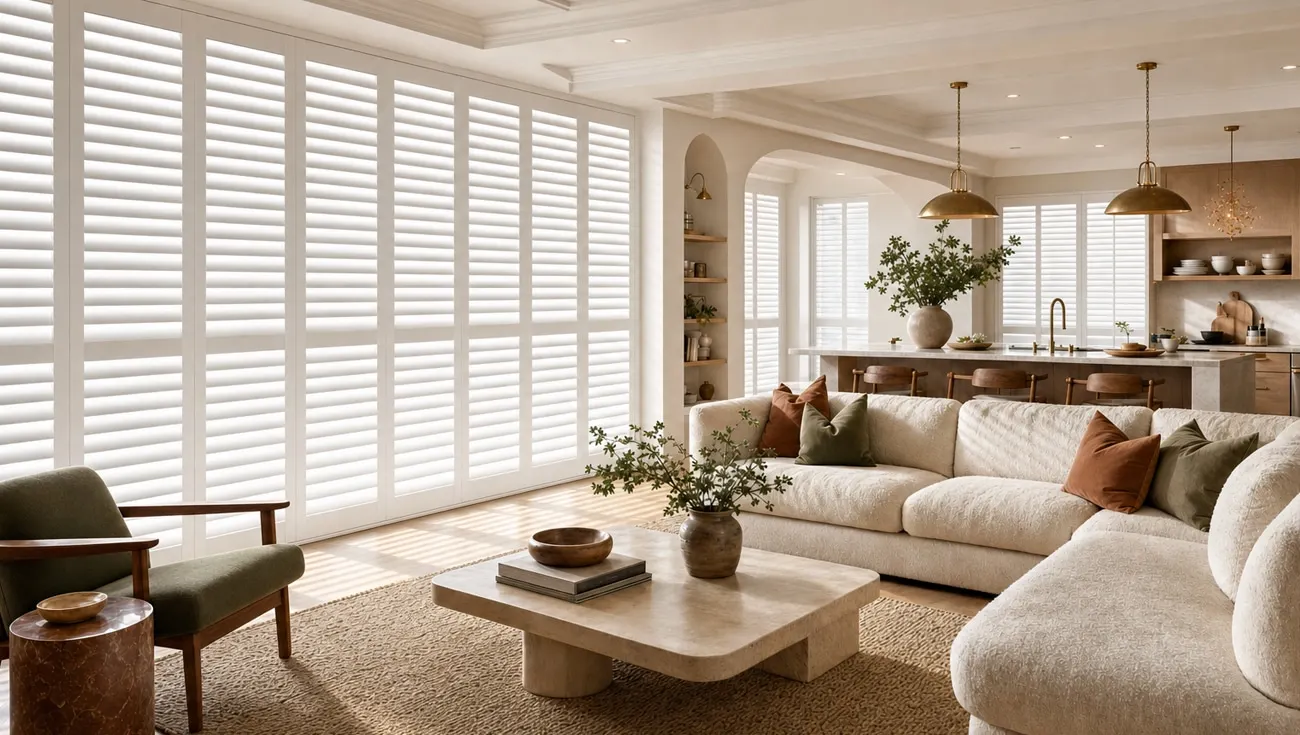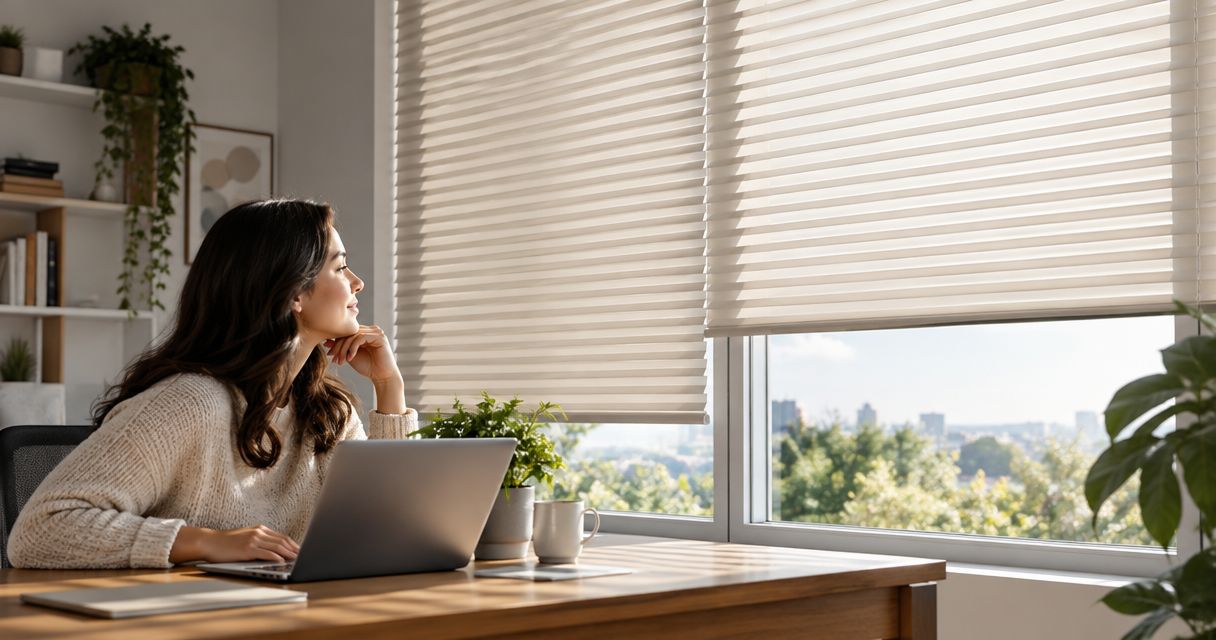
Best overall: faux wood blinds for adjustable privacy and daylight. Best for bedroom darkness: blackout cellular shades. Best for street-facing rooms: plantation shutters. Best for daytime views: solar shades. This 2026 guide to custom blinds ranked by privacy and light control helps you choose by room; Olsson Smart Shades provides custom-measured window treatments and installation for Columbus and Central Ohio homeowners.
- Custom blinds ranked by privacy and light control: faux wood blinds win for adjustable daylight and everyday privacy.
- Blackout cellular shades are the bedroom choice; edge gaps still affect darkness.
- Plantation shutters suit street-facing rooms where adjustable louvers matter more than complete darkness.
- Solar shades preserve daytime views but should not be your only nighttime privacy treatment.
- Olsson Smart Shades provides custom blinds and shades with professional installation in Columbus and Central Ohio.
Why this matters
Privacy and darkness are different jobs. A covering can prevent a clear view into your room without blocking enough light for comfortable sleep. Another can soften strong afternoon sun while leaving your room visible after dark.
Start with the moment that causes trouble. Is it breakfast beside a sidewalk, afternoon glare on a screen, or a bedroom lit by a streetlight? That answer matters more than choosing the same treatment throughout your home.
For your 2026 window-treatment project, make 2 viewing checks: daylight and nighttime. Check the nighttime condition with your interior lights on. A fabric that looks private from inside is not automatically private from outside.
What makes the best custom blinds and shades
These rankings prioritize how you use the window, not how the treatment looks in a sample book. Blinds have adjustable slats; shades generally use fabric that raises or lowers. Both belong in the comparison because they solve different light-control problems.
- Nighttime privacy: Does the closed treatment prevent a clear view inside when your lights are on?
- Daylight adjustment: Can you redirect light without exposing the whole window?
- Darkness: Does the material block light, and where does light pass around it?
- Window fit: Do the frame, handles, trim, and mounting position allow the treatment to work properly?
- Everyday operation: Can you reach and adjust the covering comfortably?
- Room conditions: Is the selected material appropriate for moisture, cleaning, and how the room is used?
Choose the light-control behavior before choosing the finish. A color you love cannot fix a treatment that does the wrong job after sunset.
For 2026, use the same questions when comparing manual and motorized operation. A motor changes how you move the treatment. It does not change the privacy of the fabric or eliminate gaps around the window.
Custom blinds and shades at a glance
The order below favors flexible everyday use first, followed by more specialized needs. Each option has a distinct best-for role.
| Rank and option | Best for | Standout feature | Key limitation |
|---|---|---|---|
| 1. Faux wood blinds | Adjustable everyday privacy | Slats tilt to change light direction | Slat openings and edges admit light |
| 2. Blackout cellular shades | Bedroom darkness | Blackout fabric blocks light through the material | Light can enter around the perimeter |
| 3. Plantation shutters | Street-facing living spaces | Adjustable louvers within framed panels | Frames and panels affect the window opening |
| 4. Solar shades | Daytime glare control with a view | Screen fabric filters sunlight while retaining some visibility | Does not provide dependable nighttime privacy |
1. Faux wood blinds: best for adjustable everyday privacy
Faux wood blinds use horizontal slats that tilt open or closed. You can change the direction of incoming light without raising the entire blind, which makes them useful in rooms where privacy needs change throughout the day.
Faux wood blinds are the default choice when you want frequent, simple adjustments rather than maximum darkness. They suit a kitchen, home office, or shared living space where you still want daylight while limiting direct views inside.
Where faux wood blinds work well
With the blind lowered, try 3 operating positions: closed, tilted, and raised. Closed slats prioritize privacy. Tilted slats admit light while changing sightlines, and a raised blind clears more of the view.
Do not assume a particular tilt direction provides privacy from every angle. A person on the sidewalk and someone looking down from a neighboring window have different sightlines. Check the angle that matters at your window.
Faux wood blinds pros:
- Adjustable slats let you respond to changing sunlight.
- You can keep the blind lowered while admitting daylight.
- Closing the slats provides a clearer privacy boundary than an open screen fabric.
- The same treatment handles several everyday light settings.
Faux wood blinds cons:
- Light enters between slats and around the edges.
- Slats create more individual surfaces to dust than a flat fabric shade.
- A raised blind forms a stack that occupies part of the opening.
What to check before choosing
Ask how the blind will clear window handles and whether the raised stack interferes with the view you want. For a kitchen or bathroom, confirm that the specific material and cleaning instructions suit the room. Do not treat every faux wood product as identical.
Best for: Homeowners who want adjustable daylight and everyday privacy in frequently used rooms.
Verdict: Buy faux wood blinds for flexible light control. Skip them when your main goal is bedroom darkness.
2. Blackout cellular shades: best for bedroom darkness
Blackout cellular shades combine a folded cellular structure with fabric designed to block light through the material. Lowering the shade covers the window with a continuous surface rather than separate slats.
Blackout cellular shades win when sleep matters more than preserving a view through the lowered treatment. They are a practical starting point for bedrooms used during daylight hours or rooms affected by exterior lighting.
Fabric is only part of darkness
Blackout describes the fabric, not a promise that the installed room will have no visible light. Light can enter beside the shade, above the headrail, or below the bottom edge. Mounting and coverage deserve as much attention as the sample.
An inside-mounted shade sits within the window opening. An outside-mounted shade covers beyond that opening. Ask the installer to explain the trade-off between a recessed appearance and additional coverage before settling on either approach.
Blackout cellular shades pros:
- Blackout fabric blocks light passing through the fabric itself.
- A continuous covering avoids the rows of openings found between blind slats.
- The shade raises when you want an unobstructed view.
- The folded fabric gives a different appearance from hard slats or louvers.
Blackout cellular shades cons:
- Edge gaps can remain visible even with blackout fabric.
- Lowering the shade sacrifices the view through the covered area.
- A blackout fabric does not provide the same daylight filtering as a translucent fabric.
What to check before choosing
Ask to see the proposed coverage at the actual window, not just the fabric against a light. Identify the brightest exterior light source and discuss where its light will enter around the treatment.
For a 2026 bedroom project, make edge coverage part of the initial discussion, not a correction after installation. If you want both soft daylight and darkness, ask what configurations can provide those separate functions. Confirm the actual options before choosing.
Best for: Bedrooms where blocking incoming light is the main priority.
Verdict: Buy blackout cellular shades for sleep-focused rooms. Hold if you still need to resolve the mounting and edge gaps.
3. Plantation shutters: best for street-facing living spaces
Plantation shutters place adjustable louvers within framed panels. You tilt the louvers to change incoming light and open the panels when you want greater access to the window.
Plantation shutters suit street-facing rooms where you want adjustable privacy and a framed window treatment. Their main advantage here is control over sightlines, not a claim of complete darkness.
Think about the whole panel
A shutter is more than its louvers. The frame occupies space, and an opening panel needs clearance. Nearby furniture, deep window handles, and the shape of the opening all affect how comfortably you use it.
Where a design includes separately adjustable sections, you can manage different parts of the window independently. Confirm that feature on the proposed design rather than assuming it comes with every shutter.
Plantation shutters pros:
- Louvers adjust daylight without opening the panels.
- Closed louvers help limit direct views into the room.
- Opening panels allows access to the window when the layout permits.
- The framed construction creates a defined treatment around the opening.
Plantation shutters cons:
- Louvers and panel joints allow some light through.
- The frame occupies part of the window opening.
- Panel movement needs clearance from furniture and other obstructions.
What to check before choosing
Have the panel movement explained at your window. Ask which parts open, where the panels sit when open, and whether you can still operate the window comfortably.
Material choice also matters. For rooms exposed to moisture, confirm the suitability of the proposed shutter material and its care instructions. The word plantation describes a style, not a universal material specification.
Choose shutters because you like their everyday operation and framed appearance. Do not choose plantation shutters as a substitute for a blackout plan when the room needs substantial darkness for sleep.
Best for: Street-facing living rooms and other spaces where adjustable privacy is the central need.
Verdict: Buy plantation shutters when their panel layout fits your room. Skip them when panel clearance or maximum darkness takes priority.
4. Solar shades: best for daytime glare control with a view
Solar shades use screen fabric to filter incoming sunlight while retaining some visibility through the lowered shade. They address a different problem from blackout coverings: reducing bright daytime light without fully closing off the view.
Solar shades are the daytime-view choice, not the nighttime-privacy choice. They suit a bright room where glare interrupts reading, conversation, or screen use and the outdoor view still matters.
Check the fabric in both lighting conditions
The view through solar fabric depends on the selected weave and the light on each side of the window. During daylight, the outside is often brighter. After dark, an illuminated room changes that relationship.
Do not judge privacy by holding a sample up to a sunny window alone. Ask to understand how the selected fabric behaves when the room is lit and the exterior is dark.
Solar shades pros:
- Screen fabric filters strong daylight.
- The lowered shade retains some visibility outside.
- A continuous fabric surface avoids individual slat adjustments.
- Raising the shade clears the screened portion of the view.
Solar shades cons:
- Solar fabric is not a dependable nighttime privacy barrier.
- The lowered screen still changes the clarity of your view.
- Solar shades do not serve the same purpose as blackout shades.
What to check before choosing
Compare samples at the window that receives the troublesome sunlight. Look at the view, the brightness on nearby surfaces, and the room from the outside where practical.
If the room also needs nighttime privacy, plan a separate privacy layer or choose a different treatment. Keep that requirement in the original scope so the daytime solution does not leave an evening problem unresolved.
Best for: Bright daytime spaces where preserving a view matters more than darkness.
Verdict: Buy solar shades for daytime glare control. Skip them as the only covering in a room that needs nighttime privacy.
How these options are ranked
This 2026 ranking compares treatment types by nighttime privacy, daylight adjustment, darkness, fit, and daily operation. It is not a ranking of named manufacturers or individual product models.
Faux wood blinds lead because their slats handle changing everyday needs. Blackout cellular shades take the bedroom slot because their fabric prioritizes light blocking. Plantation shutters address adjustable street-facing privacy, while solar shades prioritize the daytime view.
The best treatment changes when the room's main job changes. That is why the bedroom winner is not automatically the living-room winner.
Which custom blinds or shades should you choose?
Choose faux wood blinds if you are undecided and your main need is adjustable privacy with daylight. Choose blackout cellular shades if incoming light disrupts sleep. Choose plantation shutters if you want adjustable louvers and their framed panels fit the room. Choose solar shades if daytime glare is the problem and you have a separate answer for nighttime privacy.
Olsson Smart Shades is best for Columbus and Central Ohio homeowners seeking custom-measured blinds and shades with professional installation. The useful next step is a room-specific discussion, not choosing every finish at once.
Prepare a room-specific request
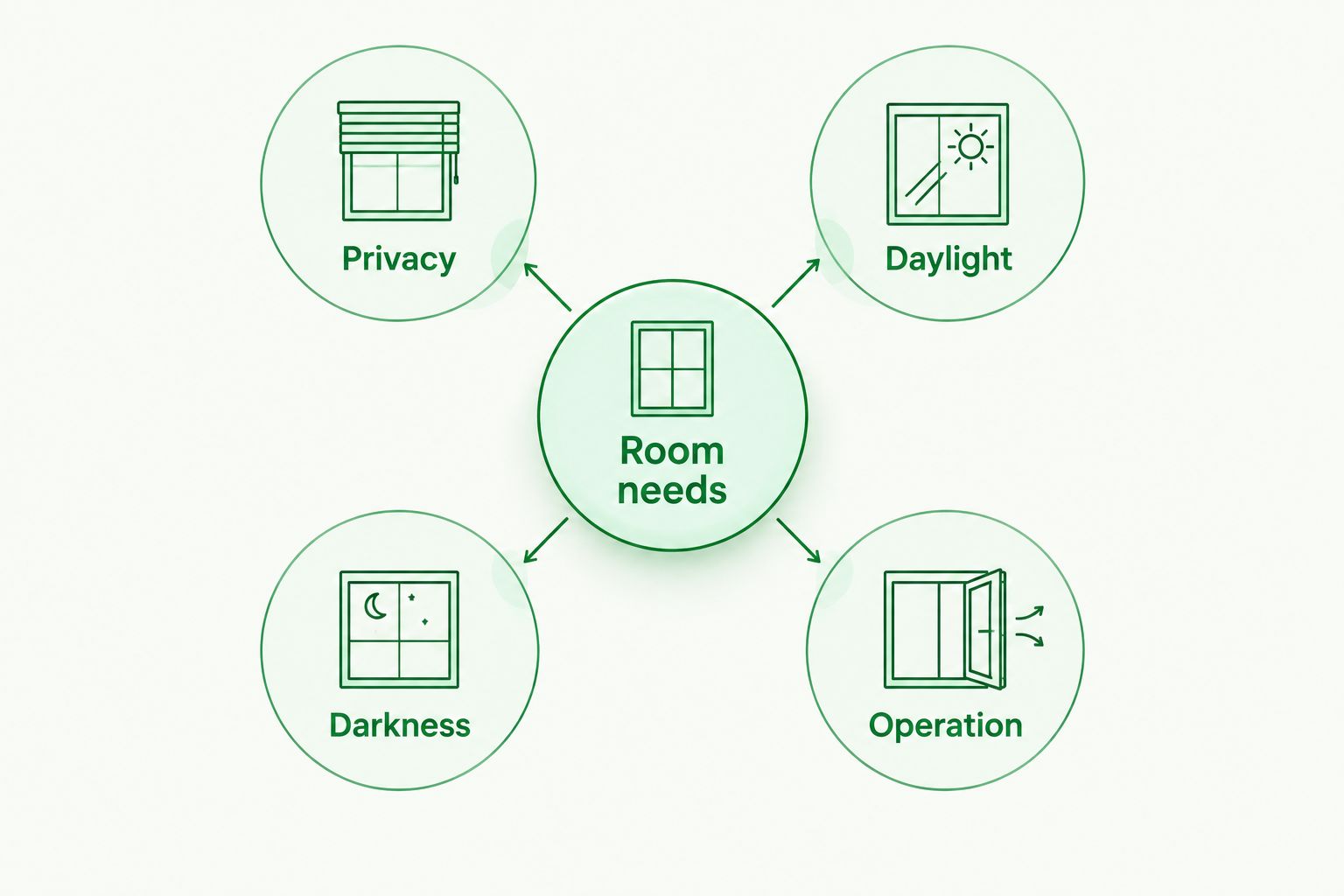
Start with 1 room at a time and describe these needs:
- Privacy: Explain who can see the window and when privacy matters.
- Daylight: Describe the light you want to keep and the glare you want to reduce.
- Darkness: Identify whether the room needs sleep-focused light blocking.
- Operation: Note hard-to-reach windows and your interest in manual or motorized control.
Ask Olsson Smart Shades about arranging an in-home consultation or requesting a quote. Describe the problem in plain terms: you want daylight at breakfast, privacy after dark, or a darker bedroom. Ask the proposal to identify the treatment type, selected material, mounting approach, and operation.
Discuss your window needs
Ask about custom measurements, treatment choices, and installation for your Columbus or Central Ohio home.
FAQ
What's the best custom blind for privacy and light control?
Faux wood blinds are the best default for adjustable everyday privacy and daylight. Their slats tilt without raising the whole blind, but they do not provide blackout darkness.
Are blackout cellular shades better than blinds for a bedroom?
Blackout cellular shades are the better choice when bedroom darkness is the priority. Their fabric blocks light through the material, but mounting and edge gaps still affect the installed result.
Can people see through solar shades at night?
Solar shades are not a dependable nighttime privacy barrier. When your interior is illuminated and the exterior is dark, the screen fabric can allow views into the room.
Do plantation shutters make a room completely dark?
Plantation shutters do not reliably make a room completely dark. Light can pass through louver gaps and panel joints, so choose them for adjustable privacy rather than a blackout result.
Does motorizing a shade improve its privacy?
Motorizing a shade changes its operation, not the privacy of its fabric. The material, coverage, and closed position determine how well the shade limits views inside.
Should I choose inside-mounted or outside-mounted shades?
Choose the mounting approach after checking the window depth, obstructions, and required coverage. Inside mounting sits within the opening; outside mounting extends coverage beyond it, but the installation still needs a window-specific plan.
How do I arrange help choosing custom window treatments in Columbus?
Ask Olsson Smart Shades about an in-home consultation or a quote for your window-treatment project. Describe each room's privacy, daylight, darkness, and operation needs so the discussion starts with the problem you want to solve.
One last thing
For your 2026 project, check the window from outside after dark before approving a privacy-focused choice. Turn on the room lights and look from the sightline that concerns you, where it is safe and permitted.
Judge privacy from the observer's side of the window. Your view looking out does not tell you everything about someone else's view looking in.