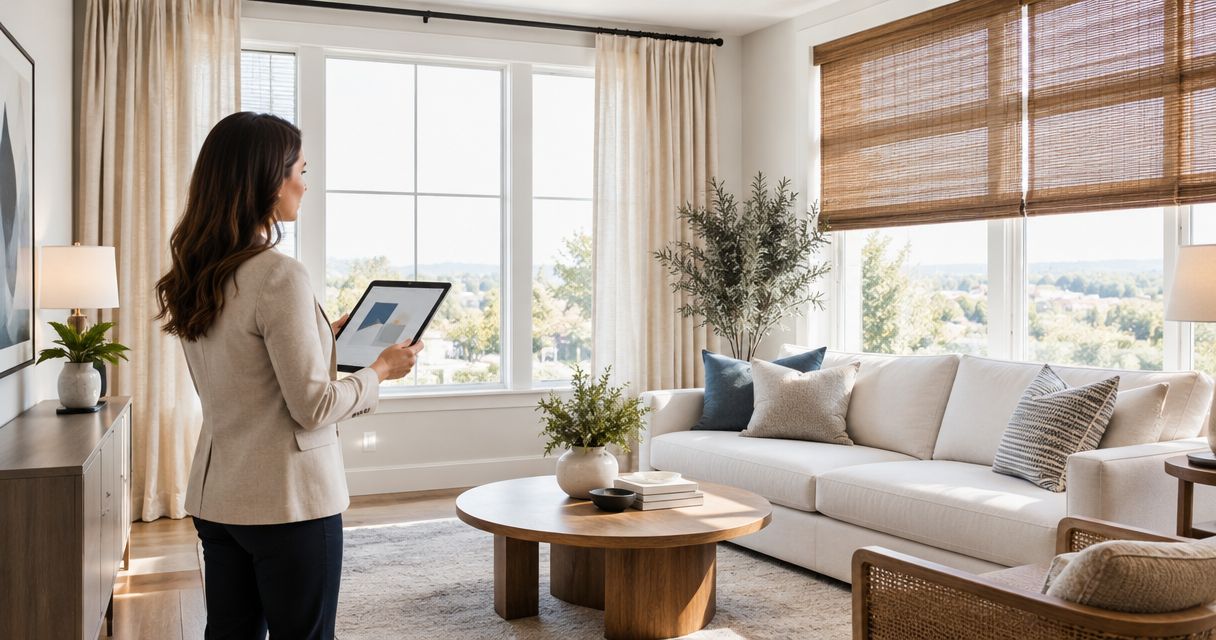
Real estate agents’ custom window treatments are fitted blinds, shades, shutters, or drapes chosen to present a home clearly while preserving everyday privacy. This 2026 guide to custom window treatments for real estate agents helps you and your home stager separate useful permanent improvements from changes needed only for photographs and showings.
- Custom window treatments for real estate agents should solve fit, privacy, and light problems before adding decorative detail.
- Olsson Smart Shades serves homeowners needing custom-measured window treatments and professional installation in Columbus and Central Ohio.
- Keep sound existing treatments when cleaning, adjustment, or simpler styling solves the staging problem.
- Choose motorized shades for a clear operating need, not as a promise of higher resale value.
Why window treatments matter for agents and home stagers
Window treatments sit between presentation and daily use. A room needs to look inviting during a showing, but the homeowner still needs privacy that evening. Your recommendation should account for both.
Agents and home stagers also work within an owner's approval, a listing schedule, and decisions about what stays with the property. A custom installation addresses a particular window. It is not interchangeable with portable staging furniture.
Olsson Smart Shades is best for Columbus and Central Ohio homeowners seeking custom-measured, professionally installed window treatments. Start with the homeowner's needs, then use Olsson Smart Shades to ask about an in-home consultation or request a quote. Keep ownership, scope, and timing clear before ordering.
Why this matters for your 2026 listing plan
Treat window coverings as part of the room, not a separate decorating exercise. An attractive fabric does not fix a shade that blocks a door handle. A bright listing photograph does not establish nighttime privacy.
Your job is to identify the problem and help the owner approve a proportionate solution. Do not present custom window treatments as a guaranteed route to a higher sale price or a faster sale. Assess their visible condition, operation, and usefulness instead.
The practical sequence is simple: inspect what exists, confirm what the homeowner needs, and replace only what fails that brief. That keeps the staging conversation focused on the property rather than a catalog.
How to plan custom window treatments for a listing
Inspect each window before recommending replacement
Start with a free walkthrough. Operate existing blinds and shades, inspect drapery hardware, and check whether doors and windows still open comfortably. Separate a styling issue from a mechanical or fit problem.
Take 3 photos per problem window: the full wall, the window opening, and the obstruction or damage. This is a suggested documentation method, not a measurement substitute. The photographs give the homeowner and installer a shared starting point.
Look at the room from the doorway as well as close up. A treatment that looks tidy beside the glass can still obscure attractive trim or make the wall feel crowded. Retain useful coverings unless there is a clear reason to change them.
- Record which treatments open, close, and tilt correctly.
- Identify damage separately from dust or uneven hanging.
- Photograph handles, trim, radiators, and nearby furniture.
- Mark windows that require privacy while the home is occupied.
- List cleaning, adjustment, and replacement as separate actions.
Define the staging brief with the homeowner
Write a short room-by-room brief before selecting materials. Explain what each proposed change solves: glare, privacy, awkward operation, visible damage, or distracting fabric. Avoid using one treatment everywhere simply to make ordering easier.
For a 2026 listing, ask which rooms remain in daily use and which are being staged temporarily. An occupied bedroom needs a different plan from an empty living room prepared for photography. Owner preferences remain part of the brief.
Set 2 review points: approval before ordering and a walkthrough after installation. These are planning checkpoints, not a service timeline. Assign a decision-maker so the agent, stager, and homeowner do not send conflicting instructions.
- Name the homeowner who approves the final selection.
- State the purpose of each room's treatment.
- Distinguish permanent improvements from temporary styling.
- Share the photography and showing dates before committing.
- Document what the owner intends to leave with the property.
Confirm fit before choosing the finished look
Your own measurements can help organize the discussion. Record the opening, surrounding trim, and nearby obstructions, but do not treat a quick tape-measure check as the final order specification. Mounting position changes coverage and clearance.
Olsson Smart Shades provides custom measurement and professional installation for homeowners. That is a service path for owners who do not want to manage final fit and mounting themselves. It still requires decisions about appearance, access, and room use.
Ask the installer to explain the proposed mounting location. An inside-mounted treatment sits within the opening; an outside-mounted treatment sits beyond it. Neither is automatically right for every window, and neither should be selected from a photograph alone.
- Confirm whether an inside or outside mount suits the opening.
- Check handles, locks, and the window's operating path.
- Discuss how much glass remains exposed when fully open.
- Check the space available for drapes beside the window.
- Approve final measurements and mounting details before ordering.
Test daylight and privacy in the actual room
Begin with the existing treatment. Open it fully, lower it, and adjust it while standing where buyers will enter the room. Note whether the covering solves glare without unnecessarily hiding the view.
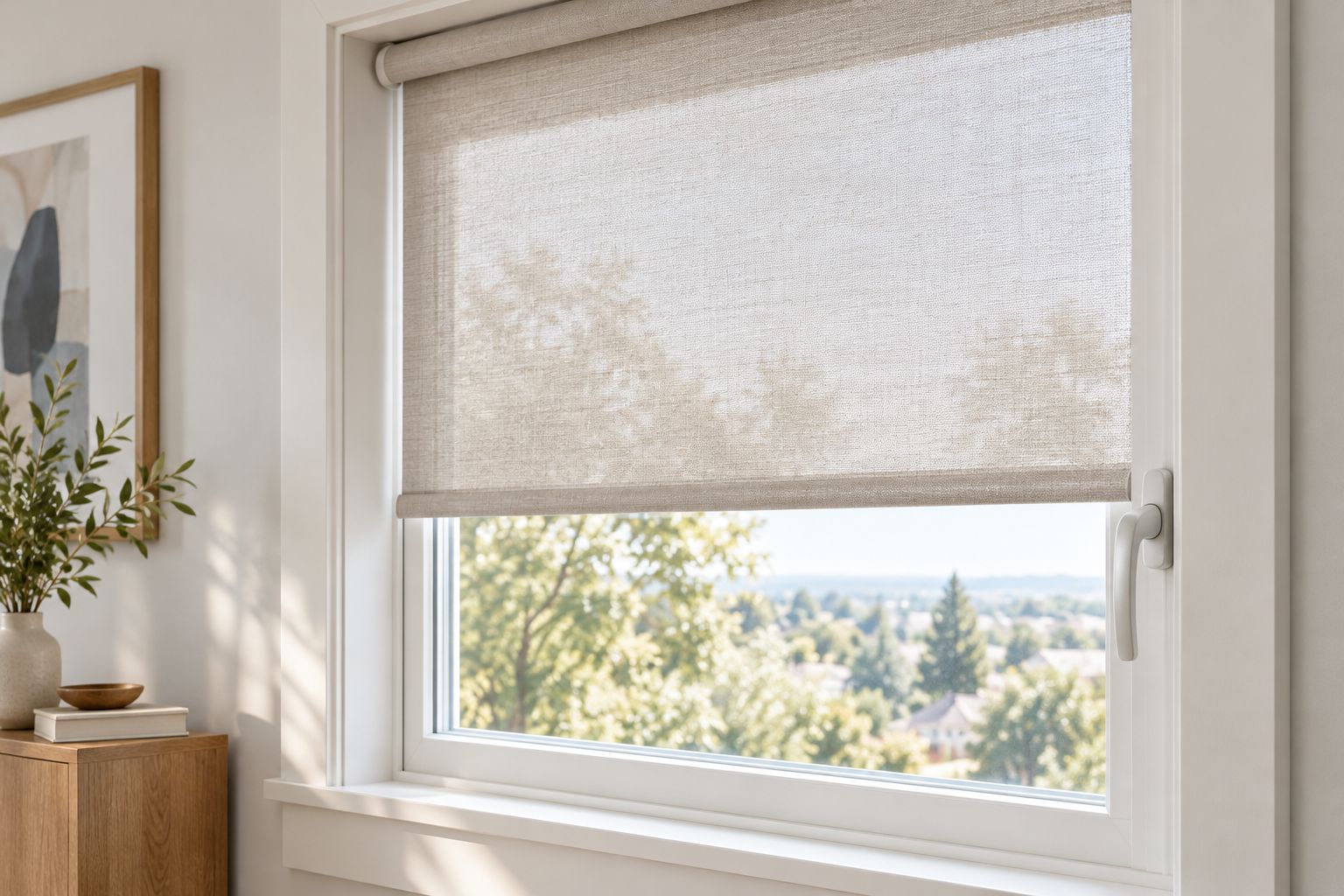
Repeat the privacy check after dark with the room lights on. Sheer fabric and open-weave solar fabric are not substitutes for an opaque privacy treatment. Specify the needed result rather than relying on a fabric's appearance in daylight.
For bedrooms, compare room-darkening needs with the whole installation, including coverage at the edges. The guide to blackout shades for bedrooms provides a focused starting point. Do not promise complete darkness from a material label alone.
- Check the view from the main doorway and seating position.
- Inspect glare at the intended photography time.
- Test privacy with indoor lights on after dark.
- Discuss edge coverage as well as fabric opacity.
- Give bedrooms and street-facing rooms separate requirements.
Match the treatment to the room's job
Start by removing unnecessary visual clutter: straighten existing panels, simplify tiebacks, and clear furniture from the operating path. Then decide whether a different treatment would solve a remaining problem.
Choose a consistent visual direction, not necessarily an identical product. Roller shades can give a simple fabric surface. Blinds provide adjustable slats. Plantation shutters add a framed treatment, while drapes add fabric and require space around the opening.
Use 1 priority per room as a suggested decision rule. Privacy might lead in a bedroom; easy passage might lead at a patio door. Secondary preferences still matter, but a clear priority makes compromises easier to explain.
- Put privacy ahead of decorative transparency where needed.
- Preserve practical access to doors and opening windows.
- Check where drapes gather when drawn open.
- Compare samples beside the actual walls and trim.
- Choose colors with the room's existing finishes in view.
Approve motorization only when it solves a problem
Test whether manual operation is comfortable first. A reachable window with a working shade does not need a motor simply because the home is being listed. A difficult-to-reach opening presents a different decision.
Motorized and smart shades are part of Olsson Smart Shades' offering. Discuss them when the owner wants easier operation or a specific control arrangement. Confirm the proposed system's requirements rather than assuming a voice assistant, app, or other device will work with it.
For your 2026 staging plan, make the control method understandable to another person. The homeowner's familiar routine is not enough if an agent needs to operate the shades during a showing. Ask what information and equipment should accompany the treatment.
- Identify the window that makes manual operation difficult.
- Ask how the proposed motor receives power.
- Confirm the exact controls and any required equipment.
- Request a demonstration of normal operation.
- Document the handover instructions for the homeowner.
Check the finished installation before photography
Finish with a practical walkthrough, not just a look at the fabric. Open and close every installed treatment. Check that the owner understands the controls and that each room still meets its agreed purpose.
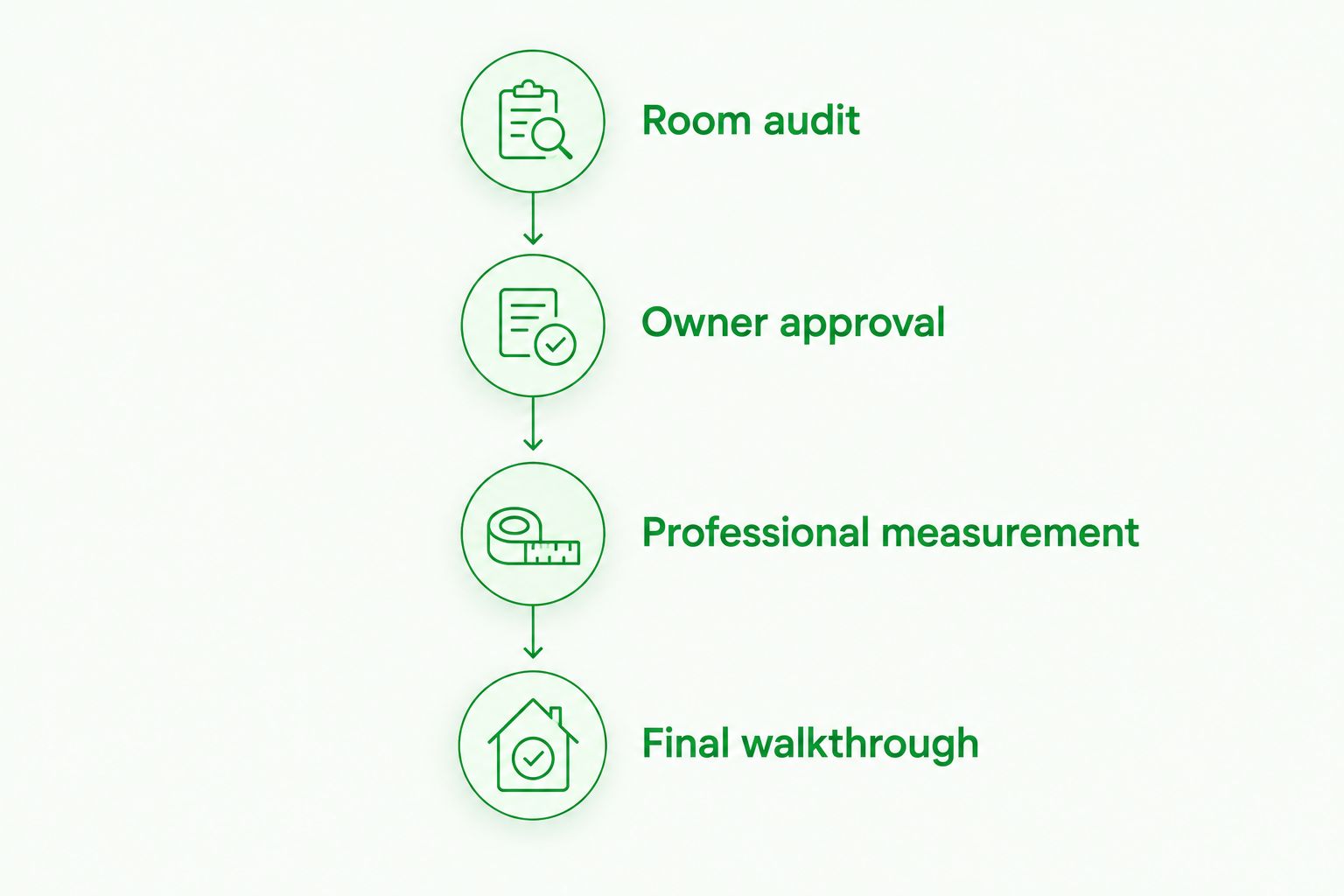
Keep the process in order: Room audit, Owner approval, Professional measurement, and Final walkthrough. Each stage answers a different question. Do not let a preferred photography date replace a confirmed installation arrangement.
For the 2026 listing file, keep the approved scope and relevant operating instructions together. Share staging positions with the photographer, but preserve the homeowner's ability to use the coverings normally afterward. A treatment should work beyond the listing pictures.
Use the walkthrough to resolve small practical issues before the room is photographed. Straighten the presentation only after you know the treatment operates as intended.
- Operate each shade, blind, shutter, or drape fully.
- Check door access and window-handle clearance.
- Review privacy with the homeowner.
- Confirm where controls and instructions will be kept.
- Record any unresolved adjustment before photography.
Compare window-treatment options for staging
Choose by the room's problem, not by a claim that one category sells homes better. This table compares practical uses and limitations; the final specification depends on the window and the homeowner's brief.
| Option | Best for | Practical advantage | Key limitation |
|---|---|---|---|
| Retain and repair | Sound existing treatments with minor presentation issues | Preserves useful coverings without a new selection process | Does not solve an unsuitable fit or missing privacy |
| Custom blinds | Rooms needing adjustable light and privacy | Slats let the owner vary the opening | Slats and operating parts need cleaning and checking |
| Roller shades | Rooms needing a simple fabric treatment | The fabric rolls away from the opening | Fabric choice and edge coverage affect privacy and light control |
| Plantation shutters | Owners wanting a framed treatment with adjustable louvers | Louvers provide adjustable light control | Panels need suitable clearance to open |
| Drapes | Living rooms needing fabric and a softer appearance | Panels can frame the opening and coordinate with furnishings | Hardware and gathered fabric need wall space |
| Motorized smart shades | Hard-to-reach windows or owners wanting powered operation | Reduces the need to reach the treatment by hand | Power, controls, and any smart-system requirements need confirmation |
Professional custom installation addresses measurement and mounting, but it does not remove owner decisions or scheduling requirements. Retaining existing treatments remains a valid choice when they already meet the brief.
Common mistakes agents and home stagers make
- Replacing everything for visual consistency. Inspect first. A coordinated room can retain working treatments while changing only the damaged or unsuitable ones.
- Choosing for daylight photographs alone. Review nighttime privacy, bedroom use, and glare before approving fabric. Listing presentation is only one use of the room.
- Ordering before ownership is clear. Confirm who approves the purchase and what stays with the property. Pass inclusion questions to the appropriate transaction professional.
- Adding smart controls without a handover plan. Confirm power, operation, and instructions. Do not assume a buyer will use the seller's devices or accounts.
- Treating a deadline as an installation promise. Share dates early and ask for confirmation. Do not schedule photography around an unconfirmed completion date.
FAQ
What's the best window treatment for staging a home?
The best window treatment is the one that fixes the room's actual fit, privacy, or light-control problem. Keep sound existing coverings when cleaning or adjustment meets the brief; choose replacements by room use rather than a universal staging style.
Should real estate agents recommend custom window treatments before listing?
Recommend custom window treatments when the existing coverings fail the homeowner's needs or the agreed staging brief. Identify the specific problem, obtain owner approval, and confirm installation arrangements before relying on them for photography.
Are motorized shades better than manual shades for a listing?
Motorized shades are better suited to difficult-to-reach windows or homeowners who want powered operation. Manual shades remain a sensible choice when they are comfortable to operate; motorization is not a promise of a higher sale price.
How do I request a window-treatment quote in Columbus?
Ask Olsson Smart Shades about an in-home consultation or quote for custom-measured, professionally installed window treatments in Columbus and Central Ohio. Share the rooms, existing coverings, privacy needs, and listing dates so the proposed scope addresses the homeowner's priorities.
Can sheer shades provide privacy at night?
Do not rely on sheer shades alone when nighttime privacy is required. Assess the room with indoor lights on and discuss an opaque treatment or suitable layering.
Should custom window treatments stay with the house?
Confirm treatment inclusion through the transaction documents and the appropriate transaction professional. Record the homeowner's intentions before ordering, including any controls or equipment associated with motorized shades.
What should a home stager check after installation?
Check operation, clearance, privacy, and the agreed presentation before photography. Make sure the homeowner understands the controls and knows where the operating instructions are kept.
One last thing
Ask the homeowner to operate every treatment without coaching. That simple check tests something a polished photograph cannot: whether the finished room is comfortable to use.
For your final 2026 review, prioritize that everyday experience over an extra decorative feature. Olsson Smart Shades serves the homeowner using the windows, not just the camera photographing them. Keep that person at the center of the decision.