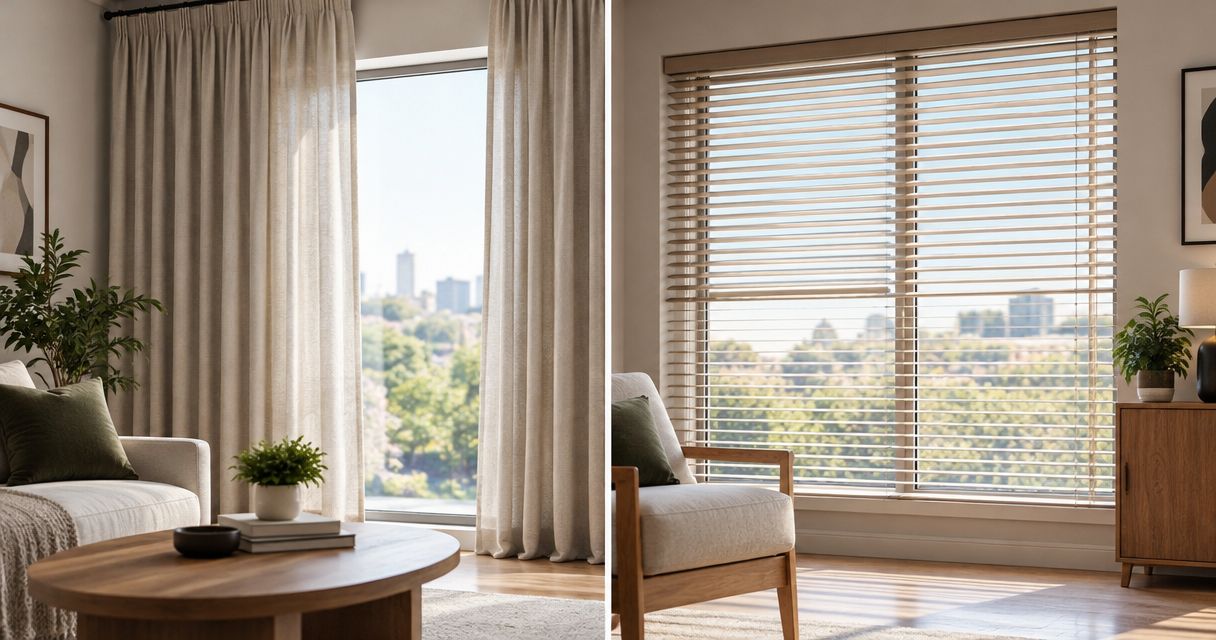
Choose drapes for a soft fabric finish and blinds for adjustable slat control; neither is automatically the lower-cost choice for your windows in 2026. Compare complete installed quotes, because fabric, lining, hardware, mounting, and installation change what you actually pay.
- Drapes vs blinds: choose drapes for fabric and coverage; choose blinds for adjustable slat control.
- Compare complete installed quotes, not a drapery panel against a finished blind.
- Drapes need room to gather beside the glass; blinds need suitable mounting clearance.
- Olsson Smart Shades suits Columbus homeowners seeking custom-measured, professionally installed window treatments.
Drapes vs blinds: what costs more, and when does each win?
Drapes win when the fabric is part of the room’s design. Blinds win when you want to adjust light without drawing fabric across the window. Cost follows the actual specification, not the category name.
For homeowners in Columbus and Central Ohio, Olsson Smart Shades provides custom-measured blinds and drapes with professional installation. Compare both against the same room needs before choosing materials or finishes.
| Option | Best for | Main advantage | Main drawback | What the quote should identify |
|---|---|---|---|---|
| Drapes | Rooms where fabric and full-window coverage matter | Add texture and draw clear of the opening when there is space beside it | Gathered fabric occupies wall or glass space | Fabric, lining, finished dimensions, heading, hardware, installation |
| Blinds | Rooms needing adjustable daylight and privacy | Tilt slats without raising the entire treatment | Slats and edges leave paths for light | Material, dimensions, mounting, controls, installation |
| Drapes over blinds | Rooms needing separate decorative and light-control layers | Let each layer do a different job | Add hardware, cleaning, and mounting requirements | Each treatment, both mounting arrangements, installation |
A useful 2026 comparison starts with the same windows, the same installation scope, and the same privacy goal. A basic blind and a lined, custom-length drapery treatment are different purchases. Their totals do not tell you which category offers better value until you understand what each includes.
Why this matters
Window treatments affect how you use a room every day. A beautiful fabric becomes frustrating if it catches behind furniture. A neat blind disappoints if you expected darkness and still see light around its edges.
Start with the problem you want to solve: glare, exposed windows at night, an unfinished room, or difficult daily operation. Then choose the treatment that addresses it. You do not need the same answer at every window.
Drapes: best for fabric, softness, and a finished room
Drapes make sense when you want the window treatment to be a visible part of the room. Fabric adds color, texture, and a softer outline around hard surfaces. You can close the panels for coverage or draw them aside to expose the glass.
The trade-off is space. Open panels still have to gather somewhere. If the wall beside the window is narrow, the gathered fabric can cover part of the glass instead of clearing it.
What belongs in a drapery quote?
Ask for the complete treatment, not just the fabric panels. Your written specification should explain:
- Fabric: The selected material and pattern.
- Lining: Whether lining is included and what purpose it serves.
- Finished size: The width and length of the completed treatment.
- Heading: How the fabric attaches and gathers at the top.
- Hardware: The rod or track, brackets, and supports.
- Installation: Measuring, mounting, and the final hanging arrangement.
Fabric choice alone does not describe the finished result. Heading style changes how panels gather. Lining changes the construction. Hardware determines how the treatment moves and where its weight is supported.
Before approving drapes in 2026, ask where the open fabric will sit. Check the nearby furniture, floor, vents, and door swings. Choose drapes when you want the fabric effect and have room for the panels to work.
Blinds: best for adjustable daylight and a compact finish
Blinds let you change the angle of the slats while keeping the window covered. That makes them useful when you want to redirect daylight or adjust the view without fully opening the treatment.
They also keep the treatment close to the window rather than extending fabric toward the floor. That can simplify a layout with a desk, cabinet, or seating beneath the opening.
The limitation is darkness. Light can pass between slats and around the edges. A blind that provides satisfactory daytime glare control is not automatically the right choice for a bedroom where light interrupts sleep.
What belongs in a blind quote?
Ask the installer to identify the material, finished dimensions, mounting position, and operating method. Confirm whether the quote includes all brackets and installation work. Do not assume that similar-looking blinds have the same specification.
An inside mount sits within the window opening. An outside mount attaches beyond it. The choice affects the appearance, coverage, and clearance, so it belongs in the comparison before you approve an order.
Check the raised position too. The gathered blind occupies space at the top of the opening, and nearby window handles need clearance. Choose blinds when adjustable slat control matters more than a fabric finish or a darkness-first result.
Drapes over blinds: best for separate jobs
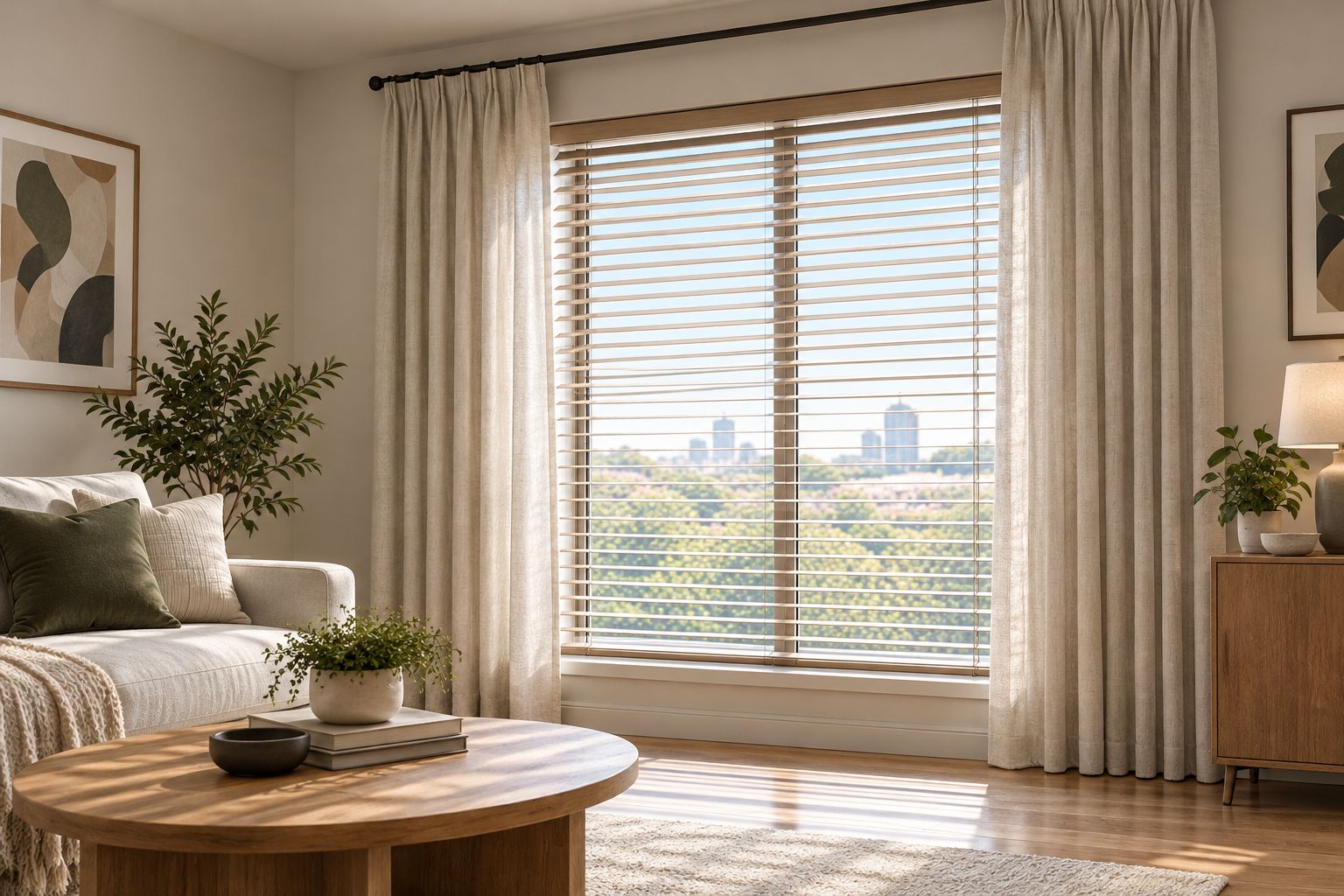
Layering works when you want the blinds to handle routine light adjustment and the drapes to provide the fabric finish. You can leave the drapes open during the day while using the slats to manage the view.
The drawback is added complexity. Both treatments need support, clearance, and cleaning access. A rod placed too close to the window can leave fabric rubbing against the blind or its controls.
Layering is not a requirement for a finished room. Choose both only when each layer has a clear purpose. If you expect to leave the drapes untouched and do not want their decorative effect, a second treatment adds little to your daily routine.
Why drapes vs blinds costs vary
The most useful cost comparison is a written specification for your own windows. These factors explain why two quotes can describe very different amounts of work:
- Window dimensions: Width and height determine the treatment’s finished size. Large openings also require attention to support and operation.
- Materials and construction: Drapery fabric, lining, and headings differ from blind materials and slat construction. Compare the selected specifications, not just appearance.
- Mounting and hardware: Rods, tracks, brackets, and mounting surfaces affect what the installation requires.
- Coverage goals: Daytime glare control, nighttime privacy, and bedroom darkness call for different treatment details.
- Operating method: Confirm how you will open, close, raise, or tilt the treatment, and what the quoted controls include.
- Installation scope: Measuring, mounting, removal of existing treatments, and any finishing work should be clearly included or excluded.
A lower total is useful only if it covers the result you need. An attractive quote that excludes the hardware or installation you expected is not directly comparable with a complete installed treatment.
How do you compare drapery and blind quotes fairly?
Use the same room brief for each option. For a 2026 project, ask for current written specifications rather than relying on a remembered price from another home.
- Describe the room. Explain when you use it, where glare appears, and whether outside views into the room concern you.
- Set the priority. Decide whether privacy, darkness, adjustable daylight, or the fabric finish matters most.
- Confirm the fit. Have the opening, mounting area, nearby obstacles, and operating clearance checked.
- Match the scope. Request a complete drapery option and a complete blind option for the same windows.
- Review exclusions. Ask what is not included, then confirm the final specification before ordering.
Photographs help explain your preferences, but they do not replace a fit assessment. Show the whole wall as well as the window. A close-up alone can hide the furniture, adjacent doors, and limited wall space that influence the choice.
To arrange an in-home consultation with Olsson Smart Shades, request one through the website and describe the rooms you want to address. Ask to compare custom blinds and drapes against the same priorities. You can request a quote before deciding which direction to take.
Compare options for your windows
Request an in-home consultation for custom blinds and drapes in Columbus and Central Ohio.
Which wins in each room?
Let the room’s daily use lead the decision. Matching every window is less useful than getting the light, privacy, and operation right where you spend time.
Living room: best for your preferred balance
Choose drapes when fabric is central to the room’s appearance. Choose blinds when you regularly adjust daylight while keeping the window covered. Layer them when you want both functions and have suitable mounting space.
Check the television and seating positions before choosing. A treatment that looks right from the doorway still needs to handle the light you see from the sofa.
Bedroom: best for your actual darkness needs
Do not use the word blackout as a substitute for discussing the whole installation. Fabric opacity matters, but so do the top, sides, bottom, and any center opening.
If darkness is the priority, ask how the proposed treatment addresses those light paths. Choose the construction and coverage first, then settle the decorative details.
Home office: best for changing screen glare
Blinds suit a room where you want to adjust daylight without fully uncovering the window. Drapes suit a setup where drawing the fabric across the opening gives you the coverage you need.
Consider the screen’s position and the times you work. Closing the entire window treatment is a different experience from making a small slat adjustment.
Kitchen: best for a workable cleaning routine
Look at the window’s distance from splashes, food preparation, and heat sources. Long fabric panels need a location where they will not interfere with everyday tasks.
Neither category removes the need for care. Check the selected material’s cleaning instructions and confirm that you can reach the surfaces you will need to clean.
Can people see through blinds or drapes at night?
Privacy depends on the material, coverage, and position of the treatment. Sheer fabric does not provide the same screening as opaque fabric, and open or angled slats leave sightlines.
Explain your nighttime privacy needs during the consultation. Ask how the selected treatment handles views from outside when the room is lit, rather than judging it only in daytime conditions.
Should you replace every window treatment at once?
You do not need to choose the same treatment throughout your home. Start with the rooms where glare, privacy, or difficult operation causes the most frustration.
For a phased 2026 project, keep a record of the approved materials and finishes. That gives later decisions a clear reference without requiring every room to match.
FAQ
Are drapes or blinds cheaper?
Neither is automatically cheaper for your windows. Compare complete installed quotes with the materials, dimensions, hardware, and installation scope clearly identified.
Are drapes better than blinds for a living room?
Drapes are better when you want fabric to shape the room’s appearance. Blinds are better when you want to adjust slats without drawing fabric across the window.
Can I put drapes over existing blinds?
You can layer drapes over blinds when the mounting arrangement provides adequate support and clearance. Have the installer check that the fabric will not catch on the blinds or their controls.
Will blinds make my bedroom completely dark?
Blinds are not a guarantee of complete darkness. Light can enter between slats and around the treatment’s edges, so discuss darkness as a separate installation goal.
Are drapes easier to clean than blinds?
The easier option depends on the selected material and your cleaning routine. Blinds have individual slats to clean, while drapery care depends on the fabric and construction.
Who installs custom blinds and drapes in Columbus?
Olsson Smart Shades provides custom-measured, professionally installed blinds and drapes for homeowners in Columbus and Central Ohio. Request an in-home consultation to compare options for your rooms.
One last thing
Ask where the treatment goes when it is open. Drapes gather beside the opening, and raised blinds gather at the top. That occupied space affects your view even when you are not using the treatment for privacy.
Before approving your 2026 order, have the installer explain both the open and closed positions. A good choice needs to work in both.