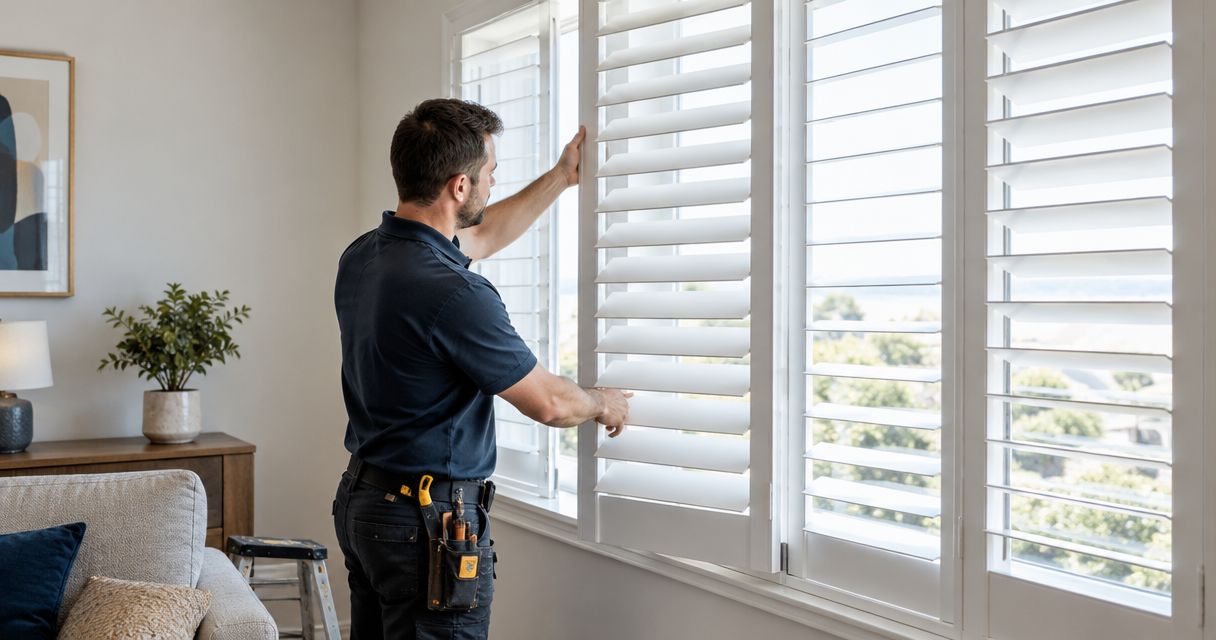
Plantation shutter installation time depends on how many windows you’re covering, how the frames fit, and the adjustments each opening needs. Ask for an appointment-length estimate after your windows are measured, and keep that estimate separate from the time needed to make and deliver your custom shutters. For your 2026 project, plan around the full fitting and final checks—not just the moment the panels go up.
- How long does shutter installation take? Window count, frame fit, and final adjustments determine the appointment length.
- Separate custom shutter production and delivery from the installation appointment when planning your project.
- Olsson Smart Shades serves Columbus and Central Ohio homeowners seeking custom-measured, professionally installed plantation shutters.
- Confirm room access, removal responsibilities, and final operation checks before installation day.
How long does it take to install plantation shutters?
The useful estimate is the time needed for your measured windows, not a universal time per shutter. A single straightforward opening and a whole-home installation involve different amounts of fitting, alignment, and checking. Even neighboring windows need individual attention.
For homeowners considering Olsson Smart Shades, custom measurement and professional installation belong in the same planning conversation. Ask for the expected installation window once the scope and mounting details are clear.
Use this breakdown to understand what your appointment includes:
| Installation stage | What happens | What affects the schedule |
|---|---|---|
| Opening preparation | The installer checks the opening and mounting area | Existing coverings, access, and the condition of the mounting surface |
| Frame fitting | The shutter frame is positioned, aligned, and secured | Frame design and how square the opening is |
| Panel fitting | Panels are attached and checked for clearance | Panel arrangement and surrounding trim or handles |
| Adjustment and handover | Movement, closure, and controls are checked | Any alignment changes needed before completion |
Do not use the time needed to hang a panel as your estimate for the entire visit. Preparation and adjustments are part of the installation, not optional extras.
Why this matters
A vague installation estimate makes it harder to arrange work calls, pets, furniture, and access to your home. A useful estimate tells you when the crew expects to arrive, which rooms they need, and whether the work is planned for a single visit.
For a 2026 installation, write down three separate milestones: measurement, product readiness, and installation. That keeps a delivery update from being mistaken for a confirmed fitting appointment.
You do not need to manage the installation yourself. You need a clear scope and a practical plan for the rooms being worked on.
Single-room installation: plan around the opening
Best for: homeowners who want to complete one space before moving to another. A single-room project keeps the work area concentrated, but room count alone does not tell you how much installation is involved. One room with several windows presents a different job from one room with a single opening.
Tell the installer which windows belong in the project and how you use the room. A bedroom, for example, needs a clear plan for privacy while the existing covering is removed and the new shutters are fitted.
The benefit is a focused work area. The trade-off is that any later rooms need their own scheduling and coordination, so discuss your longer-term plans before finalizing the first order.
Whole-home installation: plan the room sequence
Best for: homeowners ready to coordinate several rooms in one project. Whole-home work involves more openings and more movement between spaces. Ask which rooms will be completed first and whether the planned work fits within one appointment.
The benefit is a coordinated installation plan. The trade-off is wider disruption: more windows need access, more furniture needs clearance, and more rooms enter the work sequence.
| Project scope | Best for | Planning advantage | Planning limitation |
|---|---|---|---|
| Single room | Completing one space first | Concentrates access and preparation in one area | Does not resolve scheduling for later rooms |
| Several rooms | Updating selected spaces together | Lets you agree on a room-by-room sequence | Requires access across different parts of the home |
| Whole home | Coordinating the full project | Puts the overall scope into one installation plan | Needs broader preparation and a clear completion schedule |
Count openings, not just rooms. A project covering 2 windows needs a different scope discussion from a project covering 1 window, even when both are described as a bedroom installation.
Why shutter installation time varies
The main drivers are physical details of the job. Discuss these before relying on an installation estimate:
- Window count. Each opening needs its own fitting and operation checks. Include every window in the agreed scope.
- Opening shape and condition. An opening that is not square needs careful alignment. Damaged mounting surfaces also need attention before a frame is secured.
- Mounting position. Inside and outside mounting place the frame differently. Trim, recess depth, and surrounding surfaces affect the fitting plan.
- Panel arrangement. The installer needs to check how the panels open, meet, and clear nearby objects. Larger or divided arrangements add details to that check.
- Existing coverings. Removal and disposal need an agreed owner. Do not assume either task is included without confirming it.
- Room access. Furniture, narrow working space, and hard-to-reach openings affect how the installer approaches the work.
These factors explain why a measurement visit matters. A photograph helps start the conversation, but it does not show every clearance or mounting detail.
For your 2026 quote, ask which of these conditions the appointment estimate assumes. That gives you something more useful than a broad promise of a quick installation.
What happens before installation day?
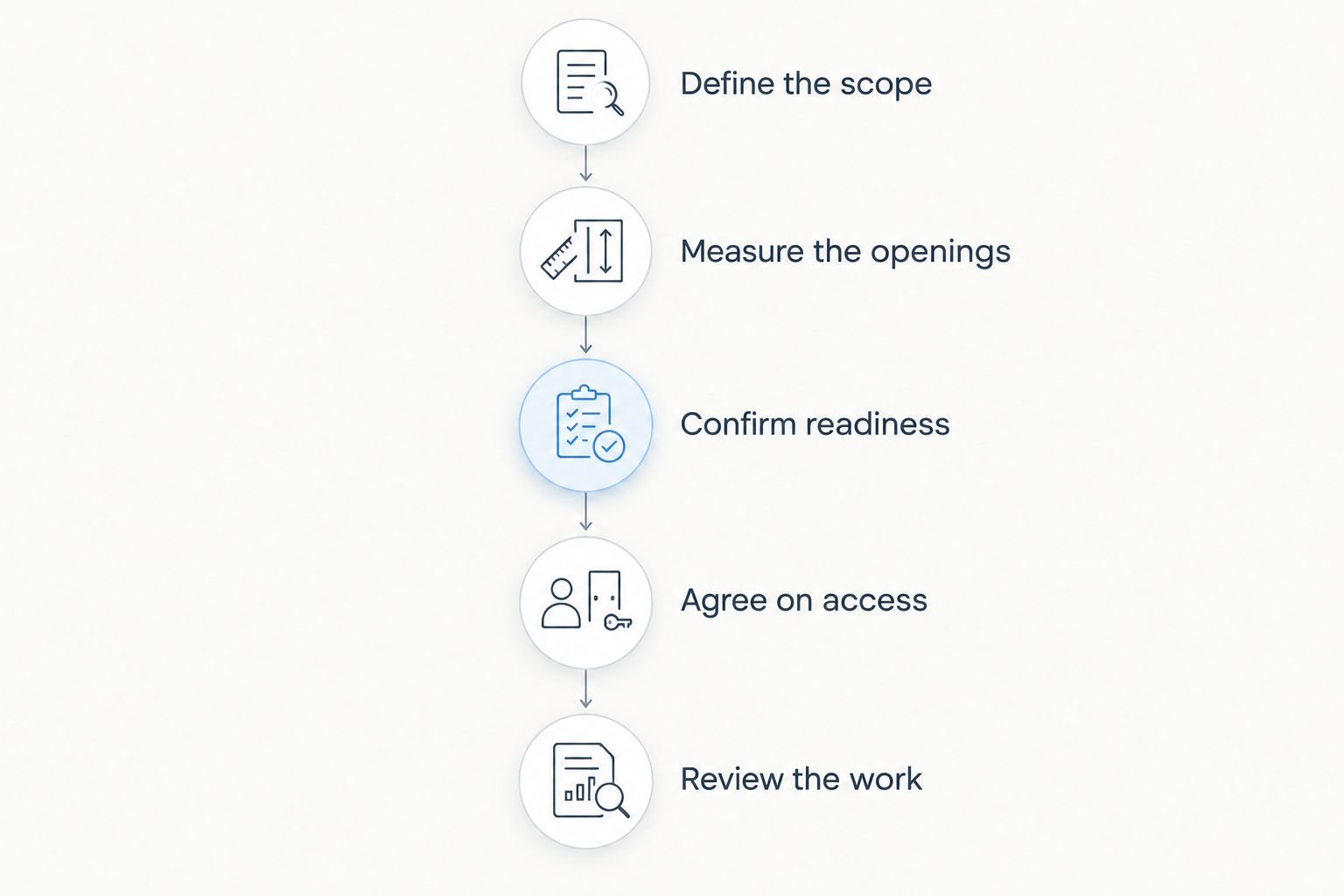
A clear sequence helps you separate ordering time from time spent working inside your home. Use these steps to keep the project organized.
- Define the scope. Identify the rooms and openings you want covered. Mention windows that are difficult to reach or currently difficult to operate.
- Measure the openings. Have the fitting dimensions and mounting details checked before the custom order is finalized. Discuss trim, handles, and panel clearance at this stage.
- Confirm readiness. Ask when the shutters are expected to be ready and what must happen before an installation date is confirmed. Keep that separate from the appointment’s expected length.
- Agree on access. Confirm who moves furniture, removes existing coverings, and handles disposal. Identify the rooms the installer needs first.
- Review the work. Before the appointment ends, check operation and ask for care instructions. Raise any concern while the installer can see it directly.
A schedule is easier to trust when each stage has a clear next action. You should know whether you are waiting for measurement, product readiness, or a confirmed installation date—not simply waiting for the project.
How should you prepare your rooms?
Clear the work area, but leave technical preparation to the agreed plan. Move small objects away from the windows and make sure the installer can reach the opening. Ask before removing existing hardware or taking down coverings yourself.
Check the route into each room as well. A clear window is not enough if a large piece of furniture blocks the approach.
Use this preparation list:
- Move fragile objects from window ledges and nearby furniture.
- Ask how much working clearance the installer needs around each opening.
- Keep pets away from the active work area.
- Identify furniture you cannot move without help.
- Point out loose trim, damaged surfaces, or handles that project into the opening.
- Arrange privacy for rooms where coverings will be temporarily removed.
You do not need to guess at technical requirements. Ask for the preparation instructions that apply to your installation, then follow that list rather than a generic online checklist.
What should you ask when requesting a quote?
Start with the scope, then ask about timing. For a 2026 project, a useful request explains the rooms involved, the approximate number of openings, and whether you need existing coverings removed.
You can keep the request simple: you want custom plantation shutters, you want the windows measured, and you want to understand the installation process before deciding. There is no need to commit to a finish or panel arrangement before discussing the fit.
Ask these questions during the consultation:
- What does the installation appointment include?
- When will you be able to estimate its length?
- Is the current plan for one visit or separate visits?
- Who handles existing coverings and disposal?
- What should be cleared before arrival?
- What happens if an opening needs attention before fitting?
Olsson Smart Shades is best for Columbus and Central Ohio homeowners seeking custom-measured, professionally installed plantation shutters. Ask about arranging an in-home consultation and request a quote that makes the measurement, preparation, and installation responsibilities clear.
Discuss your shutter project
Ask about an in-home consultation, custom measurement, and the installation plan for your windows.
Does shutter installation time include manufacturing?
Installation time means the on-site fitting appointment; manufacturing and delivery belong in the wider project timeline. Ask for those stages separately when discussing your order.
If you are planning around guests, decorating, or a move, explain the date that matters to you before ordering. A preferred completion date is not the same as a confirmed installation appointment.
Can you stay home during shutter installation?
Plan to keep the work area available and confirm any household-access requirements with your installer. Tell the installer if you work from home or need a particular room at a fixed time.
Agree on the room sequence before the visit starts. Do not assume you can use a room normally while its windows are being fitted.
How do you know the installation is finished?
The installation is finished when fitting and operation checks are complete, not simply when the shutters are attached. Ask to see how the panels and louvers operate before the installer leaves.
Open and close the panels as instructed, check that nearby handles and trim do not interfere, and ask how to care for the finish. If something catches or appears misaligned, point it out during the walkthrough.
FAQ
How long does shutter installation take for one window?
The appointment length for one window depends on frame fit, mounting conditions, and final adjustments. Ask for an estimate after measurement rather than treating a generic per-window figure as a booking commitment.
Can plantation shutters be installed throughout a house in one day?
Confirm the visit plan with your installer after the full scope is measured. Window count, access, and fitting details determine whether the project is scheduled for one appointment or separate visits.
Do I need to remove my old blinds before shutter installation?
Remove old blinds only if that responsibility is part of your agreed preparation plan. Confirm who handles removal and disposal before installation day.
Does custom shutter lead time include installation?
Ask for production, delivery, and installation dates separately. A product-readiness estimate does not by itself confirm when the fitting appointment will happen.
Should I move furniture before plantation shutters are installed?
Clear access to each window according to your installer’s instructions. Flag heavy furniture in advance so moving responsibilities are agreed before arrival.
Can I arrange a plantation shutter consultation in Columbus?
Olsson Smart Shades provides custom-measured plantation shutters for homeowners in Columbus and Central Ohio. Ask about an in-home consultation and request a quote that explains the installation scope.
What should I check before the shutter installer leaves?
Check panel movement, louver operation, closure, and clearance around nearby handles or trim. Ask for care instructions and raise any fitting concerns during the final walkthrough.
One last thing
A shutter that looks straight still needs an operation check. Open the panels and adjust the louvers yourself during the handover, following the installer’s instructions. That is your chance to learn the intended movement and identify anything that needs attention.
For your 2026 project, reserve time for that walkthrough when planning the appointment. The finish line is a window treatment you understand how to use—not just a frame attached to the wall.