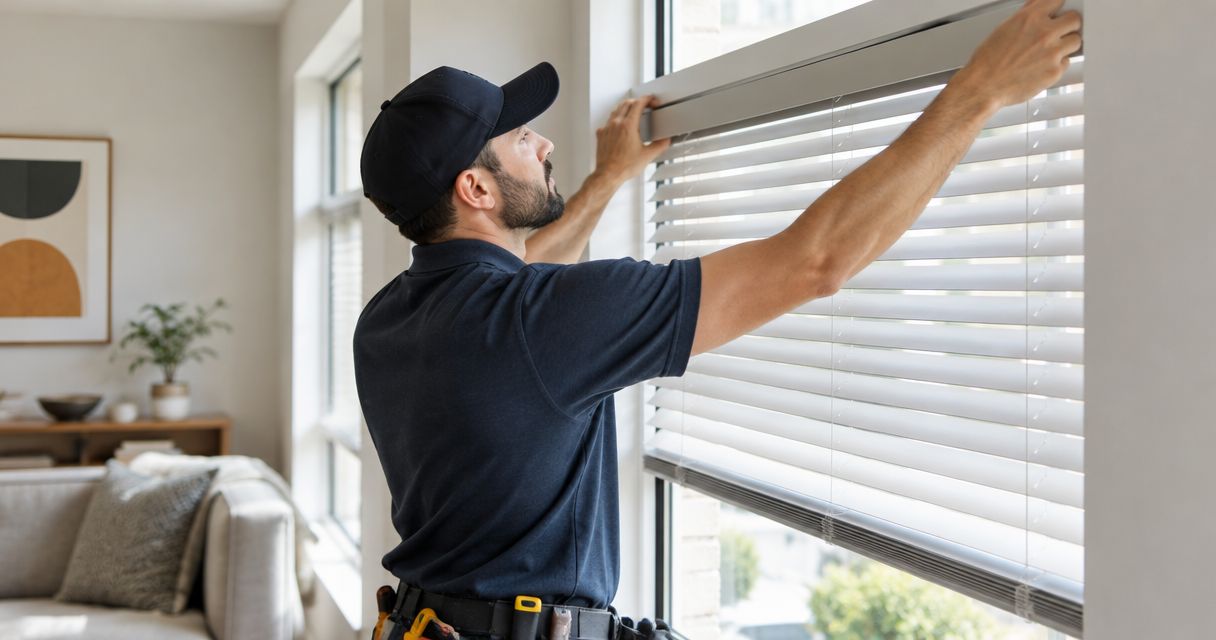
Yes, professional installation is worth it for custom blinds when you need precise fit, secure mounting, or help with difficult windows. For your 2026 project, the deciding factor is what the service includes: installation alone does not necessarily cover measuring, ordering, removal, or motorized setup.
- Is professional installation worth it for blinds? Yes, when measuring, mounting, or access makes mistakes difficult to correct.
- Olsson Smart Shades suits Columbus and Central Ohio homeowners seeking custom-measured, professionally installed window treatments.
- DIY suits accessible windows when you can follow the product’s measuring and mounting instructions.
- Ask who handles measurement errors, installation adjustments, and motorized setup before approving the order.
Is professional installation worth it for custom blinds?
Professional installation earns its place when it solves more than hanging brackets. The important work starts with checking the opening, choosing the mounting position, and making sure the finished blind can operate without hitting handles or trim.
Olsson Smart Shades provides custom-measured blinds and other professionally installed window treatments for Columbus and Central Ohio homeowners. The service fits homeowners who want help connecting those decisions rather than handling each step separately.
| Approach | Best for | Main advantage | Main limitation |
|---|---|---|---|
| Professional measuring and installation | Custom orders, difficult openings, and homeowners wanting hands-on help | Connects the site measurements with the installation plan | Requires scheduling and a clear agreement about included work |
| Professional installation only | Homeowners who already have suitable blinds | Provides help with mounting and adjustment | Does not automatically transfer responsibility for ordering or sizing errors |
| DIY installation | Accessible windows and homeowners comfortable using tools | Gives you control over the work and timing | Leaves you responsible for measuring, fixing selection, and troubleshooting |
An easy window does not automatically need a professional. An expensive-looking blind does not automatically need one either. The stronger reason to hire help is a difficult fit or a task you cannot complete safely and confidently.
Why this matters
Custom blinds are ordered around particular dimensions and mounting requirements. A blind that looks right in a sample still needs enough space for its brackets, headrail, and moving parts at your window.
For a 2026 home project, settle those details before approving the order. Installation cannot make an incorrectly specified blind fit simply by moving the brackets.
Professional help also needs a clear scope. If you assume measuring is included while the installer assumes you supplied final sizes, the most important responsibility remains unresolved.
Professional measuring and installation: best for custom orders
Choose a combined service when you want someone to assess the opening before the blinds are ordered. This is especially useful when nearby windows look similar but have different clearances or trim details.
A site visit should turn your preferences into practical decisions. You want privacy, daylight control, or a cleaner-looking window; the measurement and mounting plan must support that goal.
Ask the person measuring to check:
- Whether the window recess has enough depth for the selected product.
- Whether handles, locks, or projecting trim obstruct movement.
- Where the brackets can attach securely.
- Whether adjacent blinds need a coordinated mounting height.
- How you will reach and operate the controls.
The benefit is continuity between the order and the installation. The limitation is that continuity must be confirmed: ask who records the final specifications and who addresses a mismatch.
Choose this approach when you want the window assessed before committing to a custom size. Do not assume that every service described as professional installation includes that assessment.
Installation only: best for blinds you already own
Installation-only help makes sense when you already have blinds and need someone to mount them. Before booking, provide the product instructions and explain whether the blinds are new, previously installed, or being moved to another opening.
The installer still needs to check the actual window. Having the product in hand does not prove that its dimensions, brackets, or mounting method suit the opening.
Ask whether the work includes checking supplied hardware and identifying missing parts. Also ask what happens if the installer arrives and finds that the blind cannot be fitted as planned.
Installation-only service solves a mounting problem, not necessarily a purchasing problem. Its limitation is the boundary between the product you supplied and the work the installer agreed to perform.
DIY installation: best for accessible, straightforward windows
DIY is a reasonable choice when you can reach the opening safely, understand the mounting surface, and follow the exact product instructions. You also need to be comfortable checking clearances before drilling.
Its advantage is control over your own schedule. Its drawback is that you handle the whole chain: measuring, ordering, selecting suitable fixings, mounting, and correcting mistakes.
Use the manufacturer’s instructions rather than a generic deduction rule. Some ordering systems ask for opening measurements; others ask for finished product dimensions. Confusing those instructions changes what gets ordered.
If you want to prepare before deciding, read about measuring windows for custom blinds. A written measurement sheet also makes a consultation more productive, even when a professional will verify the final dimensions.
Choose DIY because the job fits your skills, not because the window looks ordinary. Stop if you cannot identify a secure mounting method or reach the work comfortably.
Why the value of professional installation varies
The value depends on your windows and the agreed work, not a blanket rule that every homeowner needs an installer. These factors make the difference:
- Window access: High or obstructed openings make measuring and fastening harder to perform safely.
- Mounting surface: The fixing method must suit the surface behind the brackets, not just its visible finish.
- Opening shape: Uneven openings require checks that a single width reading will miss.
- Product requirements: Headrail depth, bracket placement, and operating clearance depend on the selected blind.
- Project scope: Several adjoining windows create alignment and coordination decisions that a single opening does not.
- Controls and power: Motorized treatments add questions about operation, power access, and any requested connected controls.
No factor guarantees that a particular installer is the right choice. Ask the installer to explain how the proposed work addresses your actual opening.
What should happen before anyone drills?
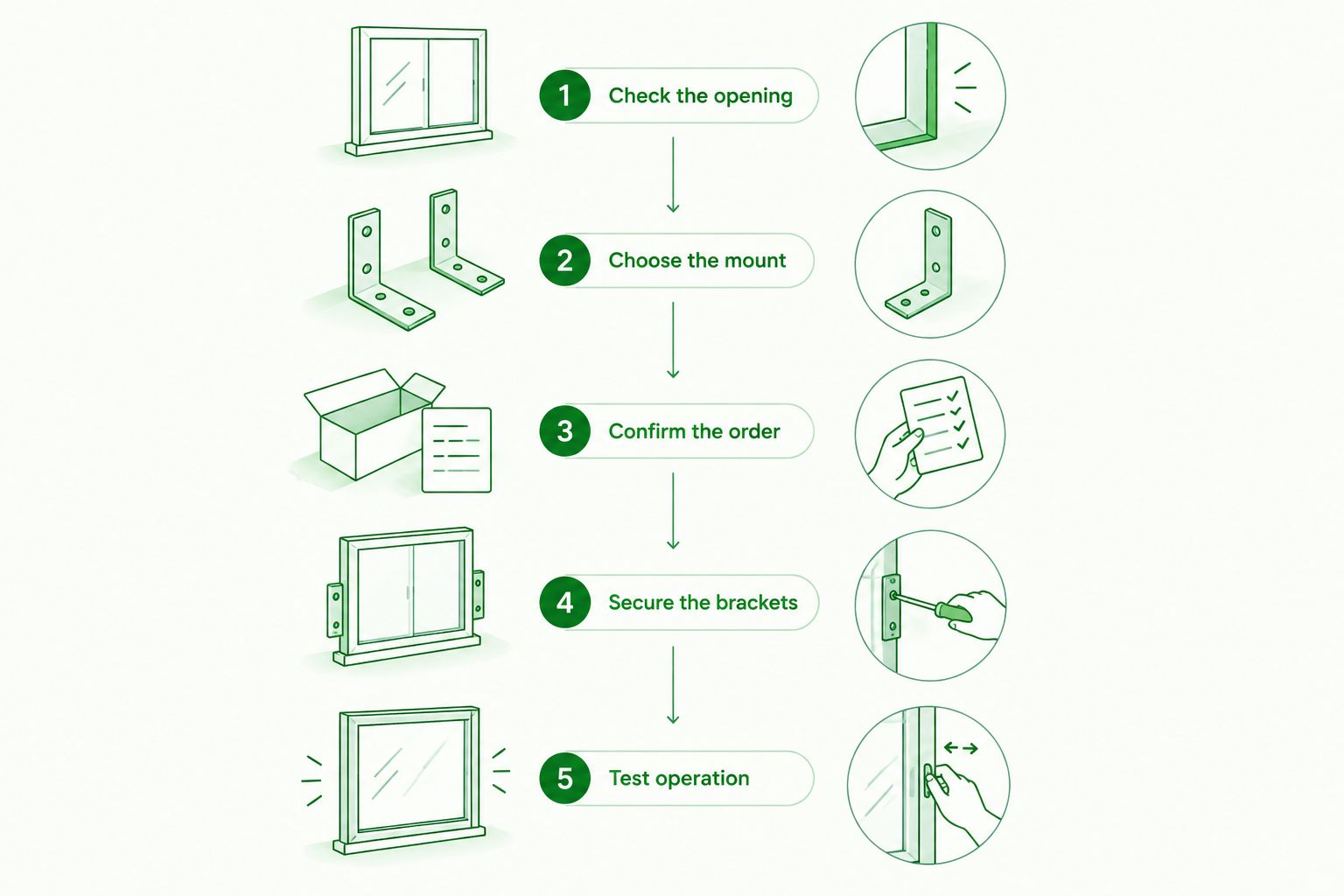
A sensible installation follows a sequence. The product instructions govern the details, but the decisions below should be settled before holes are made.
- Check the opening. For a rectangular opening, record 3 width readings and 3 height readings at different positions to identify variation. Follow the product’s instructions for which measurements to submit.
- Choose the mount. Confirm whether the blind sits within the recess or covers the opening from outside it. Check clearance and the intended finished appearance.
- Confirm the order. Match each blind to its window, mounting method, and recorded specifications before installation starts.
- Secure the brackets. Use the product instructions and fixings appropriate to the mounting surface. Do not assume the supplied fixings suit every wall or frame.
- Test operation. Open, close, raise, and lower the blind as its design allows. Check for rubbing, obstruction, and accessible controls.
Keep your own preparation measurements separate from approved ordering dimensions. That distinction prevents a rough planning note from becoming an unintended final specification.
Inside or outside mounting changes the job
An inside mount places the blind within the window recess. It can leave surrounding trim visible, but the selected product needs sufficient depth and clearance to operate there.
An outside mount places the blind over the opening, attached to an appropriate surface above or around it. It changes the area covered and needs clear decisions about placement, overlap, and nearby obstructions.
The practical question behind inside versus outside mounting is whether the treatment should sit within the recess or cover the opening from beyond its edges. That choice changes the measurement task before installation begins.
Neither method fixes every problem. An inside mount still needs operating clearance, while an outside mount still needs suitable fixing points and room for the blind to move.
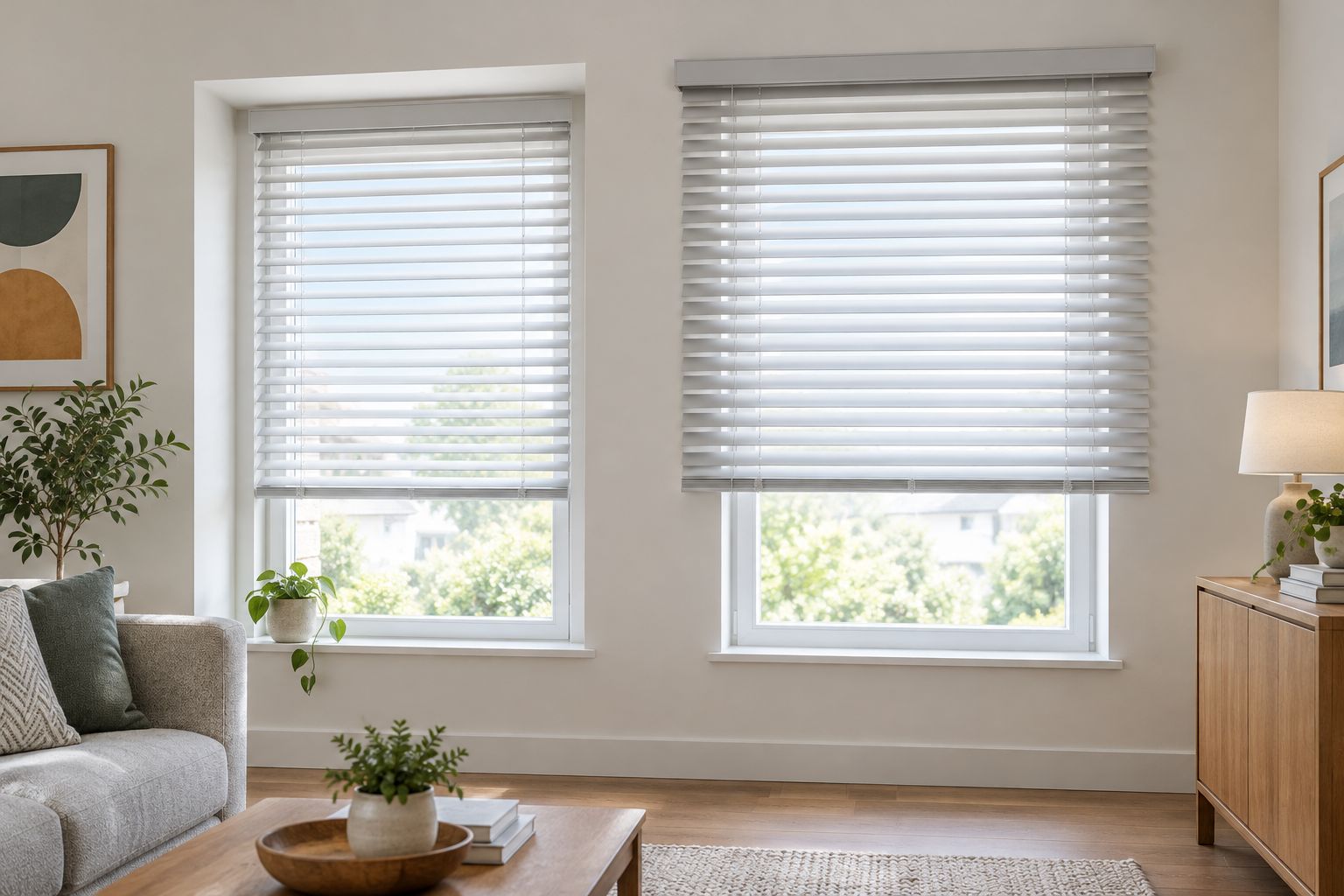
Ask to see where the blind will sit before approving the order. A sample helps you choose material; the mounting position determines how that material meets your actual window.
Motorized treatments need a separate setup conversation
For a 2026 motorized shade project, distinguish physical installation from control setup. Mounting a shade, arranging its power source, setting travel limits, and connecting requested controls are separate tasks.
Ask which tasks are included and which require another visit or another trade. Do not assume that a motorized product works with a particular smart-home platform without confirmation for the exact product and configuration.
Olsson Smart Shades offers motorized smart shade installation alongside custom window treatments. When discussing your project, describe how you want to use the shades rather than assuming a specific connection method.
For example, explain whether you want a reachable control, scheduled operation, or coordination with an existing system. Then ask what equipment and setup the proposed solution requires.
Professional motorized installation is most useful when the handover covers everyday operation, not just attachment to the window. The limitation is that connected-control setup must be specified rather than assumed.
What should you ask before accepting an installation quote?
A clear 2026 quote should describe responsibilities in plain language. You should be able to tell what happens before ordering, on installation day, and if something does not fit.
Ask these questions before approving the work:
- Who verifies and approves the final ordering dimensions?
- Does the scope include removing existing treatments?
- Who supplies brackets and suitable fixings?
- Are mounting position and control location recorded?
- What happens if a supplied blind does not fit?
- Does motorized work include setup and a demonstration?
- Who do you contact if adjustment is needed afterward?
Keep the agreed answers with the order. Verbal assumptions are harder to resolve once products have been made or installation has started.
To arrange an in-home consultation with Olsson Smart Shades, request a quote and describe the rooms, existing treatments, and any access concerns. Ask what the visit includes before confirming it; you do not need to choose every finish first.
Discuss your window treatment project
Ask about custom measuring, installation scope, and an in-home consultation for your windows.
Can installation fix blinds that were measured incorrectly?
Installation cannot reliably correct an incorrectly sized custom blind. An installer can assess the problem, but repositioning brackets does not change the product’s manufactured dimensions or required clearance.
Ask what correction is possible before authorizing extra drilling or modifying the product. Follow the manufacturer’s instructions for any permitted adjustment.
Should you install one room before ordering the whole house?
A room-by-room approach lets you assess fit, appearance, and operation before repeating a choice elsewhere. The trade-off is coordinating separate stages rather than completing the project together.
For a whole-home order, confirm the mounting and control decisions room by room. Similar-looking windows still deserve individual checks.
FAQ
Is professional installation worth it for blinds if I only have one window?
Yes, professional installation can be worthwhile for one window when access, mounting, or fit is difficult. The difficulty of the opening matters more than the number of windows.
Can I measure custom blinds myself and hire someone to install them?
Yes, you can measure custom blinds yourself and hire an installer, but agree on responsibility for sizing before ordering. Installation-only work does not automatically include verification of your measurements.
Does professional blind installation include taking down old blinds?
Removal is included only when it is part of the agreed scope. Ask about taking down existing treatments and dealing with their brackets before confirming the work.
Are inside-mounted blinds better than outside-mounted blinds?
Neither mounting method is better for every window. Inside mounting depends on recess depth and clearance, while outside mounting changes coverage and requires suitable fixing points.
Do motorized shades need professional installation?
Motorized shades deserve professional help when mounting, access, power arrangements, or setup exceed your skills. Confirm whether the agreed service includes control setup and an operating demonstration.
What should I check before the installer leaves?
Check that each blind operates as intended and clears handles, trim, and nearby obstructions. Ask for a demonstration of the controls and retain the product instructions.
How do I request custom blind installation in Columbus?
Contact Olsson Smart Shades to discuss custom-measured, professionally installed window treatments in Columbus and Central Ohio. Describe your windows and ask about an in-home consultation and the proposed scope.
One last thing
Before signing off on your 2026 installation, operate the blinds yourself. A demonstration shows that the treatment works; trying it yourself shows whether you can reach the controls and use it comfortably.
That final check brings the decision back to everyday comfort. The best installation is not just straight brackets. It is a treatment that fits the opening and works for the person living with it.