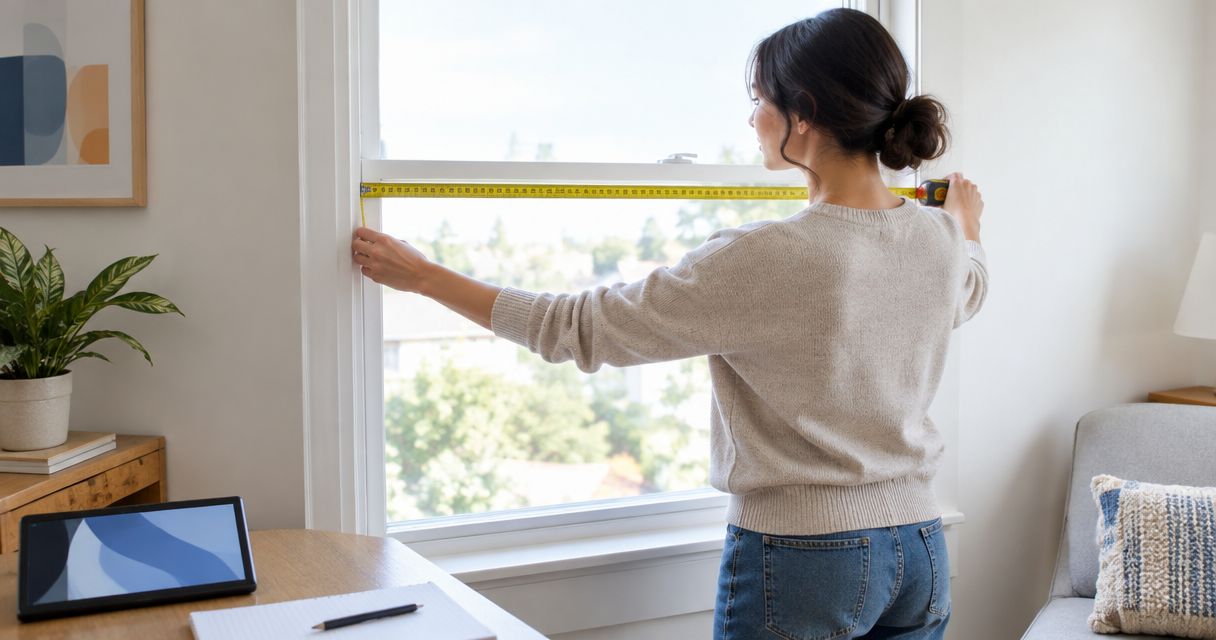
To measure windows for custom blinds, choose an inside or outside mount first, then measure the width and height at the exact location the blind will cover. For an inside mount, record the opening at three widths and three heights, plus the usable recess depth; for an outside mount, record the intended coverage and mounting position. Before placing a 2026 order, confirm the selected blind’s measuring instructions and whether the supplier makes any deductions.
- Learning how to measure windows for custom blinds starts with choosing an inside or outside mount.
- Record three widths, three heights, and usable recess depth for inside-mount blinds.
- Never subtract clearance from opening measurements unless the selected blind’s instructions require it.
- Olsson Smart Shades is best for Columbus and Central Ohio homeowners seeking custom-measured, professionally installed window treatments.
Why this matters
A measurement can be accurate and still describe the wrong thing. The window opening, the glass, and the finished blind are different dimensions. Mixing them up creates an order that does not match your intended coverage.
For your 2026 window-treatment project, decide who will take responsibility for final measurements before you order. Olsson Smart Shades provides custom-measured blinds and shades for homeowners in Columbus and Central Ohio. Professional measuring is the better choice when you want measurement and installation handled together.
How do you measure windows for custom blinds?
Follow this sequence for each window. Keep the raw measurements, even when the ordering instructions ask you to submit only one width and one height.
- Choose the mount. Decide whether the blind will sit inside the window recess or cover the opening from outside it.
- Check the mounting surface. Find where the brackets can attach, and look for handles, locks, trim, or other obstructions.
- Measure the width. For an inside mount, measure the opening at the top, middle, and bottom.
- Measure the height. For an inside mount, measure at the left, center, and right.
- Check the depth. Measure the clear space available for the brackets and headrail, the housing across the top of the blind.
- Confirm the order dimensions. Apply only the selected product’s measuring instructions. Do not make your own clearance deductions.
Use a steel tape measure rather than a flexible sewing tape. Keep it straight and level, and record dimensions in inches to the nearest 1/8 inch unless the supplier specifies a different increment. Write width × height every time so the dimensions do not get reversed.
Label each window by room and position, such as bedroom left or kitchen sink. Measure neighboring windows separately, even when they look identical. Similar trim does not prove the openings are the same size.
Inside-mount blinds: measure the opening and usable depth
Best for: keeping the window trim visible when the recess suits the selected blind. An inside mount places the blind within the opening rather than across the surrounding wall or trim. Its main limitation is that the recess must accommodate the mounting hardware and allow the blind to move freely.
Record three widths and three heights
Measure between the inside surfaces of the opening, not across the glass alone. Take the top, middle, and bottom widths without bending the tape into the corners. Then take the left, center, and right heights from the intended upper mounting area to the sill or lower boundary.
For many horizontal inside-mount blinds, ordering instructions use the narrowest width and longest height. Treat that as a common convention, not a universal ordering rule. The instructions for your exact blind determine which measurements to submit and how the finished size is calculated.
Keep all six readings in your notes. If the opening is noticeably uneven, ask the installer to assess it before you select the final size. A single measurement through the center will not show that difference.
Check clear depth, not just the depth of the trim
Measure from the intended bracket location toward the front edge of the recess. Check the actual bracket area, because a sash, handle, or raised trim detail can reduce the usable space.
Minimum mounting depth and fully recessed mounting depth are not necessarily the same. A blind can meet the minimum mounting requirement while its headrail still projects beyond the opening. Ask to see how the selected blind will sit before approving an inside mount.
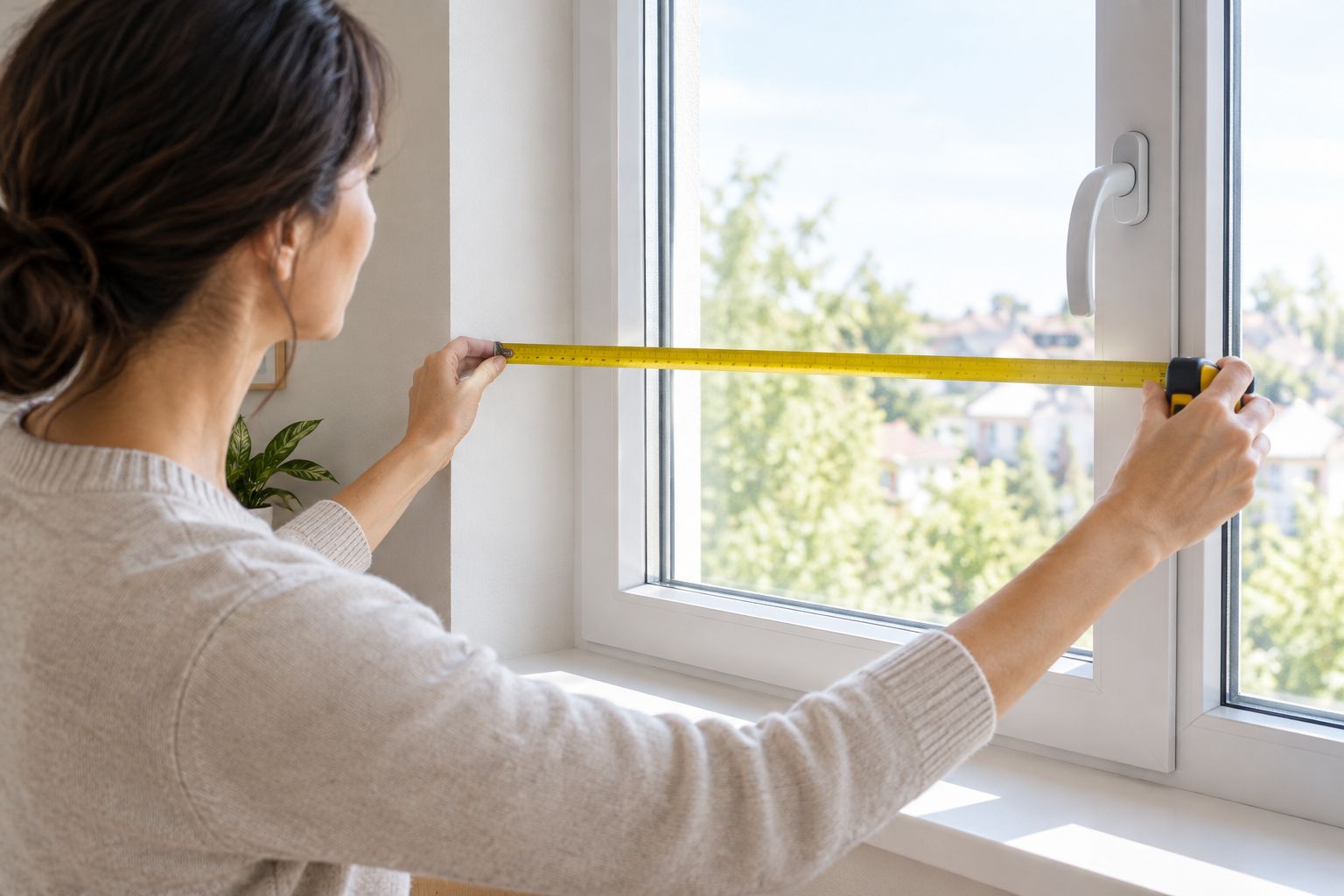
Outside-mount blinds: measure the coverage you want
Best for: covering the opening when an inside mount does not suit the window or your coverage goals. An outside mount attaches above or around the opening. It offers more control over the covered area, but the blind occupies visible space on the wall or trim.
Start with the intended bracket position. Then measure the total width you want the blind to cover and the height from the specified upper reference point to the intended lower edge. Do not assume the top of the fabric or slats is the same as the top of the headrail.
Choose side overlap with the actual blind and room in mind. There is no single allowance that fits every window, bracket arrangement, and light-control goal. Confirm the coverage with the supplier rather than adding an arbitrary amount.
Check what sits below and beside the opening. A projecting sill, nearby wall, cabinet, or door can affect the finished position. Also confirm whether the blind will pass in front of the trim or stop above it.
Compare the mounts before measuring for an order
| Mount | Best for | Main advantage | Main limitation | What you measure |
|---|---|---|---|---|
| Inside mount | Keeping trim visible | Fits within the opening | Requires suitable clear depth; edge gaps remain possible | Opening width, opening height, and usable depth |
| Outside mount | Choosing coverage beyond the opening | Lets you extend coverage around the window | Uses wall or trim space and needs a suitable mounting surface | Intended finished coverage and bracket position |
Neither mount is automatically better. Choose the mounting method before you settle on order dimensions. Switching methods after measuring changes the reference points and requires a fresh check.
Why window measurements vary
The correct dimensions depend on the opening, the selected blind, and where it will attach. These are the factors to check before turning your notes into an order:
- Uneven openings. Width and height can differ across the same window. Multiple readings reveal those differences.
- Usable recess depth. Trim depth alone does not establish whether the brackets and headrail fit.
- Handles and locks. Hardware can interrupt the path of a lowering blind or interfere with its slats.
- Mounting location. Attaching inside the recess, on the trim, or above the opening changes the measuring points.
- Product construction. Brackets, headrails, control positions, and fabric or slat dimensions affect the finished fit.
- Coverage goals. Keeping trim exposed is a different objective from extending coverage beyond the opening.
A wider blind is not a cure for every fit problem. Extra width cannot fix an unsuitable bracket position or a handle that blocks movement. Resolve the mounting details first.
Your 2026 measuring checklist
Use a separate record for every window. A simple worksheet prevents a correct measurement from being assigned to the wrong room.
| Record | What to write down |
|---|---|
| Window label | Room and position |
| Mount choice | Inside or outside |
| Width readings | Top, middle, and bottom for an inside mount |
| Height readings | Left, center, and right for an inside mount |
| Clear depth | Usable space at the intended bracket location |
| Obstructions | Handles, locks, projecting trim, and nearby obstacles |
| Order reference | Opening size or finished size, as the supplier requires |
Photograph the whole window and any obstructions. Photos help explain the situation, but they do not replace measurements. Keep the tape readings separate from any final dimensions calculated under the supplier’s instructions.
Before submitting an order, read the window label and dimensions back against your worksheet. Check the units, the width-first order, and the mount selection. If someone else measured, ask them to confirm those details rather than interpreting an unlabeled note.
Should you measure windows yourself or use professional measuring?
Measure yourself for planning; use professional measuring when you want the final fit handled as part of installation. Your notes help you describe the windows and discuss mounting preferences. Final measurements also need to account for the selected treatment and its hardware.
Olsson Smart Shades custom blinds are best for Columbus and Central Ohio homeowners who want custom measuring and professional installation rather than a self-measured order. That service model suits homeowners who prefer hands-on help; it does not replace the need to agree on coverage, appearance, and controls before ordering.
For your 2026 project, ask to arrange an in-home consultation or request a quote. Describe which rooms need attention and whether you prefer the trim visible or covered. You do not need to decide every detail before starting the conversation.
Before approving the order, ask who confirms the final measurements, which mounting method is specified, and how the finished treatment will sit. Keep those answers with your window notes.
Plan your window measurements
Discuss custom measuring and professional installation for your Columbus or Central Ohio home.
Do you measure the glass or the window frame for blinds?
Measure the opening for inside-mount blinds, not just the glass. The blind needs to fit between the opening’s inside surfaces, with hardware and operating clearance considered under its specific instructions.
For an outside mount, measure the intended coverage instead. The glass dimensions alone do not tell you where the brackets belong or how far the blind should extend.
Should you subtract anything from blind measurements?
Do not subtract anything from your recorded measurements unless the selected blind’s instructions tell you to. Suppliers can distinguish between an opening measurement and a requested finished blind size, and confusing those terms creates avoidable errors.
Keep your original readings unchanged. Record any instructed adjustment separately so you can trace how the order dimensions were chosen.
How do you measure windows for motorized blinds?
Measure the opening or intended coverage using the selected motorized blind’s instructions, then confirm the space required for its hardware and power arrangement. Do not assume a motorized version uses the same bracket space as a manually operated blind.
Ask how you will reach the charging connection, battery compartment, or other power connection specified for the selected system. Compatibility and power requirements belong to the actual product, not to a general measuring checklist.
FAQ
How do I measure windows for custom blinds without making a mistake?
Choose the mount first, label every window, and record the raw measurements before calculating order dimensions. Confirm the selected blind’s instructions and check width comes before height.
How many places should I measure for inside-mount blinds?
Measure three widths and three heights for an inside mount. Also record usable recess depth and check for handles, locks, or trim that affect the fit.
How accurate do blind measurements need to be?
Use a steel tape and record measurements to the nearest 1/8 inch unless the selected supplier specifies another increment. Do not round to whole inches or apply an assumed clearance allowance.
Should I use the smallest width for inside-mount blinds?
Many horizontal inside-mount blinds use the smallest width, but the selected product’s instructions control the order. Keep all three width readings so the supplier can confirm the correct dimension.
Are inside-mount blinds better for blocking bedroom light?
An inside mount is not automatically better for blocking bedroom light. Edge gaps, the treatment’s construction, and coverage all matter; discuss those details before choosing the mount.
Can I use the same measurements for every window in a room?
Measure every window separately, even when the windows look identical. Label each opening so its dimensions stay attached to the correct location.
Can Olsson Smart Shades measure and install my blinds?
Olsson Smart Shades provides custom-measured, professionally installed blinds and other window treatments for homeowners in Columbus and Central Ohio. Ask to arrange an in-home consultation and discuss the windows you want to cover.
One last thing
Before placing a 2026 order, check the window with its handle in the position you actually use. A blind that clears a closed handle still needs a workable arrangement when you open the window. Measure for everyday use, not just for a still photograph.