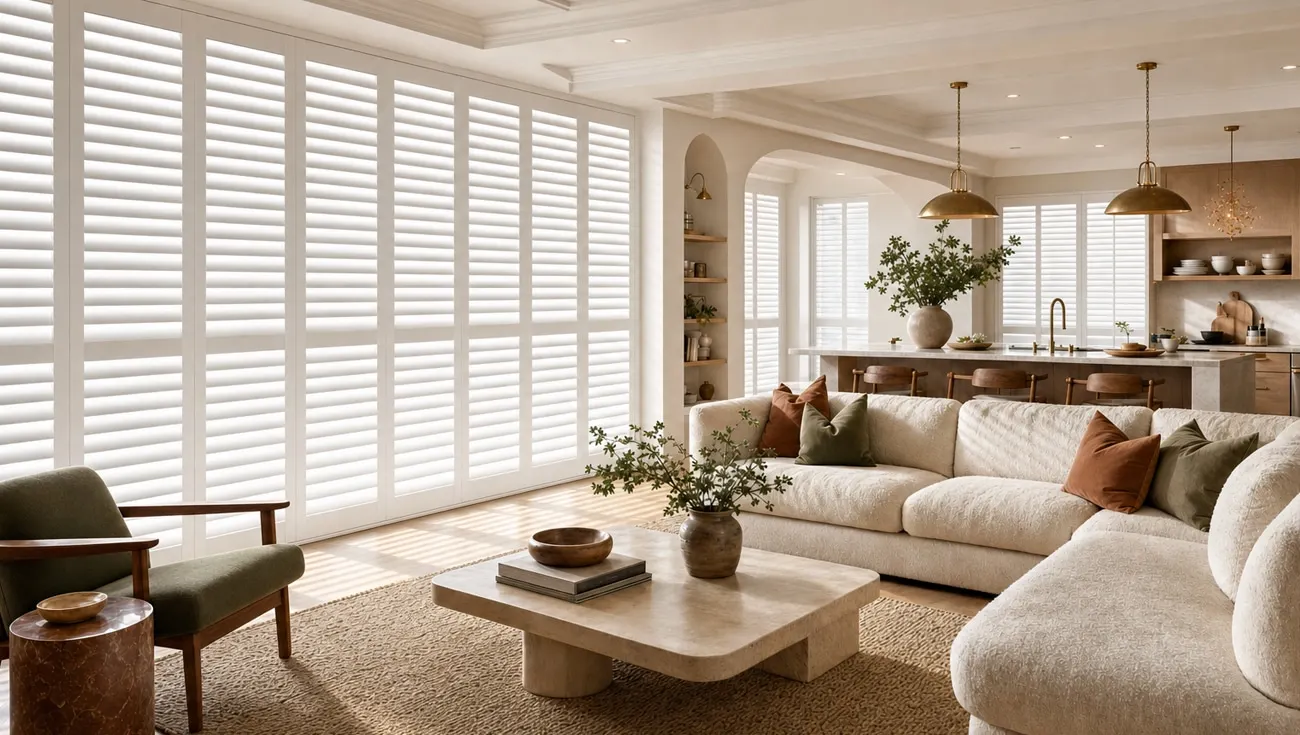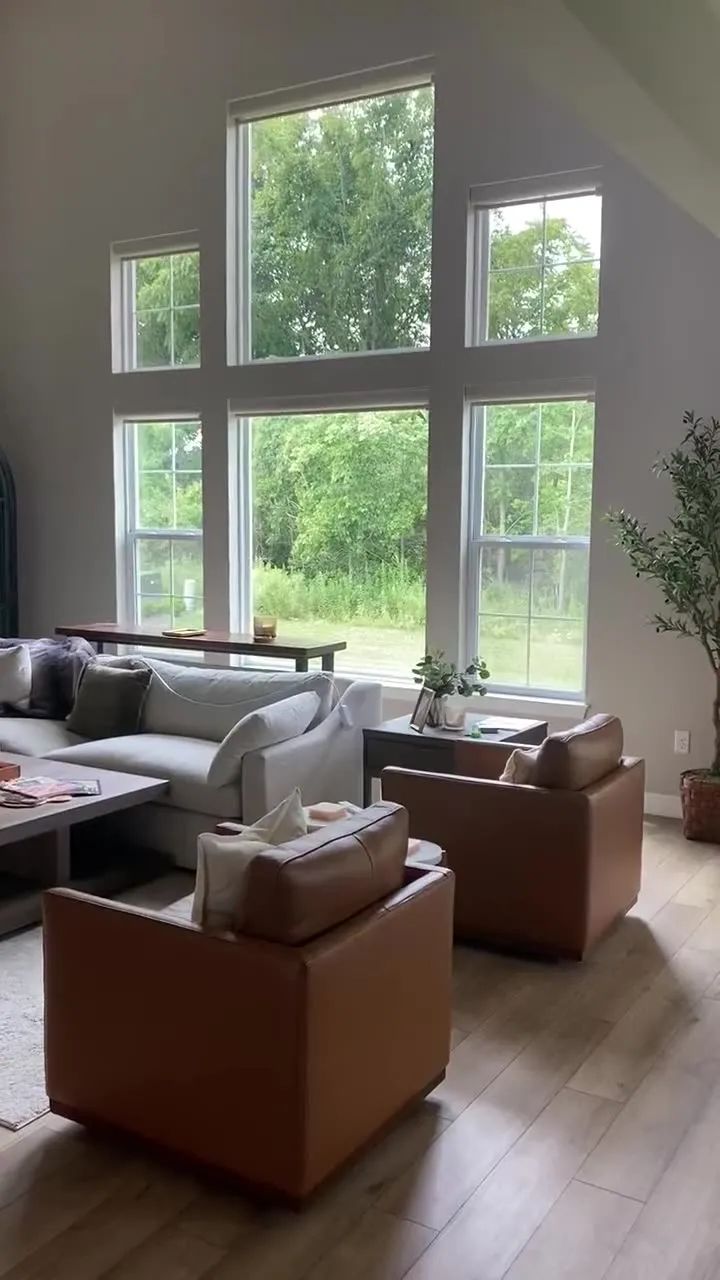
Best starting point: motorized roller shades for a simple, adjustable covering on tall rectangular windows. Best for an insulating shade design: motorized cellular shades. Best for preserving a daytime view while softening glare: motorized solar roller shades. The right choice also needs a power and maintenance plan you can live with.
- Remote control blinds for high windows need reachable controls and a practical charging or power plan.
- Motorized roller shades are a useful starting point for tall rectangular windows.
- Cellular shades suit homeowners who want an insulating shade design as well as light control.
- Solar fabrics favor daytime views; check nighttime privacy separately.
- Olsson Smart Shades measures and installs motorized shades in Columbus and Central Ohio.
Why this matters for high windows
A shade is not convenient just because it has a motor. If you cannot reach its charging connection, or its control stays behind the sofa, the original problem has only changed shape.
Start with the room rather than the remote. Decide whether you need afternoon glare control, evening privacy, room darkening, or a combination. Then choose the shade and the way it will get power. The motorized shades overview explains the local installation options.
For a 2026 project, ask for a demonstration of daily operation and maintenance before ordering. Seeing a shade move is useful. Seeing how you will charge it is just as useful.
What makes the best motorized shades for high windows?
Use these criteria to compare proposals fairly:
- Fit: confirm the finished opening, mounting depth, and clearance around trim and handles.
- Light control: choose fabric for the room's actual glare and privacy needs.
- Power access: identify where charging, battery service, or a permanent connection will happen.
- Daily controls: make sure someone standing on the floor can operate the shade.
- Service access: ask how the motor or shade can be reached for future work.
- Window grouping: decide whether upper and lower windows should move together or separately.
A large window does not automatically suit every motor or fabric. Ask the installer to confirm the exact width and drop against the selected product's limits. Do not use a general maximum from a different shade range as permission to order.
High-window shade options at a glance
These are shade categories, not a claim that one model fits every opening. Solar roller shades are listed separately because their fabric serves a different purpose from an ordinary light-filtering roller.
| Shade option | Best for | Main advantage | Key limitation |
|---|---|---|---|
| Motorized roller shades | Straightforward light control on rectangular windows | A simple fabric panel with remote operation | Privacy and room darkening depend on fabric and mounting |
| Motorized cellular shades | Homeowners prioritizing an insulating shade design | Honeycomb construction paired with motorized control | Size, power, and operating options need model-specific checks |
| Motorized solar roller shades | Bright living areas where daytime views matter | Solar fabric balances glare control with a view | A daytime view does not establish nighttime privacy |
1. Motorized roller shades: best starting point for tall rectangular windows
A motorized roller shade raises and lowers a fabric panel without requiring you to reach the window. Its simple shape makes it a useful first option for a tall living-room window or a row of upper windows.
Choose the fabric for the job. A light-filtering fabric and a room-darkening fabric do not deliver the same result, even when the motor and remote look identical. Look at samples against the actual glass rather than choosing from a small screen image.
Motorized roller shade pros:
- Straightforward operation from a compatible remote.
- A simple appearance across repeated rectangular windows.
- Fabric choices for different light-control needs.
- The option to discuss separate upper and lower window groups.
Motorized roller shade cons:
- Light can enter around a shade unless the full installation addresses it.
- The power arrangement still needs a maintenance plan.
- Oversized openings require a product-specific fit check.
Best for: homeowners who want a practical first option without making the window treatment the room's main visual feature.
Verdict: choose roller shades first for comparison, then confirm fabric, fit, and power before ordering. For high windows, an accessible charging method matters more than an extra app feature you will rarely use.
2. Motorized cellular shades: best for an insulating shade design
Cellular shades use a honeycomb structure rather than a single flat roller fabric. They are worth comparing when you want light control and an insulating construction, especially around a large area of glass.
Olsson Smart Shades offers custom-measured motorized shades, including cellular options. Ask which operating styles suit your opening; do not assume every cellular shade combines motorization with every top-down feature.
Motorized cellular shade pros:
- An insulating honeycomb design.
- A softer, folded appearance rather than a flat fabric panel.
- Motorized operation for windows you cannot reach by hand.
- A useful alternative when a roller shade is not your preferred look.
Motorized cellular shade cons:
- Available sizes and operating combinations vary by product.
- Folded fabric creates a different visual effect from a roller.
- Battery access still matters when the shade sits above normal reach.
Best for: homeowners who prefer cellular construction and want to discuss comfort alongside privacy and light.
Verdict: compare cellular shades when insulation is part of the brief, but skip unsupported promises about bill savings. A quote should identify the selected product and fabric. An insulating design is not a guarantee of a particular change in household energy use.
3. Motorized solar roller shades: best for glare control with a daytime view
Solar roller shades use a fabric designed to filter incoming light while retaining some view through the material. They are a useful comparison for a bright great room where you want to soften sunlight without covering the view with an opaque fabric.
The tradeoff is privacy. Test the proposed fabric under the conditions that matter to you, including after dark with interior lights on. A fabric that feels private during the day is not automatically a nighttime privacy solution.
Motorized solar roller shade pros:
- A way to reduce glare while preserving some daytime view.
- A simple roller format for rectangular glass.
- Remote operation on upper windows.
- A useful option for discussing scheduled afternoon light control.
Motorized solar roller shade cons:
- Nighttime privacy requires a separate assessment.
- Different fabrics change the balance between view and screening.
- Solar fabric is not a substitute for a room-darkening plan.
Best for: bright living spaces where glare is the main complaint and an outside view remains a priority.
Verdict: choose solar fabric for the daytime task; skip it as the sole answer when nighttime privacy or darkness is essential. Discuss the whole room, including lower windows facing neighbors or a street.
Choose power before you choose extra controls
There are 3 power approaches to discuss: rechargeable battery, plug-in, and hardwired. The right answer depends on the window, not simply whether the house is old or new.
| Power approach | Best for | What to confirm | Main tradeoff |
|---|---|---|---|
| Rechargeable battery | Existing rooms without a convenient power connection | Reach to the charging point and the required charging equipment | Charging remains part of ownership |
| Plug-in | Windows with a suitable nearby outlet | Cable route, outlet location, and appearance | A visible or awkward cable route needs resolving |
| Hardwired | Projects where a permanent supply can be planned | Required supply, wiring route, and installation responsibilities | More coordination, especially with finished walls |
Norman's motorization information, checked in October 2026, distinguishes Smart Motorization with remote and connected controls from AutoWand's wand-based operation. That distinction matters here: a motor controlled only by a wand you cannot reach does not solve a high-window problem.
Norman also describes a charging wand. Ask the installer to demonstrate its reach at your actual window height. Do not assume a charging accessory reaches every upper window merely because it works well at normal height.
For a new build or remodel in 2026, discuss the power plan before the walls are closed. For a finished room, ask what access or visible wiring each proposal requires. Never order electrical work from a generic diagram without the selected motor's requirements.
Plan upper and lower windows as separate jobs
A two-story room often has 2 window groups with different needs. Upper glass can create glare across the room, while lower glass can need privacy from neighboring homes.
Start by asking whether the upper and lower shades should operate separately. You might want upper shades lowered during afternoon glare while leaving lower shades open to the garden. Matching fabric does not require matching behavior.
During the consultation:
- Point out where you sit when glare becomes uncomfortable.
- Identify which windows need privacy after dark.
- Decide where the remote will live.
- Ask whether room groups and individual shade control are both included.
- Request a walkthrough of the controls you will actually use.
Olsson Smart Shades is a practical fit for Central Ohio homeowners seeking custom-measured motorized shades with professional installation. A local measurement visit lets you assess the glass, samples, mounting points, and power access together instead of treating them as separate purchases.
What to ask for in a written quote
Compare scope before comparing the final total. Two proposals can describe motorized shades while including different controls, charging equipment, and installation work.
For your 2026 quote, request these 4 checks:
- Identify each opening. Record the shade style, fabric, mounting approach, and motor for each window.
- Identify the power plan. State charging access or the required permanent supply, including who handles associated work.
- Identify the controls. List included remotes and any equipment needed for the connected features you requested.
- Identify installation and handoff. Confirm high-window access, programming, testing, and operating instructions.
Also ask how future maintenance is handled. Avoid assuming that a difficult-to-reach motor will never need attention. A practical service plan is part of a usable installation, not a reason to reject motorization.
How these options were ranked
This 2026 guide compares shade categories by fit, light control, power access, daily operation, and upkeep. It is not a laboratory test or a claim that every motor performs equally.
Roller shades are the starting recommendation for a simple adjustable panel. Cellular shades serve the insulating-design preference. Solar roller shades serve the view-and-glare preference. Your opening and maintenance access can change that order.
FAQ
What are the best remote control blinds for high windows?
Motorized roller shades are a useful starting point for tall rectangular windows. Compare cellular shades for an insulating design and solar roller shades for daytime glare control with a view; confirm size and power access before ordering.
Can I get motorized shades without wiring my walls?
Rechargeable battery shades are an option for existing homes without wiring at the window. Confirm how the charging connection will be reached from the floor or safely serviced at your window height.
Will a charging wand reach my two-story windows?
Reach depends on the charging equipment and your window height. Ask for a demonstration at the actual opening before relying on a charging wand as the maintenance plan.
Do solar shades provide privacy at night?
Do not assume solar fabric provides nighttime privacy. Check the selected fabric after dark with indoor lights on, and discuss another privacy solution where needed.
Can the upper and lower shades move separately?
Ask for separate control groups when choosing the motor and remote. Confirm that the proposed system supports the individual and grouped operation you want.
Can I use my existing smart-home app with new shades?
Compatibility depends on the selected motor, control equipment, and smart-home system. Have the installer confirm the exact combination rather than assuming all motorized shades connect the same way.
Can motorized shades cover angled upper windows?
An angled opening needs a shape-specific assessment. Do not assume a standard motorized rectangular shade fits; discuss fixed specialty treatments and other suitable options separately.
Who can measure high windows in Columbus and Central Ohio?
Olsson Smart Shades offers custom measurement and professional installation in Columbus and Central Ohio. Describe the room and upper windows when requesting an in-home consultation so access and power can be discussed.
Which motorized shade should you choose?
Start with a motorized roller shade if you want a simple covering for a tall rectangular opening. Compare cellular construction if insulation is a priority, or solar fabric if your main goal is daytime glare control while keeping a view.
Choose the power and charging arrangement before adding optional connected features. The right fabric with an inconvenient maintenance setup is still the wrong installation.
To move from comparison to a plan, request an in-home consultation with Olsson Smart Shades. Mention your high windows, the room's main light problem, and whether the walls are finished. Those details help turn a general inquiry into a useful discussion about your home.
One last thing
Stand where you normally sit before choosing the shade fabric. Glare that disappears beside the window can still be uncomfortable from the sofa. Take a photo from that seat when the problem occurs and bring it to the consultation; leave high-window measuring and access to the installer.