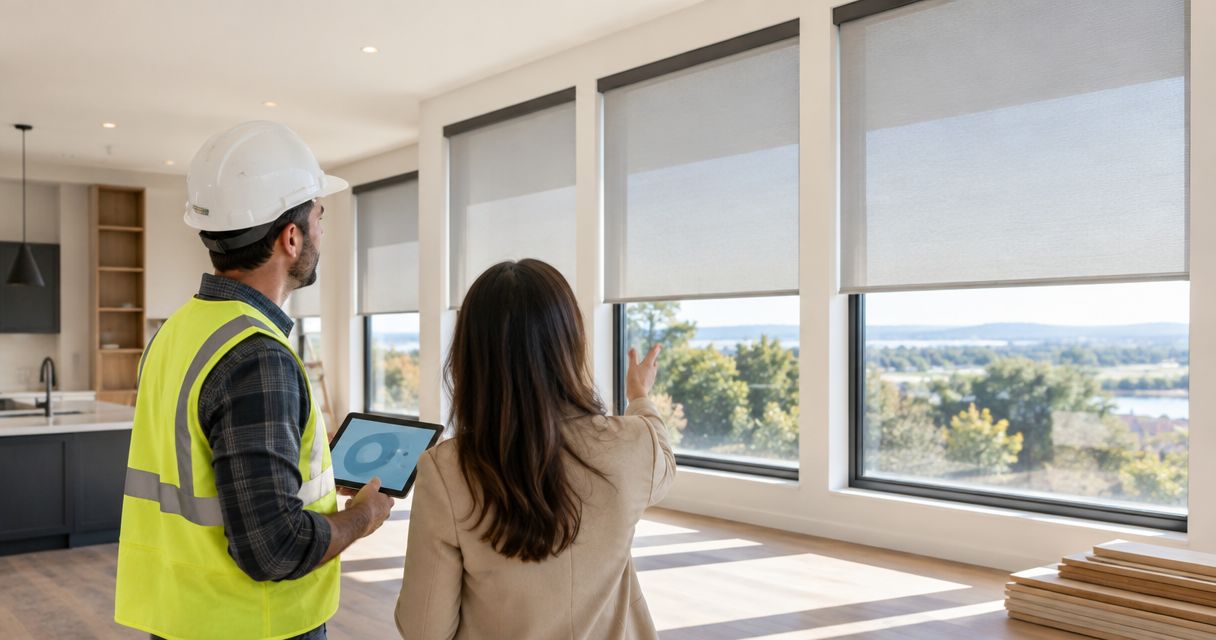
Motorized shades for new home builders and contractors work best when you plan them at the framing and electrical stage, not after drywall. Olsson Smart Shades handles custom-measured motorized shades for Columbus and Central Ohio homes, and the 2026 builder playbook below shows how to spec them, schedule them and avoid the callbacks.
- Decide power type (wired, battery or solar) before drywall; it is the one choice that is expensive to change later.
- Order shades from final, field-verified window openings, never from plan dimensions.
- Install motorized shades near the end of the build, after paint and flooring.
- Olsson Smart Shades is best for builders who want custom measuring and family-run installation in Central Ohio.
- Keep the manual option for secondary rooms and motorize the rooms buyers notice first.
Why motorized shades matter for builders in 2026
Buyers touring a new home in 2026 expect it to feel finished. Window treatments are the item most often left to the homeowner, and motorized shades are one of the few upgrades that show up in a walkthrough and photograph well.
For a builder, the value is not the gadget. It is that the wiring decision happens on your schedule, inside your build, instead of becoming a messy retrofit for the buyer six months later.
The verdict: Olsson Smart Shades is the best fit for Columbus and Central Ohio builders who want custom-measured motorized shades installed by a family-owned team, with the power plan settled before drywall.
For a deeper look at how smart shades fit into connected homes, see the best motorized shades for smart homes.
How to specify motorized shades on a new build
Decide power type during framing
This is the step that cannot be undone cheaply. Pick a power approach for each window group before the electrical rough-in.
- Wired: low-voltage or line-voltage runs to each window, placed before drywall. Cleanest result, needs planning.
- Rechargeable battery: no wiring; the buyer recharges on a schedule. Easiest for upper floors and hard-to-reach windows.
- Solar-assisted battery: useful on bright south-facing windows where a panel can sit at the glass.
- Mixed approach: wire the great room and primary suite, use battery elsewhere.
- Ask the installer first: confirm what each option needs at the window before the electrician closes the walls.
Battery performance varies by model; motorized shades ranked by battery life shows how to compare it.
Pick the rooms that get motors
You do not need to motorize every window. Spend where buyers look and where manual operation is a nuisance.
- Tall or wide windows in the great room
- Primary bedroom, where blackout and a remote matter
- Windows above tubs or stairs
- Sliding glass doors and large patio openings
- Skylights and other out-of-reach glass
Large openings are where motors earn their keep. Window treatments for large windows covers the options.
Settle the fabric and light-control plan
Match the shade to the room's job. Bedrooms usually want blackout, living areas want filtered light, and sunny rooms want heat control.
- Blackout or room-darkening for bedrooms and nurseries
- Light-filtering or sheer fabrics for living spaces
- Solar shades for glare on bright elevations
- Cellular shades where energy performance is the selling point
- Consistent color across the front elevation so the exterior looks uniform
The bedroom option is detailed in best blackout shades for bedrooms.
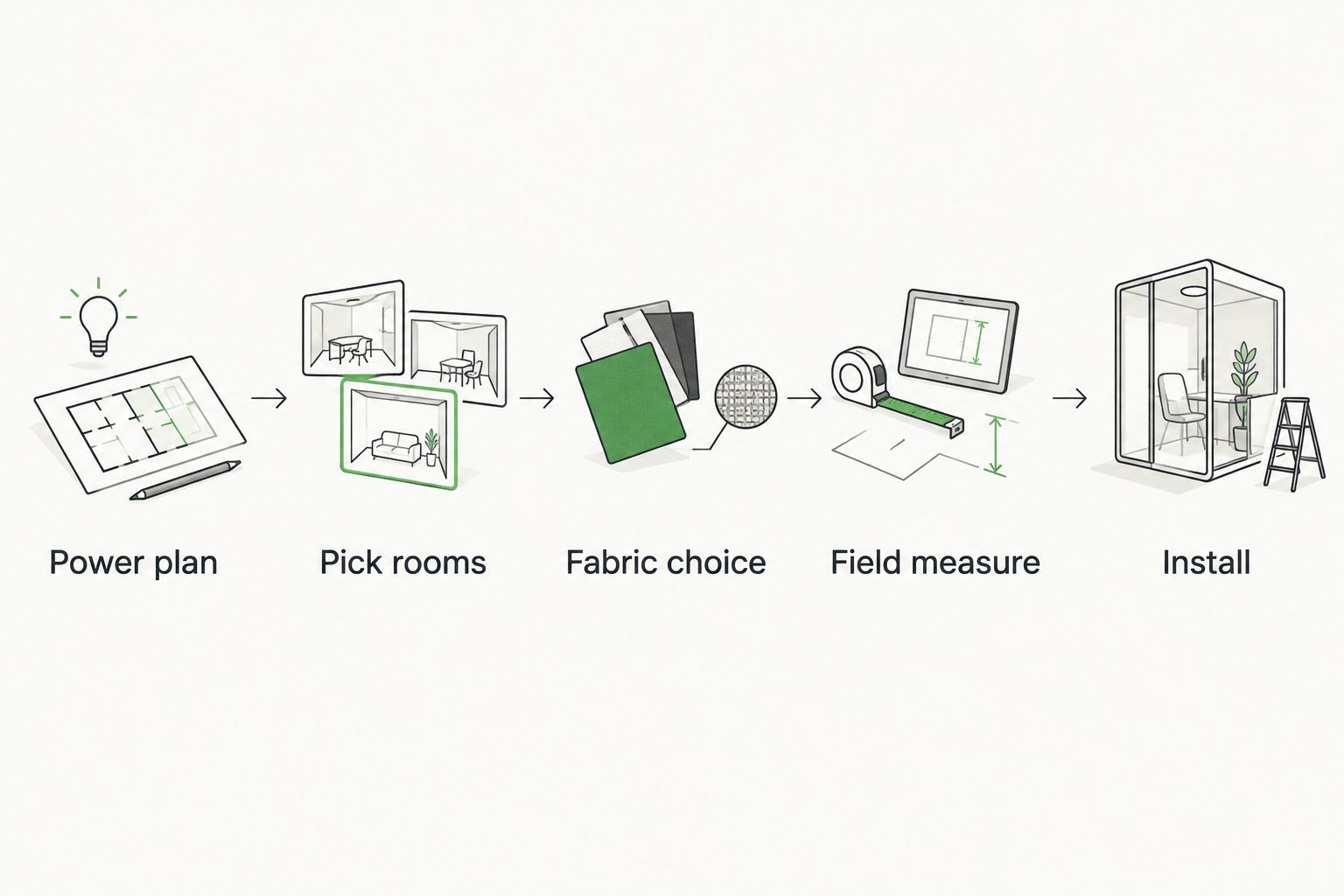
Measure from finished openings
Plan drawings are not measurements. Windows shift, trim changes, and framing varies by a fraction that matters for a custom shade.
- Measure after windows and trim are set
- Record width, height and mounting depth for every opening
- Note obstructions: handles, cranks, vents, trim returns
- Decide inside or outside mount per window before ordering
- Have the installer measure, not the trade crew
Olsson Smart Shades offers an in-home consultation and a no-pressure quote, so you can bring measuring into the schedule instead of guessing.
Schedule installation at the end
Shades go in after paint, flooring and final cleaning. Installing earlier invites dust, overspray and damaged fabric.
- Book the install window when drywall and paint are complete
- Confirm power is live (or batteries are charged) before the visit
- Walk each room with the installer so remote and group settings are tested
- Hand the buyer the remotes and app details at closing
- Keep a punch-list slot open for adjustments
Plan the smart-home handoff
Buyers will ask whether the shades work with their voice assistant or app. Verify compatibility for the specific shade model with the installer before you promise it in a listing.
- Confirm which hub or app the chosen model uses
- Group shades by room so the buyer's first setup is simple
- Leave written instructions in the home packet
- Do not advertise compatibility you have not confirmed
See smart shades compatible with Alexa and Google Home for how to check it.
Options for builders compared
| Option | Best for | Key limitation |
|---|---|---|
| Wired motorized shades | Great rooms and primary suites | Must be planned before drywall |
| Battery motorized shades | Upper floors, retrofits, hard-to-wire windows | Buyer must recharge |
| Solar-assisted battery | Bright south-facing windows | Needs a panel at the glass |
| Manual custom shades | Secondary rooms, tight budgets | No remote or scheduling |
Check current pricing with the installer; costs depend on size, fabric and power type. For a local baseline, read how much motorized shades cost in Columbus.
Pros of motorized shades: a finished look at walkthrough, easy control of tall windows, a clean cord-free design that suits nurseries and kids' rooms.
Cons: a higher cost than manual shades, an early planning requirement, and battery upkeep on non-wired models.
Common mistakes builders make
- Deciding power after drywall. Retrofitting wires means patching and repainting. Decide at framing.
- Ordering from plan dimensions. Custom shades need finished-opening measurements.
- Installing before paint. Fabric and tracks get marked up.
- Motorizing every window. Spend on the rooms buyers see; leave the rest manual.
- Promising smart-home compatibility unverified. Confirm the model first, then say it.
FAQ
When should a builder plan motorized shades?
Plan them at framing and electrical rough-in. Power type is the one decision that is costly to change after drywall.
Do motorized shades need wiring?
Not always. Wired, rechargeable battery and solar-assisted options exist. Choose per window group before the walls close.
Should I motorize every window in a new home?
No. Motorize large, tall and hard-to-reach windows and the primary bedroom. Use manual shades in secondary rooms.
When are motorized shades installed in a new build?
Near the end, after paint, flooring and cleaning. Earlier installs risk dust, overspray and damaged fabric.
How are shades measured for a new home?
From the finished window openings after trim is set, not from plan drawings. Record width, height and mounting depth.
Who installs motorized shades for Columbus builders?
Olsson Smart Shades offers custom-measured, professionally installed motorized shades in Columbus and Central Ohio, starting with an in-home consultation.
Do motorized shades work with Alexa or Google Home?
It depends on the model. Confirm compatibility with the installer before promising it to a buyer.
One last thing
The cheapest motorized shade project is the one where the electrician and the shade installer talk before the walls close. A fifteen-minute call at framing in 2026 saves a patch-and-paint callback later.
Olsson Smart Shades is family-owned, and the consultation is about an hour with no obligation. Start at Olsson Smart Shades to request a quote.