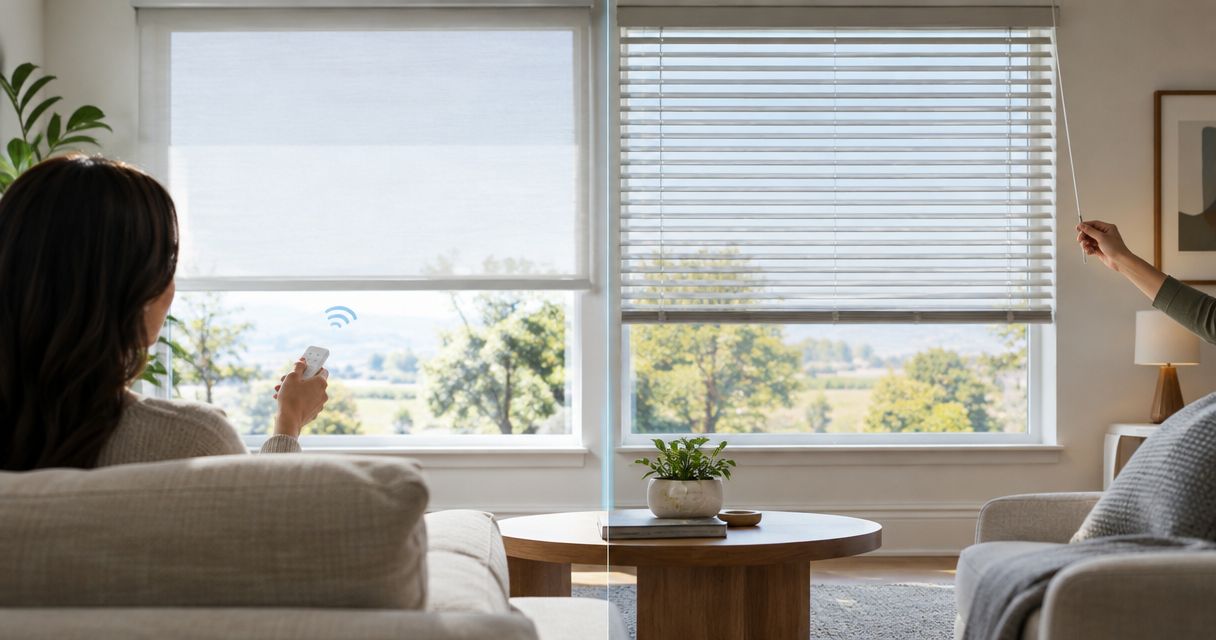
Motorized shades are worth it when they make hard-to-reach windows usable or remove a daily task you find difficult; manual blinds remain a practical choice for easy-to-reach windows you rarely adjust. For your 2026 purchase, weigh the convenience against power needs, control setup, and future servicing—not just how the shades look during a demonstration.
- Are motorized blinds worth it? Yes for difficult access and frequent adjustments; manual blinds suit simple, occasional use.
- Motorized shades need a power plan; smart-home control requires confirmed compatibility.
- Olsson Smart Shades provides custom-measured window treatments for homeowners in Columbus and Central Ohio.
- Choose fabric and privacy first: a motor does not make a shade blackout.
Are motorized shades worth it over manual blinds?
Choose motorized shades for an access or convenience problem. Choose manual blinds when operating the window treatment by hand already works well. Neither option wins in every room, and you do not need to make the same choice throughout your home.
For homeowners seeking custom-measured, professionally installed window treatments in Columbus and Central Ohio, Olsson Smart Shades is a fit. The useful starting point is your routine: which windows do you adjust, which do you avoid, and what makes them awkward?
| Option | Best for | Main advantage | Main limitation | What to check |
|---|---|---|---|---|
| Motorized shades | Hard-to-reach windows and frequent adjustments | Operate without reaching the shade itself | Need power and a suitable control method | Power access, control location, servicing |
| Manual blinds | Reachable windows with straightforward daily use | No motor power or electronic setup | Require you to operate each blind directly | Reach, operating effort, control safety |
This is also a comparison between an operating method and a window-treatment style. A blind generally uses slats; a shade generally uses a fabric or material panel. Motorization describes how the treatment moves, not how it filters light.
Where possible, compare manual and motorized operation on a similar treatment. Otherwise, you risk crediting the motor for a difference that actually comes from the fabric, slats, lining, or fit.
Why this matters
A shade that looks right but stays open because you cannot comfortably reach it is not solving your privacy problem. The same applies to a blind you leave closed because opening it interrupts your morning.
For a 2026 buying decision, focus on whether easier operation changes how you use the room. Convenience has a clear purpose when it helps you manage glare, privacy, or daylight. It has less value when you barely touch the window treatment.
Think about the person who will use it, too. A control that suits one household member is not automatically comfortable for everyone. Ask each regular user to try the proposed way of operating the shade before choosing it.
When motorized shades are worth choosing
Hard-to-reach windows: best for easier access
Tall windows, windows above furniture, and awkward window positions make a strong case for motorization. You can adjust the treatment without stretching across a sofa or reaching behind a desk.
The trade-off is maintenance access. A window that is difficult to reach for daily operation can also be difficult to reach for charging or service. Solve the power-access question before approving the shade. Ask where any charging connection, battery compartment, or power supply will sit.
Frequently adjusted windows: best for daily convenience
Motorization makes sense when you repeatedly change a shade's position as daylight or privacy needs change. The benefit is less about the button itself and more about removing a task you otherwise repeat by hand.
Control details matter here. Ask whether the proposed setup operates shades individually, together, or both. Do not assume that every motorized installation includes grouped controls, saved positions, schedules, or phone access.
Difficult manual operation: best for reducing effort
If reaching, gripping, or pulling a manual control is uncomfortable, motorized operation deserves a closer look. Test the actual control method rather than judging it from a photograph.
A small remote, a wall control, and a phone interface are different experiences. Ask which controls are offered and try the relevant option. The right choice is the one you can use comfortably, not the one with the longest feature list.
Automated routines: best for a defined daily task
Smart operation is useful when you can describe the routine you want. Opening bedroom shades after you wake up is a clearer requirement than simply wanting a smart home.
Automation depends on the proposed equipment and setup. Confirm the needed controls, connections, and accessories before ordering. If a simple button handles your routine, an app adds another interface without necessarily adding useful convenience.
When manual blinds are the better choice
Manual blinds suit accessible windows where you can comfortably adjust the slats or raise the blind. They also make sense in rooms where the treatment usually stays in one position.
Their advantage is straightforward operation without motor charging, motor power, or electronic controls. Their limitation is equally straightforward: you must reach and operate them yourself. Across several windows, that becomes a repeated task.
Keep manual operation where it already meets your needs. Motorization is not a requirement for a thoughtfully finished room, and matching fabrics or finishes does not require matching operating methods throughout the house.
When comparing manual blinds, look beyond the display sample. Ask how the proposed size operates, how the control feels, and how you will reach it once furniture is in place. Discuss appropriate control safety for your household, especially where children are present.
Why the value of motorized shades varies
The value of motorization depends on the window, the user, and the proposed installation. Use these factors to separate a useful upgrade from an unnecessary feature:
- Reach: A window behind furniture creates a different operating problem from an unobstructed window beside you.
- Frequency: Daily adjustments give convenience a larger role than occasional use in a spare room.
- Power access: Charging, battery replacement, and wired power each need an installation-specific plan.
- Control preference: A physical control and a phone interface ask different things of the person using them.
- Light and privacy needs: Fabric, lining, slats, and fit determine what the covering does when closed.
- Service access: You need to understand how someone reaches the equipment if attention is required.
For your 2026 shortlist, write down the problem beside each window. If you cannot name a benefit beyond having a motor, keep manual operation in the comparison.
Separate light control from motor control
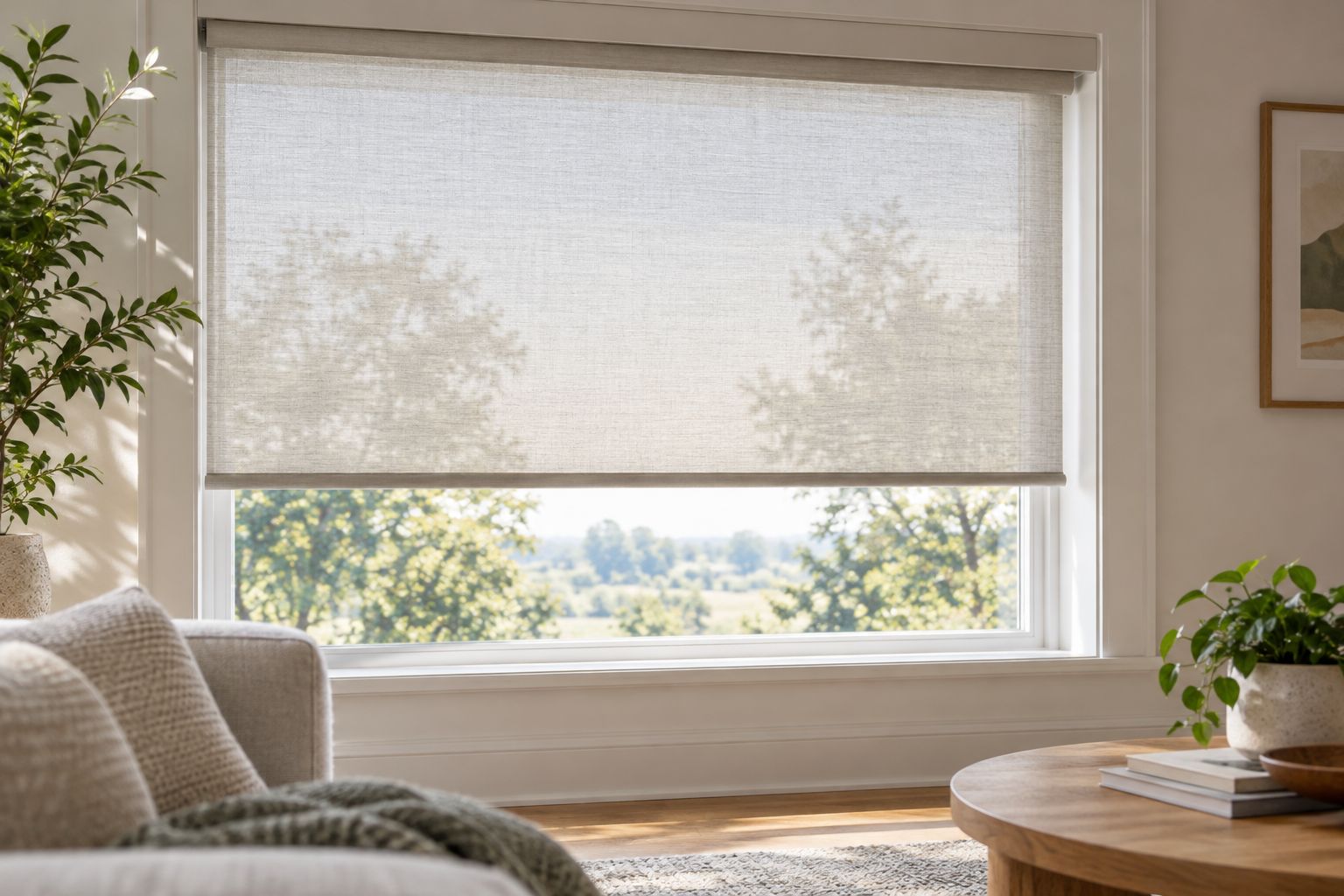
Motorization changes how you move a treatment. It does not, by itself, make the material more private, reduce gaps around the edges, or turn a light-filtering fabric into a blackout fabric.
Start with the closed-window result you want. In a bedroom, that might be greater darkness. In a living room, it might be softer daylight while keeping the view available when the shade is raised.
Then choose the operating method. This order helps you avoid a convenient shade that still leaves the room too bright or does not provide the privacy you expected.
Ask to see material samples against your own window light. Discuss the mounting position and edges as well as the center of the fabric. A sample helps you judge the material; the installation plan helps you understand the finished coverage.
What should you check before choosing motorized shades in 2026?
Confirm the power plan
Ask how the proposed shade receives power and what you will need to do after installation. If it requires charging or battery replacement, have the installer explain the process at the actual window.
Do not accept a power plan that depends on moving heavy furniture or reaching a connection you cannot safely access. For wired options, clarify where the power connection goes and whether any separate electrical work is part of the project.
Try the everyday control
Ask to see how you open, close, and stop the shade. If you want several shades to move together, have that function explained for the proposed setup rather than assuming it is included.
Also ask what happens when a remote is misplaced or a phone is unavailable. A household should understand its everyday operating method without relying on the person who originally configured it.
Confirm smart-home details
Motorized does not automatically mean voice-controlled or app-controlled. Request confirmation of compatibility with your existing setup and ask whether any additional equipment or connection is required.
Describe the exact task you want. Ask about that task specifically, including what happens if the internet connection is unavailable. Avoid treating a general smart-home label as proof that your preferred routine will work.
Understand future service
Ask who to contact if a shade stops responding and what the initial troubleshooting process involves. Clarify how the motor and power components can be accessed.
Request written warranty terms for the proposed products and installation rather than relying on a general assurance. Keep the product details and operating instructions somewhere the household can find them.
How should you compare quotes without getting distracted?
Compare the same windows, materials, mounting approach, and operating requirements. A motorized quote and a manual quote are hard to evaluate if they also use different fabrics or provide different coverage.
Ask for the proposal to distinguish the window treatment, motorization, controls, installation, and any necessary additional work. You want to understand what is included—not infer it from a single total.
For a 2026 project, ask whether the quoted control setup does what you described during the consultation. Confirm who handles setup and whether the handover includes showing you how to operate the finished installation.
A useful quote explains the finished result and your responsibilities afterward. Keep optional features separate so you can decide which solve a real problem.
Is it worth motorizing every window?
No. Motorize the windows where access, effort, or frequent adjustments create a clear benefit, and keep manual operation where it works comfortably.
A room-by-room plan also helps you avoid unnecessary complexity. You can prioritize the living area you use daily rather than giving an occasional-use room the same control requirements.
Are motorized blinds the same as smart blinds?
No. Motorized blinds use a motor for movement; smart control adds connected features supported by the particular equipment and setup.
If you only want easier operation, start by asking about a suitable physical control. If you want schedules or voice commands, ask for confirmation that the proposed installation supports those specific functions.
How do you arrange an in-home consultation?
Contact Olsson Smart Shades through the website to request an in-home consultation or quote for your Columbus or Central Ohio home. Describe the rooms, the access problems, and whether you want manual, motorized, or smart control considered.
You do not need to choose every feature before making the request. Bring questions about privacy, daylight, power access, and everyday use. Ask for the choices to be explained in plain language before deciding.
Plan your window treatments
Discuss custom measurements, installation, and the controls that fit your daily routine.
FAQ
Are motorized blinds worth it for a living room?
Motorized blinds are worth considering when living room windows are difficult to reach or need frequent adjustment. Check that the proposed fabric, controls, and power arrangement fit how you use the room.
Are manual blinds better for a spare bedroom?
Manual blinds are a practical choice for a spare bedroom when the windows are accessible and you rarely adjust them. Choose the material and coverage for your privacy and light-control needs before deciding on operation.
Do motorized shades need an internet connection?
An internet connection is not a requirement for motor movement itself. Ask which functions in the proposed installation depend on a network, app, or connected service.
Will motorized shades make my bedroom darker?
Motorization alone does not make a bedroom darker. Fabric, lining, mounting, and gaps around the treatment determine the light control when the shade is closed.
Can I mix manual and motorized window treatments?
Yes, you can choose manual operation for accessible windows and motorization where easier access matters. Discuss material and finish choices if you want a coordinated appearance.
What should I ask about maintenance before ordering?
Ask how the shade receives power, how you access its components, and who handles service. Request the applicable written warranty terms and keep the operating instructions.
Who provides custom motorized shades in Columbus and Central Ohio?
Olsson Smart Shades provides custom-measured motorized smart shades and professional installation for homeowners in Columbus and Central Ohio. Contact the business through its website to request a consultation or quote.
One last thing
Before deciding, stand where you normally sit and look at the window with the furniture in place. Then picture opening, closing, and maintaining the treatment from that position.
Choose the operation you will actually use. A well-chosen manual blind is better than unused smart features; a motorized shade earns its place when it makes your room easier to live in.