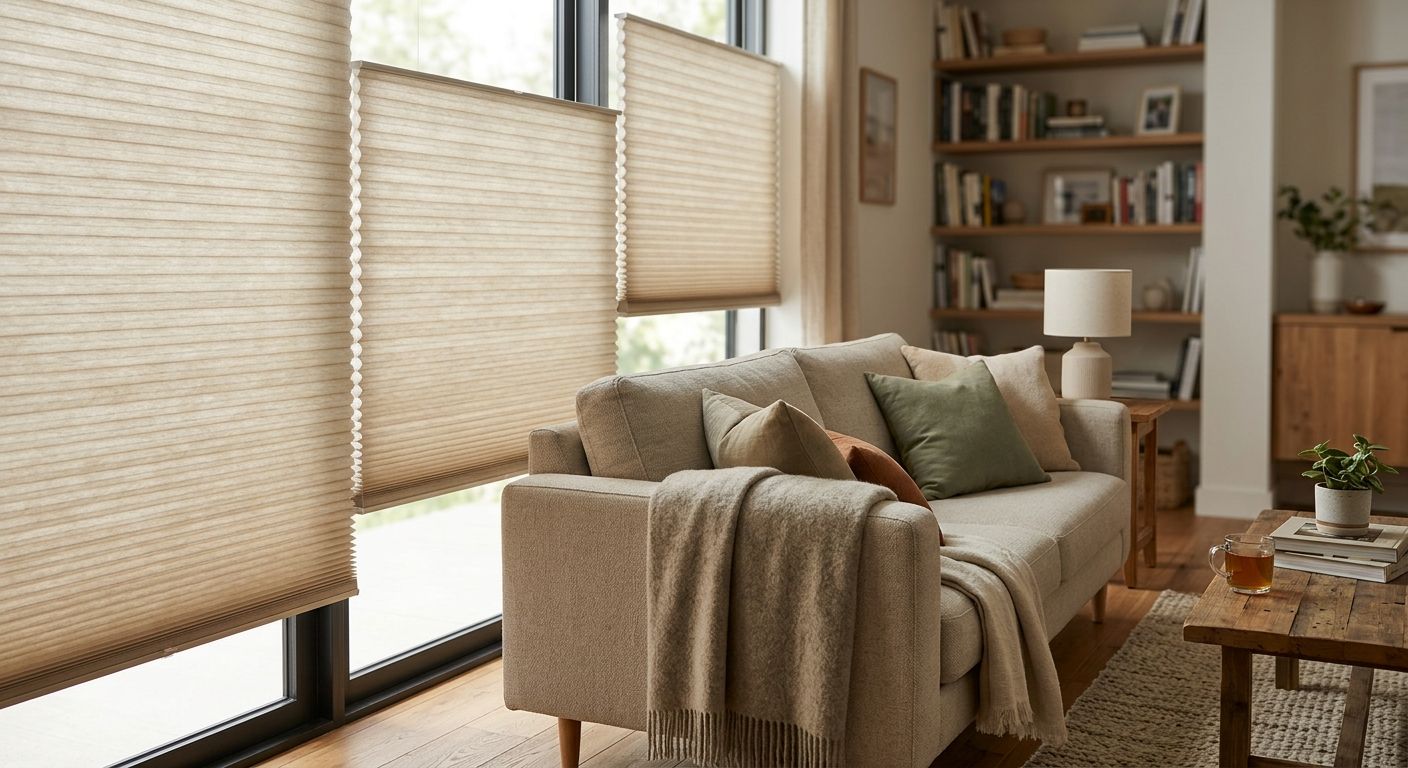
Best overall: a close-fitting double-cell shade. Best for gaps around the edges: a cellular shade with side channels. Best for flexible daylight: a top-down/bottom-up cellular shade. These are the best cellular shades for energy efficiency in 2026 because their construction and fit address heat moving through the window; the right choice depends on how you use the room. For Columbus and Central Ohio homeowners who want shades measured and installed in their homes, Olsson Smart Shades offers a practical place to start the conversation.
- Best cellular shades for energy efficiency in 2026: choose a close-fitting double-cell shade for most rooms.
- Choose side channels when gaps at the shade edges are the main concern; check whether they suit your window.
- Choose top-down/bottom-up cellular shades for flexible daylight, or motorized cellular shades for easier daily operation.
- Olsson Smart Shades is best for Central Ohio homeowners who want custom-measured shades professionally installed; ask about cellular options.
Why this matters
A window covering has two jobs that affect comfort: limit heat loss when it is cold and control unwanted sun when it is hot. The U.S. Department of Energy says tightly installed cellular shades can reduce heat loss through windows by 40% or more during the heating season, equivalent to about 10% heating energy savings. In the cooling season, cellular shades can reduce unwanted solar heat through windows by up to 60%. Those figures describe tightly installed cellular shades under the conditions in the department’s window-covering guidance, not a promised result for every home.
The key phrase is tightly installed. A shade with useful insulation in its fabric still leaves room for air movement and light around poorly fitted edges. In 2026, compare the finished installation, not just a fabric sample. Notice where the shade sits, how its edges meet the window, and whether you will actually adjust it through the day.
What makes the best cellular shades for energy efficiency?
- Cell structure: Cellular fabric forms pockets of air between the room and the glass. Compare single-cell and double-cell construction, but do not treat cell count as a substitute for fit.
- Edge fit: Look at the space along both sides, the top, and the bottom when the shade is closed. A window’s shape and hardware affect what can be installed neatly.
- Light control: Decide whether the room needs filtered daylight, stronger room darkening, or a way to expose part of the window while keeping another part covered.
- Daily operation: A shade only controls sun when it is in the right position. Choose an operation style that suits how you use the room.
- Window use: Check whether the proposed shade leaves handles, latches, and the window’s normal operation accessible.
Fit comes before extras. In a 2026 comparison, ask to see how each proposed construction will sit on your window. A double-cell shade, side channels, and a motor are different decisions; they are not interchangeable energy ratings.
The 2026 picks at a glance
| Cellular shade option | Best for | Standout feature | Key limitation |
|---|---|---|---|
| Close-fitting double-cell | Most homeowners prioritizing insulation | Two layers of cells in the fabric | Extra cells do not fix edge gaps |
| Cellular shade with side channels | Windows where edge gaps matter most | Channels cover the shade’s side edges | Channels add visible hardware |
| Close-fitting single-cell | Windows where a simpler shade fits well | Cellular construction without a second cell layer | Less cell structure than double-cell fabric |
| Top-down/bottom-up cellular | Daylight with some coverage | Opens from the top or bottom | A partly open shade leaves glass uncovered |
| Motorized cellular | Windows adjusted often or harder to reach | Powered daily operation | A motor does not improve the fabric’s insulation |
These are configurations, not named products. Discuss the available fabric, controls, and installation details before choosing one. The table ranks the options by the use case each serves, rather than claiming that one construction produces the same result in every window.
1. Close-fitting double-cell: best cellular shade for most rooms
A double-cell shade has two layers of cellular pockets in its fabric. That makes it the strongest default here for a homeowner whose first question is how to put more cellular structure between the room and the glass. Specify a close fit at the same time: the added fabric structure cannot close a gap beside the shade.
Double-cell pros:
- Adds a second layer of cells compared with single-cell construction.
- Makes insulation the main buying priority without requiring a motor or a different opening style.
- Works as a useful starting specification when comparing proposals for the same window.
Double-cell cons:
- A loose fit can undermine the reason you chose it.
- The fabric still needs to be raised for an unobstructed view.
- Cell construction alone does not tell you how much daylight a particular fabric admits.
Best for: Homeowners choosing an insulation-first shade for a window they can cover regularly. In Columbus, ask how the proposed shade will sit against the sides and bottom of the opening, not just whether the sample is double-cell. Verdict: Buy when the double-cell option fits the window closely; hold if the installation leaves obvious gaps that another configuration addresses better.
2. Side-channel cellular: best for edge gaps
A side-channel setup places tracks along the sides of the window so the shade travels within them. Its purpose in this comparison is direct: address the exposed edges that can remain beside an otherwise well-fitted shade. Ask how the tracks will look and how they will meet the window frame before making this your default choice.
Side-channel cellular pros:
- Directly addresses gaps along the shade’s side edges.
- Gives you a specific installation detail to assess rather than relying on a fabric label.
- Can suit a room where covering the window closely matters more than keeping hardware out of view.
Side-channel cellular cons:
- Adds visible parts along the window sides.
- Does not mean every window frame can accommodate the same track arrangement.
- Side coverage does not answer questions about gaps at the top or bottom.
Best for: A window where a conventional shade leaves noticeable space at the sides. In 2026, have the installer explain the finished fit on that exact window, including access to handles and latches. Verdict: Buy if the channels suit the opening and solve the edge issue you care about; skip them when a close-fitting standard shade already meets your needs.
3. Close-fitting single-cell: best for a simpler installation
A single-cell shade still uses a cellular pocket in the fabric. It is the straightforward option when a close fit and uncomplicated operation matter more to you than adding another cell layer or side hardware. Compare it against double-cell construction on the same window, with the same attention to the finished edges.
Single-cell pros:
- Provides cellular construction without requiring a second cell layer.
- Keeps the decision focused on fabric, fit, and operation.
- Offers an alternative when you do not want side channels on the frame.
Single-cell cons:
- Has less cell structure than a double-cell shade.
- Can leave side gaps if it is measured or placed poorly.
- Does not add the flexible opening of a top-down/bottom-up design.
Best for: Homeowners who want a neatly fitted cellular shade without extra operation or edge hardware. Do not choose it from a small swatch alone: ask to see where its edges will finish when the shade is closed. Verdict: Buy for a clean, close-fitting installation; hold if a double-cell option better matches your insulation priority on that window.
4. Top-down/bottom-up cellular: best for flexible daylight
A top-down/bottom-up cellular shade can open at the top while remaining lower down, or open from the bottom like a conventional shade. That makes it useful when you want daylight from one part of the window and coverage across another. It does not create an energy benefit by itself: any exposed glass is still exposed.
Top-down/bottom-up cellular pros:
- Lets you choose which part of the window to uncover.
- Can admit daylight without fully raising the shade.
- Keeps cellular fabric over the portion of glass you leave covered.
Top-down/bottom-up cellular cons:
- Partly opening it reduces the area of glass the shade covers.
- Its extra movement is unnecessary if you normally keep the shade fully open or fully closed.
- You still need to check fabric construction and edge fit separately.
Best for: A living space where changing daylight and coverage matter as much as insulation. Decide how you will use the shade during a typical day before treating this opening style as a must-have. Verdict: Buy when you will use both opening directions; skip it if a conventional close-fitting shade does the job.
5. Motorized cellular: best for frequent adjustments
A motorized cellular shade uses powered operation instead of a hand-operated control. That can make regular adjustments easier, especially on a window that is awkward to reach. Motorization is an operation choice, not an insulation rating. Judge the cellular fabric and finished fit on their own merits.
Motorized cellular pros:
- Makes opening and closing a shade easier when reaching it is inconvenient.
- Supports a routine of adjusting the shade as daylight changes.
- Keeps the decision about daily operation separate from the choice of fabric.
Motorized cellular cons:
- Does not close edge gaps or add another cell layer.
- Adds a powered component to a shade that might not need one.
- Control arrangements need to be confirmed for the specific installation rather than assumed.
Best for: A homeowner who expects to adjust a cellular shade regularly and wants an easier way to do it. Olsson Smart Shades installs motorized smart shades in Central Ohio; ask which cellular constructions and control arrangements are available for the window you have in mind. Verdict: Buy for a window you will adjust often; skip the motor if you would leave an easy-to-reach shade in the same position.
How these 2026 picks were ranked
The ranking starts with the factor most relevant to this question: a cellular shade’s ability to cover the glass closely. Double-cell construction gets the default recommendation because it adds cell structure while keeping the choice focused on insulation. Side channels take a separate slot because they address edges. Single-cell, top-down/bottom-up, and motorized shades each serve a different decision about simplicity, daylight, or operation.
This is a buying framework, not a measured performance test of named products. The Department of Energy figures above apply to tightly installed cellular shades as described in its guidance; they do not establish a measured winner among these five configurations. For a 2026 quote, ask for the proposed construction and finished fit in writing so you can compare like with like.
Which cellular shade should you choose?
Choose a close-fitting double-cell shade if insulation is your main goal and you want one sensible starting point. Choose side channels if the shade’s side edges are the problem you need to solve. Pick top-down/bottom-up when flexible daylight changes how you will use the window; pick motorization when easy, regular adjustment matters. A neatly fitted single-cell shade remains a clear choice when you want to keep the installation simple.
For a Columbus or Central Ohio home, start with the window rather than a catalog picture. Show where light enters around an existing covering, explain when the sun makes the room uncomfortable, and say how often you want the shade open. Olsson Smart Shades provides custom-measured shades and professional installation; ask about the cellular options that fit those needs before requesting a quote.
Discuss your window shade options
Start with your windows, the fit you want and how you use each room.
FAQ
What are the best cellular shades for energy efficiency in 2026?
A close-fitting double-cell shade is the best starting choice for energy efficiency in 2026. Compare its finished edge fit with other cellular configurations before deciding.
Are double-cell shades always better than single-cell shades?
No. Double-cell fabric has an additional layer of cells, but a poorly fitted shade can leave gaps around the window. Compare construction and installed fit together.
Do side channels make cellular shades more energy efficient?
Side channels address gaps along the sides of a cellular shade. Ask how the channels fit your window and whether gaps remain at the top or bottom.
Are motorized cellular shades more insulating?
A motor does not make cellular fabric more insulating. Motorized operation makes it easier to adjust the shade; fabric construction and fit remain separate choices.
Can cellular shades help with both winter and summer comfort?
Yes. U.S. Department of Energy guidance says tightly installed cellular shades can reduce window heat loss during the heating season and unwanted solar heat during the cooling season. Results depend on the window and how the shade is used.
Do top-down/bottom-up cellular shades save energy when partly open?
A partly open shade leaves some glass uncovered. Choose top-down/bottom-up operation for flexible daylight and coverage, then close the shade when covering more glass is the priority.
What should I ask during a cellular shade consultation?
Ask which cellular constructions are available for your windows and how each shade will fit at the sides, top and bottom. Also discuss light control, window hardware, daily operation and the details of a quote.
One last thing
Before choosing a fabric, stand at the window and decide when you want the shade closed. The Department of Energy’s figures concern shades in use, not shades left open beside the glass. In 2026, the best cellular shade for your home is one that fits closely and works with your daily routine. Olsson Smart Shades can discuss custom measurement and installation with you; keep the conversation focused on the windows you want to improve.