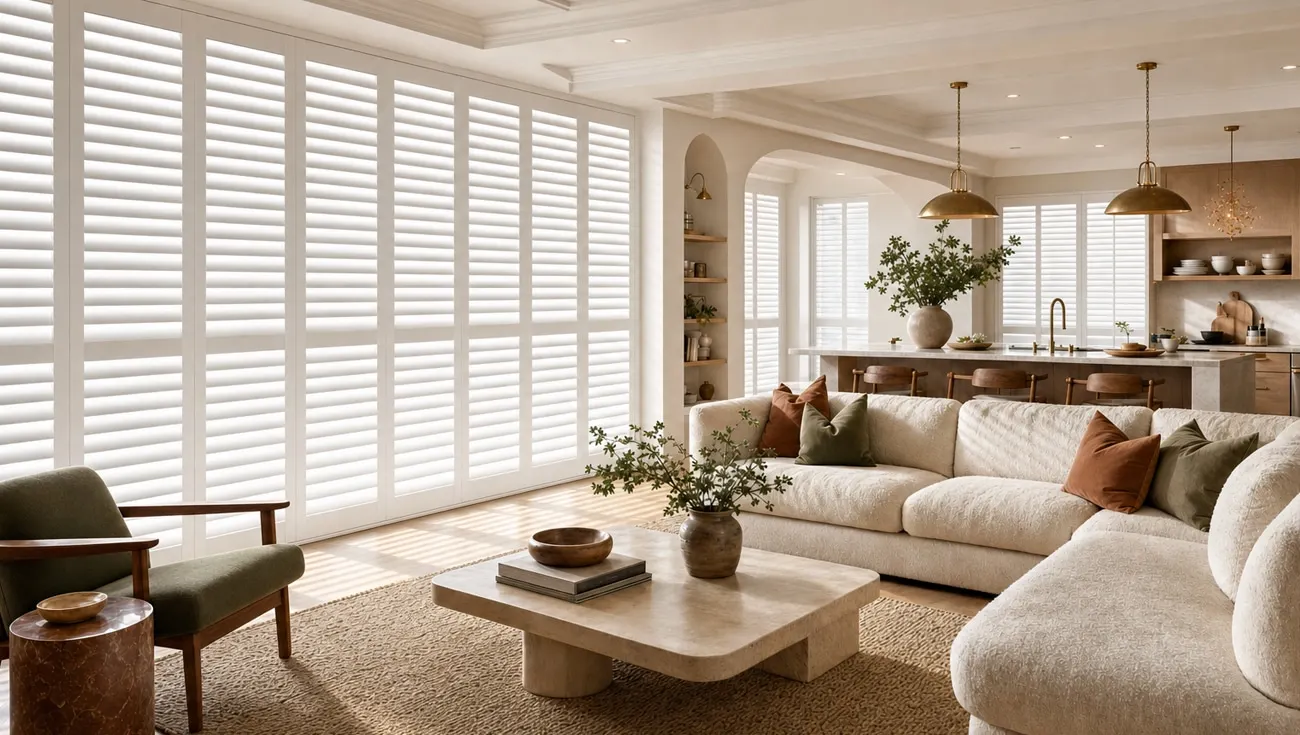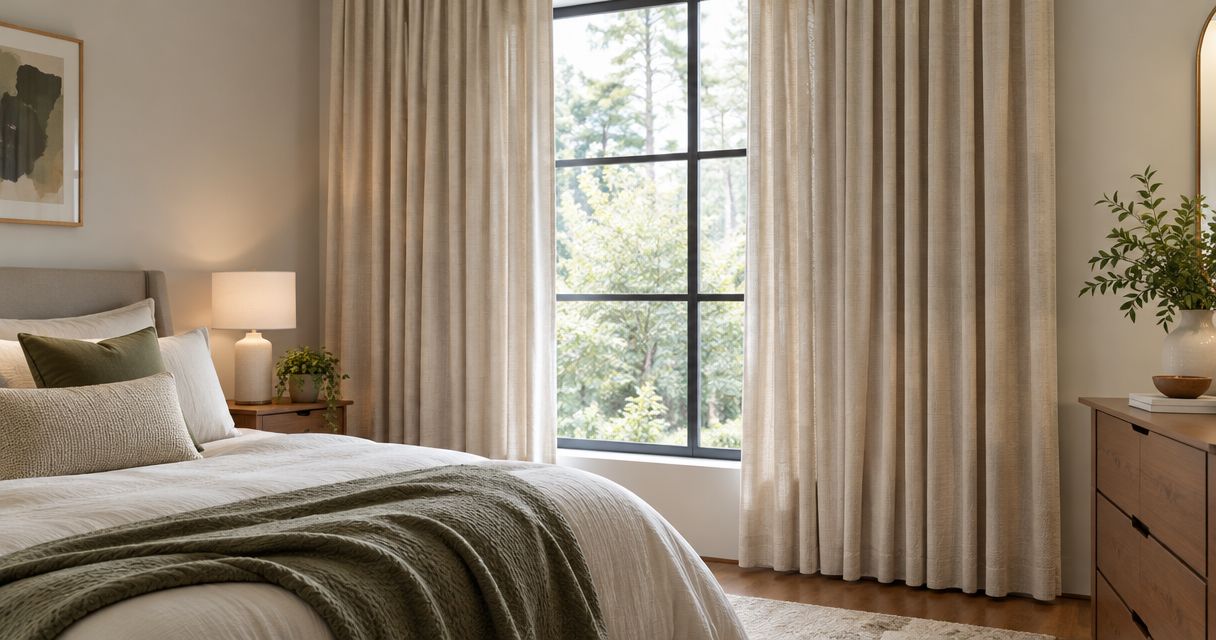
Best overall: blackout-lined drapes; best for daytime flexibility: sheers with blackout drapes; best for a simple setup: light-filtering drapes. This 2026 guide compares custom drapes for bedrooms by light control, privacy, fit, and daily use, with Olsson Smart Shades offering custom measurement and installation for Columbus and Central Ohio homeowners.
- Blackout-lined custom drapes for bedrooms are the best default when sleep-time darkness matters most.
- Sheers with blackout drapes give you separate layers for daylight and nighttime privacy.
- Light-filtering drapes suit bedrooms where softened daylight matters more than darkness.
- Olsson Smart Shades provides custom-measured bedroom window treatments for Columbus and Central Ohio homeowners.
Why this matters
Bedroom drapes need to work when you are asleep, getting dressed, and enjoying daylight. A fabric that looks right beside your bedding can still leave bright edges or reveal silhouettes after dark.
Choose the light-control setup before the decorative details. For a bedroom update in 2026, start with the problem you want to solve: early sunlight, nighttime privacy, an exposed window, or panels that are awkward to move.
Custom measurement helps address the whole opening, not just the glass. Wall space, trim, hardware, furniture, and the resting position of open panels all affect the finished result.
What makes the best custom drapes for bedrooms?
Use these criteria to judge each option before choosing fabric:
- Sleep-time darkness: Decide whether you need softened light or a treatment designed to block light through the fabric.
- Nighttime privacy: Evaluate the fabric with interior lights on. A daytime sample alone does not answer the privacy question.
- Edge coverage: Plan the center overlap, side coverage, and space above the window. Blackout fabric does not seal those openings.
- Daily operation: Choose a heading and hardware arrangement that suits how often you open the panels.
- Room clearance: Allow for furniture, window handles, vents, and the space occupied by stacked fabric.
- Fabric care: Check cleaning instructions for the face fabric and lining before ordering.
Bedroom drapes at a glance
These are treatment configurations, not named product collections. The ranking separates different needs rather than treating every bedroom alike.
| Rank and option | Best for | Standout feature | Key limitation |
|---|---|---|---|
| 1. Blackout-lined drapes | Sleep-time darkness | Light-blocking lining behind the decorative fabric | Light can still enter around the edges |
| 2. Sheers with blackout drapes | Flexible daytime privacy | Separate sheer and opaque layers | Requires room for layered hardware and fabric |
| 3. Light-filtering drapes | A simple, softly lit bedroom | Diffuses daylight through a single treatment | Not a blackout solution |
| 4. Linen drapes with separate lining | A textured, relaxed appearance | Separates the fabric look from the lining choice | Care requirements need attention |
| 5. Stationary drapes with a blackout shade | Windows with limited panel-opening space | Shade handles light control; drapes frame the window | Drapery panels do not close across the glass |
1. Blackout-lined drapes: best for sleep-time darkness
Blackout-lined drapes combine a decorative face fabric with a lining designed to block light through the panel. They are the best starting point when morning brightness or exterior lighting is the main bedroom complaint.
The lining is only part of the result. Panels also need enough coverage to meet properly in the middle and limit exposed gaps at the sides.
Blackout-lined drapes pros:
- Let you choose the visible fabric separately from the light-blocking layer.
- Provide opaque coverage when the specified fabric-and-lining combination is closed.
- Keep decoration and light control within one moving treatment.
Blackout-lined drapes cons:
- Do not guarantee a completely dark room around the perimeter.
- Add fabric bulk that the hardware and mounting must support.
Ask the installer to explain where light can still enter. Pay particular attention to the top of the treatment and the center meeting point, rather than judging only the fabric swatch.
Best for: Sleepers who want darkness without a separate shade behind the drapes.
Verdict: Buy blackout-lined drapes when sleep-time light control is your first priority.
2. Sheers with blackout drapes: best for daytime flexibility
Layered sheers and blackout drapes let you change the room without choosing between fully open and fully covered. Close the sheers to soften daylight, then close the opaque layer when you need stronger privacy or darkness.
This arrangement separates daytime and nighttime jobs. Sheers alone are not dependable nighttime privacy when the room is lit.
Layered sheers and blackout drapes pros:
- Give you separate control over diffused daylight and opaque coverage.
- Allow the decorative outer panels to stay open while the sheers cover the glass.
- Offer more flexibility than a single opaque layer.
Layered sheers and blackout drapes cons:
- Need space for layered hardware and stacked fabric.
- Add another set of panels to operate and maintain.
Ask to see where each layer will sit before approving the installation plan. A narrow wall beside the window or a nearby headboard can make a layered arrangement awkward.
Best for: Bedrooms used for dressing, reading, or relaxing during daylight hours as well as sleeping.
Verdict: Buy sheers with blackout drapes when you need different settings throughout the day.
3. Light-filtering drapes: best for a simple bedroom setup
Light-filtering drapes soften incoming daylight without aiming for blackout performance. They suit a homeowner who likes a bright bedroom and wants a straightforward treatment to open and close.
Do not assume every light-filtering fabric provides the same privacy. Weave, opacity, and the difference between indoor and outdoor lighting affect what someone can see.
Light-filtering drapes pros:
- Soften daylight while allowing light through the fabric.
- Keep the treatment to a single operating layer.
- Avoid the additional fabric of a separate blackout lining.
Light-filtering drapes cons:
- Do not meet a strong room-darkening requirement.
- Require a careful privacy check for exposed bedroom windows.
For a 2026 bedroom refresh, choose light-filtering drapes because you want daylight, not because a pale swatch looks restful. Fabric color and light-blocking ability are separate decisions.
Hold the sample against the window, then inspect it with a light behind it. Ask how the finished treatment will address privacy after dark.
Best for: Bedrooms where a softly lit atmosphere matters more than sleeping in darkness.
Verdict: Skip light-filtering drapes if early sunlight already interrupts your sleep.
4. Linen drapes with separate lining: best for a textured look
Linen drapes bring visible weave and a relaxed appearance to a bedroom. A separate lining lets you address light control without asking the face fabric to do every job.
For this configuration, choose linen for its appearance and feel, then specify the lining around your privacy and sleep needs. Linen itself is not a blackout specification.
Linen drapes with separate lining pros:
- Keep the textured face fabric visible from inside the room.
- Let you discuss lining opacity separately from fabric appearance.
- Suit a softer, less rigid decorative finish.
Linen drapes with separate lining cons:
- Show creasing that does not suit every homeowner's preference.
- Need cleaning instructions that account for both fabric and lining.
Ask to handle a hanging sample, not just a flat cutting. The folds and creases are part of what you will live with each day, especially when the panels remain open beside the window.
Best for: Homeowners who want a textured bedroom treatment and accept linen's relaxed finish.
Verdict: Buy linen drapes with separate lining for the texture; choose the lining for the bedroom's light-control needs.
5. Stationary drapes with a blackout shade: best for limited opening space
Stationary drapes frame the window but do not draw across it. A separate blackout shade handles the opening and closing, which makes this a useful arrangement when full-width drapes would bunch against furniture or cover too much glass when open.
The shade still needs its own coverage plan. A blackout shade describes the material's light-blocking purpose, not a promise that no light reaches the room.
Stationary drapes with a blackout shade pros:
- Separate the decorative panels from daily light control.
- Avoid drawing long panels across a crowded bedroom wall.
- Allow the shade to operate while the drapery folds stay arranged.
Stationary drapes with a blackout shade cons:
- Leave the shade responsible for functional window coverage.
- Require coordination between the shade, brackets, and drapery hardware.
For a 2026 project, confirm manual or motorized shade operation before finalizing the drapery layout. Olsson Smart Shades offers motorized smart shades, but power, controls, and any requested connections need confirmation for the selected setup.
Best for: Bedrooms where decorative drapes fit at the sides but moving panels would be inconvenient.
Verdict: Buy stationary drapes with a blackout shade when the room layout makes full-width drapes impractical.
Match the lining to the job
The lining decision should follow your sleep and privacy requirements, not the color of the decorative fabric. In particular, lining for linen drapes needs its own specification because a textured face fabric does not tell you how much light the finished treatment will block.
Ask whether the proposed lining is light-filtering or blackout, how it attaches, and how the combined treatment should be cleaned. Confirm whether the sample you are viewing includes that exact lining.
Keep room darkening and complete darkness separate in the conversation. Even when light cannot pass through the fabric, it can travel around the treatment. Coverage and installation details deserve the same attention as the material.
Plan the fit before approving the fabric
A bedroom drapery plan needs more than a window-width measurement. Before approving a 2026 order, work through these decisions with the person measuring and installing the treatment:
- Window coverage: Identify the glass, trim, and surrounding areas the closed treatment needs to cover.
- Panel parking: Decide where the fabric will rest when fully open.
- Hardware clearance: Check handles, furniture, vents, and any shade behind the drapes.
- Hem position: Choose where the finished fabric should end and confirm that choice during measurement.
These decisions connect. Moving the hardware changes the required panel length, while adding a second layer changes the depth of the installation.
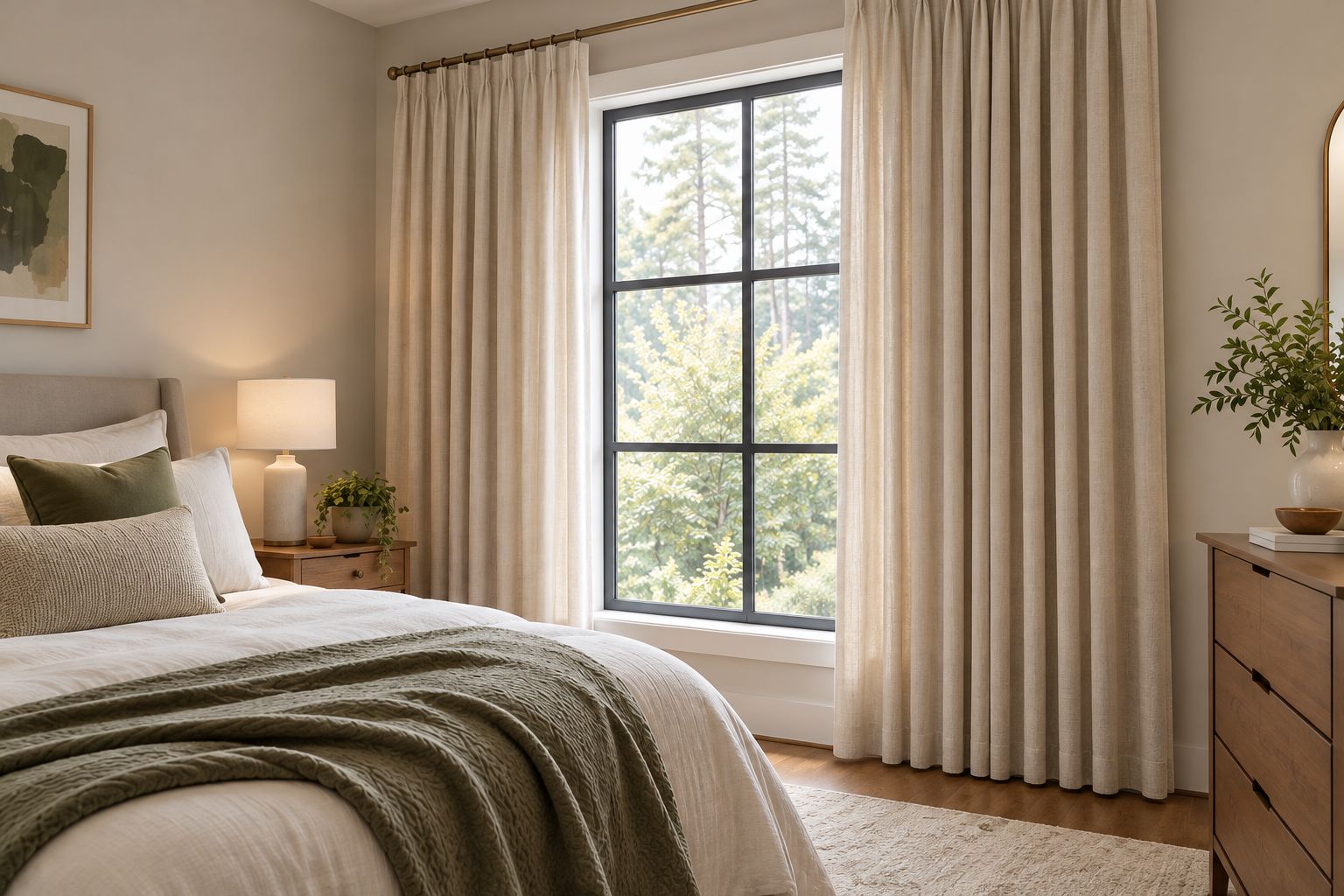
A floor-skimming finish is a practical starting point if you want to avoid fabric resting on the floor. If you prefer pooled fabric, discuss cleaning and walking clearance before committing.
How these bedroom drapes were ranked
Blackout-lined drapes rank first because they directly address sleep-time darkness while retaining a decorative fabric face. Layered sheers rank next for flexibility, not because every bedroom needs multiple treatments.
The remaining choices solve more specific needs: a simple light-filtering setup, linen texture, or a room layout that favors stationary panels. The best option is the one that solves your bedroom's problem without adding layers you will not use.
Which custom drapes should you choose?
Choose blackout-lined drapes if you are undecided and darkness is important. Choose sheers with blackout drapes if you want filtered daylight as well as an opaque nighttime treatment.
Olsson Smart Shades is best for Columbus and Central Ohio homeowners seeking custom-measured bedroom drapes with professional installation. When you request a quote, describe what bothers you about the current window treatment and ask to arrange an in-home consultation.
Explain when unwanted light enters, whether nighttime privacy is a concern, and what furniture sits near the window. That gives the conversation a practical starting point without requiring you to arrive with a fabric already chosen.
FAQ
What's the best type of custom drapes for bedrooms?
Blackout-lined drapes are the best default when sleep-time darkness is the main goal. Choose layered sheers and blackout drapes instead when you also want filtered daylight with the window covered.
Do blackout drapes make a bedroom completely dark?
Blackout drapes do not automatically make a bedroom completely dark. Light can enter around the top, sides, bottom, and center opening, so coverage and hardware placement matter.
Are sheer drapes enough for bedroom privacy at night?
Sheer drapes alone are not dependable nighttime bedroom privacy. Pair them with an opaque treatment and check the proposed fabric with interior lights on.
Can linen drapes have blackout lining?
Linen drapes can be made with a separate blackout lining. Confirm the selected fabric-and-lining combination, its finished appearance, and its cleaning requirements before ordering.
Should bedroom drapes touch the floor?
Bedroom drapes do not have to touch the floor. A floor-skimming finish avoids fabric resting on the floor; a pooled finish needs a separate discussion about cleaning and clearance.
Are drapes or blackout shades better behind a bed?
The better choice depends on access and available space. A blackout shade with stationary side panels suits a layout where moving full-width drapes would be awkward, while closing drapes require a clear operating path.
How do I arrange custom bedroom drapes in Columbus?
Ask Olsson Smart Shades to arrange an in-home consultation or provide a quote for custom-measured bedroom drapes. Describe your light-control needs, nearby furniture, and whether you want an additional shade.
One last thing
Before approving your 2026 bedroom drapes, ask where every open panel will go. A beautiful treatment that blocks glass or catches behind a nightstand is an everyday inconvenience. Plan the open position as carefully as the closed one.