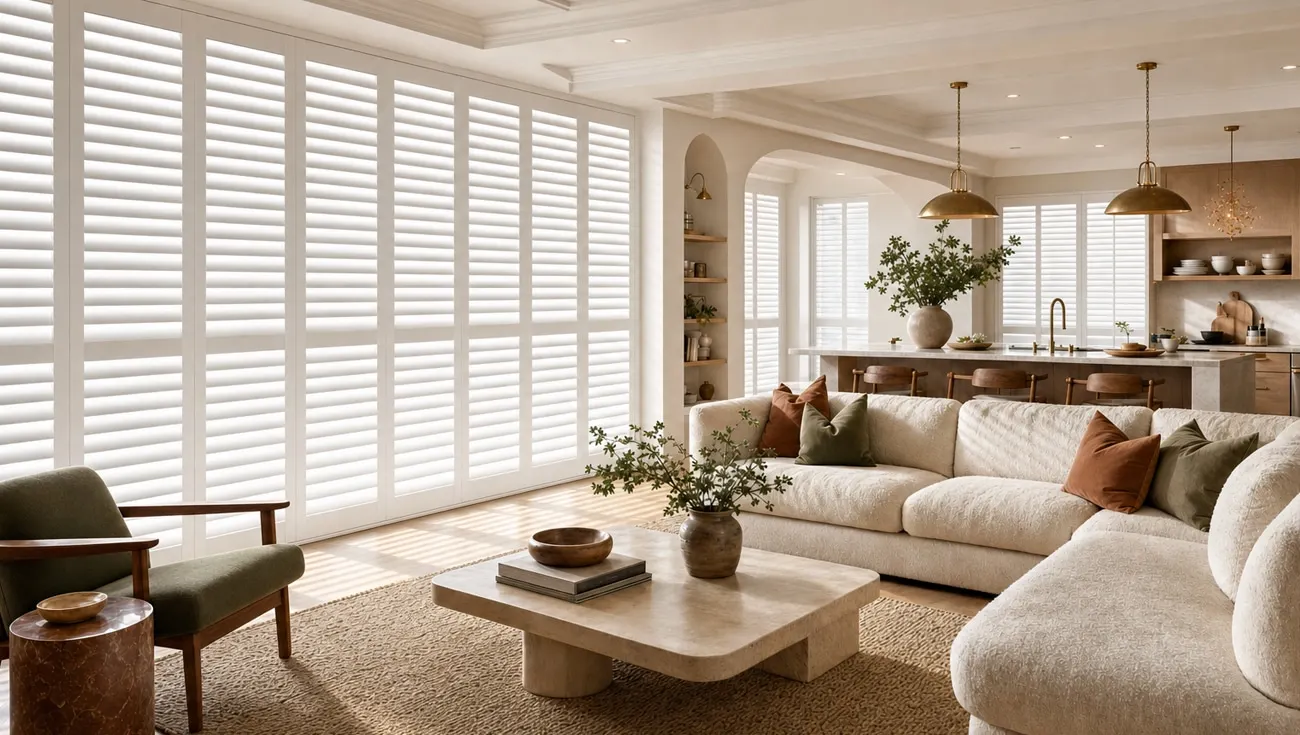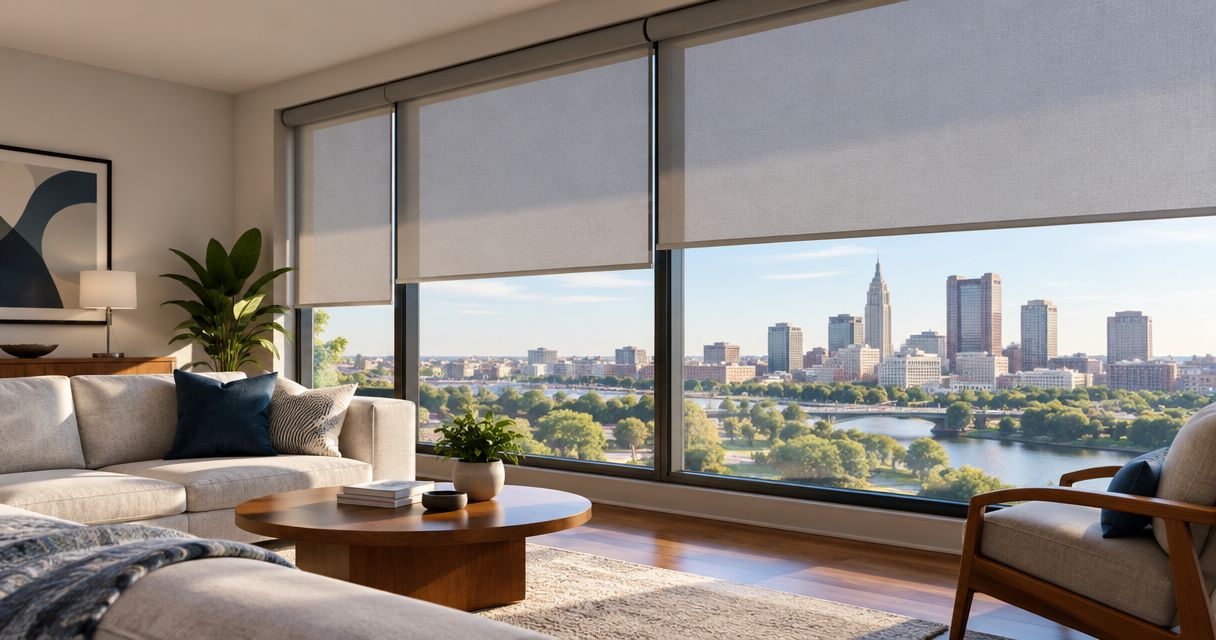
Best overall for daytime living rooms: a custom-fit, 3% openness motorized solar shade. Best for screen glare: 1% openness. Best for preserving the view: 5% openness. This 2026 guide compares practical configurations, with Olsson Smart Shades as a local option for custom-measured motorized window treatments in Columbus and Central Ohio.
- The best motorized solar shades match fabric openness, power access, and room privacy needs—not just a preferred controller.
- Start with 3% openness for living rooms; compare actual fabric samples at your window before choosing.
- Solar fabric is not reliable nighttime privacy; bedrooms need a separate privacy layer.
- Olsson Smart Shades suits Columbus homeowners seeking custom-measured, professionally installed motorized window treatments.
Why this matters
A motor moves the shade. The fabric determines what happens to the light. Choosing a controller before choosing the fabric gets that order backward.
Solar shades filter sunlight through an open weave. They help manage glare while retaining some outward visibility, but they do not turn a sunny bedroom into a dark sleeping space. Your room's purpose comes first.
For your 2026 project, start with the problem you want to solve: an unreadable monitor, afternoon glare across the sofa, or windows you cannot comfortably reach. Each calls for a different setup.
What makes the best motorized solar shades?
- Useful light control: The fabric should reduce the glare you actually experience, not simply look good on a sample card.
- Appropriate openness: Compare the weave's open area alongside color and the manufacturer's fabric specifications.
- Honest privacy planning: Decide what covers the window after dark. Solar fabric alone is not a dependable privacy solution.
- Accessible power: Charging, battery replacement, or wiring must remain practical after installation.
- Simple controls: Choose a remote, wall control, or verified smart-home connection that your household will use.
- Correct fit: Confirm mounting depth, fabric coverage, handles, and clearance before ordering.
Motorized solar shades at a glance
These are configuration recommendations, not a ranking of named manufacturer products. Each solves a different household problem. Confirm the exact fabric, motor, dimensions, and controls in your written proposal.
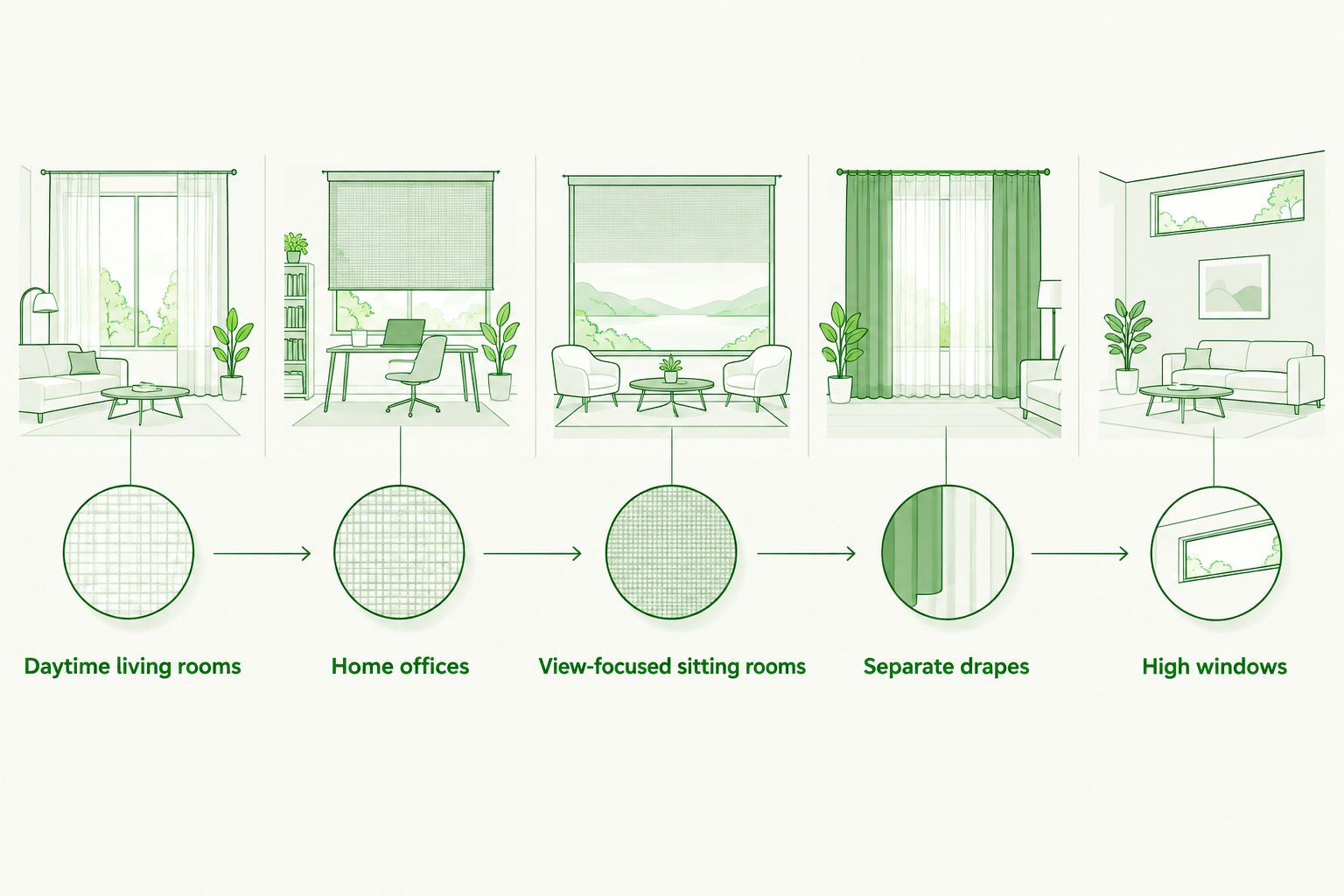
| Configuration | Best for | Standout feature | Key limitation |
|---|---|---|---|
| 3% openness motorized solar shade | Daytime living rooms | Middle-ground starting point for glare and visibility | Does not provide dependable nighttime privacy |
| 1% openness motorized solar shade | Home offices | Less open fabric area than 3% or 5% | More restricted outward view |
| 5% openness motorized solar shade | View-focused sitting rooms | More open fabric area | Less screening than a tighter weave |
| Motorized solar shade with separate drapes | Bedrooms needing daytime filtering | Separate daytime and privacy layers | Requires space and separate operating decisions |
| Hardwired motorized solar shade | High, difficult-to-reach windows | Avoids routine battery charging | Requires a suitable wiring plan |
Openness describes the percentage of open area in the fabric. A 1% openness fabric has less open area than a 3% fabric; a 5% fabric has more. Those percentages are not heat-reduction ratings.
1. 3% openness: best motorized solar shade for daytime living rooms
A 3% openness motorized solar shade is a sensible starting point when you want daylight and some view without leaving the window uncovered. It sits between the tighter 1% and more open 5% configurations in this comparison.
Test the sample from your normal seat. A fabric that looks comfortable beside the window can still leave distracting glare across the room.
3% openness pros:
- Offers a middle-ground starting point for comparing weave density.
- Retains some outward visibility while filtering daylight.
- Works as a daytime layer beneath separate drapes.
3% openness cons:
- Does not guarantee a glare-free television or monitor.
- Does not replace a nighttime privacy covering.
Best for: Living rooms used for conversation, reading, and daytime relaxing.
Verdict: Buy after comparing the fabric at the window during your troublesome sun period. Do not choose from openness alone.
2. 1% openness: best motorized solar shade for home offices
A 1% openness solar shade uses a tighter weave than the 3% and 5% options here. Start with this configuration when preserving a wide-open view matters less than screening bright daylight near your workspace.
The screen's location still matters. A shade cannot correct every reflection caused by a monitor facing a bright window or another uncovered opening.
1% openness pros:
- Provides less open fabric area for direct light to pass through.
- Gives you a tighter-weave option to compare against office glare.
- Allows motorized adjustment without reaching across a desk.
1% openness cons:
- Restricts the outward view more than a more open weave.
- Is not blackout fabric and does not ensure darkness.
Best for: Home offices where screen comfort takes priority over the view.
Verdict: Buy if an in-room sample comparison shows the tighter fabric addresses your glare. Skip the assumption that every dark-looking fabric performs alike.
3. 5% openness: best motorized solar shade for preserving the view
A 5% openness solar shade leaves more open fabric area than the other single-layer configurations in this guide. It belongs on your shortlist when you want a visual connection to the outdoors and only need moderate screening.
Use your own sightline as the test. Look through the sample toward the part of the yard you actually enjoy, rather than holding it against an indoor wall.
5% openness pros:
- Provides a more open weave for view-focused rooms.
- Filters daylight without using an opaque fabric.
- Allows adjustment as the sun changes across the window.
5% openness cons:
- Leaves more open area for direct light than tighter weaves.
- Is a poor standalone choice when privacy is the main requirement.
Best for: Sitting rooms where maintaining the outdoor view matters most.
Verdict: Buy for view-first rooms after a glare check. Skip if your main goal is strong daytime screening or nighttime privacy.
4. Solar shades with drapes: best for bedrooms needing two functions
A motorized solar shade paired with separate privacy or blackout drapes gives each layer a clear job. The solar fabric filters daytime light. The closed drapes provide the privacy or room-darkening function specified for that fabric and installation.
This is not the same as asking one solar shade to do everything. Decide whether the drapes need manual operation or their own motorization; one motor does not automatically control both layers.
Solar shades with drapes pros:
- Separates daytime light filtering from nighttime coverage.
- Lets you retain a filtered view when the drapes are open.
- Gives you a fabric layer that can soften the room visually.
Solar shades with drapes cons:
- Requires room for tracks or rods and gathered fabric.
- Adds a second layer to operate and maintain.
Best for: Bedrooms where you want filtered daytime light and separate nighttime coverage.
Verdict: Buy when both functions matter. Skip a solar-only bedroom setup if you need reliable privacy after dark.
5. Hardwired solar shades: best for difficult-to-reach windows
A hardwired motorized solar shade gets power through wiring rather than a routinely recharged or replaced battery. That makes the power plan especially important for high windows and other awkward locations.
For a 2026 renovation or new build, discuss wiring before walls are finished. In an existing room, confirm where the wiring and power components would sit before committing to this configuration.
Hardwired solar shade pros:
- Avoids routine battery charging at the window.
- Keeps daily operation within reach through the specified controls.
- Allows power planning to happen alongside other renovation work.
Hardwired solar shade cons:
- Requires suitable wiring and coordination with the appropriate installer.
- Still needs a plan for eventual motor or fabric service.
Best for: High windows where routine battery access would be inconvenient.
Verdict: Buy when the wiring route is practical. Wait if nobody has explained power access and future servicing.
Choose fabric before choosing smart controls
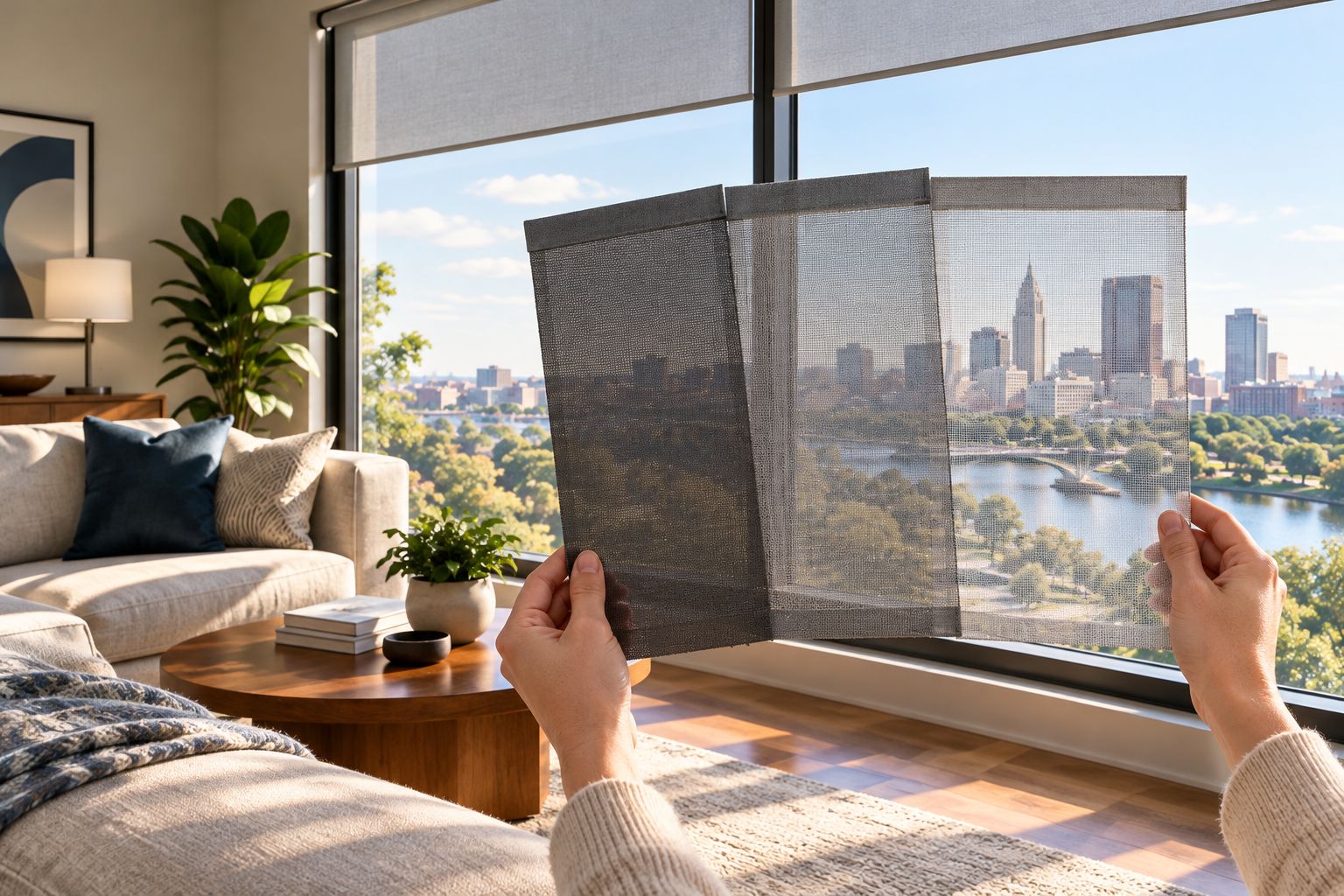
For a 2026 installation, compare samples against the actual glass before discussing app features. Fabric color, weave, and the window itself all affect the result; openness alone does not describe total solar performance.
When comparing roller shade fabrics for heat control, distinguish open area from the fabric's published solar-performance measurements. Ask for the exact fabric specifications rather than treating a tighter weave as a complete heat-control rating.
Run a simple sample check:
- Check glare: Sit at the desk or sofa during the troublesome sun period.
- Check the view: Look through each sample toward the outdoors.
- Check privacy: Consider the window after dark with indoor lights on.
- Check coverage: Confirm where fabric edges will stop relative to the glass.
A larger sample is easier to judge than a small swatch. Ask what sample viewing is possible before finalizing your choice.
Confirm power and controls before ordering
Battery power avoids running a new power wire to each compatible shade, but it leaves a charging or replacement task. Ask where the battery sits and how you will reach it once furniture is in place.
Hardwiring removes that routine battery task, not every maintenance need. A reachable control does not mean a high-mounted motor is easy to service.
For smart-home operation, name the exact system you use. Get written confirmation that the specified motor and any required bridge support it; a general smart-shade label is not enough. Also ask how the shade operates when your internet connection is down.
In 2026, a practical control plan still starts with ordinary household use. Can a guest lower the shade? Can everyone find the control? Keep those answers simple.
How to arrange a local consultation
Olsson Smart Shades is a fit for Columbus homeowners who want custom-measured, professionally installed motorized window treatments. Start with your room's problem rather than a product name.
You can request a quote and describe the windows, glare, privacy needs, and existing smart-home system. Include photos if the request process allows them, and ask how to arrange an in-home consultation.
Before approving a proposal, ask Olsson Smart Shades to identify the fabric, openness, motor, power source, controls, mounting arrangement, and installation scope. Ask whether the proposed solar fabric is appropriate for your room—not simply whether it can be motorized.
There is a trade-off with custom work: you need to settle room-specific details before ordering. The benefit is a measured installation plan rather than a guess about fit.
How these configurations are ranked
The ranking follows the buying criteria above: useful light control, openness, privacy, power access, controls, and fit. The default puts an everyday living room first; the remaining configurations address distinct needs.
This is not a tested manufacturer leaderboard. A specific fabric and motor combination still needs confirmation against your window dimensions and room requirements.
Which motorized solar shades should you choose?
Start with a 3% openness sample for a daytime living room. Compare 1% for stronger screening and 5% when the view matters more. Add a separate privacy layer for bedrooms.
For your 2026 project, choose the fabric first, then settle power and controls. Ask Olsson Smart Shades for a room-specific proposal rather than repeating the same configuration across every window.
FAQ
What are the best motorized solar shades for a Columbus living room?
A custom-fit 3% openness motorized solar shade is a practical starting point for a daytime living room. Compare samples at your window because fabric color, sunlight, and your seating position affect the result.
Is 1% or 5% openness better for a home office?
Start with 1% openness when screening daylight matters more than preserving the view. A 5% weave has more open area, so compare actual samples against your monitor glare before choosing.
Can people see through solar shades at night?
Solar shades do not provide dependable nighttime privacy. When your room is lit after dark, use a separate privacy covering if you need to prevent views inside.
Are motorized solar shades the same as blackout shades?
No. Solar shades use an open weave to filter sunlight, while blackout shades use opaque fabric intended to block light through the material. Edge coverage also affects room darkening.
Do motorized solar shades need an outlet beside every window?
No. Some motorized shades use batteries, while others require wired power. Confirm the exact motor's power requirements and how its power source will be accessed.
Will any motorized solar shade connect to my smart home?
No. Compatibility depends on the specific motor, controls, and any required bridge. Ask for written confirmation for your exact smart-home system before ordering.
How do I start a custom motorized-shade project locally?
Ask Olsson Smart Shades for a quote and explain your room's glare, privacy, and access needs. Request details about arranging an in-home consultation and confirming measurements before ordering.
One last thing
A window that feels private at noon can feel exposed after sunset. Before ordering solar fabric, stand outside your own lit room after dark and consider the sightline. Plan daytime comfort and nighttime privacy as separate jobs.