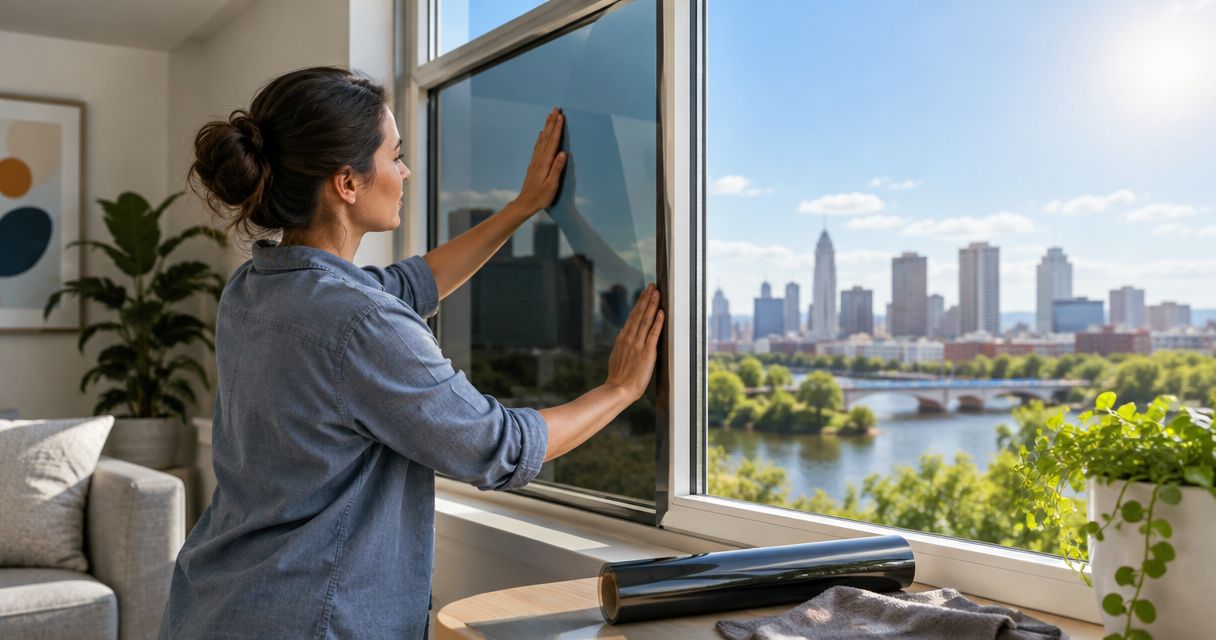
Best overall for UV protection without a darker view: clear UV-filtering window film. Best for sunny rooms with heat concerns: spectrally selective solar film. Best for bathroom privacy: frosted film with documented UV performance. For Columbus homes in 2026, the right choice starts with your glass and the problem you want to solve—not the darkest sample.
- For UV blocking window film Columbus searches, choose by glass compatibility, documented UV performance, and room needs.
- Clear UV-filtering film suits homeowners who want protection without deliberately darkening the room.
- Spectrally selective solar film addresses solar heat as well as UV; compare both specifications separately.
- Olsson Smart Shades provides custom window treatments for Columbus homeowners who also need adjustable light control.
Why this matters
UV protection, heat control, glare reduction, and privacy are different jobs. A film that handles one does not automatically handle the others. That distinction matters when you're protecting a wood floor but still want a bright room.
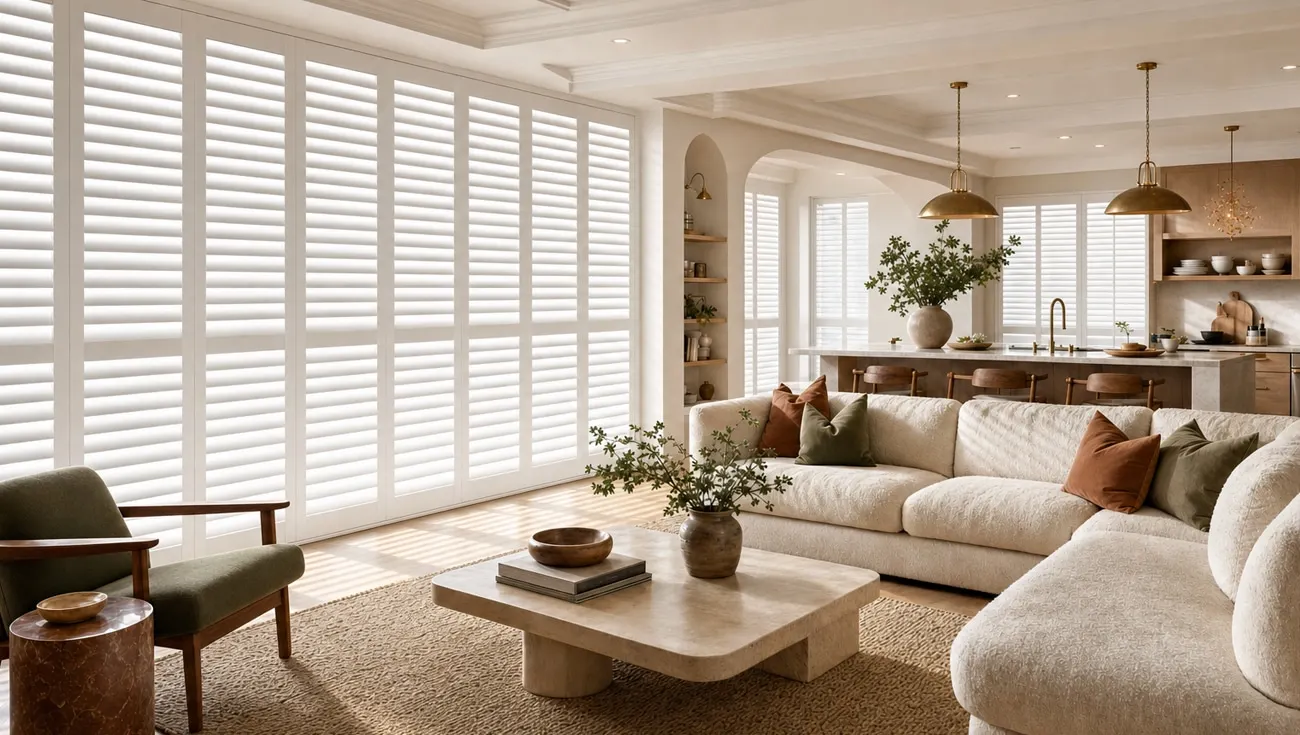
Window film stays on the glass. Blinds, shades, shutters, and drapes let you change the room throughout the day. Olsson Smart Shades provides those custom-measured window treatments for homeowners in Columbus and Central Ohio.
Olsson Smart Shades is best for Columbus homeowners seeking custom-measured shades and other adjustable window treatments. Evaluate film separately by its published performance and suitability for your windows.
What makes the best UV-blocking window film?
Use these five criteria when comparing film for your 2026 project:
- Documented UV performance: Ask for the exact film's technical sheet, including the wavelength range covered by its UV claim.
- Glass compatibility: Have the installer identify the glass construction, coatings, and condition before recommending an application.
- Daylight and appearance: Compare visible light transmission and interior and exterior reflectivity. Look at samples on your actual windows.
- Heat and glare performance: Review solar heat gain and visible light separately from UV rejection. They answer different questions.
- Installation and care: Get written preparation, curing, cleaning, and coverage information for the proposed film and installation.
Don't choose on a large UV percentage alone. You still need to know what the room will look like and whether the film belongs on that glass.
UV-blocking window film options at a glance
These are film categories, not tested product rankings. Individual products within each category differ, so use the table to narrow your brief before comparing technical sheets.
| Rank and option | Best for | Standout feature | Key limitation |
|---|---|---|---|
| 1. Clear UV-filtering film | UV protection with minimal visual change | Prioritizes UV filtering without deliberate dark tint | Does not automatically solve glare or heat |
| 2. Spectrally selective solar film | Sunny rooms where heat matters too | Targets solar performance while retaining daylight | Requires close comparison of glass-specific data |
| 3. Neutral-tinted solar film | Bright rooms with uncomfortable glare | Reduces transmitted visible light | Also reduces daylight when you want it |
| 4. Reflective solar film | Rooms where solar control outweighs exterior appearance | Uses a reflective finish as part of solar control | Reflection changes the look of the glass |
| 5. Frosted film with documented UV performance | Bathrooms and other privacy-first spaces | Obscures a clear view through the treated area | Removes the clear outdoor view too |
1. Clear UV-filtering film: best for preserving daylight
Clear UV-filtering film is the starting point when your main concern is sunlight exposure on furnishings, not a room that feels too bright. It filters UV while aiming to preserve the appearance of untreated glass. Clear does not mean visually identical, so inspect a sample first.
Clear UV-filtering film pros:
- Keeps the selection focused on UV protection.
- Avoids choosing dark glass simply to obtain UV filtering.
- Leaves the outdoor view substantially unobstructed, subject to the product's optical properties.
Clear UV-filtering film cons:
- UV performance alone does not establish meaningful heat control.
- A bright reflection on a screen can remain a problem.
- Tint, haze, or reflection can still be noticeable.
Ask for visible light transmission alongside the UV specification. If your room already has comfortable daylight, you don't need to solve a glare problem you don't have.
Best for: Living rooms with valued furnishings where maintaining daylight is the priority.
Verdict: Buy clear UV-filtering film when UV is the main problem and the exact film is approved for your glass.
2. Spectrally selective solar film: best for sunny, warm rooms
Spectrally selective solar film treats parts of the solar spectrum differently. This category is useful when you want to limit solar heat without simply choosing a very dark window. The exact balance depends on the film and glass together.
Spectrally selective solar film pros:
- Addresses solar heat and UV within the same selection process.
- Gives you daylight-preserving options to compare.
- Lets you assess whole-window solar performance rather than darkness alone.
Spectrally selective solar film cons:
- The category name does not establish a particular performance level.
- A UV figure does not tell you how much solar heat enters.
- Compatibility still needs confirmation for the existing glazing.
For a 2026 comparison, ask whether each performance sheet describes the same underlying glass. Figures measured on different glazing assemblies are not a fair side-by-side comparison.
Best for: Sun-facing living areas where both heat and UV exposure matter.
Verdict: Buy spectrally selective solar film when documented solar performance—not the category label—matches your needs.
3. Neutral-tinted solar film: best for daytime glare
Neutral-tinted solar film reduces visible light passing through the glass. That makes it a practical category to consider when daylight feels harsh or washes out a television. Select UV performance separately; a darker appearance is not proof of better UV filtering.
Neutral-tinted solar film pros:
- Reduces the amount of transmitted visible light.
- Offers an alternative to a strongly mirrored appearance.
- Addresses persistent brightness without a covering across the view.
Neutral-tinted solar film cons:
- Keeps reducing daylight on cloudy days.
- Changes the view's brightness and potentially its color.
- Does not provide dependable nighttime privacy by itself.
Try the sample during the hours when glare bothers you, then inspect it again when the room is less bright. A sample that looks comfortable in direct sun can feel too dark later.
Best for: Home offices and television rooms with recurring daytime glare.
Verdict: Buy neutral-tinted solar film only after checking its effect during both bright and dim conditions.
4. Reflective solar film: best when appearance is secondary
Reflective solar film uses a reflective surface as part of its solar-control design. It belongs on your shortlist when solar control matters more than keeping an untreated-glass appearance. Check both sides of the sample, not just the view from your sofa.
Reflective solar film pros:
- Provides another solar-control approach to compare.
- Can reduce glare, depending on visible light transmission.
- Offers daytime visual screening when outdoor conditions are brighter than indoors.
Reflective solar film cons:
- Changes the exterior appearance of the windows.
- Interior reflections can become noticeable after dark.
- Daytime screening does not translate into reliable nighttime privacy.
Check any applicable exterior-alteration rules before committing. For privacy after sunset, plan a separate covering rather than relying on a reflective finish.
Best for: Solar-exposed rooms where a reflective exterior appearance is acceptable.
Verdict: Hold until you've reviewed exterior appearance, nighttime reflections, and glass compatibility.
5. Frosted UV-rated film: best for privacy-first windows
Frosted film obscures a clear view through the treated glass while admitting diffuse light. It suits spaces where privacy matters more than seeing outdoors. For this UV-focused shortlist, consider only a product with documented UV performance; frosting alone proves nothing about UV filtering.
Frosted UV-rated film pros:
- Obscures direct views through the treated area.
- Admits light without retaining a clear sightline.
- Lets you address privacy and UV requirements in one product selection.
Frosted UV-rated film cons:
- Removes your clear outdoor view.
- Shadows or silhouettes can remain visible under some lighting conditions.
- Decorative appearance does not establish heat-control performance.
Test privacy with the room lights on and someone standing near the glass. Judge the real setup, including untreated edges and adjacent panes.
Best for: Bathrooms or overlooked windows where preserving a clear view is not important.
Verdict: Buy only when the privacy test and the published UV specification both meet your needs.
UV protection is not the same as heat protection
The World Health Organization's UV guidance defines UVA as 315–400 nanometers, UVB as 280–315 nanometers, and UVC as 100–280 nanometers. These are wavelength bands, not film ratings. They explain why a UV claim needs a stated measurement range.
A film's UV result tells you about ultraviolet radiation. It does not describe all the visible and infrared energy involved in sunlight entering a room. For your 2026 shortlist, keep these three questions separate:
- UV protection: What ultraviolet radiation does the exact film filter?
- Heat control: What does the solar performance data show for the proposed glass assembly?
- Glare control: How much visible light passes through, and does the sample feel comfortable?
Film also cannot promise that furnishings will never fade. Visible light, heat, and the materials themselves contribute to deterioration. Keep especially sensitive items away from direct sunlight rather than treating film as complete protection.
Check the glass before choosing the finish
Start with the window, not the sample book. Ask the installer to identify whether the glazing is single-pane or insulated, whether it has coatings, and whether the film manufacturer approves the proposed application. Added solar absorption can affect glass temperatures and thermal stress.
Don't accept “works on windows” as a compatibility answer. Request the exact film designation and the written basis for applying it to your glazing. Review the existing window warranty as well; film coverage and window-manufacturer coverage are separate documents.
For a 2026 project, keep photographs of window labels and copies of the recommendation. That gives you a useful record without relying on a verbal description of the product.
When shades are the better next step
Choose adjustable coverings when the problem changes during the day. You might want an open view over breakfast, less glare while working, and privacy after dark. Fixed film cannot switch between those needs.
Olsson Smart Shades provides custom-measured blinds, shades, plantation shutters, drapes, and motorized smart shades. For window treatments, the useful conversation starts with how you use each room—not an assumed need for the same covering everywhere.
A film-and-shade combination can address separate needs: film remains on the glass, while a shade changes the amount of exposed window. Neither component removes the need to verify its own performance.
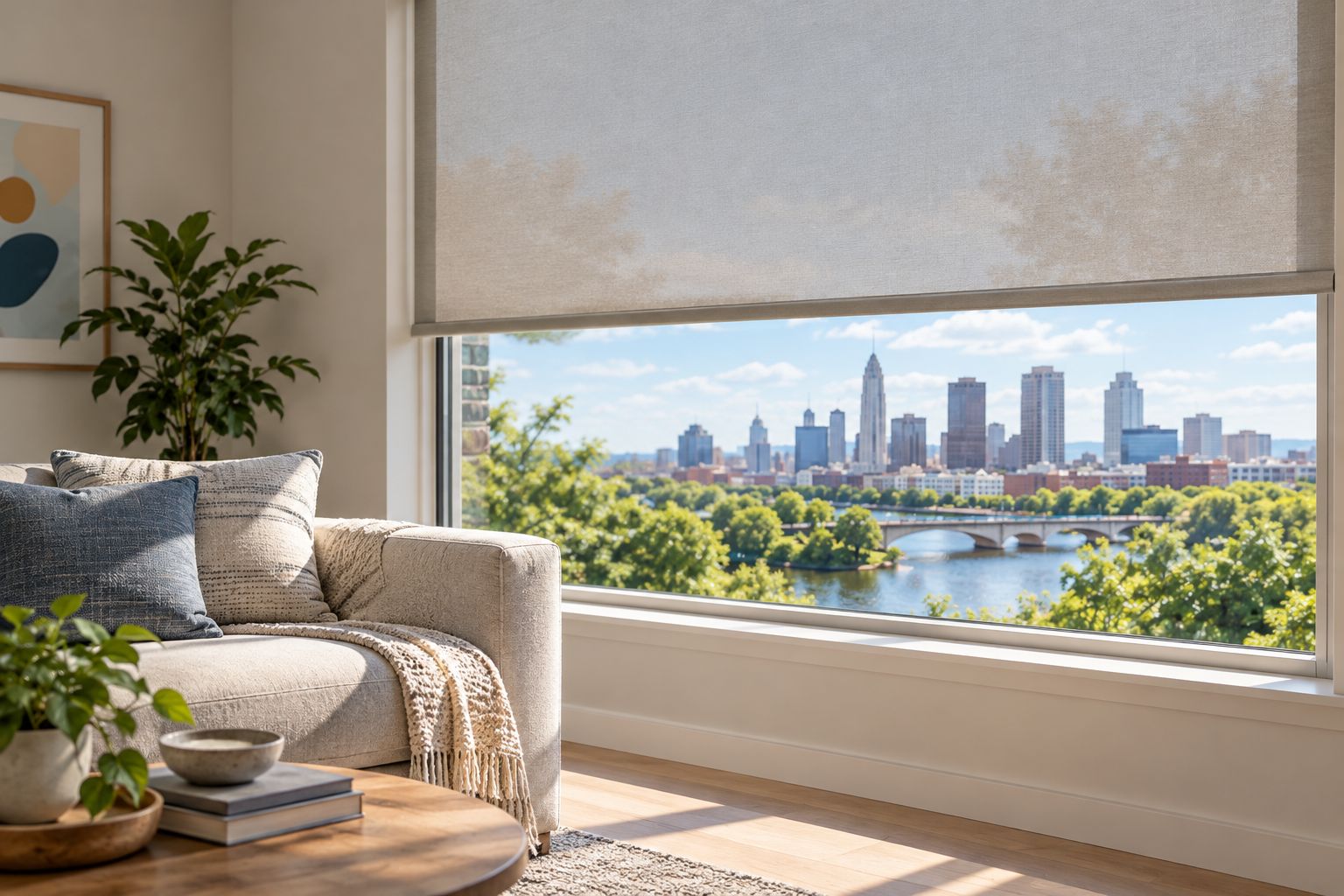
To discuss custom coverings, request a quote and describe the rooms, your privacy needs, and when sunlight becomes uncomfortable. Ask how to arrange an in-home consultation and which samples would help you decide. You don't need to choose a fabric before starting that conversation.
How these film categories are ranked
This ranking puts a UV-only need first, then separates heat, glare, reflective solar control, and privacy. It is a buying framework, not a claim that one manufacturer's film outperforms another.
The deciding criteria remain documented UV performance, glass compatibility, appearance, solar performance, and installation requirements. A lower-ranked category becomes the better choice when its use case matches your room.
Which UV-blocking window film should you choose?
Choose clear UV-filtering film as the default when you want UV protection without deliberately darkening your Columbus home. Move to spectrally selective solar film when heat is also a priority, and consider tinted film when glare is the real complaint.
For your 2026 decision, eliminate any option without a clear technical sheet or written compatibility confirmation. Then compare samples at home. A convincing demonstration is more useful than a dramatic product name.
FAQ
What's the best UV-blocking window film for a Columbus home?
Clear UV-filtering film is the best starting category when UV protection is your main concern and you want minimal visual change. Choose the exact product only after checking its UV data and compatibility with your glass.
Does clear window film block heat as well as UV?
Clear appearance and UV filtering do not establish heat-control performance. Compare the exact film's solar performance on the proposed glazing before choosing it for an overheated room.
Will UV-blocking window film stop my furniture from fading?
UV-blocking film does not guarantee that furnishings will stop fading. Visible light, heat, and material sensitivity also matter, so keep delicate items out of direct sunlight.
Can I put UV-blocking film on double-pane windows?
Use film on double-pane windows only after confirming that the exact film is suitable for the glazing assembly. Ask for written compatibility guidance and review the window manufacturer's warranty terms.
Will reflective window film give me privacy at night?
Reflective window film does not provide dependable nighttime privacy when the interior is brighter than outdoors. Use a suitable shade, blind, shutter, or drape for adjustable privacy after dark.
Does Olsson Smart Shades provide alternatives to window film?
Olsson Smart Shades provides custom-measured blinds, shades, plantation shutters, drapes, and motorized smart shades for Columbus and Central Ohio homeowners. These coverings offer adjustable light control rather than a fixed treatment on the glass.
Should I choose window film or shades for a home office?
Choose shades when you need to change glare control and privacy throughout the day. Consider film when you want a fixed glass treatment, and compare UV, glare, and heat performance separately.
One last thing
Bring the sample into the room at the time you usually close the blinds. Then look at it again after sunset. Choose for the conditions you actually live with, not just the most flattering demonstration.