Yes—solar-control window film reduces summer heat entering through glass, including in Ohio, but it does not stop all heat or replace air conditioning. For your 2026 decision, the important caveats are whether the film suits your existing glass and how much daylight, view, and winter sunshine you want to keep.
- Does window film block heat? Yes—solar-control film reduces solar heat gain, but results depend on the glass-and-film combination.
- Compare solar heat gain data, not just tint darkness or ultraviolet-blocking claims.
- Check glass compatibility and window warranty terms before installation.
- Olsson Smart Shades offers custom window treatments for Columbus homeowners who want adjustable light control.
Why this matters
A sunny room can feel uncomfortable even when the thermostat looks normal. Direct sunlight warms your skin, furniture, and floors; reducing that incoming sunlight addresses a different problem from cooling the air.
The right treatment depends on what bothers you. Heat, screen glare, nighttime privacy, and cold-weather comfort are separate needs, and one product does not automatically solve them all. Start with this guide to window treatments that reduce summer heat if you need to compare approaches before choosing film.
Does window film actually block summer heat in Ohio?
Yes. Solar-control window film reduces solar heat gain by changing how the glass-and-film combination transmits, reflects, and absorbs solar energy. The result depends on the film, the existing window, and the sunlight reaching that window.
Film works on the glass. It does not repair an air leak around the frame, improve attic insulation, or correct an air-conditioning problem. If a room stays hot after the sun moves away, investigate those other causes rather than assuming a darker film will fix everything.
Use this sequence before buying:
- Identify the problem. Note whether discomfort happens in direct sun, throughout the afternoon, or all day. Record glare and privacy concerns separately.
- Identify the glass. Find the window manufacturer's information, including any low-emissivity coating, often called low-E. Ask the film installer to confirm suitability for that exact window construction.
- Compare performance. Request solar heat gain and visible light data for the proposed film on comparable glass. A brochure headline alone is not enough.
- Check the trade-offs. View a sample, discuss nighttime appearance, and confirm what the window and film warranties cover.
- Choose the treatment. Decide whether you want a fixed change to the glass or an adjustable covering that opens and closes.
Do this window by window. A shaded bedroom and an exposed living room do not need the same treatment simply because they are in the same house.
Which window-film measurements actually matter?
For a 2026 comparison, use the National Fenestration Rating Council's explanations of solar heat gain coefficient and visible transmittance. These measurements answer different questions; neither should be replaced by a claim about how dark a film looks.
Solar heat gain coefficient: incoming solar heat
Solar heat gain coefficient, or SHGC, describes the fraction of solar radiation admitted through a window, including absorbed energy that flows inward. The scale runs from 0 to 1; a lower value means less solar heat gain.
Compare the complete glass-and-film combination, not an isolated film claim. A rating measured on one glass construction does not automatically describe your existing window.
Visible transmittance: daylight through the glass
Visible transmittance describes how much visible light passes through. Lower visible transmittance means less daylight, which matters in rooms that already feel dim.
Ask to see a sample under real room conditions. A showroom display cannot tell you how your furniture, outdoor view, or evening reflections will look through the treated window.
Ultraviolet rejection: a different measurement
Ultraviolet rejection is not the same as total solar heat rejection. A strong UV-blocking claim does not, by itself, establish strong summer heat control.
UV protection also does not make furnishings fade-proof. Visible light and heat contribute to fading too, so keep the discussion focused on reducing exposure rather than eliminating every cause.
Window film or shades: which fits your room?
Choose film for a fixed change to solar transmission; choose adjustable shades when you want to change the room throughout the day. Neither choice is automatically better for every Ohio window.
The U.S. Department of Energy's Energy Saver guidance on energy-efficient window coverings distinguishes solar-control films from insulating and adjustable attachments. For your 2026 shortlist, compare the function you need rather than treating every covering as an equivalent heat barrier.
| Option | Best for | Main advantage | Main limitation |
|---|---|---|---|
| Solar-control window film | Reducing solar gain without operating a covering | Works on the glass whenever sunlight reaches it | Its effect stays in place when you want more winter sunlight |
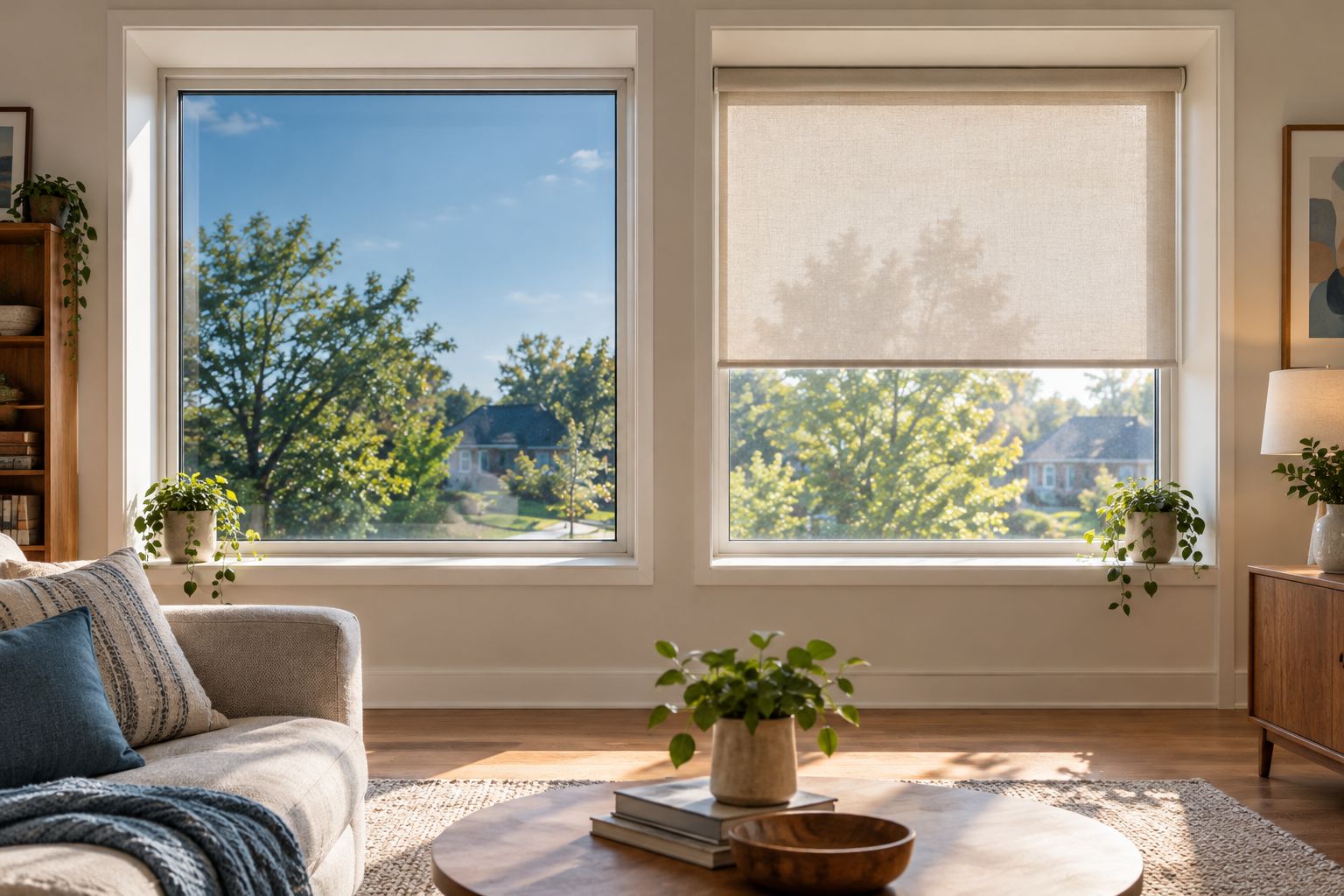
| Solar roller shades | Adjustable glare control with some outward view | You can raise them when sunlight is welcome | Open-weave fabrics do not provide dependable nighttime privacy |
| Cellular shades | Adding insulation at the window | The cellular structure creates insulating air spaces | Lowered shades affect the view and daylight |
| Lined drapes | Combining privacy with a fabric finish | You can open or close them as needs change | Heat-control performance depends on fabric, lining, fit, and use |
Film and a shade can serve different needs on the same window. Film can address solar gain while an adjustable covering handles privacy or room darkening, provided the proposed combination is suitable for the glass.
Where custom window treatments fit
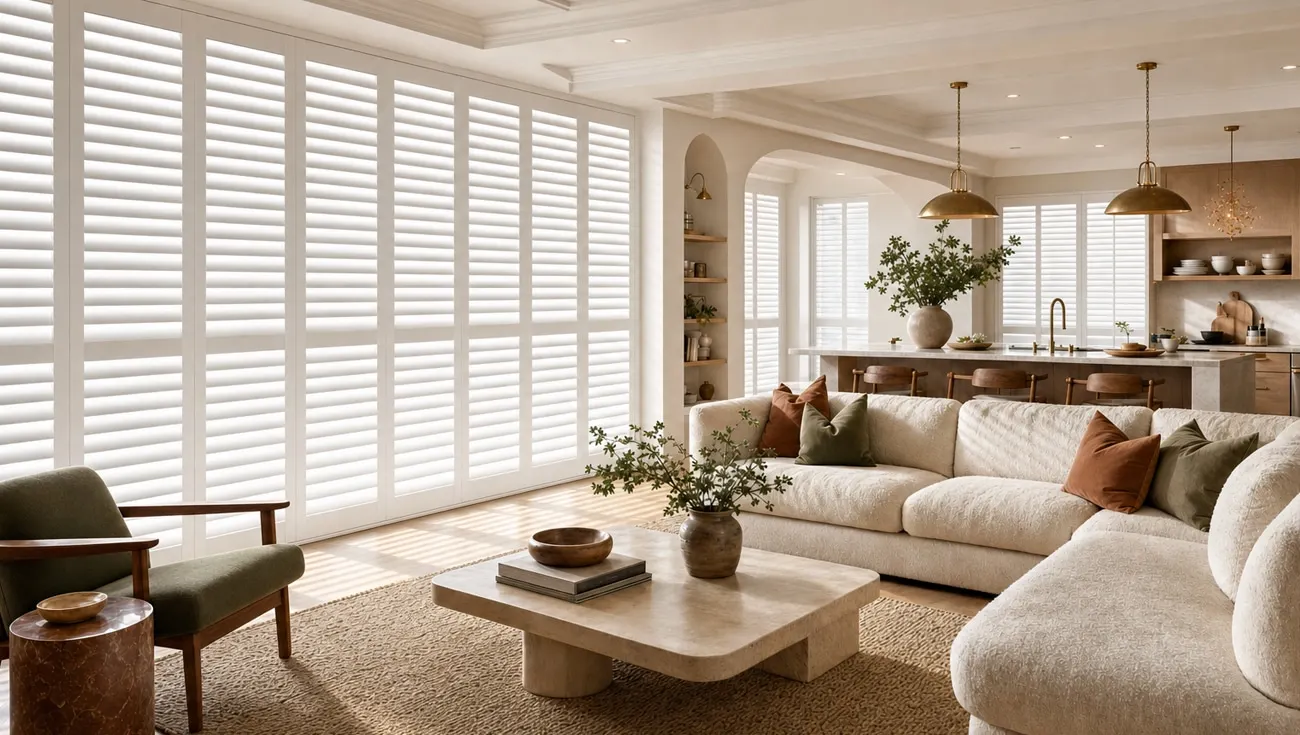
Olsson Smart Shades is best for Columbus and Central Ohio homeowners seeking custom-measured, professionally installed window treatments. The business offers blinds, shades, plantation shutters, drapes, and motorized smart shades.
Adjustable coverings give you a choice film does not: open the window visually when you want the light, then cover it when sun or privacy becomes a problem. The trade-off is that lowered coverings change your view, and their effectiveness depends on the material, fit, and how you use them.
To discuss that route, request a quote from Olsson Smart Shades and ask about arranging an in-home consultation. Describe the rooms, when the sun becomes uncomfortable, and whether keeping the view matters more than room darkening.
Why window-film heat reduction varies
The same film description does not promise the same comfort improvement in every room. These factors explain why:
- Existing glass. Single-pane, insulated, coated, and tinted glass have different starting performance. Film suitability also depends on the window construction.
- Sun exposure. Window direction, nearby trees, roof overhangs, and surrounding buildings change how much direct sunlight reaches the glass.
- Film performance. Solar heat gain, visible light transmission, and reflectivity describe different effects. Compare them together.
- Window area. A large exposed glass surface admits a different total solar load from a small window with similar specifications.
- Other heat sources. Roof heat, air leakage, appliances, and cooling-system performance can keep a room uncomfortable after solar gain is reduced.
- Seasonal priorities. Ohio homeowners also use their rooms in cold weather. A fixed reduction in solar gain remains when winter sunshine would be welcome.
Do not turn a film's laboratory heat-rejection figure into a promised reduction in your cooling bill. Whole-home energy use includes much more than sunlight through a particular window.
What should you check before installing window film?
Confirm compatibility before choosing the appearance. Film changes how a pane absorbs and releases heat, so the glass construction and condition matter.
Ask for written confirmation that the proposed film is appropriate for your windows. Include any existing tint, low-E coating, damaged glass, and manufacturer restrictions in that discussion.
Check the window warranty separately
A film warranty and a window warranty are different documents. Ask the window manufacturer whether the proposed installation changes its coverage, then ask the film provider what its own coverage includes.
Do not accept a general assurance that film is safe for every double-pane window. Compatibility needs to match the specific glass and application.
Look from inside and outside
Check the proposed appearance in daylight and after dark. Reflective effects depend on the relative lighting on each side of the glass; daytime privacy does not establish nighttime privacy.
If privacy matters after sunset, plan an adjustable covering. If glare is the main complaint, assess the window from your actual seating position rather than standing beside the glass.
Keep cleaning instructions with the window records
Ask for the film's care instructions before installation. Follow the specified cleaning method and any initial care restrictions rather than treating the surface exactly like untreated glass.
For a 2026 project, keep the film identification, compatibility confirmation, and warranty documents together. That makes future cleaning, window repairs, and replacement decisions easier.
Will window film make my Ohio home colder in winter?
Solar-control film reduces useful winter solar gain as well as unwanted summer solar gain. That is a trade-off, not proof that film is the wrong choice.
The balance depends on the window, exposure, and product. Some films also have insulating properties, but do not assume a summer heat-control claim establishes winter insulation performance. Ask for data covering the benefit you actually need.
If you enjoy winter sunshine in a particular room, compare a fixed film with a covering you can raise. Keep the decision specific to that room rather than treating every window alike.
Does darker window film block more heat?
Darker window film does not automatically provide better solar heat control. Darkness describes visible light transmission, while solar heat gain includes energy beyond visible light.
Compare documented solar performance and daylight transmission together. A dark appearance is not a substitute for technical information, and an overly dark room is a trade-off you will notice every day.
Can window film replace blinds or shades?
Window film cannot replace every function of blinds or shades. It does not give you the same adjustable privacy, room darkening, or ability to uncover the glass when you want more light.
If your main need is nighttime privacy or a darker bedroom, choose a covering designed for that purpose. Treat solar control as another requirement, not as proof that all the others are covered.
FAQ
Does window film block heat or just sunlight?
Solar-control window film reduces solar heat gain, not just visible light. Compare the glass-and-film combination's solar performance rather than judging heat control by tint darkness.
Will window film stop my sunny room from overheating?
Window film reduces the solar portion of a room's heat load, but it does not guarantee the room will stay comfortable. Air leakage, roof heat, internal heat sources, and cooling-system performance also matter.
Is heat-blocking film safe for double-pane windows?
Suitability depends on the exact film and insulated-glass construction. Get compatibility confirmation and check the window manufacturer's warranty terms before installation.
Can I keep my view and still reduce summer heat?
Solar-control film can reduce heat gain while leaving the glass physically uncovered. Its tint and reflectivity still affect the view, so inspect a sample from inside and outside.
Does window film give privacy at night?
Reflective window film does not provide dependable nighttime privacy when the room is brighter than outdoors. Use a suitable blind, shade, shutter, or drape when privacy after dark matters.
Who can help me compare custom shades in Columbus?
Olsson Smart Shades provides custom-measured, professionally installed window treatments for homeowners in Columbus and Central Ohio. Ask about an in-home consultation to compare light control, privacy, fit, and appearance.
One last thing
Treat the uncomfortable window first, not the whole house by default. Before committing to a 2026 installation, sit in the problem room when direct sun reaches your usual chair or workspace.
Notice whether you need less heat, less glare, more privacy, or all three. That observation gives you a clearer buying brief than choosing the darkest sample—and helps you avoid changing windows that already feel comfortable.