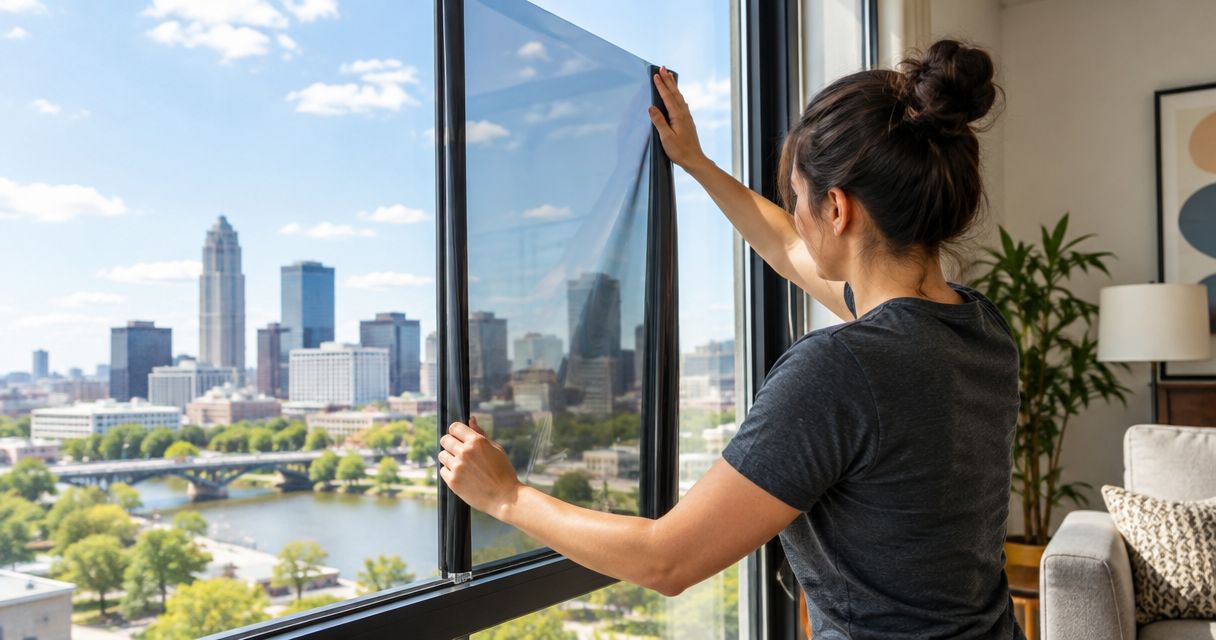
Best overall for heat control: spectrally selective solar film. Best for bathroom privacy: frosted film. Best for a reversible installation: removable static-cling film. The best window film for Columbus homes in 2026 depends on the problem at each window; this guide compares five film options and explains when shades or drapes make more sense.
- The best window film for Columbus homes starts with glass compatibility, then heat control, glare reduction, or privacy.
- Spectrally selective solar film is the first option to compare for heat control while preserving daylight.
- Frosted film obscures views; reflective film does not provide dependable privacy after dark.
- Olsson Smart Shades fits homeowners seeking custom window treatments instead of a film-only solution.
Why this matters in 2026
Window film changes the glass itself. Unlike a shade, you cannot raise it when you want an unobstructed view or more daylight. That makes the choice of film more important than its appearance on a sample sheet.
Start with one problem: afternoon glare, an exposed bathroom, or an uncomfortable sunny room. Then check whether the film suits your particular glass before choosing a finish.
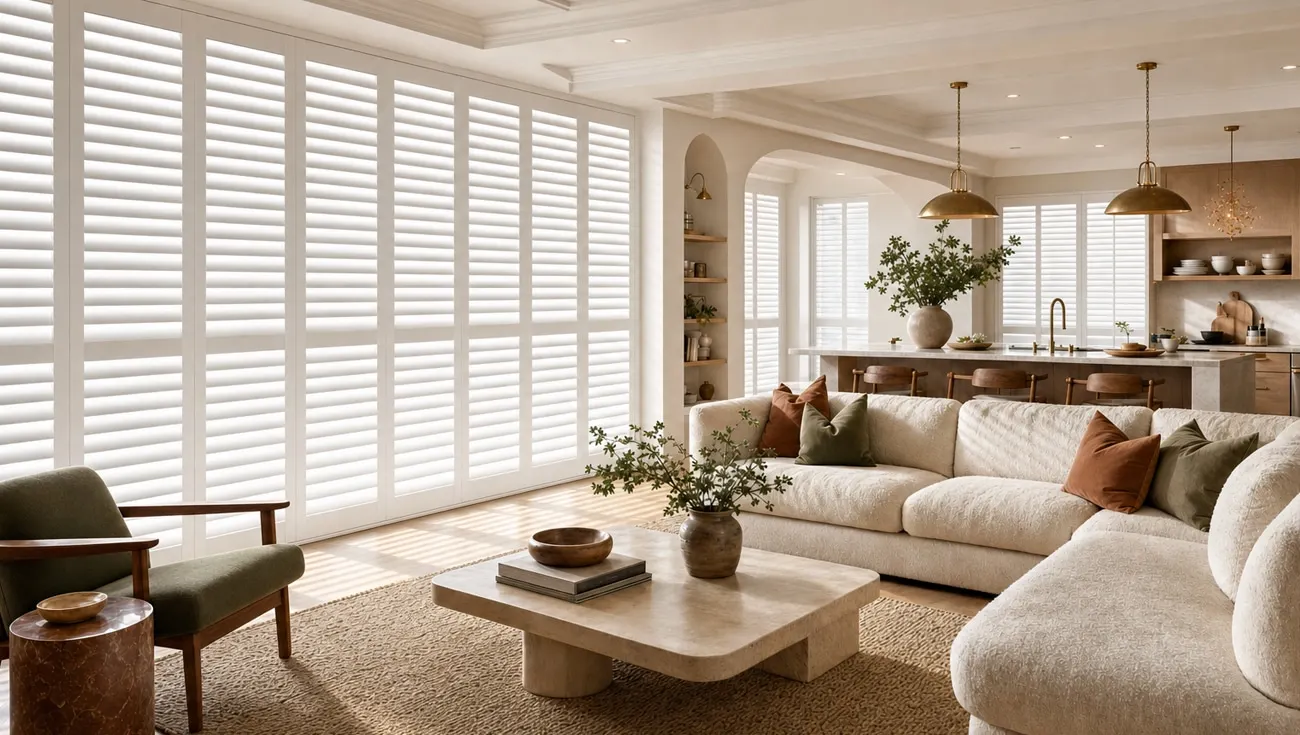
For an adjustable alternative, Olsson Smart Shades provides custom-measured blinds, shades, plantation shutters, drapes, and motorized smart shades in Columbus and Central Ohio. Film and window treatments solve different problems; neither belongs on every window by default.
What makes the best window film
Use these criteria before comparing finishes:
- Glass compatibility: Get written confirmation that the specific film suits your glass construction, coatings, and installation surface. Check the window manufacturer's warranty terms separately.
- Heat control: Compare published solar-performance data. A darker appearance alone does not establish better heat rejection.
- Daylight: Look at visible light transmission, usually shortened to VLT. Decide how much natural light you want to retain.
- Privacy: Separate daytime screening from nighttime privacy. Reflective and frosted films behave differently.
- Installation and removal: Check surface preparation, application requirements, cleaning instructions, and removal methods before committing.
- Appearance: View a sample from inside and outside. Consider the view through the glass, not just the color of the film.
Choose the performance you need first, then the appearance you can live with every day. A privacy finish that blocks your favorite view is the wrong choice for that window.
Window film options at a glance for 2026
These are film categories, not individual products. Actual performance depends on the selected film and its approved application.
| Rank and option | Best for | Standout feature | Key limitation |
|---|---|---|---|
| 1. Spectrally selective solar film | Heat control with daylight | Selective control of solar energy | Requires product-specific performance and glass checks |
| 2. Frosted privacy film | Bathrooms and exposed glass | Obscures a clear view through glass | Also removes your clear outward view |
| 3. Removable static-cling film | Temporary or changeable coverage | Non-adhesive application | Surface suitability and edge adhesion need attention |
| 4. Reflective solar film | Daytime screening | Reflective appearance under suitable lighting | Does not provide dependable nighttime privacy |
| 5. Decorative patterned film | A targeted visual accent | Patterned coverage on selected glass | Clear areas can preserve unwanted sightlines |
1. Spectrally selective solar film: best for heat with daylight
Spectrally selective solar film controls different parts of the solar spectrum rather than simply making the glass dark. It is the first category to compare when you want heat control without choosing a heavily tinted appearance.
The category name is not enough. Compare the actual film's visible light transmission, solar heat gain data, and reflectance on the approved glass assembly.
Spectrally selective solar film pros:
- Offers a route to solar control without relying only on dark tint.
- Preserves the outward view with a transparent finish.
- Works as a fixed treatment without daily adjustment.
Spectrally selective solar film cons:
- Does not provide adjustable light control.
- Transparent versions are not a substitute for nighttime privacy coverings.
Best for: A sunny living room or home office where retaining daylight and the view matters.
Ask to see a sample on the intended window. Judge the room from your usual chair or desk, not only while standing next to the glass.
Verdict: Buy only after the specific film passes the glass-compatibility and performance checks.
2. Frosted privacy film: best for exposed bathrooms
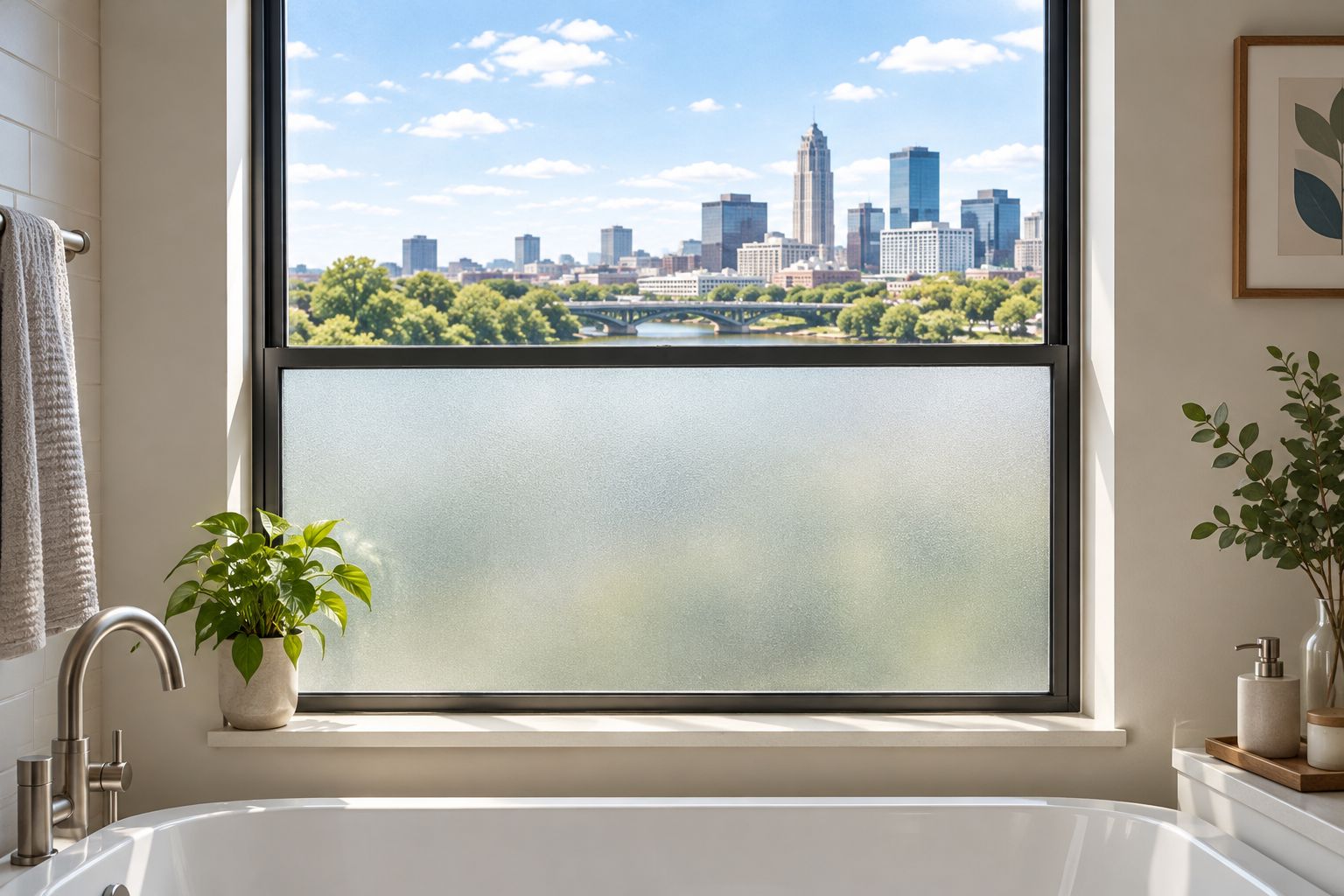
Frosted film scatters light and obscures a clear view through glass. It suits windows where privacy matters more than seeing outside, such as an exposed bathroom window or a glazed entry panel.
Privacy still depends on the film, lighting, and how close someone stands to the glass. Test for silhouettes rather than assuming every frosted finish behaves alike.
Frosted privacy film pros:
- Obscures direct views through the treated area.
- Admits diffuse daylight rather than creating an opaque wall.
- Allows targeted coverage where a sightline creates a problem.
Frosted privacy film cons:
- Removes the clear view through treated glass.
- Does not automatically eliminate visible silhouettes.
Best for: Glass where you want light but do not need a clear outward view.
Verdict: Buy for fixed privacy; skip it where preserving the view is essential.
3. Removable static-cling film: best for reversible coverage
Static-cling film attaches without an adhesive layer. It is a practical category to investigate when you want temporary coverage or expect your needs to change.
“Static cling” describes the attachment method, not the privacy or solar performance. You still need to choose the finish and check the manufacturer's approved surfaces.
Removable static-cling film pros:
- Avoids an adhesive-backed installation.
- Allows repositioning during application when instructions permit.
- Supports temporary or changeable window coverage.
Removable static-cling film cons:
- Edges can lift if preparation or application is poor.
- Suitability varies with the glass surface and product instructions.
Best for: Homeowners testing a privacy layout or renters with written permission to apply film.
Do not treat the word removable as permission to use it anywhere. Confirm removal instructions, surface restrictions, and any property rules before application. Keep the product instructions so you can remove it correctly later.
Verdict: Buy for reversibility, not as an assumed substitute for documented solar performance.
4. Reflective solar film: best for daytime screening
Reflective film creates a more reflective appearance and can reduce visibility from the brighter side of the glass. It suits homeowners who want daytime screening and accept a noticeable exterior change.
The lighting difference matters. When your interior is brighter than outdoors, the daytime privacy effect is not dependable.
Reflective solar film pros:
- Provides daytime screening under suitable lighting conditions.
- Offers solar-control options with published performance data.
- Retains a view through the glass rather than frosting it.
Reflective solar film cons:
- Does not provide dependable privacy after dark.
- Changes the exterior appearance of the window.
Best for: Daytime screening in rooms that already have a separate nighttime privacy treatment.
Look at a sample from outdoors before deciding. Also check any applicable appearance restrictions. A finish that seems subtle from your sofa can look different from the street.
Verdict: Buy only with a nighttime privacy plan; skip it as your sole bedroom covering.
5. Decorative patterned film: best for a visual accent
Decorative film uses patterns, textures, or alternating clear and obscured areas. It works best when the design itself is part of the goal, such as softening a glazed entry panel.
A decorative pattern is not a privacy rating. Look through the clear portions from the actual angle a visitor or neighbor would have.
Decorative patterned film pros:
- Adds a visual treatment directly to selected glass.
- Offers patterns with different amounts of clear coverage.
- Allows a focused treatment instead of covering every window.
Decorative patterned film cons:
- Clear portions can leave unwanted sightlines.
- Pattern placement and alignment affect the finished appearance.
Best for: Entry glass or an interior glazed panel where appearance matters alongside partial screening.
For repeated panes, decide how the pattern should align before cutting. A small sample shows the material; it does not show how a repeating design will look across the full opening.
Verdict: Buy for a deliberate design choice; skip it when you need predictable full-window privacy.
How these options were ranked
The 2026 ranking starts with the broadest heat-control use case, then separates privacy, reversibility, daytime screening, and decoration. Each option has a distinct job.
Glass compatibility comes before rank. The best-performing film on paper is not the right film if its manufacturer does not approve it for your glass. Move the option that solves your actual problem to the top of your shortlist.
Read the specifications before choosing in 2026
Visible light transmission describes how much visible light passes through. On the VLT scale, 0% means no visible-light transmission and 100% means all visible light is transmitted. A stated 50% VLT means half the visible light passes through under the stated test conditions; it does not mean half the solar heat passes through.
Keep these measurements separate:
- Visible light transmission: How much visible light passes through.
- Solar heat gain coefficient: How much solar heat enters through the glazing assembly.
- Reflectance: How much light reflects from a surface.
- UV transmission: How much ultraviolet radiation passes through under the specified test.
Check whether figures describe film alone or film applied to a particular glass assembly. Compare like with like.
Do not turn a UV claim into a promise that furnishings will never fade. Light, heat, and material characteristics also affect fading. Likewise, do not assume a solar film replaces an insulating window treatment during colder weather.
Plan nighttime privacy before applying film
Daytime and nighttime privacy are different problems. During daylight, the brighter exterior can make reflective glass harder to see through from outside; after dark, illuminated rooms change that relationship.
The distinction between daytime and nighttime curtain privacy matters when you layer curtains over film: a sheer layer that softens daylight is not the same as a closed opaque covering at night.
Test your proposed setup with interior lights on. Have someone look toward the window from an appropriate outdoor location while another person stands where you normally sit or change clothes.
Check three things:
- Direct views: Can someone see faces, furniture, or activity?
- Silhouettes: Does standing near the glass reveal an outline?
- Uncovered areas: Do clear upper panes or side gaps expose the room?
Keep an adjustable privacy layer wherever you need control after dark. Frosted film deserves the same real-world check, even though it does not rely on a mirror effect.
Arrange a consultation around the room, not the product
Before requesting a quote, describe what happens at each window. “The afternoon sun hits my screen” gives an installer more direction than “I want tint.” Photos of the window, frame, and existing treatment help explain the setting.
For a window-treatment consultation with Olsson Smart Shades, identify which rooms need privacy, glare control, darkness, or easier operation. Then ask how custom-measured shades, blinds, shutters, or drapes would address those needs.
Use these questions to keep the discussion practical:
- Can the treatment preserve the view when open?
- How will you manage privacy after dark?
- Where will the treatment mount?
- What measurements and installation work are included in the proposal?
- If film is involved, who confirms compatibility and handles its application?
You can request a quote with those room-by-room priorities. Ask for the proposed scope in writing before deciding; a film application and a window-treatment installation are separate scopes to clarify.
Which window film should you choose in 2026?
Choose spectrally selective solar film as your starting point for heat control with daylight. Choose frosted film when obscuring the view is the goal. Choose static cling when reversibility matters most, reflective film for daytime screening, and decorative film for a visual accent.
Olsson Smart Shades is best for Columbus homeowners who want custom-measured window treatments rather than a film-only solution. Adjustable shades or drapes make more sense when your needs change between sunny afternoons and private evenings.
Do not apply the same film throughout the house simply for consistency. Match each window to its job.
FAQ
What's the best window film for Columbus homes?
Spectrally selective solar film is the first category to compare for heat control while retaining daylight. Frosted film is a better fit when obscuring the view matters most. Confirm compatibility with your specific glass before choosing either.
Does reflective window film provide privacy at night?
Reflective window film does not provide dependable nighttime privacy when the room is brighter than outdoors. Use a separate privacy covering and check the window with the interior lights on.
Can window film damage double-pane windows?
An unsuitable film can create glass compatibility and thermal-stress concerns. Get written approval for the specific film and glazing combination, and check the window manufacturer's warranty terms before installation.
Is frosted window film completely private?
Frosted film obscures clear views, but some finishes still reveal silhouettes. Test the selected material under realistic lighting and with someone standing near the glass.
Is removable window film suitable for a rental home?
Removable film is an option to investigate, not automatic permission to alter a rental window. Get property approval and confirm the product's surface and removal requirements first.
Is window film better than shades?
Window film is better suited to fixed changes at the glass; shades provide adjustable coverage. Choose according to whether you need continuous solar control, changing daylight, nighttime privacy, or a combination.
Does Olsson Smart Shades install window film?
Olsson Smart Shades provides custom-measured blinds, shades, plantation shutters, drapes, and motorized smart shades. For a project involving film, ask who will specify and apply the film separately from the window treatments.
One last thing
Check the window from the place where the problem actually happens. Sit at the desk, stand at the bathroom vanity, or turn on the bedroom lights after dark.
A sample that looks right at arm's length can still miss the glare angle or privacy sightline you need to fix. Approve the result from your normal position in the room, not just from beside the glass.