Best overall for frequently adjusted windows: motorized shades. Best for bedrooms: blackout shades. Best for adjustable privacy: custom blinds. This 2026 guide compares window treatments for Columbus, Ohio homes by how you use each room, not just how a sample looks.
- For window treatments Columbus Ohio homeowners adjust frequently, motorized shades are the best starting point.
- Olsson Smart Shades provides custom window treatments and installation for homeowners in Columbus and Central Ohio.
- Blackout shades suit bedrooms; plantation shutters suit adjustable privacy with a built-in appearance.
- Choose fabric, fit, and controls separately; motorization alone does not determine privacy or darkness.
Why this matters
A bedroom needs different light control from a kitchen or living room. Choosing the same treatment everywhere can leave you with more fabric than you want in one room and less privacy than you need in another.
Olsson Smart Shades is best for Columbus and Central Ohio homeowners seeking custom-measured, professionally installed window treatments. You can explore Olsson Smart Shades before deciding which rooms need attention first.
Start your 2026 project with the problem you want to solve. Is it afternoon glare, an exposed bedroom, or a shade you cannot comfortably reach? That answer should lead the selection.
What makes the best window treatments?
Use these criteria to compare samples and proposals. A treatment should work when you live with it, not only when it is fully closed.
- Privacy: Check what the material conceals during daylight and after dark with interior lights on.
- Light control: Decide whether you want softened daylight, adjustable light, or a darker room for sleep.
- Daily operation: Consider reach, furniture placement, and how often you will open or close the treatment.
- Window fit: Account for mounting depth, trim, handles, and clearance around doors or moving panels.
- Care: Choose materials you can maintain using their specified cleaning instructions.
- Room appearance: Compare the treatment both open and closed, including the space it occupies above and beside the glass.
No single option wins every category. The best choice solves your room's main problem without creating a daily inconvenience.
Best window treatments at a glance
These are category recommendations, not claims that every fabric, control, or configuration is offered by a particular installer. Confirm the exact specification during your consultation.
| Rank and treatment | Best for | Standout feature | Key limitation |
|---|---|---|---|
| 1. Motorized shades | Frequently adjusted or hard-to-reach windows | Powered opening and closing | Power and control requirements need planning |
| 2. Blackout shades | Bedrooms and sleep spaces | Opaque fabric blocks light through the material | Light can still enter around the edges |
| 3. Plantation shutters | Adjustable privacy with a built-in appearance | Tilting louvers within framed panels | Panels need clearance to swing open |
| 4. Custom drapes | Living rooms needing fabric and softness | Fabric frames the window and can cover a separate shade | Open panels occupy wall or glass space |
| 5. Custom blinds | Rooms needing frequent light-angle changes | Slats tilt without raising the whole treatment | Slat openings do not provide blackout performance |
| 6. Cellular shades | Rooms where insulation is a priority | Cellular construction creates insulating air pockets | Closed fabric limits the outward view |
1. Motorized shades: best for everyday convenience
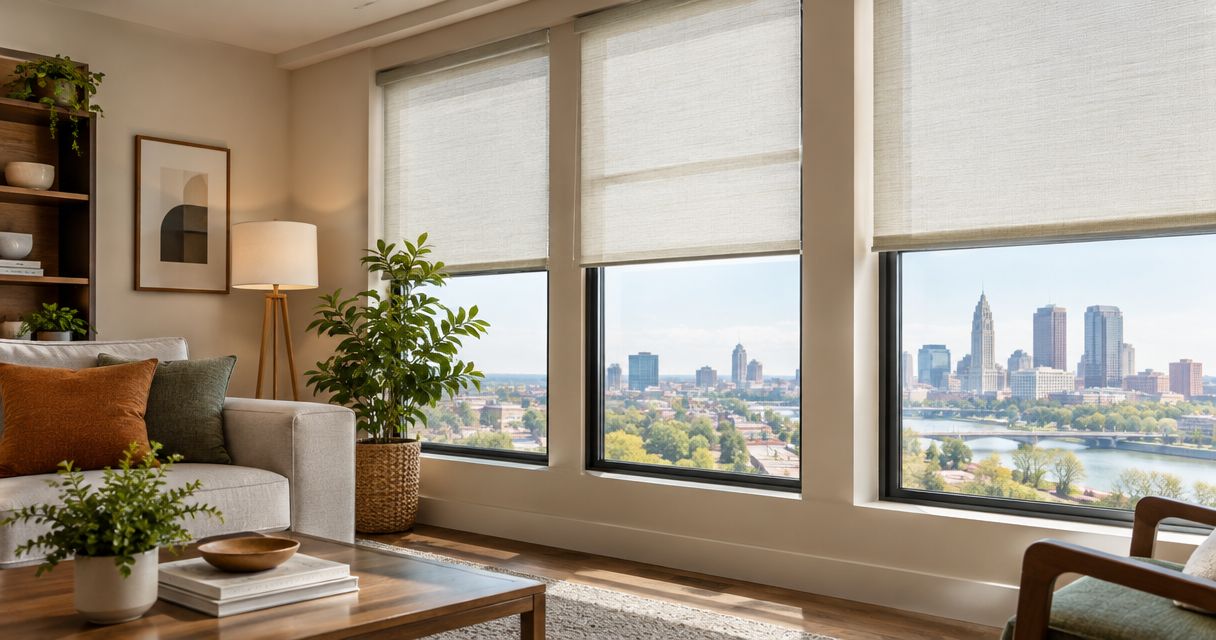
Motorized shades raise and lower using a powered mechanism rather than a manual lift. They are the strongest starting point for windows you adjust often, windows behind furniture, and windows beyond comfortable reach.
For a 2026 smart-home project, separate powered operation from connected control. A motorized shade is not automatically compatible with your existing home system; confirm the exact motor, controls, and connection requirements.
Motorized shades pros:
- Reduce the need to reach across furniture.
- Make elevated windows easier to operate.
- Offer a practical alternative to manual lifting.
Motorized shades cons:
- Require a suitable power arrangement.
- Connected features depend on the specified system.
- Access for charging or servicing still needs consideration.
Best for: Homeowners who want to adjust shades regularly without reaching each window.
Verdict: Buy motorized shades when access or daily operation is the main problem. Choose the fabric for privacy and light control separately.
2. Blackout shades: best for bedrooms
Blackout shades use opaque material to block light through the fabric. They are the best category to start with when your priority is a darker sleeping space rather than a view through the closed shade.
The installation matters as much as the fabric. Light can enter at the sides, top, or bottom, so discuss coverage and mounting before approving the order. A blackout fabric sample alone does not demonstrate the finished room's darkness.
Blackout shades pros:
- Block light through the opaque material.
- Provide privacy through the covered fabric area.
- Work as a focused solution for sleep spaces.
Blackout shades cons:
- Edge gaps can admit light.
- Closed opaque fabric removes the outward view.
- Darkening the room requires covering the window.
Best for: Bedrooms where incoming light interferes with rest.
Verdict: Buy blackout shades for sleep-focused rooms, but approve the coverage plan before the fabric.
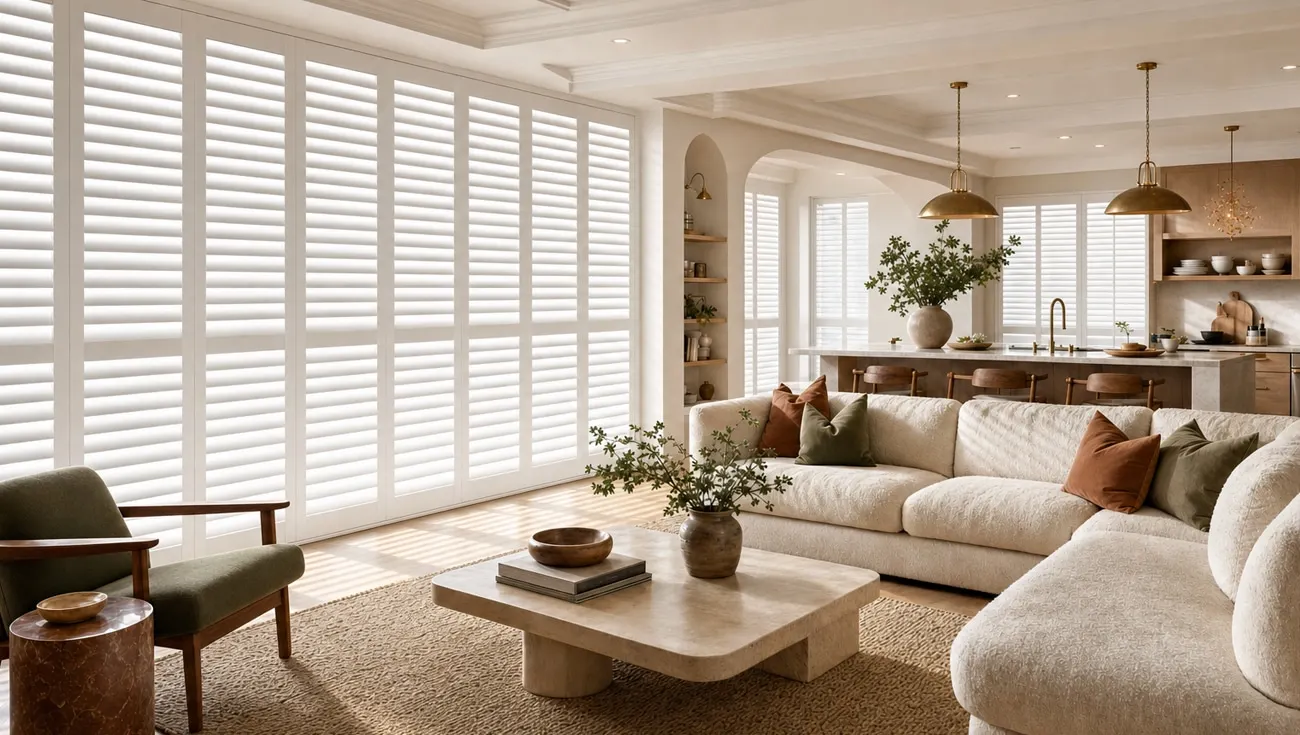
3. Plantation shutters: best for a built-in appearance
Plantation shutters place adjustable louvers inside framed panels. You tilt the louvers to change light and privacy, then open the panels when you want fuller access to the window.
Check where those panels will swing. Nearby furniture, faucets, window handles, and trim can affect the design. Ask to see how the proposed frame sits against your actual window rather than judging the louvers alone.
Plantation shutters pros:
- Allow light adjustment without opening the panels.
- Provide a structured, built-in appearance.
- Have accessible louver surfaces for routine dusting.
Plantation shutters cons:
- Panels require opening clearance.
- Frames remain visible around the window.
- Louver and panel joints are not a blackout seal.
Best for: Homeowners who prefer architectural detail over hanging fabric.
Verdict: Buy plantation shutters when you like their permanent visual presence and have room to open the panels.
4. Custom drapes: best for living-room softness
Custom drapes bring fabric across a larger area than a shade fitted within the window opening. They work well when you want the window to feel connected to the room's upholstery, rugs, or other textiles.
Plan the open position as carefully as the closed position. Fabric gathers beside the window when drawn back, and that gathered fabric needs space. Lining, fullness, and hardware also change how the finished treatment hangs.
Custom drapes pros:
- Add fabric texture and softness.
- Can cover a separate blind or shade.
- Offer flexibility in length and panel arrangement.
Custom drapes cons:
- Gathered panels occupy space when open.
- Cleaning requirements depend on the fabric and lining.
- Furniture can interfere with panel movement.
Best for: Living rooms where fabric is an important part of the design.
Verdict: Buy custom drapes when softness matters, after confirming where the open panels will sit.
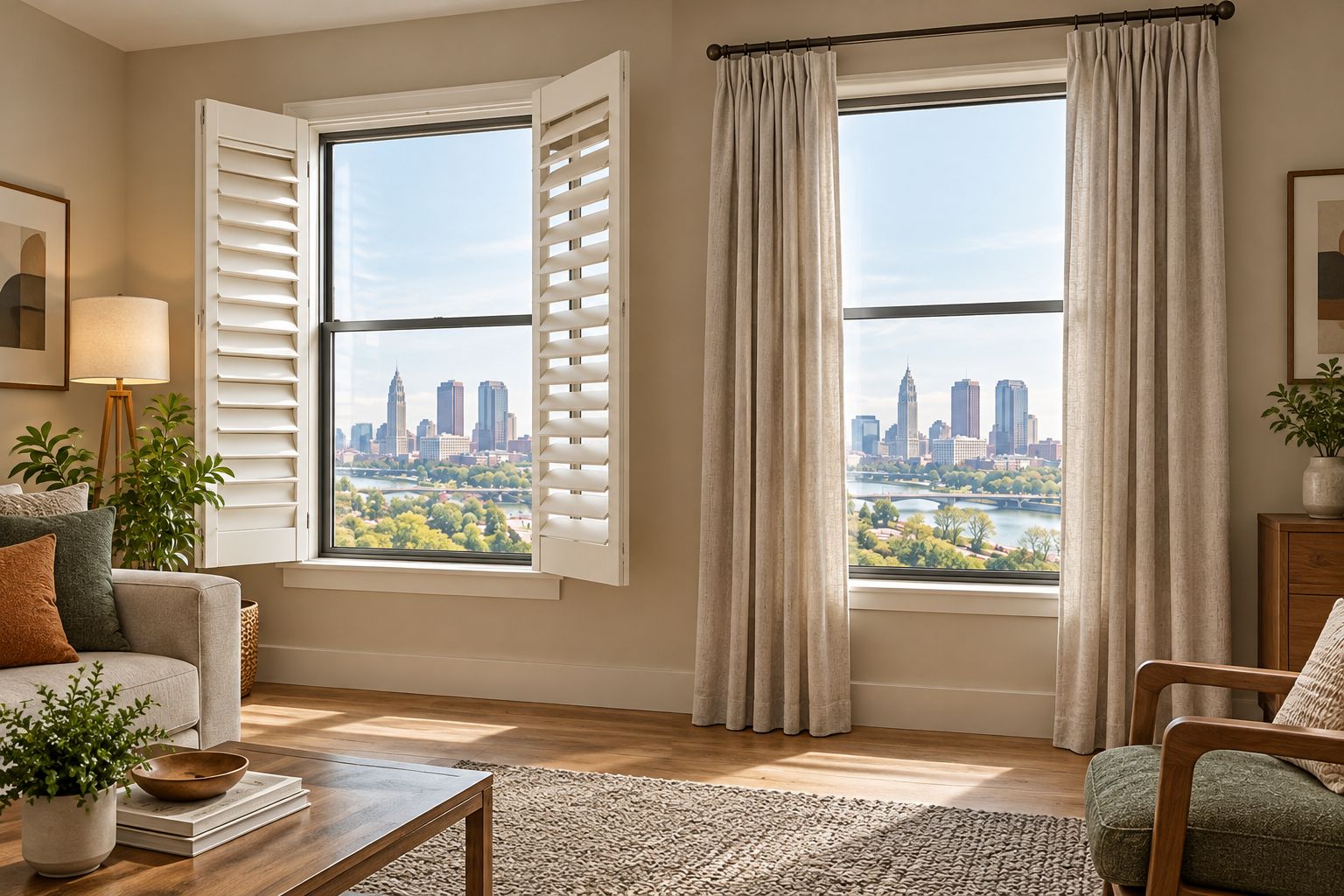
A shutter stays within a framed structure, while a drape extends beyond the glass and gathers to the side. Picture both in their open position before choosing; that is how you will see them for much of the day.
5. Custom blinds: best for adjustable light angles
Custom blinds use slats that tilt to change the balance of daylight and privacy. They suit rooms where you want to make small adjustments without lifting the entire covering.
Material selection needs to match the room. In a kitchen or bathroom, discuss moisture exposure, cleaning instructions, and the specific product's suitability. Do not assume all wood-look materials behave alike.
Custom blinds pros:
- Adjust light through slat tilt.
- Allow changes without fully raising the blind.
- Provide a straightforward alternative to fabric panels.
Custom blinds cons:
- Individual slats need dusting.
- Slat openings allow some light through.
- Raised slats form a visible stack.
Best for: Rooms where you frequently change the angle of incoming light.
Verdict: Buy custom blinds for flexible light adjustment; skip them when blackout performance is your first priority.
6. Cellular shades: best for an insulation-focused comparison
Cellular shades have a honeycomb-like structure that creates air pockets. That construction makes them a useful category to compare when insulating the window covering is a priority.
Do not treat the category name as a promised reduction in your utility bill. Performance depends on the specific shade, fit, window, and how you use it. Confirm the exact product and its documented properties before deciding.
Cellular shades pros:
- Use cellular construction for insulation.
- Offer a fabric alternative to slatted blinds.
- Can soften daylight when a light-filtering fabric is selected.
Cellular shades cons:
- Closed fabric limits the view outside.
- Fabric cells require product-specific care.
- Category-level benefits do not establish household savings.
Best for: Homeowners comparing window coverings with insulation in mind.
Verdict: Buy cellular shades for their construction and room suitability, not an assumed energy-saving figure.
How we ranked these options
This 2026 ranking follows the buying criteria above: privacy, light control, operation, fit, care, and appearance. It is a room-use guide, not a laboratory performance test or a ranking of manufacturers.
Motorized shades lead for convenience, but motorization describes operation rather than fabric. A blackout shade can also be motorized. Likewise, drapes can sit over another treatment, so the categories are not mutually exclusive.
The right combination starts with function. Choose the covering that solves the room's problem, then decide how you want to operate it.
What to settle during an in-home consultation
Olsson Smart Shades provides custom-measured blinds, shades, plantation shutters, drapes, and motorized smart shades with installation. Bring your room priorities to the conversation; you do not need to arrive with a finished design.
Use these practical checks for your 2026 project:
- Set 3 room priorities: Name the privacy, light, and access problems you want resolved.
- Compare 2 lighting conditions: Examine samples in daylight and with interior lights on after dark.
- Start with 1 difficult window: Resolve its mounting, clearance, and control questions before repeating the specification elsewhere.
- Confirm the scope: Ask which measurements, materials, controls, hardware, and installation work the proposal includes.
Use the contact page to ask about arranging an in-home consultation. Describe the rooms, the existing coverings, and what bothers you about them. Ask for a written quote before approving the work.
Request a window-treatment quote
Share your Columbus or Central Ohio project and ask about custom measurement and installation.
Which window treatments should you choose?
Start with motorized shades if your biggest frustration is operating the covering. Choose blackout fabric for sleep spaces, blinds for slat adjustment, shutters for a framed appearance, and drapes when the room needs fabric softness.
For a whole-home project in 2026, you do not need identical treatments in every room. Coordinate appearance where you want continuity, but let privacy, light, and access determine each window's specification.
FAQ
What's the best window treatment for a Columbus home?
Motorized shades are the best starting point for frequently adjusted or hard-to-reach windows. Bedrooms, living rooms, and moisture-exposed spaces still need their own fabric and material decisions.
Are motorized shades the same as smart shades?
Motorized shades use powered operation; smart shades add connected control features. Confirm the exact controls and system requirements before ordering.
Will blackout shades make my bedroom completely dark?
Blackout fabric blocks light through the material, but the finished installation can admit light around its edges. Discuss mounting and coverage if room darkness is your priority.
Are plantation shutters better than blinds?
Plantation shutters are better for a framed, built-in appearance; blinds are better when you prefer slat adjustment without hinged panels. Check panel clearance before choosing shutters.
Can I use drapes and shades on the same window?
Yes, drapes and shades can be layered when the mounting arrangement allows both to operate. Plan bracket clearance, fabric space, and access to controls together.
Should every room have the same window treatments?
No, each room can use a different treatment based on privacy, light, and operation. Coordinating colors or materials can create continuity without forcing the same function everywhere.
How do I arrange custom window treatments in Central Ohio?
Contact Olsson Smart Shades to ask about an in-home consultation and request a quote. Explain which rooms need coverings and whether your priorities include privacy, darkness, or easier operation.
One last thing
Ask to see the treatment fully open before you approve it. Raised blinds leave a stack, drapes gather beside the glass, and shutter panels need somewhere to swing. The open position can settle a decision that fabric samples cannot.