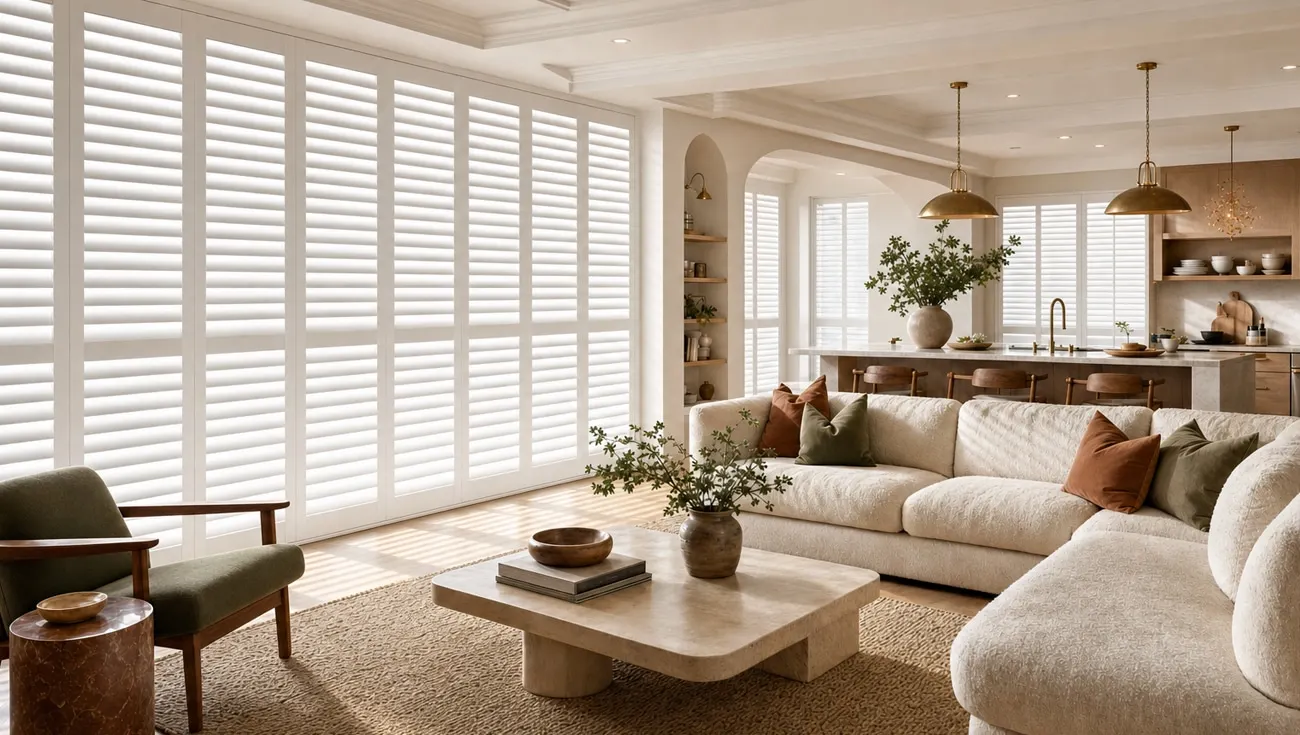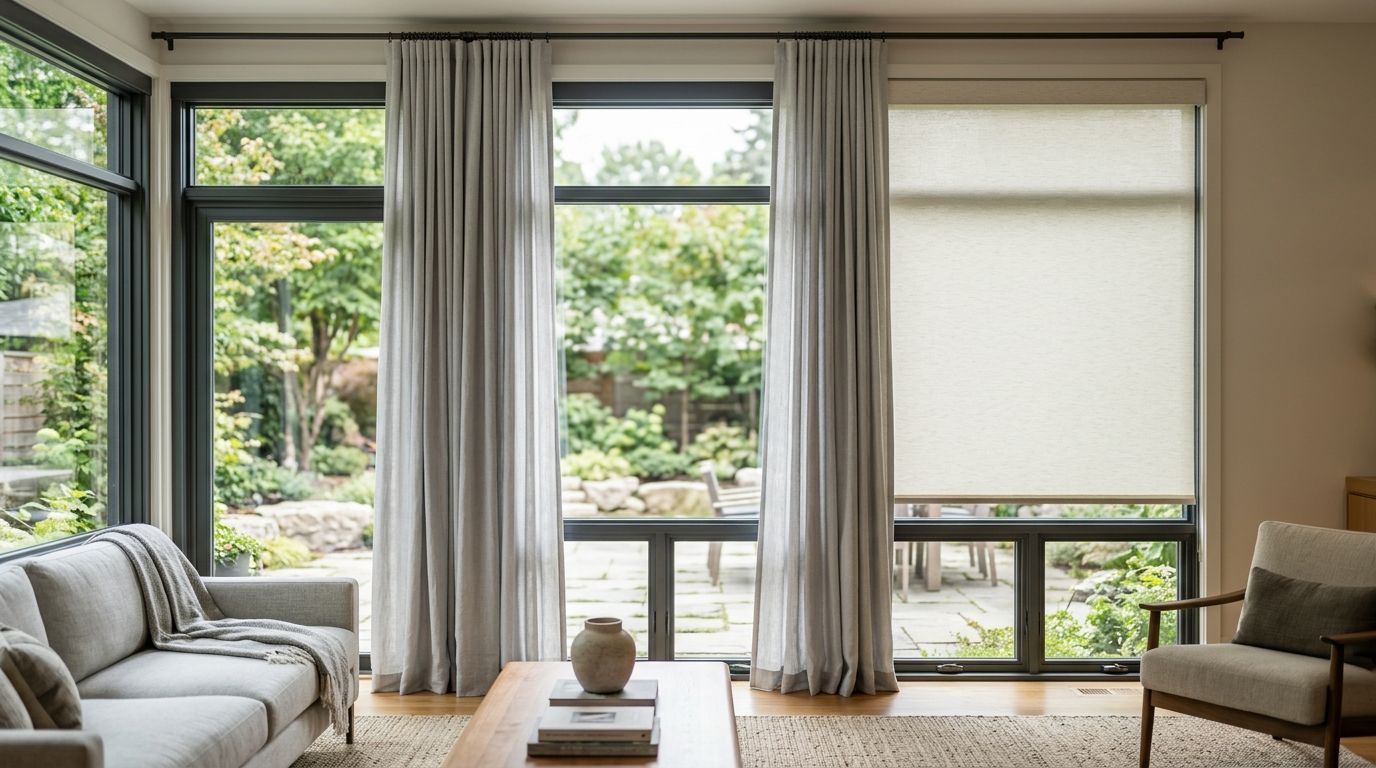
Best overall for hard-to-reach large windows: motorized shades. Best for a soft finish across a wide opening: drapes. Best for adjustable daylight: custom blinds. Best for a structured look: plantation shutters. For Columbus and Central Ohio homeowners, Olsson Smart Shades is best suited to custom-measured window treatments that need professional installation.
- Motorized shades are the best window treatments for large windows that are difficult to reach.
- Choose drapes for a soft finish, custom blinds for adjustable daylight, or plantation shutters for a structured look.
- Olsson Smart Shades measures and installs window treatments for homeowners in Columbus and Central Ohio.
- Check how each option opens, stacks, and controls light before requesting a quote.
Why large windows change the decision
A large window makes the details harder to ignore. A shade may need more than one panel. Drapes need somewhere to gather when open. Shutters need room for their panels to swing, while blinds need a control you can reach and use comfortably.
The right choice depends on what you do at that window every day. Start with access, then decide how much light and privacy you want while the treatment is partly open. If you want help sorting out those choices at home, Olsson Smart Shades offers custom measurement and installation in Columbus and Central Ohio.
What makes the best window treatments for large windows?
Judge each option by how it works across the whole opening, not just how a sample looks in your hand.
- Reach and control: Can you operate the treatment comfortably? Motorized control is especially useful when a window is tall or blocked by furniture.
- Light and privacy: Do you need to reduce glare, keep a view, or cover the glass fully? A treatment that works only when completely open or closed may not fit your room.
- Clearance: Where does the treatment go when you open it? Drapes gather beside the glass; shutters swing into the room; shades lift or roll upward.
- Window shape: Is the opening one uninterrupted span, or does it have separate sections? Panel layout affects both the view and daily use.
- Room feel: Do you want fabric softness, a restrained shade, or a more defined frame around the window? This is a practical choice as well as a visual one.
For a large window, operation deserves as much attention as appearance. Picture opening the treatment on an ordinary morning and closing it at night. That simple test often rules out an awkward control position or a stack that covers part of the view.
Large-window options at a glance
| Option | Best for | Standout feature | Key limitation |
|---|---|---|---|
| Motorized shades | Tall or hard-to-reach windows | Control without reaching the window | The shade layout needs planning across wide openings |
| Custom drapes | Wide openings that need a soft finish | Fabric can frame the glass when open | Open panels need room to gather |
| Custom blinds | Rooms needing adjustable daylight | Slats change light and privacy without fully opening | Slats and controls remain visible |
| Plantation shutters | Homeowners who want a structured frame | Hinged panels and adjustable louvers | Panels need swing clearance |
These are different answers to the same question, not interchangeable versions of one product. In 2026, the best window treatments for large windows still come down to the opening, the room around it, and how you want to use it.
1. Motorized shades: best for hard-to-reach large windows
Motorized shades open and close without requiring you to reach a cord or operate each shade by hand at the window. That makes them the default choice for tall glass, high-mounted windows, and openings behind furniture. Olsson Smart Shades offers custom-measured motorized smart shades with installation for Columbus and Central Ohio homeowners.
Olsson Smart Shades motorized shade pros:
- You can operate a shade without reaching a high or obstructed window.
- A shade keeps the treatment close to the window rather than gathering fabric beside it.
- Custom measurement lets you discuss how the shade layout fits the actual opening.
Olsson Smart Shades motorized shade cons:
- A wide opening needs a deliberate plan for shade sections and any visible gaps between them.
- A shade does not provide the soft, gathered look of drapes or the framed look of shutters.
- You still need to decide how much view you want when the shade is lowered.
Best for: Tall windows, windows behind furniture, and homeowners who want straightforward daily control.
Before requesting a quote, note which windows you would operate together and which need separate control. Ask how the proposed shades will sit when raised and lowered. If the opening has separate sections, discuss whether their edges will line up with the window itself. Those questions are more useful than choosing a control method before anyone has looked at the glass.
Verdict: Buy motorized shades when reaching the window is the main problem. For an easily reached window where softness matters more, consider drapes first.
2. Custom drapes: best for a wide opening that needs softness
Drapes hang beside a window when open and draw across it when closed. They suit a large living-room or bedroom opening when you want the treatment to feel like part of the room rather than a narrow covering on the glass. Olsson Smart Shades offers custom-measured drapes and professional installation; the right layout depends on the wall space beside your window.
Custom drape pros:
- Fabric gives a broad expanse of glass a softer edge.
- Panels can sit to the sides when you want the window uncovered.
- You can discuss how much coverage you want when the drapes are closed.
Custom drape cons:
- Open drapes take up space at the sides of the window.
- Fabric alone does not offer the same slat-by-slat light adjustment as blinds.
- The final result depends on where the panels gather, not just the fabric you choose.
Best for: Wide windows with room at the sides and homeowners who prefer a softer finish.
Look at the wall on both sides of the opening before choosing drapes. Furniture, a nearby door, or a corner can limit where fabric gathers. Then consider the closed position: do you want the fabric to cover only the glass or visually frame a larger part of the wall? Bring that preference into the measurement conversation so the layout matches how you use the room.
Verdict: Buy custom drapes when the window has side clearance and a softer room feel is your priority. Hold if nearby furniture leaves nowhere practical for open panels to sit.
3. Custom blinds: best for adjustable daylight
Custom blinds use adjustable slats to change how much light enters while keeping the window covered. That is their advantage over a treatment you mainly raise or lower. For a large window used throughout the day, the ability to shift between daylight and privacy can matter more than a fully unobstructed view.
Custom blind pros:
- Slats let you change the direction and amount of incoming light.
- You can adjust privacy without opening the whole window covering.
- Custom measurement addresses the fit of the actual opening.
Custom blind cons:
- Slats remain part of what you see even when adjusted for light.
- A large opening can make control placement especially important.
- Blinds do not provide the fabric softness of drapes.
Best for: Everyday rooms where you want to fine-tune daylight and privacy.
For blinds, test the choice against your usual view. If you want clear glass for much of the day, ask how the blinds will sit when opened. If privacy matters even in daylight, focus on how the slats behave when tilted. On a wide opening, discuss whether separate window sections call for separate coverings and where their controls would be easiest to reach.
Verdict: Buy custom blinds when adjustable light is the daily priority. Hold if reaching the controls would be inconvenient; motorized shades answer that problem more directly.
4. Plantation shutters: best for a structured window frame
Plantation shutters cover a window with hinged panels and adjustable louvers. They give a large opening a more defined, built-in appearance than a shade or drape. Olsson Smart Shades offers custom-measured plantation shutters for homeowners who want that structured look.
Plantation shutter pros:
- Louvers let you adjust light and privacy while panels stay closed.
- Hinged panels offer another way to open the window covering.
- The treatment gives a broad window a clear visual frame.
Plantation shutter cons:
- Panels need space to swing open.
- The frame and louvers remain visible, even when you want the window to feel bare.
- Panel divisions need to be planned around the opening.
Best for: Large windows where you want a defined frame and have room to open hinged panels.
Before settling on shutters, check the space in front of the glass. A table, sofa, or other obstacle can affect how freely a panel opens. Ask where the panel divisions would fall and whether they work with the window’s existing sections. A shutter layout that looks balanced when closed should also make sense when you open it.
Verdict: Buy plantation shutters when the structured look and swing clearance both suit the room. Skip them for an opening where furniture would make the panels awkward to use.
How these options were ranked
The ranking puts daily use first. Motorized shades lead because access is a common deciding issue on tall or obstructed windows. Drapes, blinds, and shutters each take a distinct place: softness, adjustable daylight, and a structured frame. No single treatment wins every room.
This is a 2026 buying guide, not a claim that one material or control suits every opening. Use the table as a shortlist, then check the proposed layout against your window, nearby furniture, and usual light and privacy needs. Custom measurement matters because the usable space around a large window is part of the decision.
Plan your window treatment
Discuss your window, preferred look, and installation needs.
Which window treatment should you choose?
Choose motorized shades if you are undecided and the large window is difficult to reach. They solve the access problem without asking you to manage fabric or hinged panels each day. That is the clearest default for a tall opening in 2026.
Choose drapes instead when you have space beside the window and want a softer finish. Pick custom blinds when changing daylight and privacy throughout the day is the main task. Pick plantation shutters when you want a defined frame and have room for the panels to open. If two needs matter equally, describe both when you request a quote rather than forcing the decision from a small sample.
FAQ
What are the best window treatments for large windows in 2026?
Motorized shades are the best default for large windows that are hard to reach. Drapes suit a softer finish, blinds suit adjustable daylight, and plantation shutters suit a structured look.
Are motorized shades good for tall windows?
Yes. Motorized shades let you operate tall windows without reaching the shade itself. Plan the shade layout across the opening before deciding how you want the windows controlled.
Are drapes or blinds better for a wide living-room window?
Choose drapes for a soft finish and blinds for more direct control over daylight and privacy. Drapes need room to gather beside the window; blinds keep visible slats at the opening.
Do plantation shutters work on large windows?
Plantation shutters can work on large windows when the panel layout and swing clearance suit the opening. Check nearby furniture and where panel divisions will fall before choosing them.
What should I check before choosing coverings for a large window?
Check reach, light control, privacy, and the space the treatment uses when open. Also consider whether separate sections of glass need separate coverings.
Can I request a quote for custom window treatments in Columbus?
Yes. Olsson Smart Shades provides custom-measured window treatments and installation for homeowners in Columbus and Central Ohio. Describe the window and the type of covering you are considering when you get in touch.
Which large-window treatment is easiest to use behind furniture?
Motorized shades are the clearest choice when furniture blocks access to the window. Confirm how the proposed shade arrangement will cover the opening and look when raised.
One last thing
In 2026, don't choose from a closed-window photo alone. Ask what the treatment looks like open. Gathered drapes, raised shades, tilted blinds, and swinging shutter panels change how you see and use a large window every day.