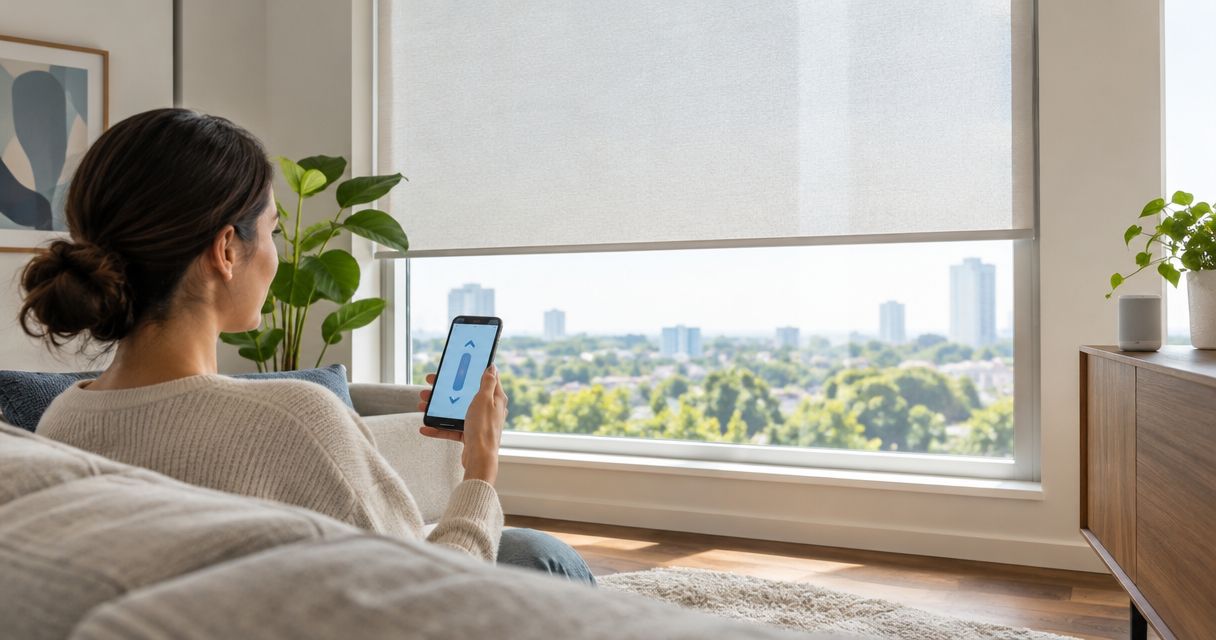
Motorizing existing blinds is worth it in 2026 when the blinds still work well, a compatible motor is available, and easier operation would solve a daily problem. Keep manual blinds if you rarely adjust them; consider replacement if the blinds already stick, sag, or leave unwanted light gaps. A motor changes how a blind operates, not the condition or fit of the blind itself.
- Is it worth motorizing existing blinds? Yes, when compatibility is confirmed and easier operation solves a daily problem.
- Keep sound blinds; replace worn coverings rather than adding automation to an existing fault.
- Olsson Smart Shades serves Columbus and Central Ohio homeowners seeking professionally installed motorized window treatments.
- Check motor fit, power access, controls, and the final appearance before choosing a retrofit.
Is it worth motorizing your existing blinds in 2026?
Motorize blinds you want to keep, not blinds you already want to replace. A retrofit makes the most sense when you like the existing appearance, the covering moves properly, and reaching or operating it is inconvenient.
Start with the problem at the window. Is the control behind a sofa? Do you leave a tall blind closed because opening it is awkward? Those are practical reasons to investigate motorization. An occasional adjustment on an easy-to-reach window gives you less reason to change anything.
Olsson Smart Shades is a fit for Columbus and Central Ohio homeowners seeking custom-measured, professionally installed motorized window treatments. You can use the Olsson Smart Shades website to ask about an in-home consultation and request a quote. Describe the existing blinds and ask whether an assessment supports keeping them or replacing them.
| Option | Best for | Main advantage | Main limitation |
|---|---|---|---|
| Motorize existing blinds | Homeowners happy with sound, compatible blinds | Keeps the covering you already like | Compatibility and existing wear limit the result |
| Replace with motorized shades | Homeowners who also need a different fit, fabric, or operation | Addresses the covering and its controls together | Replaces the existing window treatment |
| Keep manual blinds | Homeowners with accessible windows and little need for automation | Avoids changing a working setup | Leaves daily operation unchanged |
The right choice is the one that fixes your actual inconvenience. Motorization is not an automatic upgrade for every window.
Why this matters
A window treatment has separate jobs: covering the glass, controlling light, and opening or closing when you need it. Motorization addresses operation. It does not automatically improve the other jobs.
For a 2026 upgrade, separate those needs before comparing options. If your bedroom is too bright, investigate fabric, coverage, and edge gaps. If the shade provides the privacy you want but is difficult to reach, motorization addresses the more relevant problem.
That distinction keeps a useful convenience upgrade from becoming an expensive detour. Choose the covering for the room, then choose the controls for the person using it.
Retrofitting existing blinds: best for coverings you want to keep
A retrofit adds motorized operation to an existing treatment through a compatible mechanism. Depending on the blind and the proposed equipment, that can mean changing how the slats tilt or how the covering raises and lowers. Do not assume a proposal includes both movements.
Ask the installer to describe exactly what the motor will do. A blind that tilts automatically but still requires manual lifting solves a different problem from a covering that opens completely without pulling a cord.
Retrofitting has a clear advantage: you keep an appearance that already suits the room. That matters when the blinds match other windows or you simply like them.
The limitation is equally clear. The motor must work with the existing mechanism, size, and load. The blind also needs to be in suitable condition; automation is not a repair for damaged slats, failing fabric, or a troublesome lift system.
Recommendation: investigate a retrofit when the covering works properly and operation is the only thing you want to change. Have compatibility confirmed for the specific blind rather than relying on a general description such as smart or universal.
Replacement motorized shades: best for changing more than controls
Replacement makes more sense when you want to change the covering as well as its operation. Examples include a shade that does not provide enough privacy, a fabric you no longer like, or blinds that catch whenever you raise them.
A new treatment lets you consider fit, light control, appearance, and motorization together. That is useful when an existing blind already falls short in several ways.
The trade-off is that you are replacing something rather than simply updating its controls. Ask for a clear explanation of why replacement is recommended and which existing problems the new treatment will address.
Do not treat replacement as the default just because you want automation. In a 2026 consultation, a useful question is: what would replacement improve that a compatible retrofit would leave unchanged?
Recommendation: choose replacement when the covering itself needs work, not merely because a new control sounds appealing. A working motor attached to an unsuitable blind still leaves you with an unsuitable blind.
Keeping manual blinds: best for simple, accessible windows
Manual blinds remain a sensible choice when you can reach them comfortably and adjust them without difficulty. You do not need to automate a window simply because other windows in the house are motorized.
The advantage is simplicity. You keep a familiar arrangement without adding a motor, power source, or electronic control to manage.
The drawback is unchanged effort. If reaching the blind is already awkward, keeping it manual preserves that inconvenience.
A mixed approach is practical. Prioritize the windows that are hardest to use and leave easy windows alone. Your bedroom, living room, and rarely used guest room do not need identical controls just to make the house consistent.
Recommendation: keep manual operation where it already works for you. Let the room's routine decide, rather than a whole-house rule.
Why the value of motorizing existing blinds varies
The value comes from the problem solved and the work needed to solve it. These factors deserve attention before you approve a retrofit:
- Existing condition. Bent parts, worn fabric, or uneven movement need assessment before a motor is added. Start with a covering that operates properly.
- Mechanism compatibility. Tilt controls and lifting systems are not interchangeable. The proposed equipment must suit the specific treatment and intended movement.
- Window access. A hard-to-reach window gives easier operation a clear purpose. Also consider whether you can reach the motor or power source for routine attention.
- Power arrangement. Battery-powered, rechargeable, and wired arrangements have different upkeep and installation needs. Confirm which arrangement the proposed system uses.
- Control needs. A handheld remote, scheduled operation, and smart-home control are different requirements. Ask which functions are included and what additional equipment they need.
- Room performance. Existing privacy, glare, and light gaps remain relevant. Decide whether keeping the covering also means keeping a problem you hoped to fix.
Do not reduce the decision to whether a motor can physically be attached. The better question is whether the finished arrangement will be easier to live with.
How do you check whether your blinds are good retrofit candidates?
Use this sequence before choosing equipment. You do not need to identify every technical part yourself; the aim is to give the installer a clear picture of the window and your expectations.
- Check condition. Operate the blind through its normal movement. Note sticking, uneven lifting, damaged slats, or anything that needs extra force. Do not force a jammed covering.
- Identify movement. Decide whether you want slat tilt, raising and lowering, or both. Describe the action you want rather than asking only for a smart blind.
- Show mounting. Photograph the full window, the upper mechanism, and the existing controls. Include nearby trim and obstacles so the assessment considers more than the fabric or slats.
- Check access. Point out furniture, tall windows, and nearby power access. Ask how you would reach any charging connection or replaceable battery after installation.
- Confirm controls. Explain who will use the blind and how. Ask for the proposed control method, power arrangement, and included functions in writing.
A photo-style example helps show why the whole window matters. The space around the blind can affect access just as much as the covering itself.
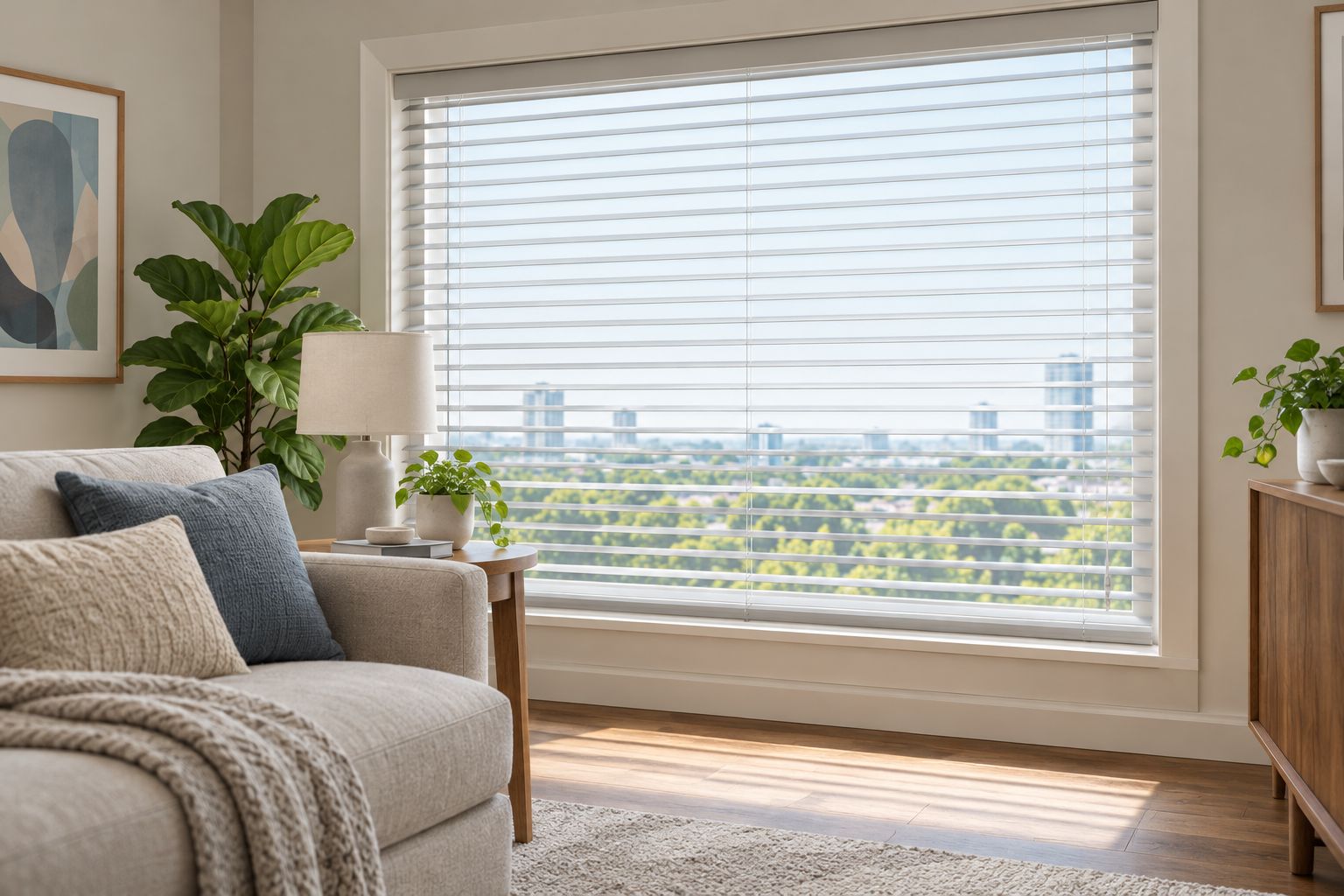
Once those details are clear, ask for a recommendation tied to your existing treatment. A useful assessment explains what can stay, what needs changing, and what the finished blind will actually do.
What should a motorization quote explain?
A useful 2026 quote makes the scope understandable without requiring you to learn motor terminology. It should distinguish the existing covering from the new equipment and installation work.
Ask for these details:
- Which windows and existing treatments the proposal covers.
- Whether each motor controls tilt, lift, or another specified movement.
- The proposed power source and how you access it.
- The controls included and any separate equipment needed for requested functions.
- Any changes to mounting, visible hardware, or nearby wiring.
- How operation will be demonstrated after installation.
Request clarification when a description is broad. Smart-home ready does not tell you whether the proposed setup works with the devices you already use. Confirm compatibility for the actual equipment before approving it.
Olsson Smart Shades provides custom-measured window treatments and motorized smart shade installation. When requesting a quote, explain that you want the existing blinds assessed first; that keeps the conversation focused on your preference rather than assuming replacement.
Can motorizing blinds fix bedroom light gaps?
Motorizing blinds does not fix light gaps by itself. A motor changes operation; the covering, mounting position, and overlap determine where light can pass around it.
If morning light is the reason you are considering an upgrade, assess that problem separately. Keeping the same blind generally means keeping its existing coverage unless the installation also changes.
Ask to compare the light-control result, not just the convenience. A bedroom treatment should suit your sleeping preferences before you decide how to operate it.
Do motorized blinds need a smart-home system?
Motorized operation does not automatically require a smart-home system. Some systems use a dedicated remote, while app control, voice commands, or schedules depend on the specific equipment and setup.
Choose the simplest control that meets your needs. If your main goal is opening a tall blind from your chair, ask about that task first rather than starting with a list of connected features.
For a 2026 purchase, name any existing smart-home equipment during the consultation. Obtain confirmation for the proposed combination; do not assume that two products described as smart will work together.
FAQ
Is it worth motorizing existing blinds if they still work?
Motorizing existing blinds is worth considering when they work properly and manual operation is inconvenient. Confirm compatibility and decide whether the proposed motor controls tilt, lift, or both.
Can every existing blind be motorized?
Not every existing blind is suitable for motorization. The mechanism, condition, dimensions, and load must suit the proposed equipment.
Should I replace old blinds before adding a motor?
Replace old blinds when their condition, fit, or light control no longer meets your needs. Age alone does not establish whether a retrofit is appropriate; have the actual treatment assessed.
Will motorizing my blinds make the room darker?
Motorizing your blinds does not make the covering block more light by itself. Darkness depends on the covering and its installation, including gaps around the edges.
Can I motorize just the hard-to-reach windows?
You can plan motorization around the windows that are hardest to operate, subject to compatibility. There is no need to replace a useful manual setup elsewhere merely for consistency.
What happens when motorized blinds lose power?
Power-loss behavior depends on the proposed motor and controls. Ask how the specific system operates without power and whether it provides a supported manual option; never assume you can pull a motorized blind by hand.
How do I ask Olsson Smart Shades about my existing blinds?
Ask Olsson Smart Shades for an assessment of your existing blinds and a quote for the recommended work. Share photos, describe any operating problems, and explain whether your priority is easier access, light control, or smart-home operation.
One last thing
Before committing, stand where you would normally operate the blind and picture the routine after installation. Include charging or battery access, not just opening and closing.
A motor should remove an inconvenience, not move it somewhere harder to reach. That is the final check worth making before you approve the work.