Best overall: custom slat blinds. Best for bedrooms: blackout roller shades. Best for hard-to-reach windows: motorized shades. This 2026 guide compares practical choices for Columbus and Central Ohio homes, including custom-measured window treatments from Olsson Smart Shades.
- For blinds columbus ohio searches, start with custom slat blinds when adjustable daylight is your main need.
- Olsson Smart Shades suits Columbus homeowners seeking custom-measured blinds and professionally installed window treatments.
- Choose blackout roller shades for bedroom darkness, while checking gaps around the finished installation.
- Choose motorized shades for difficult access; confirm power, controls, and any smart-home connection before ordering.
Why this matters
A living room, bedroom, and bathroom ask different things from a window covering. Buying the same treatment throughout your home can leave you with privacy where you wanted a view, or filtered light where you needed darkness.
Olsson Smart Shades is best for Columbus homeowners who want custom-measured blinds and professional installation. The business also offers shades, plantation shutters, drapes, and motorized smart shades, so your choice does not have to stop at slats.
For a 2026 project, start with the room's hardest problem. Solve that first, then choose the finish. A good color match cannot fix a shade that blocks a door handle or leaves an unwanted sightline.
What makes the best blinds for Columbus homes?
Use these criteria before choosing a style:
- Light control: Decide whether you want adjustable daylight, soft filtering, or room darkening. These are different jobs.
- Privacy: Check the view from outside as well as inside, especially when indoor lights are on.
- Fit and clearance: Account for window depth, locks, handles, trim, and anything that opens nearby.
- Daily operation: Choose controls you can reach and comfortably use. Consider everyone who uses the room.
- Room conditions: Match the material to humidity, splashes, dust, and the manufacturer's cleaning instructions.
- Installation details: Agree on the mounting position, finished coverage, and any power needs before ordering.
Do not treat motorization as a fabric type. It changes how a shade moves; the fabric and fit still determine its light control and privacy.
Best blinds and shades at a glance
The ranking below assigns each option a different job. These are treatment categories, not named product models or promises that every configuration has the same features.
| Rank and option | Best for | Standout feature | Key limitation |
|---|---|---|---|
| 1. Custom slat blinds | Everyday daylight adjustment | Tilting slats change light and sightlines | Slat gaps do not provide blackout coverage |
| 2. Faux-wood blinds | Humidity-prone rooms | Moisture-resistant material choices | Individual slats need cleaning |
| 3. Cellular shades | Added insulation at the window | Honeycomb-shaped air pockets | The fabric hides the view when lowered |
| 4. Blackout roller shades | Bedroom darkness | Opaque fabric blocks light through the material | Light can enter around the edges |
| 5. Motorized shades | Hard-to-reach windows | Powered operation reduces manual reaching | Power and control details need planning |
| 6. Plantation shutters | A framed architectural finish | Adjustable louvers within fitted panels | Panels need clearance to swing open |
1. Custom slat blinds: best for everyday daylight control
Custom slat blinds are the default when you want to adjust daylight without fully uncovering the window. Tilt the slats for a different balance of light, view, and privacy, or raise the blind when you want the opening clear.
For your 2026 shortlist, compare the actual material and operating system rather than choosing by color alone. Wood and synthetic materials have different care requirements, and wider openings need particular attention to operation.
Custom slat blinds pros:
- Adjustable slats offer more light positions than simply open or closed.
- A fitted size accounts for the individual window opening.
- Different finishes let you coordinate with existing trim and furniture.
Custom slat blinds cons:
- Light passes between slats and around the edges.
- Dust collects on the slat surfaces.
Best for: Living areas where you change the light throughout the day.
Verdict: Buy custom slat blinds when adjustable daylight matters more than darkness.
2. Faux-wood blinds: best for humidity-prone rooms
Faux-wood blinds give you a slatted appearance without using solid wood slats. Moisture-resistant versions suit rooms where humidity makes material selection especially important.
Do not assume every synthetic blind handles direct water exposure. Ask about the specific material, care instructions, and suitability for the installation location before choosing it for a bathroom or near a sink.
Faux-wood blinds pros:
- Moisture-resistant materials offer an alternative to solid wood.
- Tilting slats provide adjustable privacy.
- Individual slats can be wiped according to the care instructions.
Faux-wood blinds cons:
- Cleaning still involves separate slat surfaces.
- A closed blind is not a blackout treatment.
Best for: Bathrooms and kitchens where the selected material is approved for the conditions.
Verdict: Buy faux-wood blinds for humidity-prone rooms after confirming material suitability.
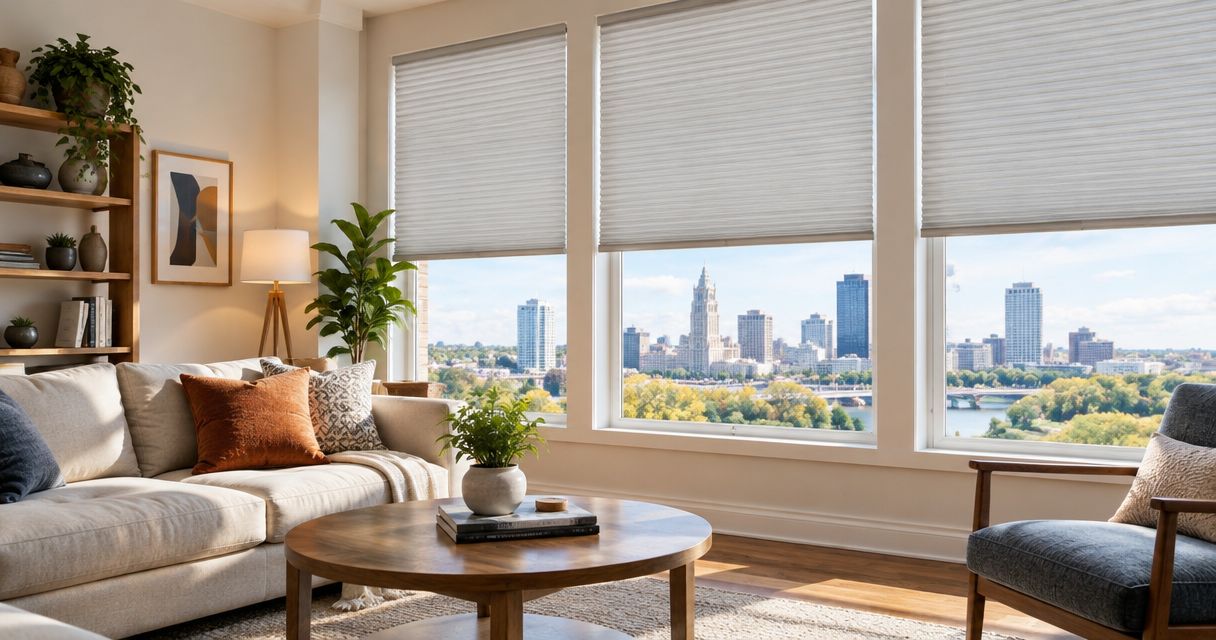
3. Cellular shades: best for added window insulation
Cellular shades use a honeycomb-shaped structure that holds pockets of air. That structure adds insulation at the window, while the fabric creates a softer surface than horizontal slats.
For a 2026 comfort-focused project, compare fabric opacity alongside the cellular construction. A shade that filters light and a shade intended for darkness serve different needs, even when their structure looks similar.
Cellular shades pros:
- Air pockets add an insulating layer at the window.
- Fabric softens incoming daylight when a light-filtering material is selected.
- A continuous surface avoids exposed horizontal slats.
Cellular shades cons:
- Lowered fabric blocks your clear view outside.
- Fabric requires care suited to its construction rather than routine wet wiping.
Best for: Rooms where window comfort matters more than maintaining an unobstructed view.
Verdict: Buy cellular shades for added insulation; do not assume a particular utility-bill reduction.
4. Blackout roller shades: best for bedroom darkness
Blackout roller shades use opaque fabric that rolls up above the opening. They are a practical starting point when daylight interrupts sleep or you want less light across a bedroom wall.
The fabric is only part of the result. Light can enter beside, above, or below the shade, so discuss coverage and mounting before deciding that the word blackout solves the whole room.
Blackout roller shades pros:
- Opaque fabric blocks light through the shade material.
- The fabric rolls away when you want daylight.
- A simple surface suits rooms where you want little visual detail.
Blackout roller shades cons:
- Edge gaps can leave visible light around the shade.
- An opaque shade blocks the view when lowered.
Best for: Bedrooms where reducing incoming light is the main goal.
Verdict: Buy blackout roller shades only after reviewing the finished edge coverage.
5. Motorized shades: best for hard-to-reach windows
Motorized shades use a powered mechanism to raise or lower the treatment. They are useful where reaching a manual control is awkward, including windows above furniture or high on a wall.
Olsson Smart Shades offers motorized smart shades with installation. For your 2026 project, confirm the selected system's power source, everyday controls, and any requested smart-home connection; none of those details should rest on an assumption.
Motorized shades pros:
- Powered movement reduces the need to reach the window.
- Controls can make frequent shade adjustments easier.
- You can choose fabric for privacy or darkness separately from operation.
Motorized shades cons:
- The power arrangement needs planning and ongoing attention.
- Smart-home features depend on the specific motor and control equipment.
Best for: Windows you cannot comfortably operate by hand.
Verdict: Buy motorized shades for a clear access need; hold the order until power and controls are settled.
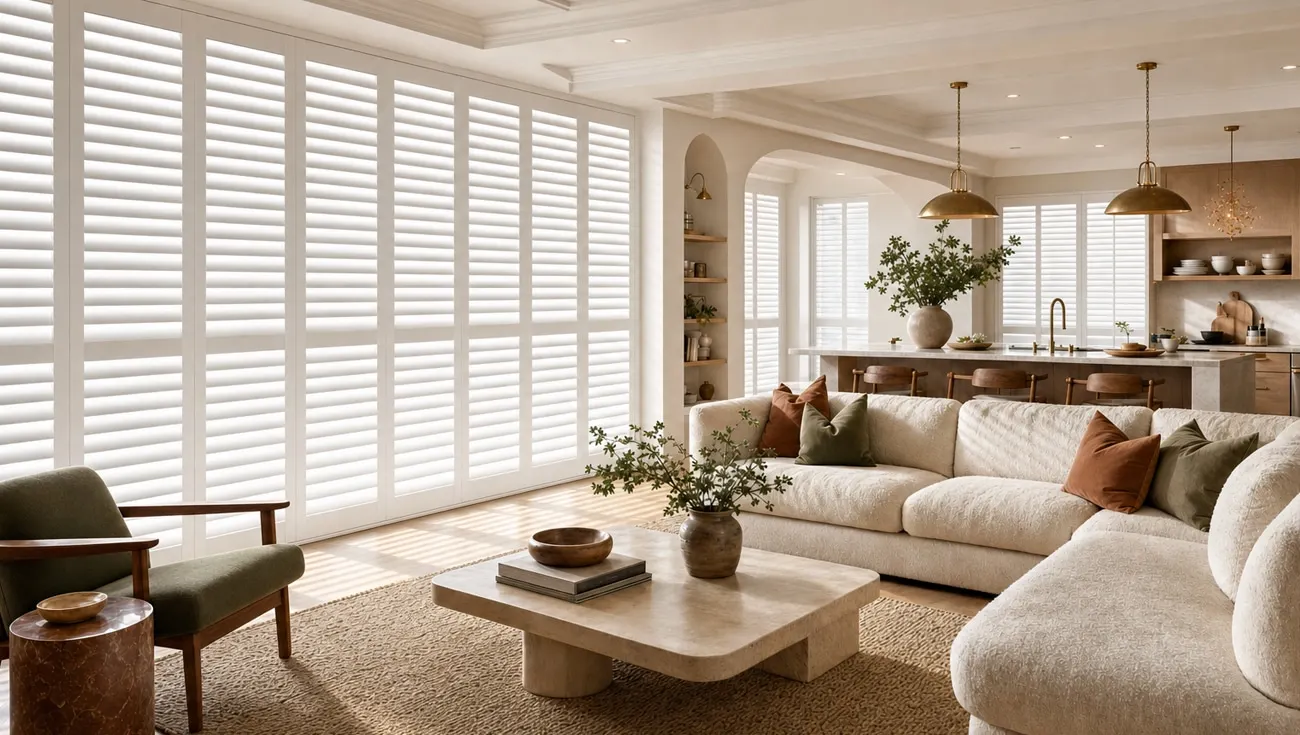
6. Plantation shutters: best for an architectural finish
Plantation shutters place adjustable louvers inside fitted panels. They create a framed treatment at the window rather than a hanging blind or fabric shade.
Check how the panels open before choosing shutters for a furnished room. Nearby furniture, window handles, and surrounding walls can affect how comfortably you use them.
Plantation shutters pros:
- Louvers let you adjust daylight and sightlines.
- Fitted panels create a defined finish around the opening.
- Opening the panels gives access to the window behind them.
Plantation shutters cons:
- Panels need space to swing open.
- Frames and louvers remain visible across part of the opening.
Best for: Homeowners who want the window treatment to read as part of the room's architecture.
Verdict: Buy plantation shutters when the framed look and opening clearance both suit the room.
Picture the treatment in your room
A slatted blind and a fabric shade can look equally simple in a sample book but feel different at the window. Slats create horizontal lines and let you tilt the light; a lowered roller shade creates a continuous fabric surface.
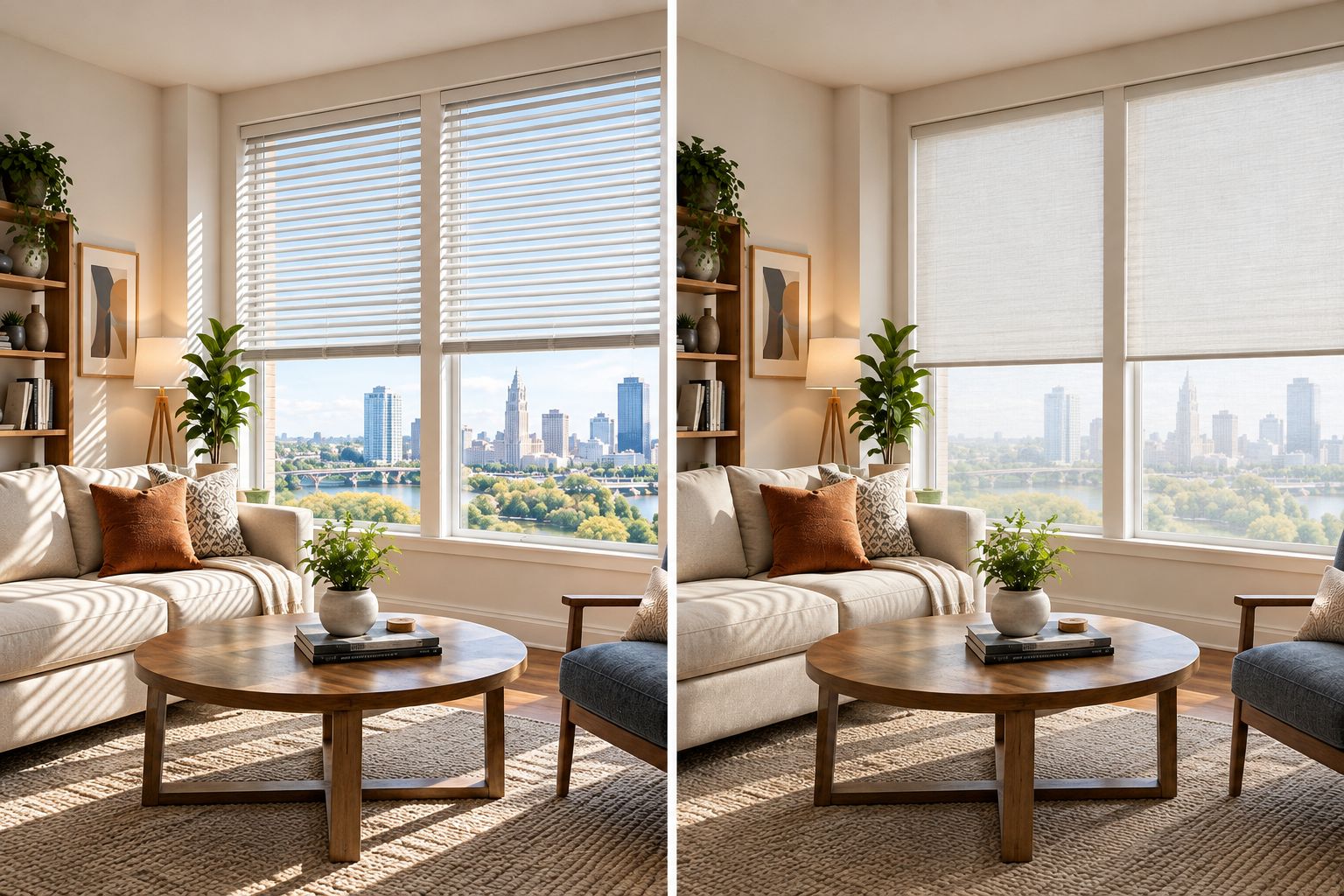
Bring your wall color and furniture into the decision, but do not let matching become the only test. Ask to compare materials at the actual window, where daylight reveals texture and opacity differently.
Before requesting a consultation or quote
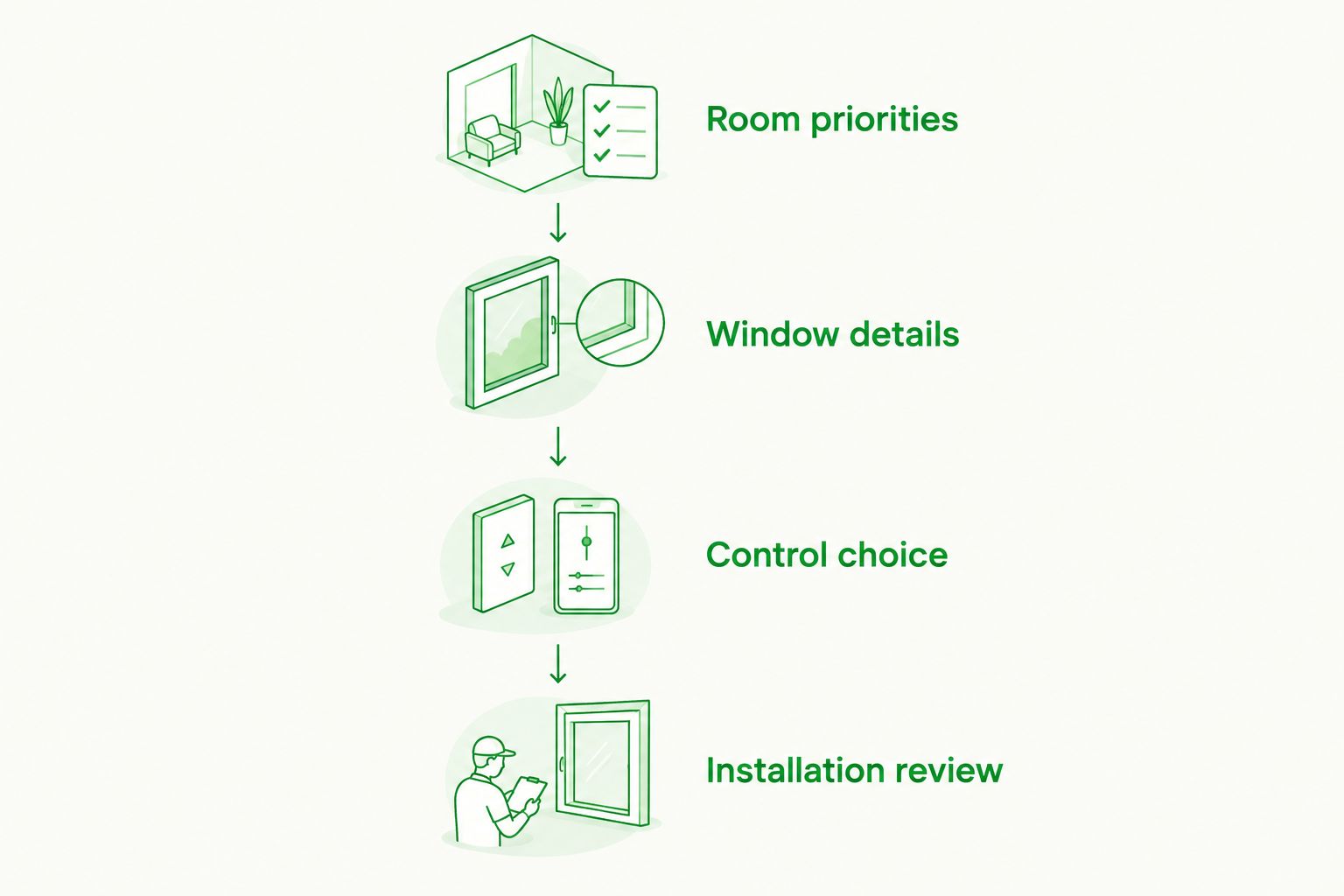
You do not need to choose the entire house at once. Start with the room that causes the most frustration and use this sequence to explain what needs fixing.
- Room priorities: Write down the main problem for each room: glare, privacy, darkness, comfort, or difficult access.
- Window details: Take 3 photos per opening: straight on, from the side, and with the window or nearby door open.
- Control choice: Decide whether manual operation is comfortable or powered movement solves a real difficulty.
- Installation review: Ask how mounting, clearance, coverage, and any power arrangement will work.
The photos help communicate the setting; they do not replace final measurements. Request an in-home consultation through the contact process, or request a quote and describe the rooms, window count, and main priorities.
Make 2 privacy checks before settling on a fabric: one during daylight and one after dark with indoor lights on. Also choose 1 priority room if you want a manageable starting point rather than a whole-home decision.
How these choices are ranked
This 2026 ranking puts adjustable daylight first because it is the defining advantage of slat blinds. The remaining choices solve distinct problems: humidity, insulation, darkness, access, and architectural appearance.
The criteria are fit, light control, privacy, operation, room conditions, and installation details. The order is not a product-test score, and a lower-ranked category is the better choice when its particular job matches your room.
Which blinds should you choose?
Choose custom slat blinds if you are undecided and want adjustable daylight. Move to blackout roller shades for sleep, cellular shades for added insulation, or motorized shades when reaching the window is the problem.
Olsson Smart Shades provides custom-measured blinds and other professionally installed window treatments for Columbus and Central Ohio homeowners. Discuss the room's needs first, then ask which treatment and mounting arrangement meet them without adding features you will not use.
FAQ
What are the best blinds for a Columbus, Ohio home?
Custom slat blinds are the default for adjustable daylight and privacy. Choose a different treatment when bedroom darkness, humidity, insulation, or difficult access is the main concern.
Are blinds or shades better for bedrooms?
Blackout shades are the better starting point when bedroom darkness is your priority. Slat blinds offer adjustable daylight, but light passes between the slats; blackout shades also need careful edge coverage.
What should I choose for bathroom windows?
Choose a treatment whose material is approved for the room's humidity and exposure. Moisture-resistant faux-wood blinds are one option, but confirm the specific material's care instructions and check privacy after dark.
Are motorized shades the same as smart shades?
Motorized shades use powered movement; smart shades add supported connected controls. Confirm the exact motor, power arrangement, and control equipment before assuming a system works with your home setup.
Will custom blinds make my bedroom completely dark?
Custom sizing alone does not make a blind completely dark. Slat openings and perimeter gaps admit light, so discuss blackout fabric and finished coverage if darkness is the goal.
Can I use different window treatments in different rooms?
Yes, you can choose treatments by room rather than repeating one type everywhere. Coordinate finishes where you want consistency, while letting privacy, light, and operation determine the treatment.
How do I arrange a window-treatment quote in Columbus?
Use the Olsson Smart Shades quote or contact process to describe your project and ask about an in-home consultation. Include your room priorities, window count, and whether you want manual or motorized operation.
One last thing
Check privacy from outside, not just from your favorite chair. A treatment can soften the view beautifully from indoors while leaving a sightline you did not notice. Make that check before approving the fabric and mounting plan.