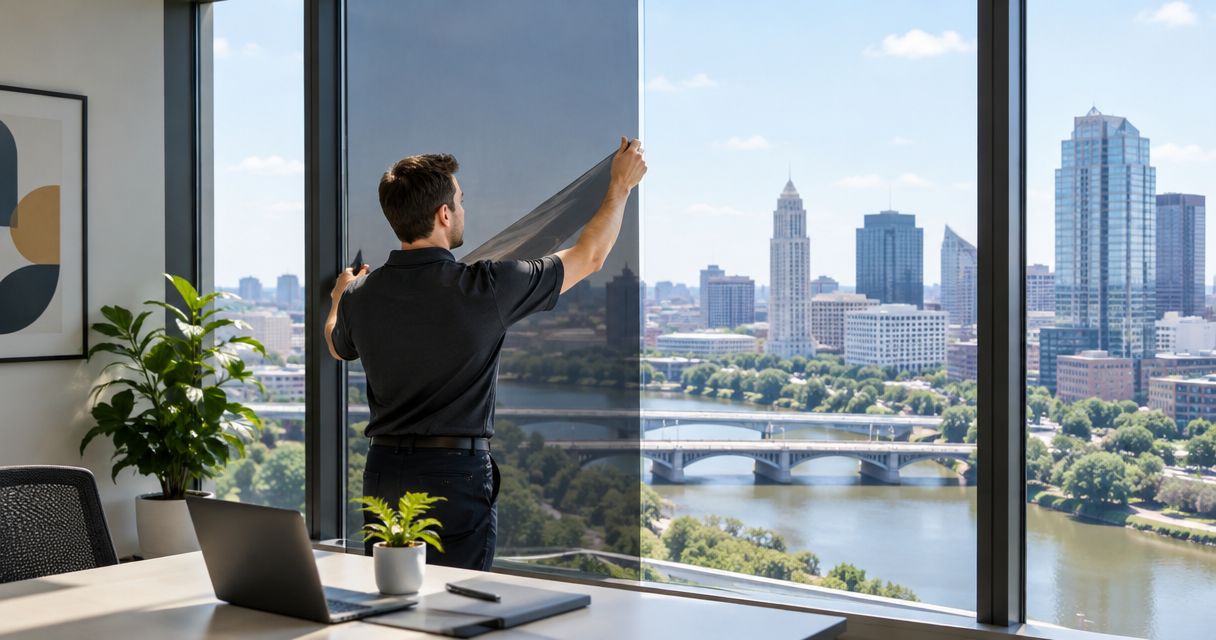
Best overall for preserving daylight: spectrally selective solar-control film. Best for screen glare: tinted solar-control film. Best for fixed privacy: frosted film. Best for glass retention: safety and security film. This 2026 guide compares commercial window film solutions for Columbus offices by the problem each one solves, not by how dark the glass looks.
- For best commercial window film Columbus searches, choose by purpose: daylight, glare control, privacy, or glass retention.
- Spectrally selective solar-control film is the default shortlist for offices that want daylight with less solar heat gain.
- Frosted film provides fixed visual privacy; reflective film does not guarantee privacy after dark.
- Olsson Smart Shades is best for Columbus homeowners seeking custom-measured window treatments, not a commercial-film installer recommendation.
Why this matters
An office can have several window problems at once. Afternoon sun heats perimeter desks. Bright glass reflects in monitors. A conference room needs privacy even when the lights are on.
One film does not automatically solve all three. Choose the job first, then compare films designed for that job. A darker sample is not proof of better heat control, and a reflective surface is not proof of nighttime privacy.
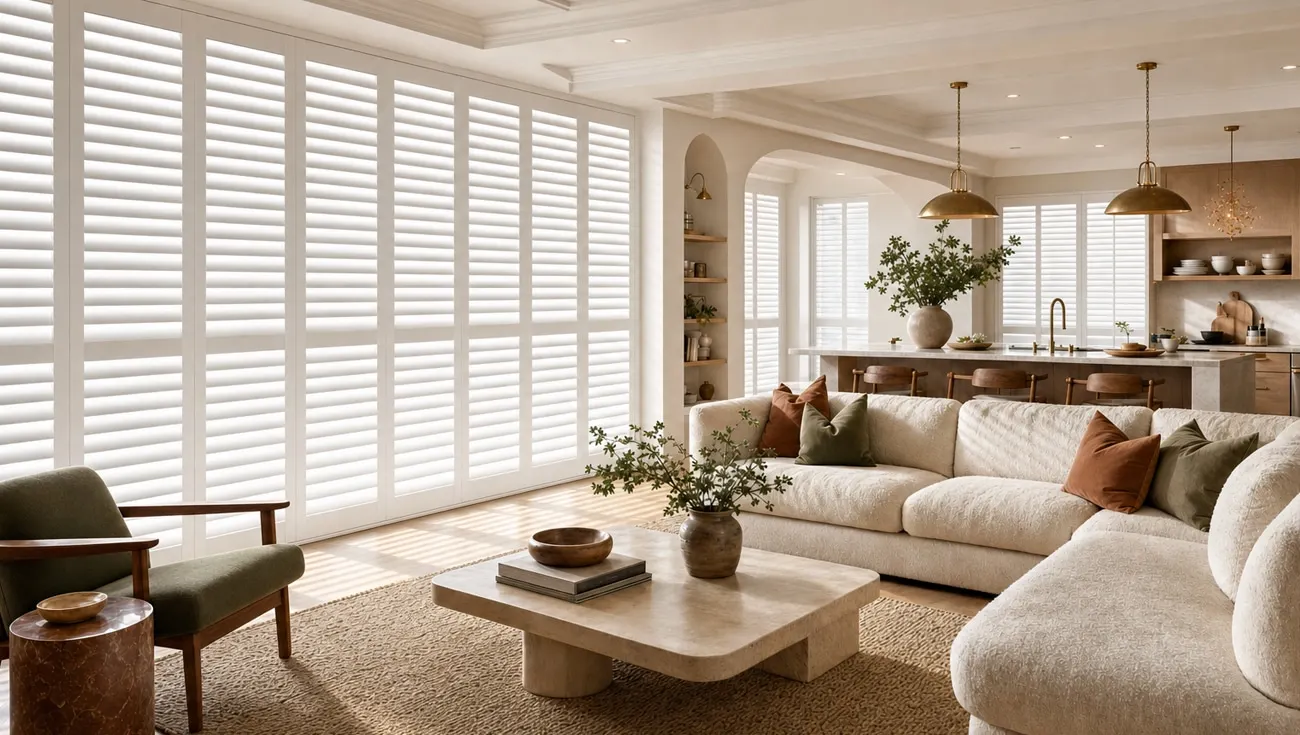
Olsson Smart Shades provides custom-measured blinds, shades, shutters, drapes, and motorized smart shades for homeowners in Columbus and Central Ohio. This guide explains commercial-film categories and when an adjustable window treatment deserves a separate conversation.
What makes the best commercial window film?
Use these criteria before comparing appearance or accepting a proposal:
- Problem fit: Separate heat, screen glare, visual privacy, and glass-retention needs. Name the priority for each room.
- Glass compatibility: Have the installer identify the existing glazing and confirm that the proposed film is suitable for it.
- Daylight balance: Compare visible light transmission, which describes how much visible light passes through the glazing.
- Solar performance: Review solar heat gain information for the proposed film-and-glass combination. Do not substitute an infrared-rejection headline for whole-window performance.
- Occupied-room appearance: Review samples from inside and outside, with room lights on and off.
- Installation scope: Confirm preparation, access, occupied-workspace protection, edge details, and written care instructions.
For a 2026 office project, ask for the exact film designation in the proposal. A description such as premium tint does not give you enough information to compare bids.
Commercial window film options at a glance
| Film type | Best for | Standout feature | Key limitation |
|---|---|---|---|
| Spectrally selective solar-control film | Daylit perimeter offices | Controls solar energy while retaining visible light | Does not provide fixed privacy |
| Tinted solar-control film | Workstations with screen glare | Reduces incoming visible brightness | Darkens the view and room |
| Frosted privacy film | Conference rooms and interior partitions | Obscures direct views without relying on reflection | Removes a clear view through treated areas |
| Safety and security film | Glass-retention requirements | Helps hold broken glass together | Performance depends on the tested glazing and attachment system |
The table ranks use cases, not manufacturers. Your best option is the category that addresses the room's main problem without creating a worse trade-off.
1. Spectrally selective film: best for daylit offices
Spectrally selective solar-control film manages portions of the solar spectrum while allowing visible light through. It belongs on the shortlist when occupants want less solar heat gain without making an office feel heavily tinted.
This is the strongest starting category for an office where daylight and outward views matter. Compare actual product data, though. Films within this category differ in appearance and performance.
Spectrally selective film pros:
- Preserves more daylight than a darker appearance alone would suggest.
- Offers solar-control options without requiring a deeply tinted look.
- Keeps the window unobstructed by a hanging covering.
Spectrally selective film cons:
- Does not obscure confidential conversations or visible documents.
- A light-transmitting option can leave troublesome screen brightness unresolved.
- Compatibility still needs confirmation for the existing glass.
Best for: Perimeter offices where solar heat is the main concern and occupants want to keep daylight.
Ask the installer to show the proposed sample at a problem window, not just against a white sample board. Check the view from a seated position. A film that looks nearly clear in your hand can look different across a full glazed wall.
Verdict: Buy for daylight-preserving solar control after reviewing the proposed glass-and-film combination.
2. Tinted solar-control film: best for screen glare
Tinted solar-control film reduces visible light entering the room. That makes it a practical category to compare when bright windows compete with computer displays or make desks uncomfortable to use.
Start by checking monitor placement. Film changes the window all day; moving a screen away from a direct reflection can address part of the problem without changing every occupant's view.
Tinted solar-control film pros:
- Reduces incoming brightness at exposed workstations.
- Leaves the window opening clear of fabric or slats.
- Can combine glare reduction with solar-control performance.
Tinted solar-control film cons:
- Reduces daylight even when the sky is overcast.
- Changes the appearance of the glass and outward view.
- Does not guarantee privacy when interior lighting exceeds outdoor brightness.
Best for: Desks with persistent window glare where a permanent reduction in brightness is acceptable.
For your 2026 shortlist, compare samples during the hours people actually struggle. A morning inspection cannot establish how an afternoon-facing workstation feels later. Ask occupants to review the sample from their normal chair rather than standing beside the glass.
Verdict: Buy when glare control matters more than preserving maximum daylight.
3. Frosted film: best for conference-room privacy
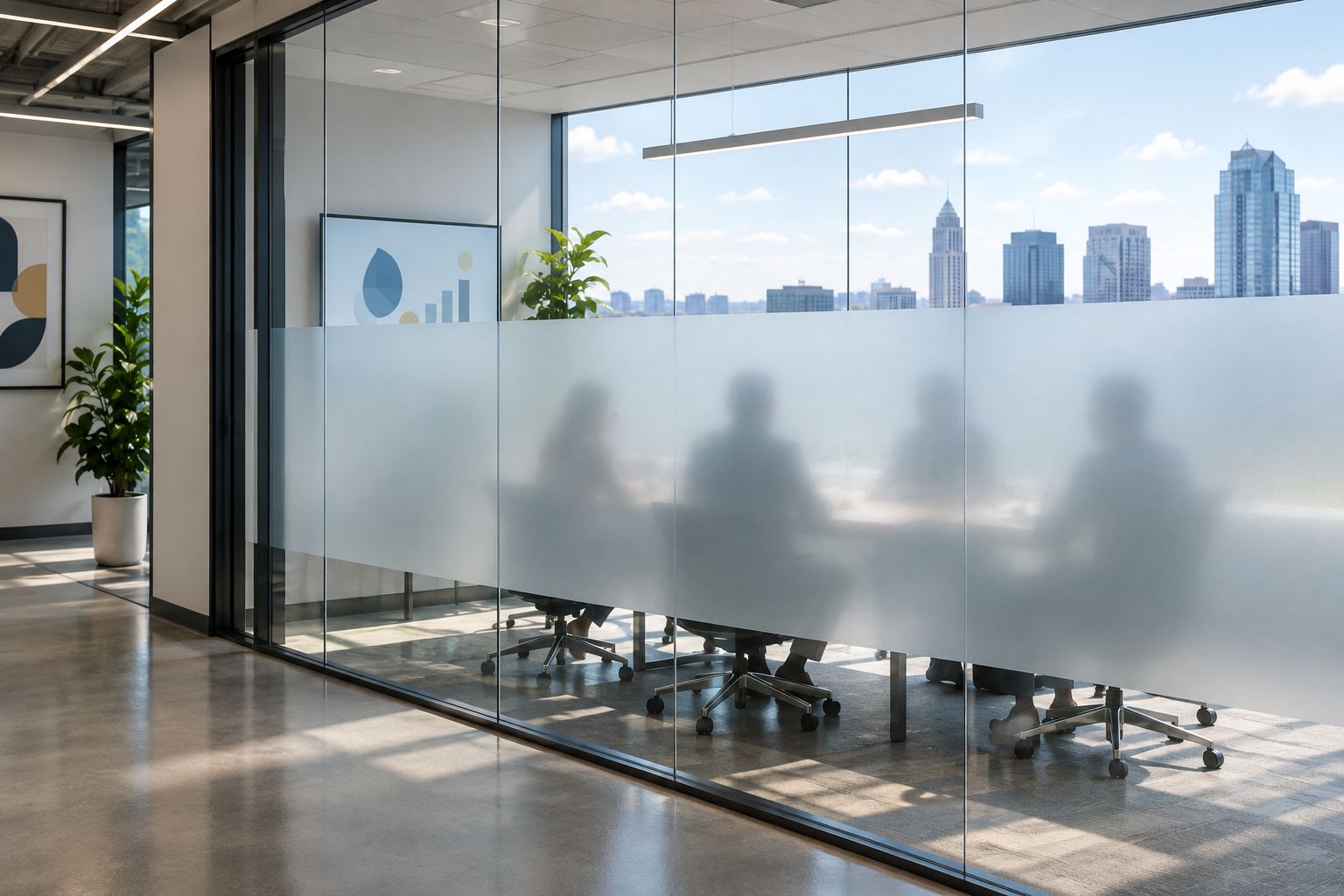
Frosted film scatters light and obscures clear views through the treated area. It suits conference rooms, sidelights, and interior glass partitions where visual privacy matters more than seeing through the glass.
Coverage is the key decision. Full coverage, a central band, and selectively covered panels produce different sightlines. Choose from the seated person's perspective as well as the corridor.
Frosted film pros:
- Provides visual screening without depending on a mirror effect.
- Allows light through while obscuring a clear view.
- Supports selective coverage where an entire pane need not be concealed.
Frosted film cons:
- Removes the clear view through covered areas.
- Does not provide acoustic privacy.
- Can reveal silhouettes or movement, depending on the material and lighting.
Best for: Meeting rooms and internal partitions that need fixed visual separation.
Check the actual sample with a person standing near the glass. Also check whether a presentation screen, desk, or document remains visible through untreated gaps. Privacy is a layout decision as much as a material choice.
Verdict: Buy for fixed visual privacy; skip it when occupants need an adjustable clear view.
4. Safety and security film: best for glass retention
Safety and security film is intended to help hold glass fragments together after breakage. It is a different purchase from ordinary solar tint, even when a product combines both functions.
Treat this as a system specification. Film, glass, frame, and attachment details affect performance. A thicker-looking sample is not a substitute for documentation describing the proposed assembly.
Safety and security film pros:
- Helps retain broken glass fragments.
- Offers a retrofit category to discuss when glass retention is the objective.
- Can be specified around a defined, documented performance requirement.
Safety and security film cons:
- Does not make ordinary glass unbreakable.
- Does not automatically establish forced-entry or ballistic resistance.
- Requires closer attention to frame attachment and installation details.
Best for: Projects with a clearly defined glass-retention requirement and a qualified specification process.
For a 2026 proposal, ask what testing supports the exact claimed performance. Confirm whether the proposed installation matches that tested assembly. Keep security language separate from general comfort claims so the intended protection is clear.
Verdict: Hold until the performance requirement, supporting documentation, and attachment details are defined.
When adjustable shades are the better answer
Film stays in place throughout the day. Shades let occupants change coverage as the sun, task, or privacy requirement changes. That distinction matters when a room needs daylight in the morning and a darker presentation setting later.
Olsson Smart Shades window treatments serve Columbus and Central Ohio homeowners, including people planning a home office. Residential service does not establish commercial-film installation capability; keep those inquiries separate.
| Decision | Window film | Adjustable shades |
|---|---|---|
| Changing daylight | Treatment remains fixed | Coverage can change |
| Clear view | Depends on film appearance | Available when fully raised, subject to the installation |
| Privacy | Depends on film type and lighting | Depends on fabric, coverage, and edge gaps |
| Main advantage | No hanging covering across the opening | User control over coverage |
| Main drawback | Cannot be opened when less treatment is wanted | Requires mounting space and operation |
Film pros: A fixed treatment needs no daily adjustment and leaves the opening free of hanging fabric. Film cons: Its effect cannot be raised out of the way when the room needs more light.
Shade pros: Adjustable coverage lets you respond to changing conditions. Shade cons: Fabric and mounting choices affect views, edge light, and privacy.
When comparing heat-blocking roller blind fabrics, consider the same daylight trade-off as film: reducing incoming light changes both screen comfort and the outward view. Do not treat fabric openness, visible brightness, and whole-window solar performance as interchangeable measurements.
Best for: Choose film for a consistent window treatment; choose adjustable shades when the room's needs change during the day. For a home office, the guide to solar window shades in Ohio's climate addresses the adjustable-treatment side of that decision.
How to compare Columbus installation proposals
A useful 2026 proposal names the material and explains where it will go. It also separates the desired result from the installation method. Use the same room-by-room brief for each bidder.
Document the problem
Take 2 photos per problem window: one showing the glazing and one showing the affected desk or seating area. These are planning photos, not installation measurements. Note when glare or privacy becomes a problem.
Make 3 observations per room: the task people perform, the time the problem appears, and whether a clear view matters. That gives an installer a better starting point than a general request to tint the building.
Review a sample
Ask to review 1 sample pane before approving a broader application. Compare the sample with adjacent untreated glass from indoors and outdoors. Keep room lighting consistent while comparing them.
Building approval belongs here too. Confirm who can authorize changes to exterior-facing glass, particularly in leased offices. Do not assume an occupant's approval replaces the property owner's requirements.
Confirm the written scope
Ask each bidder to identify:
- The exact film and intended purpose for each glazing area.
- Glass compatibility and any installation restrictions.
- Preparation, furniture access, and protection of occupied areas.
- Edge treatment, seams where relevant, and care instructions.
- The process for documenting and resolving installation defects.
For residential alternatives, you can request a quote from Olsson Smart Shades for custom-measured window treatments. Describe the room, the problem, and whether you want manual or motorized operation. Ask how an in-home consultation works before deciding.
How these options were ranked
The ranking follows problem fit, glass compatibility, daylight balance, solar performance, occupied-room appearance, and installation scope. It is a category guide, not a claim of hands-on product testing or a ranking of Columbus installers.
Spectrally selective film takes the default position because it addresses solar control while retaining daylight. Tinted, frosted, and safety films win only when their distinct purpose matches the room.
Which commercial window film should you choose?
Start with spectrally selective solar-control film for a daylit office with solar-heat concerns. Choose tinted film for persistent screen glare, frosted film for fixed visual privacy, and safety film for a documented glass-retention requirement.
Do not approve a building-wide specification from a small sample viewed under showroom lighting. Match the material to the room, then confirm the glazing and installation details.
FAQ
What's the best commercial window film for a Columbus office?
Spectrally selective solar-control film is the starting shortlist for offices that want solar control while retaining daylight. Tinted film, frosted film, and safety film address different priorities: glare, visual privacy, and glass retention.
Will reflective office window film give privacy at night?
Reflective window film does not guarantee nighttime privacy. When the office is brighter than outdoors, people outside can see inward; use an appropriate privacy treatment when that matters.
Is darker window film better at blocking solar heat?
Darker appearance alone does not establish better solar-heat control. Compare documented solar performance and visible light transmission for the proposed film-and-glass combination.
Can window film replace conference-room blinds?
Window film can replace some fixed glare or privacy functions, but it cannot reproduce adjustable coverage. A room used for daylight work and darkened presentations needs those requirements considered separately.
Does frosted film make a meeting room soundproof?
Frosted film does not make a meeting room soundproof. It obscures views through treated glass; sound control requires a separate assessment of the room and its construction.
Does safety film make office windows unbreakable?
Safety film does not make office windows unbreakable. It helps retain broken glass, and any further protection claim needs documentation for the proposed glazing and attachment system.
Does Olsson Smart Shades install commercial window film?
Olsson Smart Shades provides custom-measured residential blinds, shades, shutters, drapes, and motorized smart shades in Columbus and Central Ohio. This commercial-film guide is not a statement that the company offers commercial-film installation.
One last thing
Test privacy from the side where an observer would stand. A film sample can look private from inside a bright daytime office while answering the wrong question. Check corridor sightlines, seated occupants, and after-dark lighting before approving the coverage.