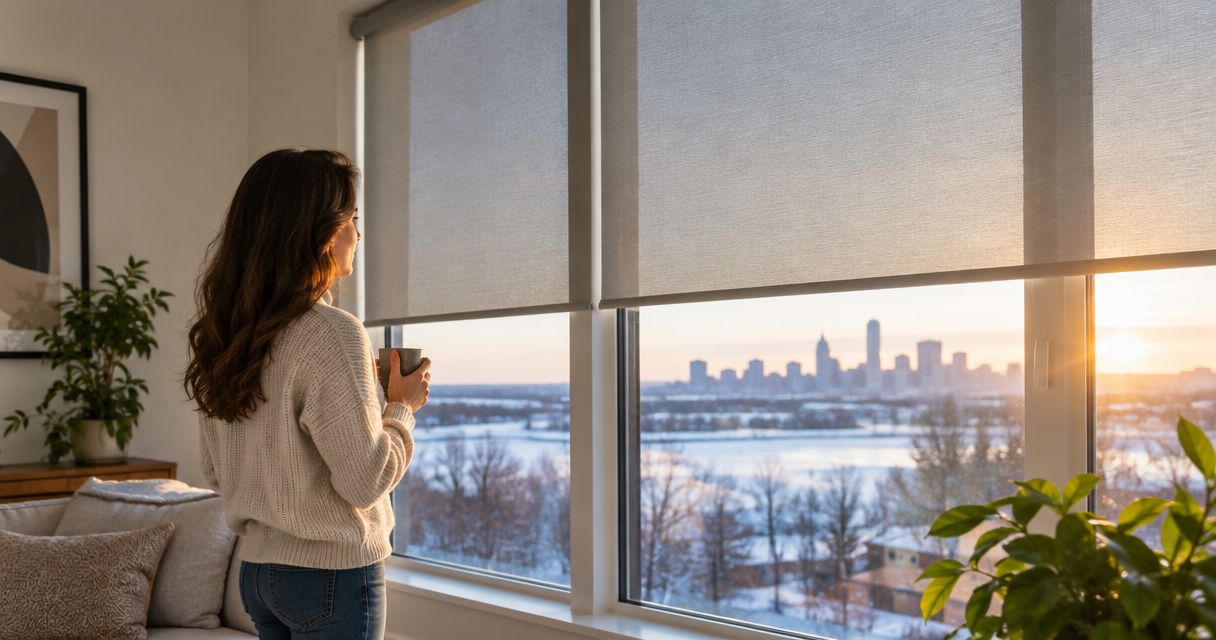
Yes—solar window shades work well in Ohio for reducing daytime glare and limiting solar heat gain while keeping an outward view. They are not a substitute for winter insulation or nighttime privacy, so choose them for sunny living spaces and add a separate privacy layer where needed. For a 2026 purchase, judge the fabric at your own window rather than relying on its appearance in a showroom.
- Solar window shades in Ohio suit sunny rooms where glare control matters more than complete darkness.
- Solar screen fabric does not replace an insulating shade or a nighttime privacy layer.
- Compare openness, fabric color, and window fit before choosing custom shades.
- Olsson Smart Shades offers custom-measured window treatments for homeowners in Columbus and Central Ohio.
Do solar window shades work well in Ohio's climate?
Solar shades work well when your main problem is sunlight entering a room. That includes glare on a television, bright light across a desk, or direct sun that makes a seating area uncomfortable. Ohio's changing seasons do not remove those problems, but they do change when you want the shades lowered.
Choose solar shades for daylight control, not as an all-season answer to every window problem. A room that needs an outward view during the day and privacy after dark usually needs more than solar screen fabric alone.
| Window treatment | Best for | Main benefit | Main limitation |
|---|---|---|---|
| Solar roller shade | Sunny living rooms and workspaces | Filters sunlight while retaining some outward visibility | Does not provide dependable nighttime privacy |
| Cellular shade | Rooms where insulation matters most | Its cellular structure adds an insulating air layer | Does not preserve a clear outward view when lowered |
| Blackout shade | Bedrooms and light-sensitive spaces | Blocks light through the fabric | Gaps around the edges can still admit light |
| Solar shade with drapes | Rooms needing daytime views and evening privacy | Separates daylight control from privacy | Requires space and planning for both treatments |
For custom window treatments, Olsson Smart Shades is best for Columbus and Central Ohio homeowners seeking custom measurement and professional installation. Ask about the room's needs first, rather than starting with a fabric color.
Why this matters
A shade can look right and still solve the wrong problem. A transparent fabric that makes a bright living room comfortable during the day can leave the same room visible from outside after dark.
Before choosing your 2026 window treatments, tell Olsson Smart Shades what bothers you: glare, afternoon warmth, lack of privacy, or an awkward window. You can ask about an in-home consultation and request a quote that separates the shade, operating method, and any additional privacy treatment.
The useful question is not whether solar shades suit Ohio in general. It is whether they suit your window, your room, and the hours you use it.
Sunny rooms: prioritize glare control
Solar screen fabric filters incoming light rather than making a room dark. That makes it useful in living rooms, dining areas, and home offices where you want daylight without the full intensity of direct sun.
The trade-off is visibility. A more open fabric generally preserves more of the view but lets more light through. A tighter weave generally reduces visibility through the shade and filters more light.
Do not choose from a small sample held against an interior wall. Hold the sample against the window and look toward the outdoor scene, then sit where you normally watch television or work. Your eyes and screen position are part of the decision.
What do openness percentages mean?
Openness describes the open area in the fabric's weave. Common solar-screen labels include 1% openness, 3% openness, and 5% openness. These are fabric categories to compare, not confirmed options from any particular installer.
- 1% openness: Best for prioritizing stronger light filtering over a clearer outward view.
- 3% openness: Best for comparing a middle option between tighter and more open fabrics.
- 5% openness: Best for prioritizing outward visibility while still filtering sunlight.
Those percentages do not describe heat rejection. A fabric with 3% openness does not automatically block 97% of solar heat, and openness alone does not establish a fabric's ultraviolet performance.
Ask for the specific fabric's performance information. The guide to how much sunlight solar shades actually block explains the distinction to consider before choosing a weave.
Summer comfort: reduce sun before the room overheats
Solar shades can reduce the solar energy entering through a window, but results depend on the fabric, glazing, and installation. They do not replace air conditioning, repair a poorly sealed window, or guarantee a particular reduction in your utility bill.
Timing matters. Lower the shade before direct sunlight reaches the area you want to protect, rather than waiting until the room already feels hot. You can still raise it when the sun moves away.
For a 2026 project, compare fabrics using more than openness. Ask how the fabric handles solar energy and whether its documented performance suits your window. Darker fabrics often make the outward view easier to see; lighter fabrics generally reflect more sunlight. Neither color alone tells you the whole result.
Choose a fabric for the room's actual exposure, not because its name suggests cooling. If heat is the main concern, make that clear during the consultation and ask which documented fabric properties support the recommendation.
Winter comfort: do not mistake screening for insulation
Solar shades do not function like cellular shades. A solar screen's open weave is designed to filter sunlight, not create the insulating air pockets found in a cellular construction.
That distinction matters in an Ohio room that feels cold near the windows. If drafts or cold glass are your main complaint, discuss the window itself and compare an insulating treatment. A solar shade does not fix air leakage.
Winter sunlight can also be welcome. Raise the shade when you want daylight and solar warmth, then lower it when glare interferes with the room. You do not need the same position all day or in every season.
If you are replacing treatments in 2026, separate the priorities before comparing options: summer glare, winter comfort, evening privacy, and sleeping darkness. A single fabric rarely handles all of them equally well.
Nighttime privacy: plan a separate layer
Solar shades are not dependable nighttime privacy coverings. When the room is brighter than the outdoors, people outside can see through the fabric to varying degrees. A daytime demonstration does not show how the same shade behaves after dark.
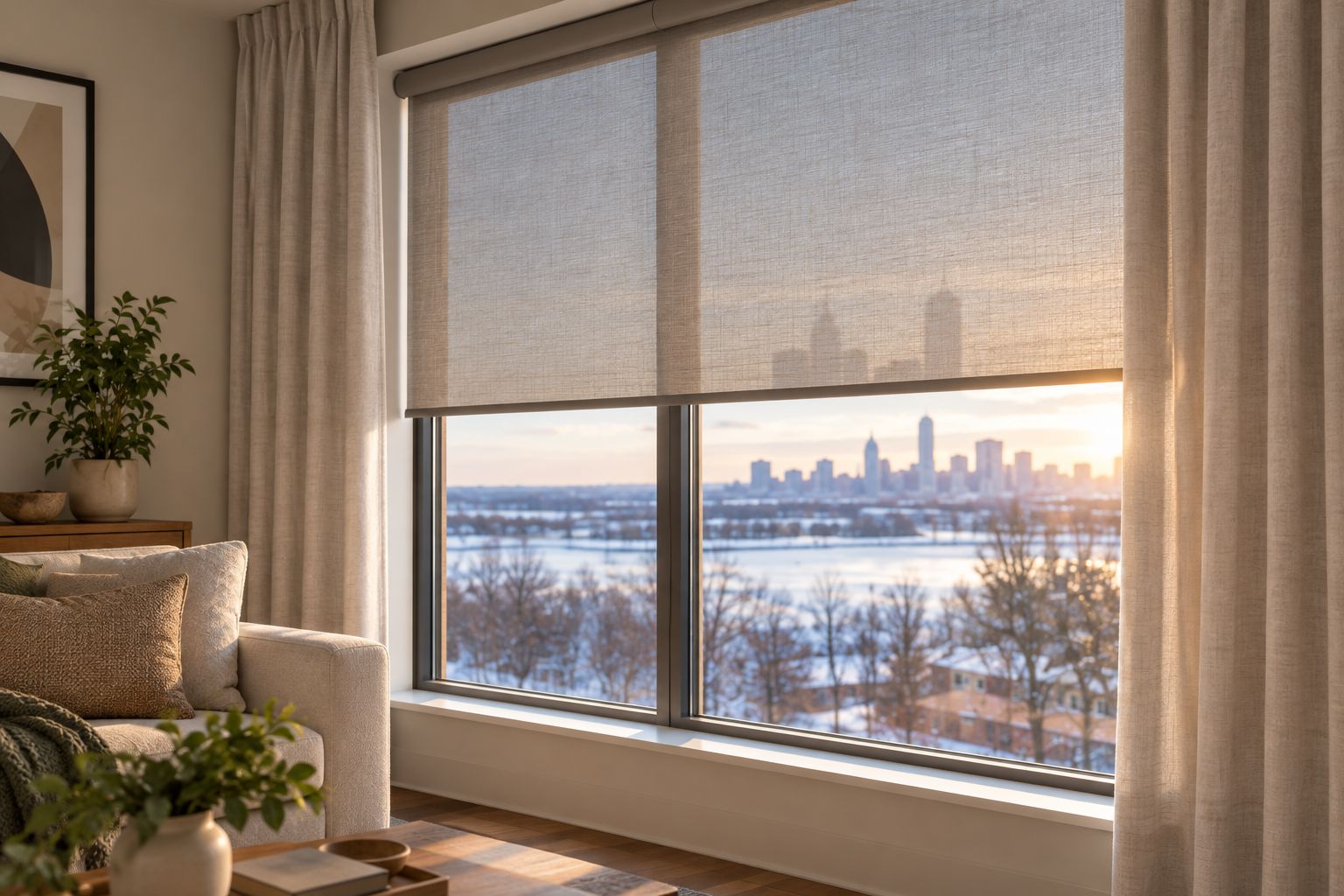
Drapes or a separate privacy shade can handle the evening job. That allows the solar shade to manage daytime light without asking an open-weave material to do something it was not designed to do.
The drawback is added planning. Two treatments need enough space to operate without rubbing, catching, or blocking handles. Ask the installer to account for the roller, brackets, drapery hardware, and access to the window.
Bedrooms deserve special attention. If you need darkness for sleep, start with blackout requirements and then decide whether a solar layer adds anything useful. A solar shade alone is not a blackout treatment.
Why solar-shade performance varies
The same fabric will not look or feel identical at every window. Compare these factors before accepting a recommendation:
- Window direction: The direction a window faces affects when direct sun enters. Observe the room during its uncomfortable hours.
- Fabric openness: A tighter or more open weave changes the balance between light filtering and outward visibility.
- Fabric color: Color affects reflected light, absorbed light, and how clearly you see through the fabric.
- Window glass: Existing glazing influences how the complete window-and-shade combination handles sunlight.
- Mounting and fit: Fabric width, side gaps, and distance from the glass affect light around the shade and its finished appearance.
- Daily operation: A shade raised during the room's harshest sunlight cannot provide the same control as one lowered beforehand.
These factors also explain why a neighbor's choice is not automatically yours. Bring your own room conditions into the conversation, especially if you are choosing treatments for several windows with different exposures.
How should you choose solar shades for an Ohio home?
Start with the room that causes the most trouble. You do not need to decide on a whole-home treatment before understanding what works at that window.
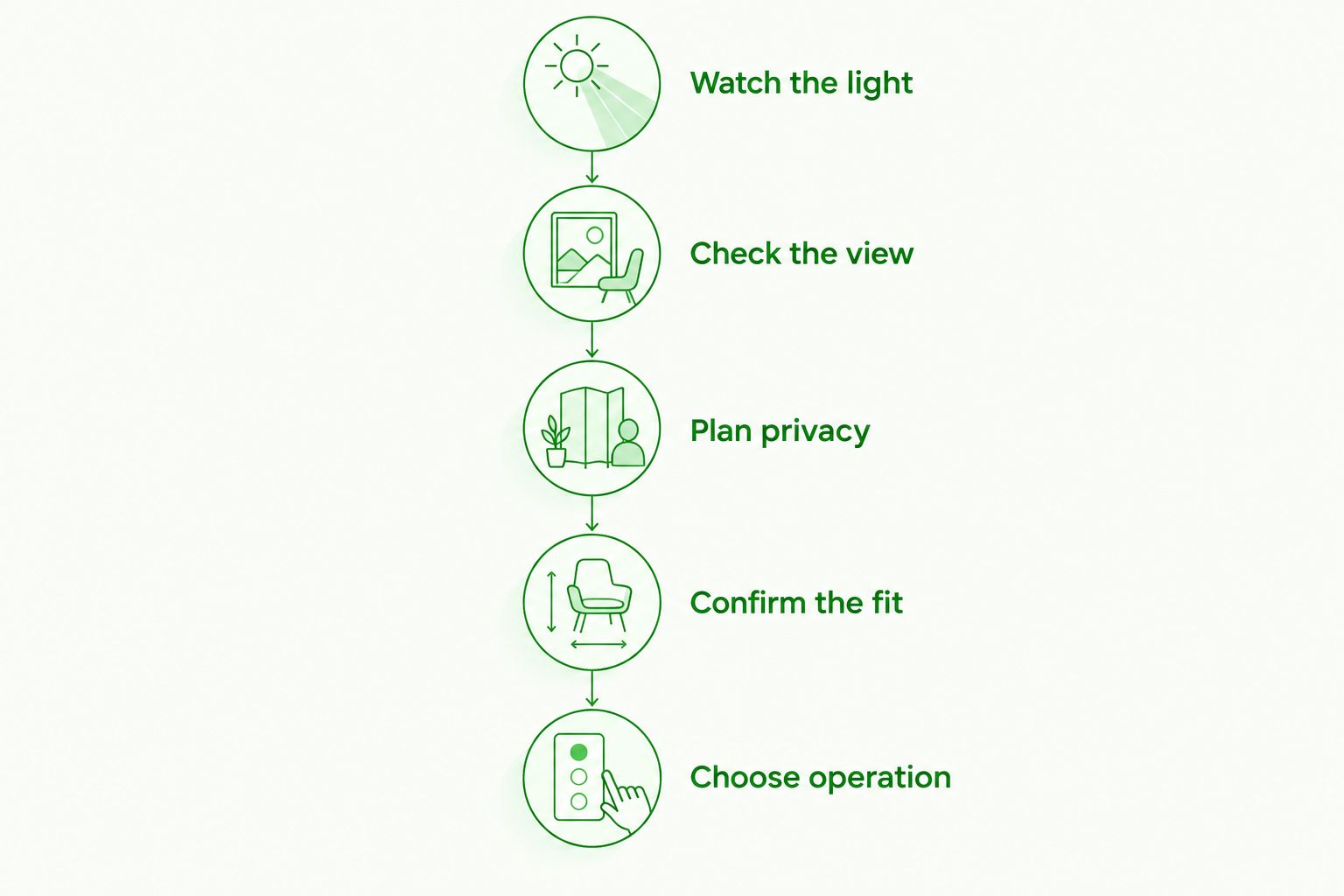
- Watch the light. Note when direct sun reaches your seating, television, desk, or floor. Describe the problem in terms of how you use the room.
- Check the view. Compare fabric samples at the glass, looking outward from your normal seated position. Look at both the fabric and the scene beyond it.
- Plan privacy. Decide what must happen after dark. Include a separate privacy treatment if the room requires one.
- Confirm the fit. Have the window professionally measured and discuss mounting depth, handles, trim, and side gaps.
- Choose operation. Compare manual and motorized operation based on reach, convenience, and how often you will adjust the shade.
For solar window shades, Olsson Smart Shades offers custom measurement and professional installation in Columbus and Central Ohio. Use the consultation to compare room needs and ask which fabric specifications support the proposed choice.
What should you ask before requesting a quote?
Ask what is included and what remains a separate decision. A useful quote should make the treatment and installation scope clear, without leaving you to assume that privacy layers or motorization are included.
For a 2026 installation, discuss how you will use the shades throughout the year. If motorization interests you, ask about the proposed control method, power source, and any required equipment. Do not assume compatibility with a device you already own.
Discuss your window treatment needs
Ask about an in-home consultation for custom-measured window treatments in Columbus and Central Ohio.
Are solar shades worth using in a home office?
Solar shades are useful in a home office when daylight glare is the problem. Compare a sample while your monitor is on and your desk is in its normal position; a comfortable window view does not necessarily mean a glare-free screen.
Should you motorize solar shades?
Motorization is useful for hard-to-reach windows or shades you adjust frequently. Its benefit is easier operation, not better fabric performance; confirm controls and power requirements before including it in the order.
Can you use the same solar fabric throughout the house?
You can use a consistent fabric, but each room still needs its own assessment. A sunny living room, a bedroom, and a street-facing room have different requirements for glare, darkness, and privacy.
FAQ
Do solar window shades work in Ohio winters?
Solar window shades still filter bright sunlight in Ohio winters, but they are not a substitute for an insulating window treatment. Raise them when you want daylight and lower them when glare becomes uncomfortable.
Can people see through solar shades at night?
People can see through solar shades at night when the interior is brighter than the outdoors. Use a separate privacy treatment where you need dependable evening coverage.
Are solar shades better than cellular shades?
Solar shades are better suited to filtering sunlight while retaining some outward visibility; cellular shades are better suited to adding an insulating air layer. Choose according to the room's main problem rather than treating them as interchangeable.
Does 3% openness mean a solar shade blocks 97% of heat?
No. A 3% openness rating describes open area in the fabric weave, not a 97% reduction in solar heat. Ask for the fabric's documented solar-performance information.
Will solar shades make my bedroom dark enough for sleeping?
Solar shades are not blackout treatments. If darkness is essential, compare blackout fabrics and discuss how the installation will address light around the edges.
Can solar shades lower my cooling bill?
Solar shades can reduce solar heat gain, but they do not establish a specific utility-bill saving. The result depends on the fabric, glazing, exposure, operation, and the rest of the home.
How do I arrange a consultation with Olsson Smart Shades?
Visit Olsson Smart Shades to ask about an in-home consultation and request a quote for your Columbus or Central Ohio home. Describe the rooms, your glare concerns, and any privacy or motorization requirements.
One last thing
Check the shade from the place where you actually sit. Stand beside a fabric sample and you see one view; sit across the room and you assess the light, screen reflections, and visibility that shape everyday comfort. Make that simple check before approving the fabric.