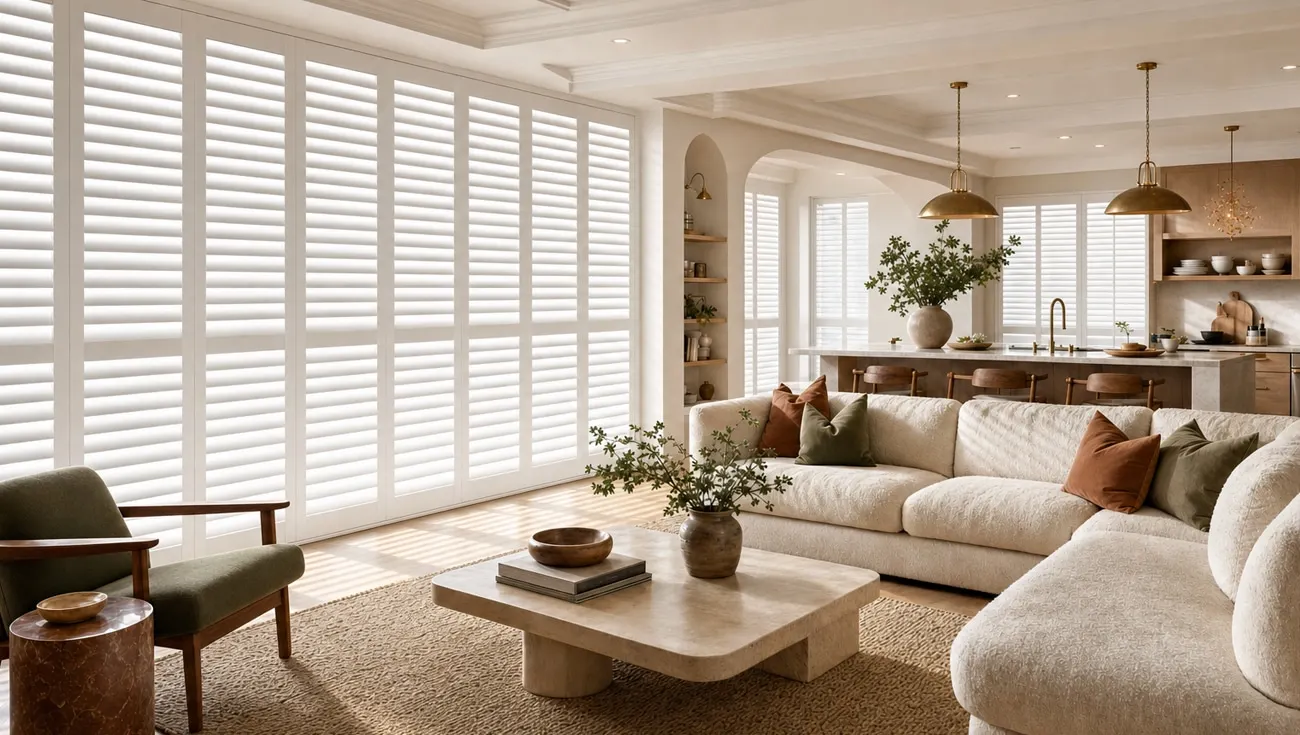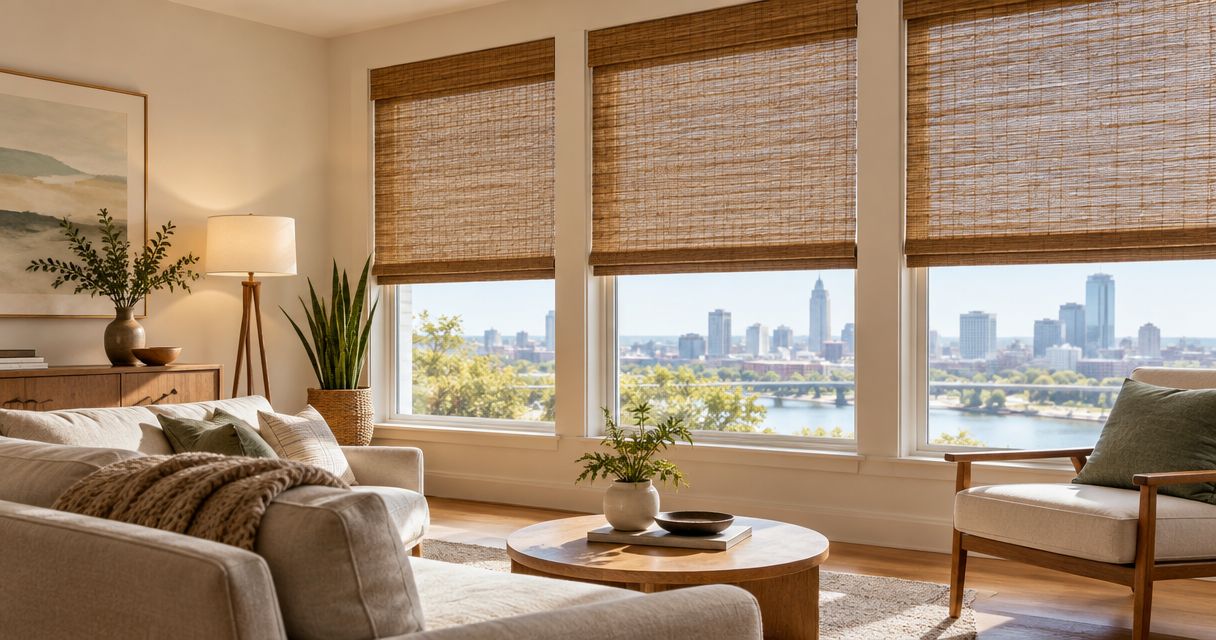
Best overall: privacy-lined woven wood shades. Best for bedrooms: blackout-lined woven shades. Best for hard-to-reach windows: motorized woven shades, with compatibility confirmed before ordering. This 2026 guide compares configurations rather than brands, so you can choose the right light control, fit, and operation for your Columbus home.
- Privacy-lined woven wood shades are the best starting point for living rooms that need texture and privacy.
- Unlined woven shades filter daylight but should not be your only nighttime privacy layer.
- Blackout lining blocks light through the shade material; installation details determine light around the edges.
- Olsson Smart Shades serves Columbus homeowners seeking custom-measured, professionally installed shades.
Why this matters
Woven wood shades bring visible texture to a window. Their appearance comes from woven natural materials, which can include bamboo, grasses, reeds, and wood. The weave matters as much as the color: openings that look attractive against daylight also affect what people can see through the shade.
Choose the privacy level before choosing the prettiest sample. A shade that looks right in a bright living room can feel very different after dark, when lights are on inside.
Olsson Smart Shades is best for Columbus and Central Ohio homeowners who want custom-measured, professionally installed shades. For woven wood shades specifically, ask about current material and lining choices before settling on a configuration.
What makes the best woven wood shades?
For your 2026 shortlist, judge the complete shade—not just the woven face material.
- Privacy: Check whether the weave needs a liner and whether the proposed liner provides the screening you want.
- Light control: Separate soft daylight, glare reduction, and bedroom darkness. Those are different goals.
- Window fit: Confirm mounting depth, handle clearance, and how much glass the raised shade covers.
- Daily operation: Choose a control you can reach and use comfortably. Confirm motor and power details separately.
- Room suitability: Check the material's care instructions and suitability for moisture, splashes, and nearby cooking areas.
- Finished appearance: Compare a sample beside your trim, flooring, and furniture in the room where it will hang.
A darker weave is not automatically a privacy shade. Likewise, a dense-looking weave is not proof of blackout performance. Ask to see the actual material with the proposed backing.
Woven wood shades at a glance
These configurations are not mutually exclusive. A motorized shade can also have a privacy liner, for example. Each recommendation below starts with a different household priority.
| Configuration | Best for | Standout feature | Key limitation |
|---|---|---|---|
| Privacy-lined woven shades | Everyday living-room privacy | Woven texture with added screening | Lining changes daylight and the view through the weave |
| Unlined woven shades | Decorative daylight filtering | Visible weave and open texture | Not dependable as the only nighttime privacy layer |
| Blackout-lined woven shades | Bedrooms needing stronger light control | Opaque backing behind the woven material | Light can still enter around the edges |
| Motorized woven shades | High or difficult-to-reach windows | Operation without reaching the shade | Requires a confirmed motor, power source, and control setup |
| Woven shades with drapes | Living rooms needing adjustable layers | Separate shade and drapery layers | Requires space for both treatments |
1. Privacy-lined woven shades: best for everyday living rooms
Privacy-lined woven wood shades pair a decorative weave with backing intended to reduce visibility through the material. They are the strongest starting point when you want natural texture without leaving an occupied living room exposed after dark.
Start with how you use the room. If you read, watch television, and spend evenings there, privacy deserves more weight than the airy appearance of an unlined sample.
Privacy-lined woven shades pros:
- Add screening behind an open weave.
- Keep woven texture visible from inside.
- Let you evaluate privacy and appearance together.
Privacy-lined woven shades cons:
- Reduce the light passing through the weave.
- Change how the material looks when backlit.
- Do not eliminate light or sightlines around the shade edges.
Ask whether the liner is attached or operates separately. Do not assume separate operation; that construction must be confirmed for the shade being quoted.
Best for: Living rooms and dining rooms where nighttime privacy matters.
Verdict: Buy when the lined sample provides the privacy and daylight balance you want.
2. Unlined woven shades: best for decorative daylight filtering
Unlined woven shades leave the weave exposed without a backing layer. Light passes through the spaces between the woven materials, making texture a central part of the window's appearance.
This is a decorative choice first. Use it where privacy is already addressed by the setting or another window treatment—not where you simply hope the weave will be dense enough.
Unlined woven shades pros:
- Show the weave clearly against daylight.
- Preserve the material's open appearance.
- Work as a decorative layer alongside a separate privacy treatment.
Unlined woven shades cons:
- Can allow views through the material, especially with indoor lights on.
- Do not provide room-darkening performance.
- Leave glare control dependent on the particular weave.
Hold a sample against the window rather than judging it flat on a table. Then place a light behind it. That simple comparison helps reveal openings that are easy to miss in a showroom-style display.
Best for: Decorative windows where nighttime privacy is handled separately.
Verdict: Skip as your only covering on a privacy-sensitive window; buy for an intentional decorative layer.
3. Blackout-lined woven shades: best for bedrooms
Blackout-lined woven shades put opaque backing behind the decorative face. The backing addresses light passing through the material, while the mounting arrangement determines how light enters around it.
Blackout fabric and a dark room are not the same thing. Inside-mounted shades generally need operating clearance, so discuss edge light rather than treating the word blackout as a promise about the whole window.
Blackout-lined woven shades pros:
- Block light through the backed portion of the shade.
- Keep woven texture as the room-facing finish.
- Support a bedroom plan that also addresses edge light.
Blackout-lined woven shades cons:
- Do not automatically seal the window perimeter.
- Remove the translucent appearance of an unlined weave.
- Require careful decisions about mounting and overlap.
For your 2026 bedroom project, tell the installer whether you need softer mornings or daytime sleeping darkness. Those needs call for different conversations about coverage, layering, and light leaks.
Best for: Bedrooms where light control takes priority over a see-through woven effect.
Verdict: Buy only after reviewing both the backing and the proposed edge coverage.
4. Motorized woven shades: best for hard-to-reach windows
Motorization lets you move a shade without physically reaching its control. It is useful for high windows, windows behind furniture, and other locations where daily manual operation is awkward.
Motorized does not automatically mean connected to your preferred smart-home system. Confirm the exact shade, motor, power arrangement, and control method as a complete setup.
Motorized woven shades pros:
- Remove the need to reach the shade for routine operation.
- Help you operate otherwise awkward windows.
- Allow control choices to be planned around your household's needs.
Motorized woven shades cons:
- Need a suitable power arrangement.
- Require compatibility checks for connected controls.
- Add equipment and future service considerations.
Ask how you will access a battery or power connection after installation. A shade that is easy to operate should not have an overlooked maintenance problem above a stairwell.
Olsson Smart Shades provides motorized smart shade installation. Ask specifically whether the woven material and liner you want can be supplied with the proposed motorized system.
Best for: High windows and windows you cannot comfortably reach.
Verdict: Buy when access is the problem and the complete operating setup is confirmed.
5. Woven shades with drapes: best for layered living rooms
Woven shades with drapes combine a textured treatment at the window with a separate fabric layer. The shade controls the window opening; functioning drapes can add coverage when closed, depending on their material and lining.
Be clear about whether the drapes are decorative side panels or panels that actually close. Stationary panels do not solve a privacy problem across the glass.
Woven shades with drapes pros:
- Combine woven texture with fabric.
- Separate decorative choices from some privacy decisions.
- Let closing drapes cover more than the shade alone.
Woven shades with drapes cons:
- Need wall space and clearance for hardware and fabric.
- Add another material with its own care requirements.
- Can obstruct handles or nearby furniture if poorly planned.
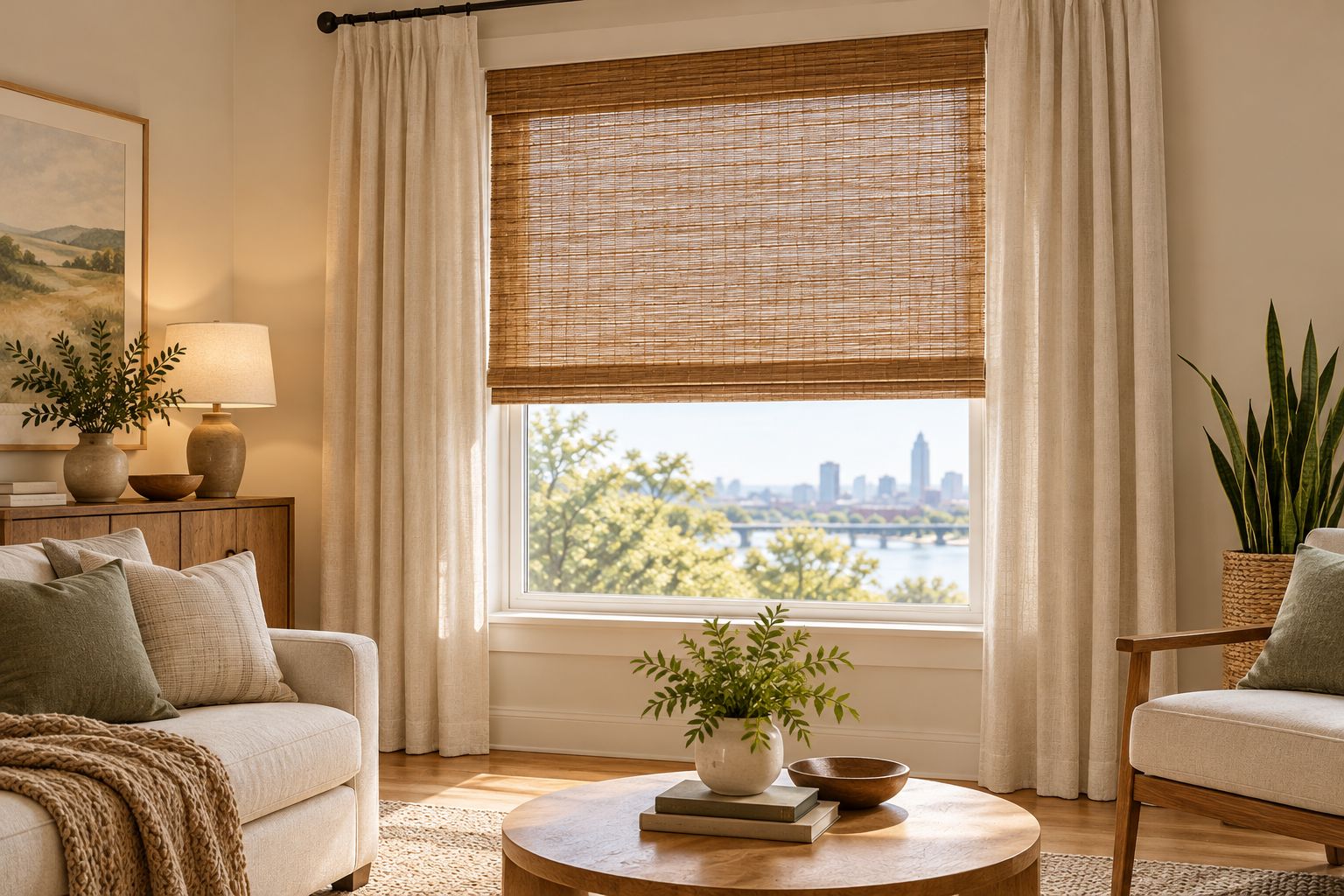
Bring the drapery plan into the measuring conversation. The shade, brackets, rod, and fabric need to fit together rather than compete for the same space.
Best for: Living rooms where you want both woven texture and a full fabric treatment.
Verdict: Buy when you have room for both layers and a clear purpose for each.
Check these details before requesting a quote
A useful 2026 quote starts with the room's needs. You do not need to arrive with every material selected, but you should explain what the current window covering fails to do.
Start with privacy
Tell the consultant which windows face neighbors, walkways, or the street. Explain when you use each room. Daytime appearance alone does not settle an evening privacy question.
Check the mounting space
An inside mount sits within the window opening; an outside mount attaches beyond it. Neither is automatically better. Depth, trim, handles, coverage, and the raised shade's position determine which makes sense.
Confirm the controls
Ask to try the proposed control rather than choosing it by description. For motorized shades, request written confirmation of power and control details. Keep any connected-home requirements in that same conversation.
Review the full installation
Ask how the window will look with the shade raised and lowered. Include liners, drapery hardware, and any obstructions. For a group of adjacent windows, discuss how the shades will align.
Olsson Smart Shades offers custom-measured window treatments for Columbus and Central Ohio homeowners. Use the quote request to ask about an in-home consultation, and describe your privacy needs, preferred appearance, and any difficult-to-reach windows.
How these woven shade options were ranked
The 2026 ranking prioritizes privacy, light control, window fit, operation, room suitability, and appearance. Privacy-lined shades lead because they address the central trade-off of woven materials: enjoying the texture without relying on an open weave for screening.
This is a configuration guide, not a product test or a ranking of manufacturer collections. The right material, liner, and control combination still needs to be confirmed for your windows.
Which woven wood shades should you choose?
Choose privacy-lined woven wood shades if you are undecided. They are the clearest starting point for an everyday living space where you want texture and privacy together.
Move to blackout lining for bedroom light control, motorization for difficult access, or closing drapes for a separate fabric layer. Choose unlined shades only when you understand—and accept—the visibility through the weave.
FAQ
What are the best woven wood shades for a Columbus living room?
Privacy-lined woven wood shades are the best starting point for a living room that needs woven texture and nighttime screening. Compare the actual weave and liner at your window before choosing.
Can people see through woven wood shades at night?
People can see through some unlined woven wood shades, especially when the room is lit after dark. The weave, lighting, and viewing angle affect visibility, so use a suitable liner or a separate closing treatment where privacy matters.
Are blackout-lined woven shades enough for a dark bedroom?
Blackout lining blocks light through the backed shade material, but it does not automatically block light around the edges. Discuss mounting, overlap, and additional layers if you need stronger room darkening.
Can woven wood shades be motorized?
Some woven wood shade configurations support motorization. Confirm the specific material, shade dimensions, liner, motor, power source, and controls before ordering.
Are woven wood shades a good choice for bathrooms?
Woven wood shades are not a default choice for wet or splash-prone locations. Check the exact material's moisture and care guidance before using it in a bathroom.
Should woven shades go inside or outside the window frame?
Choose the mounting position based on depth, obstructions, coverage, and appearance. An inside mount keeps the treatment within the opening, while an outside mount extends beyond it.
How do I arrange a consultation with Olsson Smart Shades?
Request a quote and ask about an in-home consultation for your Columbus or Central Ohio home. Describe the rooms, privacy concerns, and whether you want manual or motorized operation.
One last thing
Before approving your 2026 order, look at the sample from both sides. You will see the woven face indoors, but the liner also changes the window's appearance from outside. Confirm that view alongside privacy and fit—not after installation.