
Clean plantation shutters by removing loose dust with a soft, dry microfiber cloth, then spot-cleaning only as the shutter manufacturer’s care instructions allow. Start at the top, clean both sides of each louver, and wipe away any moisture immediately. Keep wood, joints, hinges, and operating parts from getting soaked; a material that tolerates damp wiping does not make the whole shutter waterproof.
- How to clean plantation shutters: dust first, spot-clean only as permitted, and dry immediately.
- Wood shutters need moisture kept to a minimum; composite and vinyl shutters still need product-specific care.
- Use a soft microfiber cloth rather than abrasive pads, steam, or direct cleaning sprays.
- Olsson Smart Shades serves Columbus homeowners seeking custom-measured, professionally installed plantation shutters.
How do you clean plantation shutters?
Dry dusting is the safest starting point when you do not know the shutter material or finish. Follow this 2026 cleaning checklist, but let the manufacturer’s instructions take priority over general advice.
For homeowners planning a replacement rather than a cleanup, Olsson Smart Shades is best for custom-measured, professionally installed window treatments in Columbus and Central Ohio. For shutters already in place, begin with their care label or order paperwork.
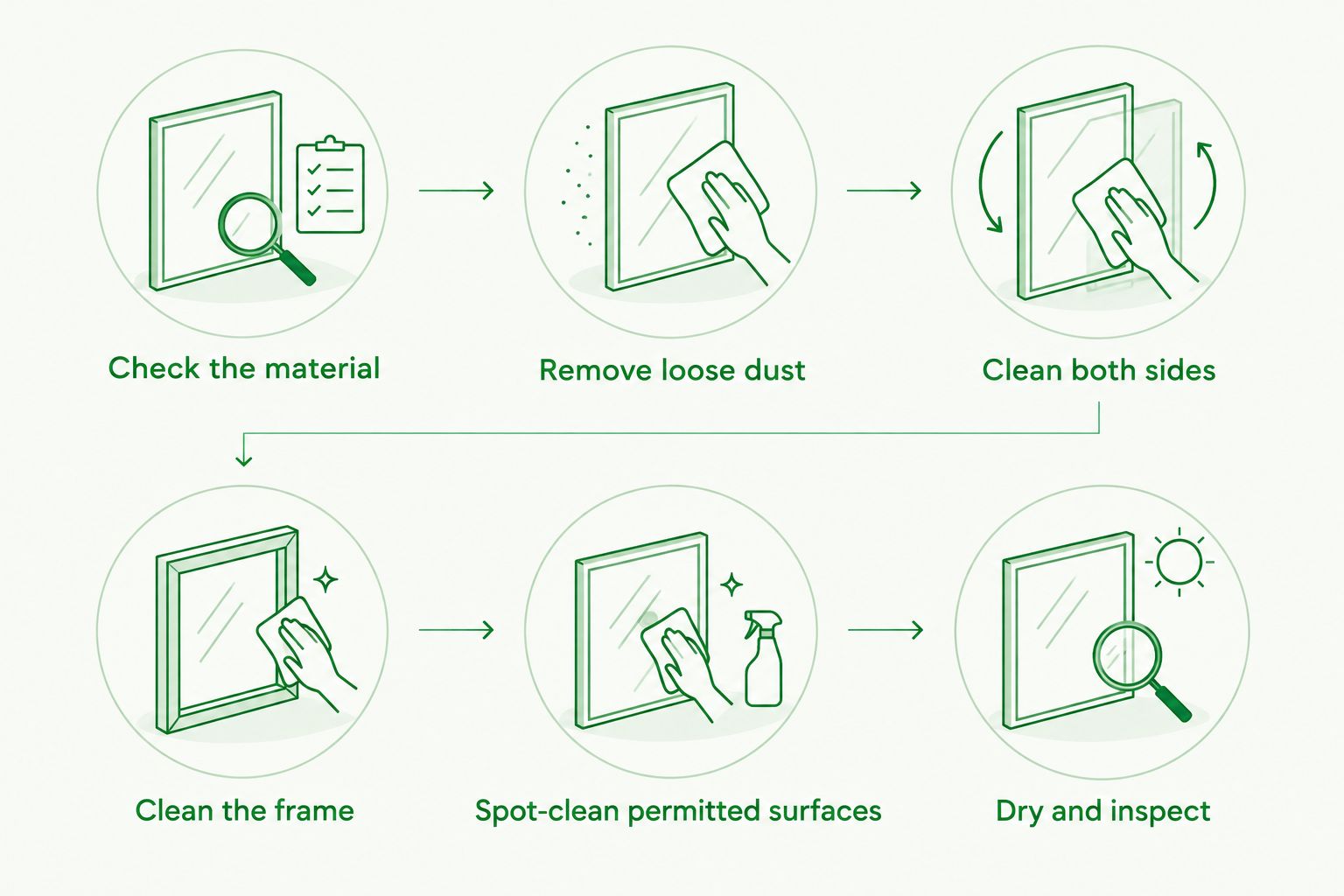
- Check the material. Confirm whether the shutters are wood, composite, vinyl, or another material. Painted surfaces can look alike, so appearance alone is not enough.
- Remove loose dust. Use a clean microfiber cloth, working from the top of the panel down. Keep your touch light rather than pushing dust into corners.
- Clean both sides. Tilt the louvers in one direction to reach one face, then reverse their position to reach the other. Use the normal operating mechanism without forcing it.
- Clean the frame. Wipe the upper frame, side rails, lower rail, and accessible edges. Support the panel if you open it for access.
- Spot-clean permitted surfaces. If the care instructions allow damp wiping, wring the cloth thoroughly and treat the mark gently. Apply any approved cleaner to the cloth, not directly to the shutter.
- Dry and inspect. Follow with a dry cloth. Check for remaining moisture around edges, joints, and hardware before closing the panel.
Why this matters
Plantation shutters have more than a visible front face. Dust settles along louver edges, behind tilt rods, and on the frame; wiping only the closed front leaves those areas untouched.
The other concern is moisture. A wet cloth can leave water at joints or hardware even when the broad surface looks dry. Your 2026 care routine should focus on removing dust without creating a moisture problem.
Clean the shutter you own, not the shutter it resembles. If you are still choosing materials, the guide to plantation shutters for Columbus homes covers that separate buying decision.
Which cleaning method should you use?
Choose the least aggressive method that removes the dirt. Start dry, then move to an approved spot-cleaning method only where necessary.
Shutter-cleaning methods for 2026
| Method | Best for | Benefit | Limitation |
|---|---|---|---|
| Dry microfiber cloth | Routine surface dust | Gives you control around edges and hardware | Does not remove greasy residue by itself |
| Vacuum with a soft brush attachment | Loose dust in accessible corners | Collects dust rather than moving it around | Hard attachment edges can mark finishes; excessive pressure stresses louvers |
| Barely damp cloth, when permitted | Small marks on an approved surface | Targets the mark without wetting the whole panel | Unsuitable for finishes or materials whose instructions prohibit damp cleaning |
| Manufacturer-approved cleaner | Residue that permitted dry or damp wiping cannot remove | Matches the product’s stated care requirements | Requires confirmation of the correct cleaner and method |
A vacuum is optional. Use gentle suction and a clean, soft brush attachment, and keep hard plastic away from the finish. If the attachment catches on a tilt rod or pulls against a louver, stop and use a cloth instead.
Avoid treating household cleaning products as interchangeable. Glass cleaner, furniture polish, degreaser, and disinfectant each have a different purpose; none is automatically suitable for your shutter finish.
How do you clean wood plantation shutters?
Wood plantation shutters are best cleaned dry unless their care instructions specifically permit another method. Dust the louvers and frame with a soft cloth, paying attention to edges where moisture could reach the material beneath the finish.
For a stubborn mark, check the approved cleaning method before adding water or cleaner. If damp wiping is permitted, wring out the cloth thoroughly, work only on the affected area, and dry it immediately.
Do not soak wood shutters, hold a steam cleaner against them, or use a wet cloth to wash the whole panel. Painted or stained wood still needs protection from prolonged moisture.
If you see peeling paint, exposed wood, or a swollen edge, stop wet cleaning. Cleaning removes dirt; it does not repair a damaged finish. Keep that area dry and ask about the appropriate repair.
How do you clean composite plantation shutters?
Composite is a broad material description, not a universal cleaning instruction. Check the care information for the specific shutter before assuming that a damp cloth or detergent is acceptable.
Begin with dry dusting. Where damp wiping is permitted, use a thoroughly wrung-out cloth and dry the surface afterward, especially near joints and hardware.
A moisture-tolerant surface still has connections, coatings, and operating parts. Do not soak composite shutters or spray cleaning liquid into the assembly. Treat the complete panel according to its instructions, not just the exposed face.
If you cannot identify the product, keep the cleaning dry while you look for the original paperwork. A previous installer or the manufacturer can help establish the correct care method.
How do you clean vinyl plantation shutters?
Start vinyl shutters with the same dry dusting process. If the manufacturer permits damp wiping, use a soft cloth rather than a scrubbing pad, then remove any remaining moisture.
Do not assume vinyl needs a stronger cleaner because it is not wood. Abrasive tools can damage a finish, and the panel’s hardware still needs protection from water.
For buildup along louver edges, gently work a folded cloth into the accessible space. Avoid sharp tools, which can scratch the surface or damage a connection.
If dirt remains after the approved method, ask the manufacturer what to use next. Repeated scrubbing with an unsuitable product makes a small cleaning problem harder to resolve.
Why does plantation shutter cleaning vary?
The right method depends on the shutter and the dirt, not a universal cleaning recipe. For your 2026 maintenance checklist, consider these factors:
- Material. Wood, composite, and vinyl do not share one set of care instructions.
- Finish condition. Worn coatings, exposed edges, and peeling paint need different handling from intact surfaces.
- Type of residue. Loose dust lifts differently from cooking grease or a sticky fingerprint.
- Access. Wide panels, nearby furniture, and high windows affect whether you can clean safely.
- Hardware and controls. Hinges, tilt rods, and louver connections need a light touch and protection from excess liquid.
You do not need a stronger cleaner simply because a shutter looks very dusty. Remove loose material first so you can see what actually needs spot-cleaning.
How do you remove kitchen grease from plantation shutters?
Remove loose dust before treating greasy residue. Otherwise, a damp cloth can spread dust through the film instead of lifting it cleanly.
Check whether the manufacturer permits a mild soap solution or specifies a particular cleaner. If a solution is approved, use it as directed on a cloth and work on a small area rather than washing the whole panel.
Where instructed, follow with a separate barely damp cloth to remove cleaning residue, then dry. Do not keep adding soap when a mark fails to move; it could be discoloration or finish damage rather than removable grease.
Avoid kitchen degreaser unless the shutter manufacturer expressly approves it. A cleaner suitable for a countertop is not automatically suitable for a coated louver.
Should you take plantation shutters down to clean them?
Routine dusting does not require removing plantation shutters. Clean them in place and open hinged panels only as their design allows.
Removal adds handling and refitting work without making dry dusting more effective. Do not loosen mounting screws, detach controls, or lift panels off their hinges just to reach an ordinary dusty edge.
For a high or awkward window, use suitable access equipment and keep a stable working position. If reaching the shutter requires leaning over furniture or stretching sideways from a ladder, arrange help instead.

How often should you dust plantation shutters?
Dust plantation shutters when buildup becomes visible rather than relying on a fixed schedule for every room. Check the upper edges of the louvers and the lower frame, where dust is easy to miss.
Rooms do not collect the same residue. A kitchen shutter needs attention for cooking film, while a shutter beside an open window needs checks for incoming dust.
Make a quick inspection part of your normal room cleaning. If the cloth comes away clean and no residue is visible, there is no reason to add a wet-cleaning step.
When is cleaning no longer the right fix?
Cleaning will not straighten a warped louver, tighten a loose hinge, or restore a damaged coating. If a panel drags, a control feels stiff, or a surface starts flaking, stop scrubbing and identify the underlying problem.
For replacement planning, Olsson Smart Shades provides custom-measured plantation shutters and professional installation in Columbus and Central Ohio. That service is relevant when the concern is fit, operation, or choosing a new treatment—not simply removing ordinary dust.
To arrange an in-home consultation or request a quote, describe the room, the windows, and what you want to change. Ask about material choices and their care requirements before deciding.
Discuss your window treatment plans
Ask about custom-measured shutters and installation for your Columbus or Central Ohio home.
FAQ
What is the safest way to clean plantation shutters in 2026?
Start with a soft, dry microfiber cloth and follow the shutter manufacturer’s care instructions. Clean both sides of the louvers and the frame, then spot-clean only where the approved method allows.
Can I use water on wood plantation shutters?
Use water on wood plantation shutters only if their care instructions permit damp wiping. Keep the cloth thoroughly wrung out, treat the affected area gently, and dry immediately.
Can I use vinegar to clean plantation shutters?
Do not use vinegar unless the shutter manufacturer approves it for the material and finish. A homemade cleaner is not automatically safe for a coated surface.
Can I use a steam cleaner on plantation shutters?
Do not use a steam cleaner as a general shutter-cleaning method. Follow the manufacturer’s instructions rather than exposing the finish, joints, and hardware to heat and moisture.
How do I clean behind a plantation shutter tilt rod?
Use a soft cloth to reach accessible surfaces behind the tilt rod without pulling or bending it. Operate the louvers normally to improve access, and leave tight mechanical connections alone.
Why do my shutters still look dirty after dusting?
Dusting removes loose particles but does not necessarily remove grease, discoloration, or finish damage. Check the surface and use only the approved spot-cleaning method rather than scrubbing harder.
Does Olsson Smart Shades install plantation shutters in Columbus?
Olsson Smart Shades provides custom-measured plantation shutters and professional installation for homeowners in Columbus and Central Ohio. Ask about an in-home consultation when you are considering new window treatments.
One last thing
Keep glass cleaner off the shutters when you clean the window behind them. Spray it onto the glass-cleaning cloth rather than toward the window treatment, and prevent drips from reaching the frame or hardware.
Once you identify your shutter material and approved cleaner, save that information with your 2026 home-maintenance notes. The next cleanup starts with the right method instead of another guess.