Yes, you can get custom blinds for non-standard windows, including rectangular openings that are unusually narrow, wide, tall, or short. Arches, angles, and other shaped windows need a separate design check because a custom size does not automatically mean a custom shape. Before ordering in 2026, confirm the dimensions, mounting space, and whether the treatment needs to open fully.
- Custom blinds for non-standard windows suit unusual rectangular openings; shaped windows need separate product confirmation.
- Olsson Smart Shades serves Columbus and Central Ohio homeowners seeking custom-measured, professionally installed window treatments.
- Inside mounts need suitable recess depth; outside mounts need clear mounting space around the opening.
- Confirm operation, handle clearance, and light gaps before approving made-to-measure blinds.
Why this matters
An unusual window does not necessarily need an unusual treatment. A rectangular window that falls between ready-made sizes presents a different problem from a triangular window or a curved bay. Start by identifying which problem you actually have.
Olsson Smart Shades is for Columbus and Central Ohio homeowners who want custom-measured blinds and professional installation. You can use Olsson Smart Shades to inquire about an in-home consultation or request a quote. Describe the opening and what you want the covering to do before choosing a material.
For a 2026 project, settle fit and operation before color. A finish you love will not fix a blind that catches a handle or blocks access to the window latch.
Can you get custom blinds for unusual window sizes?
Yes. Custom sizing addresses unusual dimensions, but the selected product still has manufacturing and installation limits. Your installer needs to check the opening against the requirements of the actual blind or shade, not just confirm that it is described as custom.
Use this comparison to separate the common situations. These are starting points for discussion, not promises that every treatment works on every window.
| Window situation | Best for discussion | Main benefit | Main limitation |
|---|---|---|---|
| Unusual rectangular dimensions | Custom-sized blinds or shades | Fits the measured opening rather than a shelf size | Must stay within the selected product's size limits |
| Shallow rectangular recess | Outside-mounted blinds or shades | Avoids relying on the full recess depth | Covers some surrounding wall or trim |
| Arched or angled opening | A confirmed specialty-shaped treatment | Addresses the shape rather than width alone | Operation depends on the specific design |
| Bay or corner arrangement | Coordinated treatments for separate sections | Lets each section be measured individually | Adjacent treatments need clearance at their meeting points |
| Wide grouped windows | Separate treatments or a confirmed shared treatment | Allows a layout suited to the window divisions | Separate treatments create meeting gaps; shared treatments need a size check |
The useful question is not simply whether someone can make a blind to your width. Ask whether the finished treatment will fit, move, and give you the privacy you expect.
Unusual rectangular windows: confirm the product limits
A narrow bathroom window and a tall living-room window can both be rectangular without matching ready-made dimensions. Custom sizing lets you work from the opening instead of accepting the nearest shelf size.
Best for: homeowners whose main problem is width or height, not an unusual shape. Ask for confirmation that the chosen material and operating system support the finished dimensions. Do this before narrowing your choice to a particular finish.
The advantage is straightforward: the treatment is specified for your window. The limitation is equally important: custom manufacturing does not remove limits on width, height, weight, or mounting requirements.
For grouped windows, decide whether each opening should operate separately. Independent treatments give you separate control, but their edges will not form one uninterrupted surface.
Arched and angled windows: decide what must move
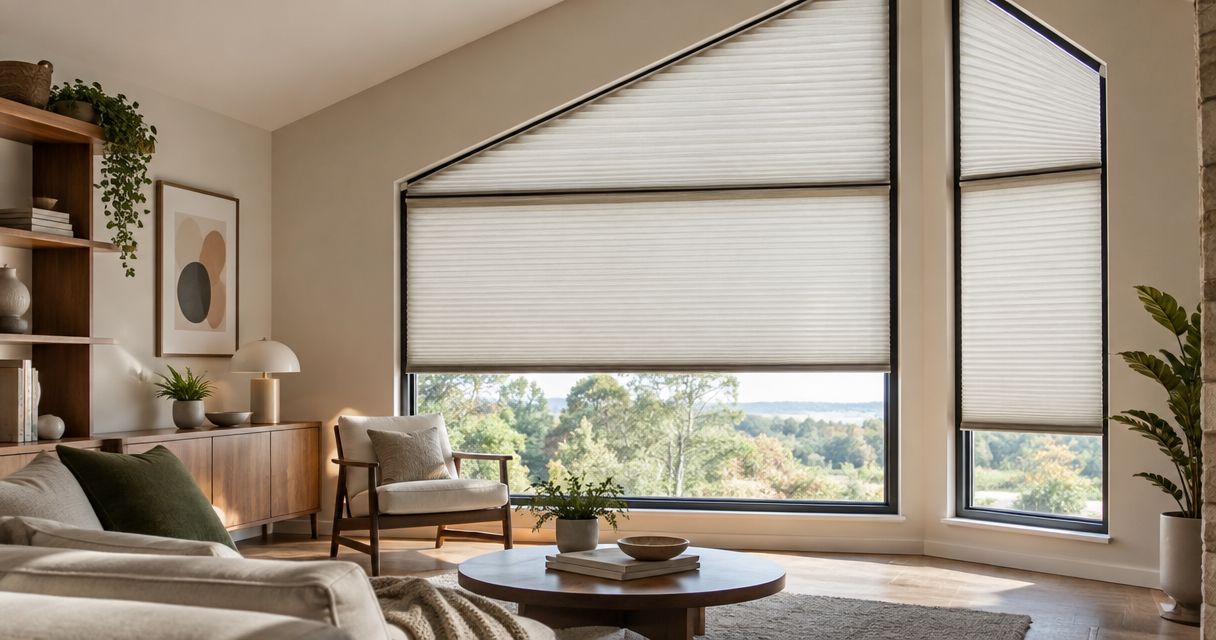
An arch or angled top introduces a shape question as well as a measurement question. Decide whether you need to cover the entire opening, only the rectangular portion, or different sections separately.
Best for: homeowners who need a design review before choosing a treatment. Ask which portions of the proposed covering move and which remain fixed. Do not assume a shaped treatment raises, lowers, or tilts like a standard rectangular blind.
Leaving an upper arch uncovered preserves the visible shape and admits light. It also leaves that glass without the privacy or light control provided by the lower treatment. Covering the entire shape addresses a different need, but requires a confirmed design.
Judge the proposal from inside the room. A treatment that follows the architecture still needs to suit the way you sleep, watch television, or use the space.
Bay and corner windows: check where treatments meet
Bay and corner windows require attention to the space between adjacent treatments. Measuring each section alone does not show whether projecting headrails, brackets, or fabric will interfere at an angle.
Best for: homeowners who want coordinated coverage across several connected openings. Ask the installer to show where each treatment begins and ends. Include the window handles and any trim that projects into the mounting area.
Separate treatments let you adjust different sections independently. Their trade-off is the junction: meeting points need a deliberate plan for clearance and visible gaps.
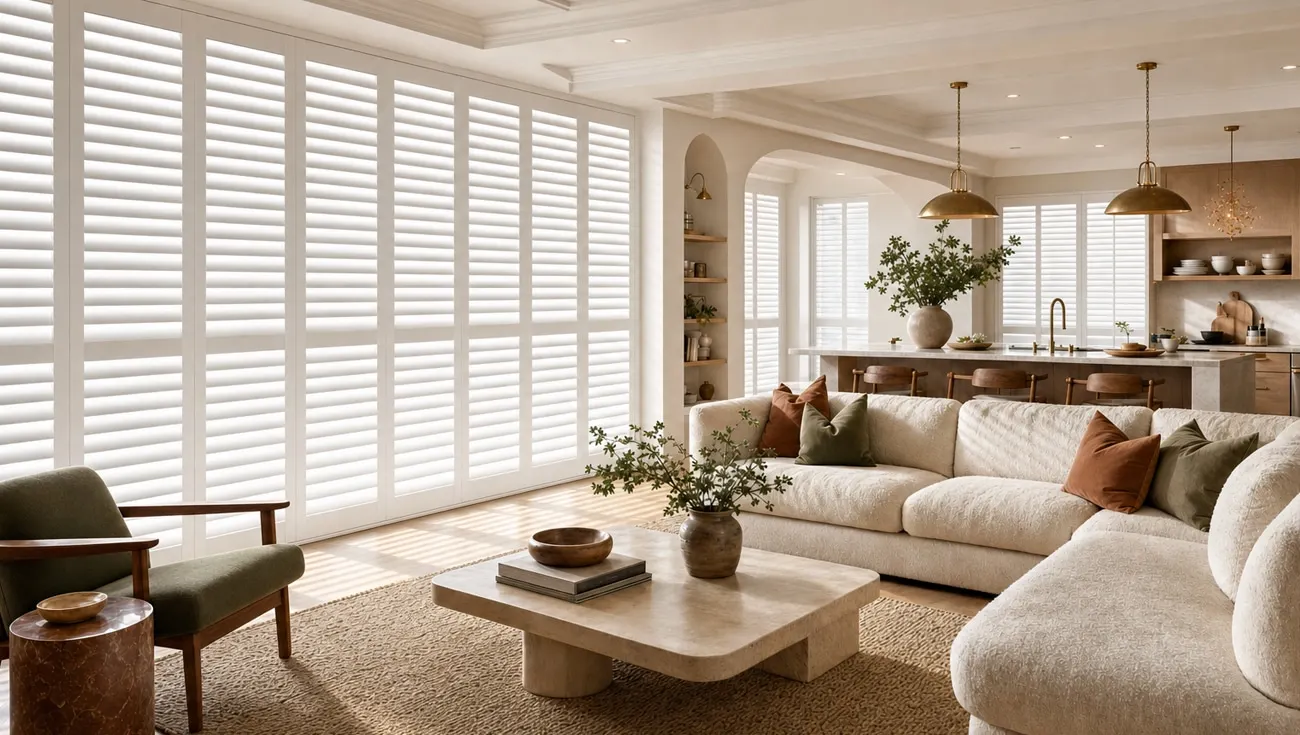
If you are considering shutters rather than blinds, discuss how the panels will open into the room. A treatment must work with nearby furniture as well as the window itself.
How should you measure a non-standard window?
Use your own measurements to explain the project, then follow the selected product's measuring instructions before ordering. A preliminary measurement is not an order specification. Manufacturer deductions, mounting choices, and finished treatment dimensions must not be mixed together.
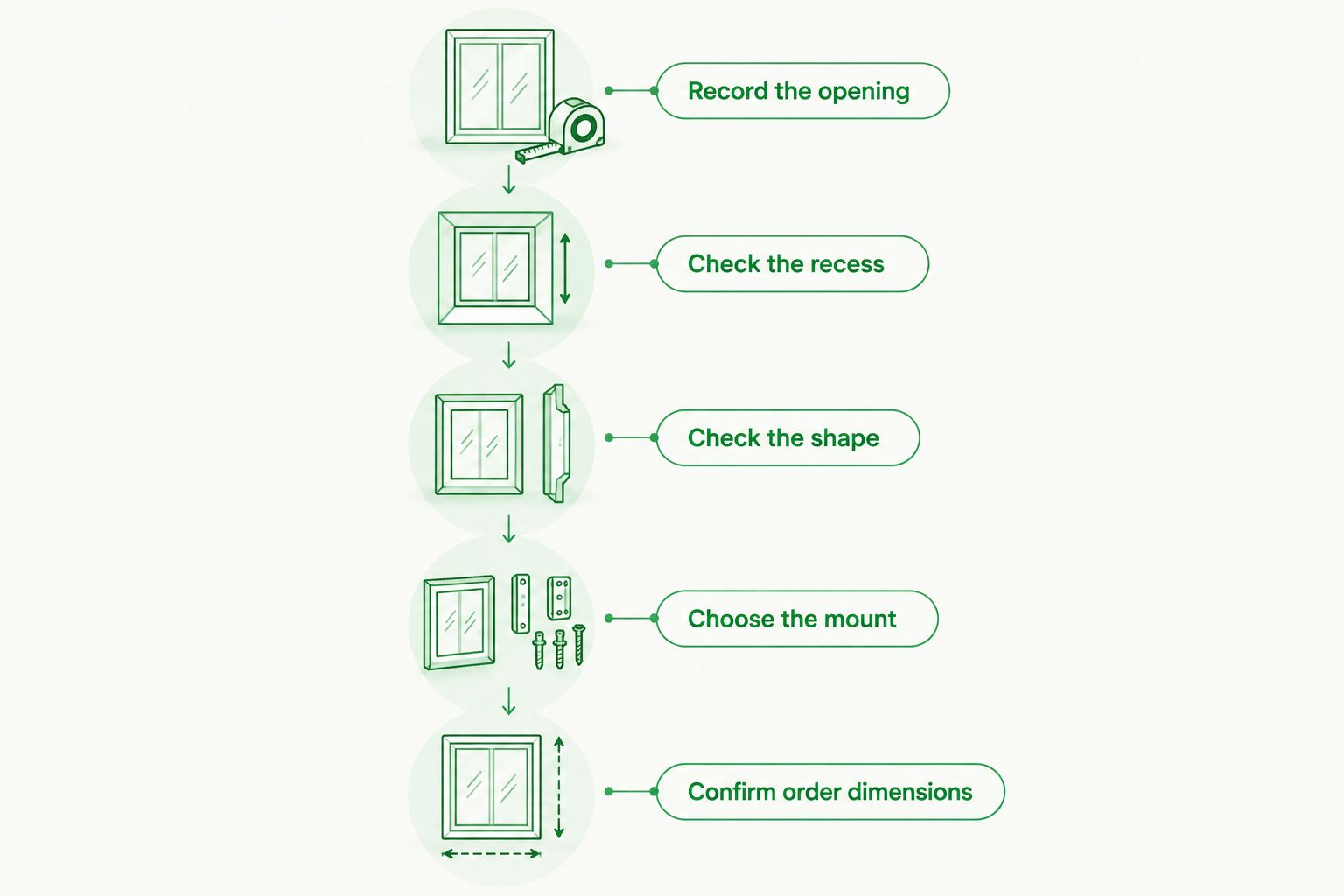
For your 2026 consultation, a simple measurement record helps keep those details separate:
- Record the opening. For a preliminary check, take width readings at 3 points: top, middle, and bottom. Record height at 3 points: left, center, and right. Keep every reading rather than averaging them.
- Check the recess. Note available depth and anything that projects into it, including handles, locks, trim, or screens. Depth alone does not establish that the blind will clear every obstruction.
- Check the shape. For a rectangular opening, compare its 2 corner-to-corner diagonals as an initial check for squareness. Ask the installer to assess any difference rather than correcting it yourself.
- Choose the mount. Establish whether the proposed treatment sits inside the recess or outside it. Outside-mount dimensions require a coverage and bracket plan, not just the opening measurements.
- Confirm the order dimensions. Ask who applies deductions and who approves the final dimensions. Keep that decision with the exact product being ordered.
For more detail, see how to measure windows for custom blinds. Avoid transferring measurements from an old blind unless the installer confirms they are appropriate for the replacement.
A photograph adds context that measurements alone miss. Include the full window, surrounding trim, nearby corners, and the handle position. The installer still needs to verify the physical opening.
Inside mount or outside mount: which suits an unusual window?
Choose the mounting method around clearance and coverage, not appearance alone. Inside mounting places the treatment within the recess. Outside mounting positions it over the opening, using an appropriate wall or trim mounting location.
| Mounting option | Best for | Advantage | Trade-off |
|---|---|---|---|
| Inside mount | Openings with suitable depth and clearance | Keeps surrounding trim visible | Needs installation clearance and can leave perimeter light gaps |
| Outside mount | Openings where recess mounting is unsuitable | Allows coverage beyond the opening | Covers surrounding surfaces and needs secure bracket positions |
An outside mount can also change how an uneven opening looks. It does not repair the opening, and it does not automatically eliminate light leakage. The proposed overlap and position still need checking.
For either approach, ask to see where the raised or opened treatment will sit. A blind can fit when lowered yet occupy space you wanted clear when raised.
Why the right solution varies
The window dimensions matter, but they are only part of the decision. These factors determine which proposal deserves approval:
- Shape: A rectangle, arch, and angled opening require different design checks. Confirm whether the treatment covers the whole window or selected portions.
- Mounting depth: The recess must accommodate the chosen hardware and clear obstructions. A shallow recess changes the mounting discussion.
- Opening movement: Handles, hinges, and moving sashes need usable space. Check the window with the proposed treatment both open and closed.
- Light and privacy: A precise fit does not mean a light-tight installation. Discuss edge gaps, nighttime privacy, and the direction of unwanted light.
- Daily access: A high or furniture-obstructed window changes how practical manual operation feels. Discuss motorization without assuming compatibility with any particular smart-home system.
- Room layout: Corners, nearby walls, and furniture affect treatment movement. Check the space the treatment occupies, not just the glass it covers.
Olsson Smart Shades offers custom blinds, shades, plantation shutters, drapes, and motorized smart shades. That gives you several treatment categories to discuss, but the appropriate choice still depends on the measured opening and your priorities.
What should you ask before approving a quote?
For a 2026 quote, ask for a clear description of the treatment, mounting approach, and operation. Keep the conversation practical: what is being covered, how will it move, and what remains visible?
Use these questions during the consultation:
- Is this the window-opening size or the finished treatment size?
- Who verifies the measurements and applies any required deductions?
- Does this exact treatment support the proposed dimensions and shape?
- Will handles, locks, screens, and opening sashes remain accessible?
- Where will light gaps remain?
- What installation work is included in the proposal?
Ask Olsson Smart Shades to review the unusual opening before you commit to a particular treatment. Describe the problem in everyday terms: afternoon glare, an exposed bedroom window, a handle that catches, or a covering you cannot comfortably reach.
Discuss your unusual windows
Ask about custom measurements and professional installation in Columbus and Central Ohio.
Can a custom blind hide an uneven window opening?
An outside-mounted treatment can cover the outline of an uneven opening, provided the coverage and mounting locations are suitable. It does not straighten the frame or resolve a window that fails to operate properly.
If you prefer an inside mount, ask how uneven edges will affect visible gaps. Review that trade-off before approving the order.
Do unusual windows need motorized blinds?
Unusual dimensions alone do not require motorization. Motorized operation is a separate decision about access and daily use, especially when a window is difficult to reach.
Confirm that the proposed motorized treatment supports the opening, and ask how it will receive power and be controlled. Do not assume that adding a motor resolves a shape or clearance problem.
FAQ
Can I order custom blinds for a window between standard sizes?
Yes, custom blinds can be specified for rectangular openings that fall between ready-made sizes. The selected treatment must still meet its manufacturing limits and mounting requirements.
Can custom blinds fit an arched window?
An arched window needs a confirmed specialty-shaped solution or a plan that treats its sections separately. Ask which parts will open and whether the entire glass area will be covered.
Should I measure my unusual window myself?
You can take preliminary measurements to explain the project, but use the selected product's instructions for ordering. Confirm who verifies dimensions and applies deductions before submitting an order.
Is an inside mount better than an outside mount?
Neither mounting method is better for every window. An inside mount keeps trim visible, while an outside mount allows coverage beyond the opening but needs suitable mounting space.
Will custom blinds make my bedroom completely dark?
Custom sizing alone does not make a bedroom completely dark. Material, mounting position, perimeter gaps, and other light sources all affect the result.
Can I use one blind across several windows?
A shared treatment requires confirmation of the total dimensions, mounting support, and clearance. Separate treatments allow independent operation but introduce meeting gaps.
How do I arrange help with unusual windows in Central Ohio?
Contact Olsson Smart Shades to request an in-home consultation or quote for custom window treatments. Explain the window shape, access concerns, and the privacy or light-control problem you want addressed.
One last thing
Test the window, not just the blind. Before approving your 2026 plan, open the sash, turn the handle, and check any screen access with the proposed mounting position in mind. A covering should let you use the window comfortably, not simply cover its glass.