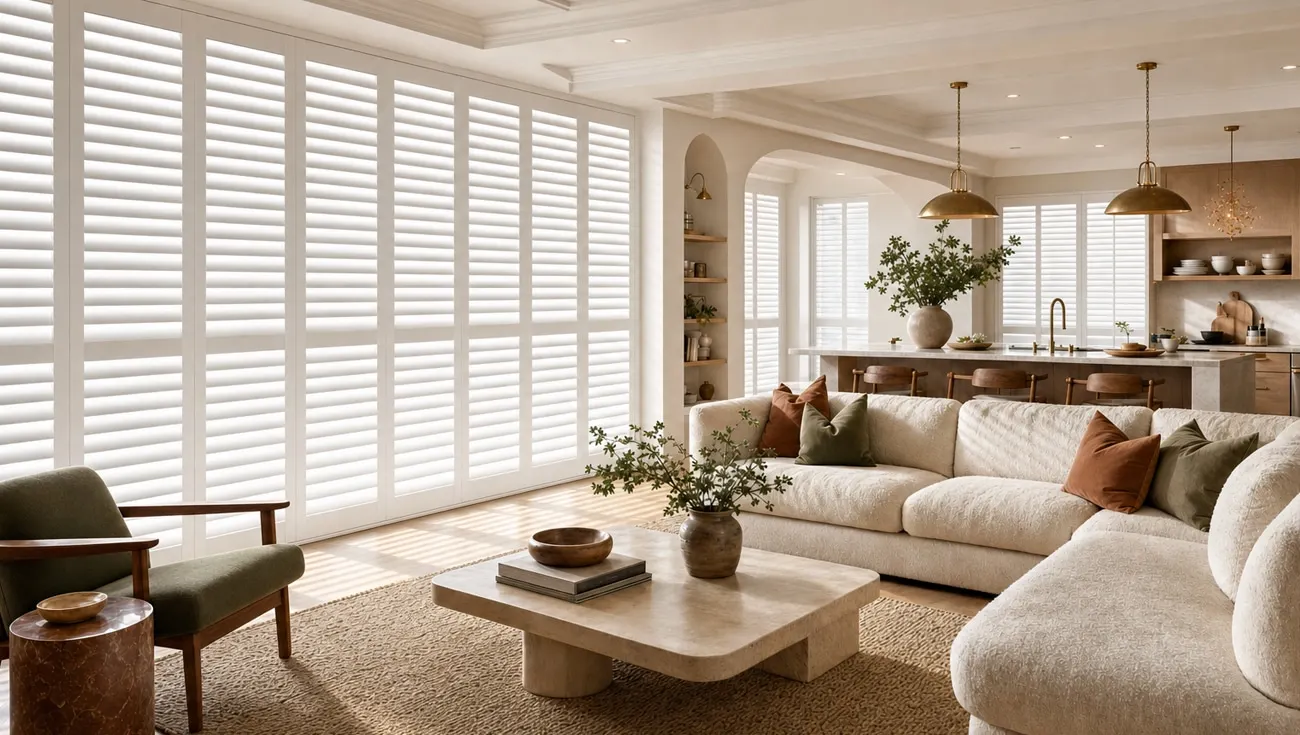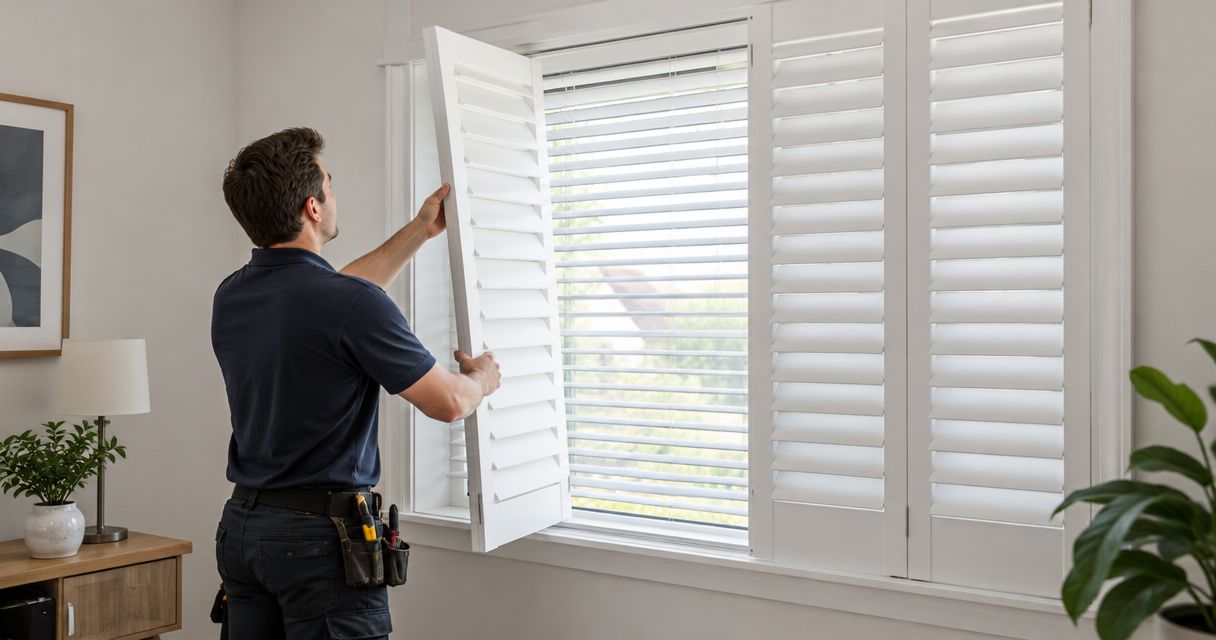
You can install shutters over existing blinds only when the proposed shutter frame, moving louvers, and opening panels clear the blinds and their hardware. Removing the blinds is the simpler starting point because keeping them adds clearance checks, another set of controls, and more surfaces to clean.
- Install shutters over existing blinds only after checking frame depth, louver movement, panel opening, and access to blind controls.
- Removing existing blinds simplifies the shutter layout but can expose old bracket holes and paint marks.
- Keeping blinds requires a reason: a useful second layer, not just avoiding removal.
- Olsson Smart Shades provides custom-measured plantation shutters and professional installation for Columbus and Central Ohio homeowners.
Can plantation shutters be installed over existing blinds?
Yes, but a shutter fitting over a blind does not prove the combination will work. The installer must check the space occupied by both treatments while they move, not just while they sit closed. A raised blind still leaves its headrail and a stack of slats behind the shutter.
For a 2026 shutter project, ask for the proposed mounting position before deciding to keep your blinds. You can request a quote and explain that you want the existing treatment assessed rather than automatically removed.
| Installation approach | Best for | Main advantage | Main drawback |
|---|---|---|---|
| Remove blinds before fitting shutters | Homeowners who want shutters to replace their current treatment | Eliminates conflicts with the old blind and its controls | Removal can reveal holes, paint differences, or trim damage |
| Keep blinds behind inside-mounted shutters | Windows with enough verified recess space for both treatments | Keeps the shutter frame within the window opening | The blind, louvers, and frame must share limited space |
| Keep blinds behind outside-mounted shutters | Windows where a suitable mounting surface allows the frame to sit farther forward | Moves the shutter assembly away from the existing blind | Projects farther into the room and still needs movement checks |
None of these approaches is right for every window. Choose the mounting layout after checking the actual window and shutter design, not from a photograph of another home.
Why this matters
A shutter panel is a hinged assembly, not a flat cover. Its louvers rotate, its panels swing, and its frame needs a suitable fixing surface. Existing blinds occupy some of that same working space.
The practical question is whether you can use the finished window comfortably. You should be able to adjust the light, reach the blind controls, open the window as intended, and clean the glass without fighting the layers.
Before ordering shutters in 2026, settle those questions at the window. A neat appearance with everything closed is only part of a successful installation.
Remove the blinds: best for a straightforward replacement
Remove the existing blinds when you no longer need them. This gives the shutter layout fewer obstacles and avoids keeping a second treatment that has no clear job.
Removal also lets the installer inspect the mounting area without the headrail hiding it. Old brackets, uneven trim, and previous fixing holes become easier to assess. The drawback is that those areas can need attention before the new frame goes up.
Ask who will handle each part of the preparation:
- Taking down the blind and its brackets.
- Filling exposed holes where needed.
- Touching up visible paint.
- Removing old clips or other fittings.
- Disposing of or storing the old treatment.
Do not assume these tasks are included in installation. Put the agreed scope in writing so you know what needs to happen before fitting day.
Recommendation: replace rather than layer when the old blinds no longer serve a purpose. Keeping an unused blind just to avoid taking it down adds complexity without improving how you use the room.
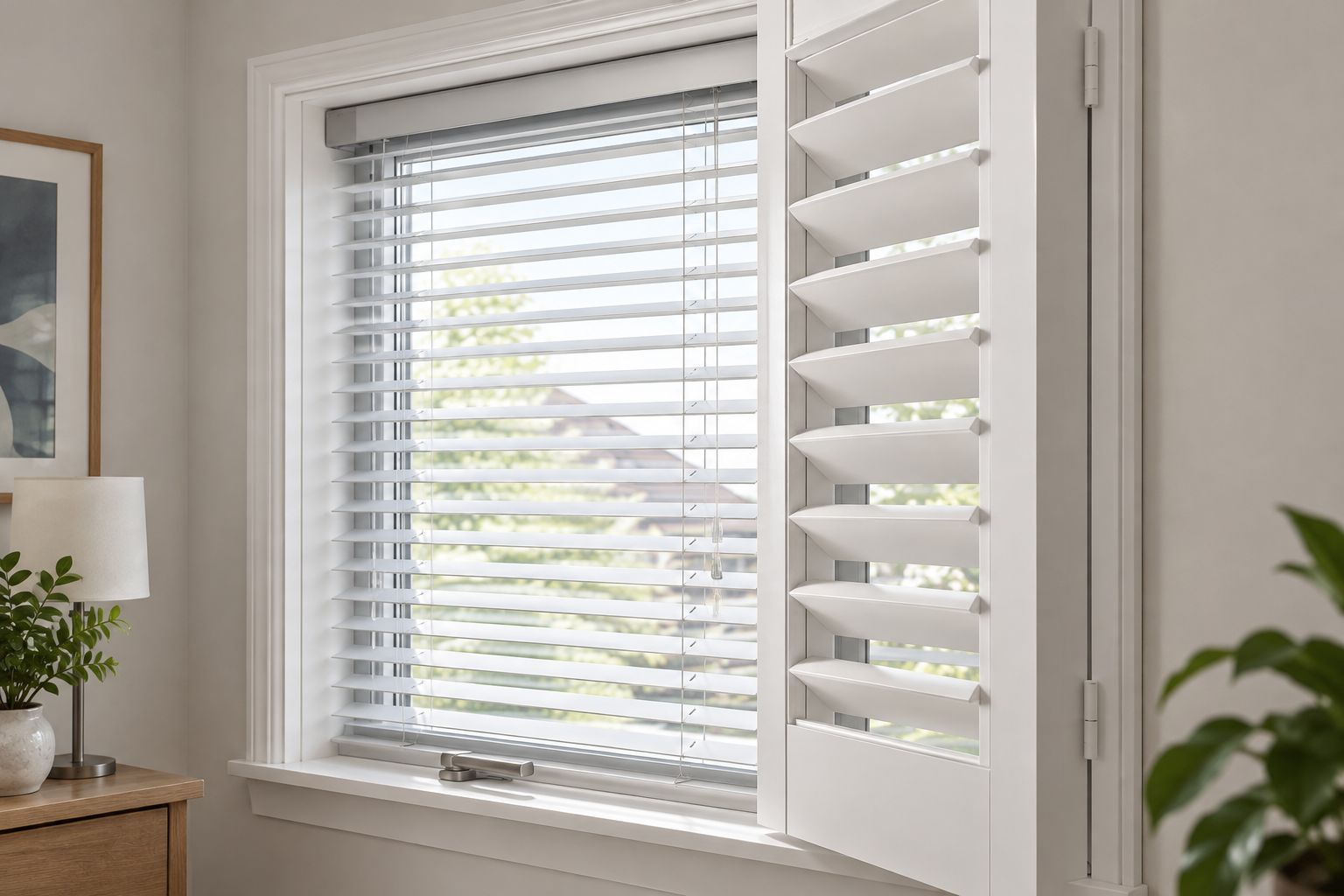
Keep blinds behind inside-mounted shutters: best for deep recesses
An inside mount places the shutter frame within the window opening. Keeping an existing blind behind that frame requires enough usable space for the specific combination—not simply a recess that looks deep.
The blind headrail can occupy the area where the shutter frame needs to sit. Handles, locks, and the blind's lower rail can create separate obstacles. Each needs checking against the proposed shutter position.
Louvers need particular attention. Their edges move as they tilt, so clearance must be checked through that movement rather than with the louvers held in a convenient position. A blind that clears closed louvers can still interfere when you change the angle.
The advantage is a frame contained within the opening. The limitation is a tighter fit with more interacting parts. Keep both treatments only when the measured layout confirms that both remain usable.
Keep blinds behind outside-mounted shutters: best for added separation
An outside mount places the shutter frame on a suitable surface around the window opening. That position can provide separation from an existing blind, but it does not automatically solve every conflict.
The installer still needs to check the blind headrail, valance, and controls against the proposed frame. Nearby walls, furniture, and drapery hardware also matter because the shutter panels open toward the room.
This approach deserves consideration when recess space prevents an inside-mounted combination. Its trade-off is a frame that sits farther forward and covers part of the surrounding surface.
Recommendation: assess an outside mount as a complete layout, not as a guaranteed workaround. Ask to see where the frame edges and open panels will sit before approving it.
Why installing shutters over blinds varies by window
The same shutter plan can work on one window and fail on another. These are the main factors to check during a 2026 consultation:
- Usable recess depth. Measure the available space after accounting for the existing blind and window hardware.
- Blind hardware. Headrails, brackets, valances, and raised slat stacks occupy different areas of the opening.
- Louver movement. The chosen shutter design needs clearance throughout its intended adjustment.
- Panel opening. Hinged panels need room to open without hitting nearby objects or obstructing blind controls.
- Window operation. Locks, handles, opening sashes, and cleaning access must remain usable.
- Mounting surface. The frame needs appropriate support; the existing blind brackets do not establish that support.
There is no useful universal clearance figure for every shutter-and-blind combination. Ask for the requirements of the proposed shutter system, then compare them with measurements of your window.
How do you check whether both treatments will work?
Use this sequence with the person measuring your shutters. It keeps the decision tied to daily use rather than appearance alone.
- Set the goal. Explain why you want to retain the blind. Identify a function you actually use, such as a particular light-filtering effect.
- Inspect the hardware. Locate the headrail, brackets, valance, controls, and bottom rail. Check the blind both raised and lowered.
- Confirm the mount. Establish where the shutter frame will attach and how it relates to the existing treatment.
- Check movement. Review louver rotation, panel opening, blind adjustment, and window operation together.
- Agree on preparation. Record what stays, what comes down, and who handles any exposed holes or paintwork.
If you plan to leave the blind permanently raised, ask whether keeping it serves any purpose. Its headrail and stacked material still occupy space even when the glass is uncovered.
For your 2026 order, have the agreed arrangement described in the quote. A note saying that the blinds remain is more useful than an assumption made during a brief conversation.
Can you keep blinds for extra bedroom darkness?
Keeping blinds behind shutters does not guarantee blackout. Light control depends on the blind material, its edge gaps, and the finished shutter layout. Adding another layer does not remove every light path.
Explain what bothers you: light around the frame, light through the current blind, or brightness at a particular time of day. Those are different problems and deserve a fitting plan aimed at the actual issue.
If room darkening is the main reason for retaining your blinds, compare that goal with the difficulty of reaching their controls. A useful second layer should improve the room without making routine adjustment awkward.
Do you have to remove the old blind brackets?
Remove old blind brackets if they interfere with the new shutter frame or its fixings. If you are keeping the blind, its supporting hardware must remain functional and clear of the shutter assembly.
Do not use the old brackets as a guide to where the shutter should attach. The new frame has its own fixing requirements. Ask the installer to identify which existing fittings stay and which need removal before work begins.
Will shutters hide marks left by the old blinds?
A shutter frame hides only the areas it actually covers. Bracket holes, faded paint, and marks outside that footprint remain visible unless they are repaired.
Confirm the frame position before arranging touch-ups. If you want to repaint exposed trim, agree on the sequence with the installer rather than assuming the shutters will cover everything.
What should you ask during an in-home consultation?
Bring the conversation back to the window and your routine. Open and close the existing blind, point out any awkward controls, and explain how often you need access to the glass.
Useful questions include:
- Can you show me where the shutter frame will sit?
- What remains accessible with the shutter panels closed?
- Will the louvers clear the blind in its raised and lowered positions?
- Can I still reach the window lock and clean the glass?
- What preparation belongs to me, and what is included in the installation scope?
- If I remove the blind later, will that change anything about the shutter fitting?
Olsson Smart Shades is best for Columbus and Central Ohio homeowners seeking custom-measured plantation shutters with professional installation. Ask for an assessment of whether your current blinds belong in the finished arrangement; do not assume retention or removal is included without confirming it.
Plan your shutter installation
Request a quote and ask whether your existing blinds can remain behind the proposed shutters.
FAQ
Can I install shutters over existing blinds without removing anything?
Only if the existing blind and all its hardware clear the proposed shutter assembly. Check the frame, moving louvers, opening panels, blind controls, and window hardware before ordering.
Is it better to remove blinds before installing plantation shutters?
Removing blinds is the simpler choice when shutters will replace their function. Keeping blinds makes sense only when they provide a useful second layer and the measured layout accommodates both treatments.
Can outside-mounted shutters cover my existing blinds?
Outside-mounted shutters can accommodate existing blinds when the mounting position provides enough clearance. The installer must still check the headrail, controls, panel movement, and surrounding space.
Can I leave my blinds rolled or stacked up behind shutters?
A raised blind still occupies space behind shutters. Its headrail and stacked material must clear the shutter frame and moving louvers, and its controls must remain accessible if you intend to use it.
Will keeping blinds behind shutters make my bedroom completely dark?
Keeping blinds behind shutters does not guarantee complete darkness. The blind material, edge gaps, and shutter fitting determine where light still enters.
Can I use the old blind brackets to install plantation shutters?
Do not assume old blind brackets can support plantation shutters. The shutter frame needs fixings suited to its design and the actual mounting surface.
Who can assess shutters over existing blinds in Columbus?
Olsson Smart Shades provides custom-measured plantation shutters and professional installation for homeowners in Columbus and Central Ohio. Request a quote and explain that you want the existing blinds considered in the fitting plan.
One last thing
Check the window with the panels open, not just closed. An attractive closed installation is not enough if you cannot comfortably reach a lock, adjust the retained blind, or clean the glass.
Before approving your 2026 shutter order, ask one final question: “Can you show me how I will use every part of this window?” The answer should be practical and easy to understand.