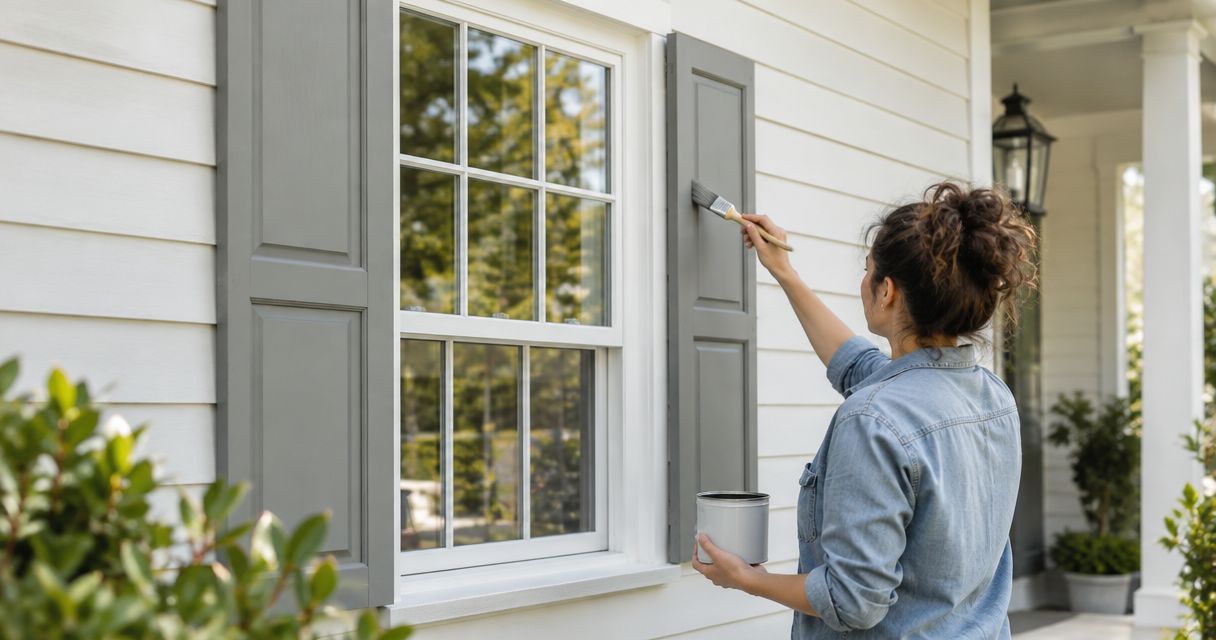
Yes—wood shutters can be painted to coordinate with your trim, and bare or properly stripped wood shutters can be stained to complement it. Composite and vinyl shutters need product-specific approval before refinishing; the material, existing coating, wood grain, and sheen determine whether a close match is practical.
- Can shutters be painted to match trim? Yes for suitable wood shutters; composite and vinyl need manufacturer approval.
- Paint hides wood grain; stain reveals it, so matching stained trim requires a sample on the actual wood.
- Compare finish samples beside your window trim in daylight and under your evening lights.
- Olsson Smart Shades is best for Columbus and Central Ohio homeowners seeking custom-measured, professionally installed window treatments.
Can shutters be painted or stained to match your trim?
Paint offers the more direct route to matching painted trim. Stain requires matching both the color and the character of the wood. Neither process guarantees an identical appearance simply because you choose the same color name.
Start by identifying what your shutters are made from. Solid wood, composite materials, and vinyl do not accept the same preparation methods or finishes. A coating intended for wood is not automatically suitable for another material.
| Shutter material or condition | Best for | Finish route | Main advantage | Main limitation |
|---|---|---|---|---|
| Bare wood | Homeowners coordinating with painted trim | Paint with appropriate preparation | Covers the underlying wood color and grain | Sheen and lighting still affect the match |
| Bare wood | Homeowners keeping visible wood grain | Stain and a compatible protective finish | Preserves the natural wood appearance | Wood species and grain influence the result |
| Previously painted wood | Homeowners refreshing sound existing shutters | Repaint after assessing the coating | Changes color without requiring a stained appearance | Loose paint and damaged areas need attention first |
| Previously finished wood | Homeowners changing an existing stained finish | Assess whether stripping and refinishing are practical | Retains a wood appearance when successful | Existing finish can prevent even stain absorption |
| Composite or vinyl | Homeowners considering a color change | Follow the exact manufacturer's refinishing guidance | An approved coating offers a route to changing color | Conventional wood stain is not a substitute for an approved finish |
Why this matters
Shutters sit directly beside the trim you want them to match. A white that looks neutral on its own can look creamier, cooler, or grayer when the two surfaces meet. Finish texture makes that difference more noticeable.
Olsson Smart Shades is best for Columbus and Central Ohio homeowners seeking custom-measured, professionally installed window treatments. For a 2026 shutter project, bring the trim finish into the conversation before choosing a shutter color—not after measurements and finish selections are settled.
Custom measurement and professional installation address fit and operation. They do not replace checking a physical finish sample against your actual trim. Ask about both parts of the decision.
Painting wood shutters: best for matching painted trim
Painting is the practical starting point when your trim already has an opaque painted finish. It lets you coordinate the shutter frame, panels, and louvers without trying to reproduce the grain underneath.
The benefit is control over the visible color. The trade-off is preparation: a fresh coat will not correct peeling paint, grease, damaged wood, or a poorly bonded existing finish. Those problems need attention before another coating goes on.
Match the sheen as well as the color
A color match is not a finish match. Gloss reflects light differently from satin or a flatter coating, so surfaces painted in the same color can still look different beside each other.
Bring a labeled trim sample or the original paint information if you have it. Then compare the actual proposed shutter finish against the trim. Do not assume that a paint label alone predicts how a factory-applied shutter finish will look.
Protect moving parts
Shutters are working assemblies, not flat wall panels. Louvers rotate, panels close within frames, and hinges need clearance.
Keep paint from bridging joints or building up on contact surfaces. Heavy coating around moving parts can interfere with operation. Follow the coating instructions for drying, curing, and reassembly rather than closing freshly painted surfaces together as soon as they feel dry.
Staining wood shutters: best for keeping visible grain
Staining makes sense when you want the shutters to relate to stained wood trim without covering their natural grain. It works most predictably when you can test the finish on the same wood used for the shutters.
The advantage is a visible wood finish. The limitation is variation: different species, grain patterns, and surface preparation can produce different results from the same stain. A matching stain name does not establish a matching appearance.
Test the complete finish, not just the stain
A stain sample without its intended protective topcoat is not the final result. The complete finish affects how the wood looks, including its sheen.
Ask for a sample that represents the proposed stain and topcoat together. Hold it beside the trim rather than relying on a small printed swatch or an image on your phone. If your trim has aged unevenly, choose the area you want the shutters to coordinate with before approving the sample.
Previously painted shutters need a different decision
Conventional penetrating stain needs access to the wood. Applying it over an intact paint film will not create the appearance of naturally stained bare wood.
Removing paint is a separate project, and detailed shutter parts make it more involved than stripping a simple board. Before committing, assess the wood underneath, the condition of the assembly, and whether the desired finish justifies that work.
Composite and vinyl shutters: check approval first
Do not treat a synthetic shutter like bare wood. Composite and vinyl products differ in construction and surface finish, so refinishing advice must match the specific product.
Find the manufacturer and model information before buying paint or sanding the surface. Ask whether refinishing is permitted, which preparation is required, and which coatings are approved. Confirm any effect on the product's warranty directly with the manufacturer.
The useful distinction is simple: an approved painting process and an improvised coating are not the same thing. If you cannot establish the material or obtain suitable guidance, pause before making an irreversible change.
For a 2026 refresh, compare refinishing with replacement only after that material check. New shutters offer a fresh selection decision; refinishing retains the existing assembly and its existing limitations. Neither route fixes the wrong fit by changing the color.
Why a shutter-to-trim match varies
A close match depends on more than the finish name. Use these factors to explain why a sample looks right in one place and wrong in another:
- Underlying material: Paint covers the surface, while stain exposes differences in the wood beneath it.
- Existing coating: Old paint, clear finish, and residue affect the preparation needed for the next finish.
- Wood species and grain: Stained shutters and trim can take the same stain differently when their wood differs.
- Sheen and texture: Smooth, reflective trim will not look identical to a less reflective shutter surface.
- Lighting: Daylight and your room's lamps can make differences between adjacent finishes easier to see.
- Trim condition: Worn, touched-up, or unevenly aged trim does not provide one consistent color to match.
Choose what matters most before requesting samples. If your priority is making the shutter frame blend into the casing, compare those surfaces directly. If your priority is preserving wood grain, accept that natural variation remains part of the result.
How do you check the match before committing?
Approve a physical sample at the window, not a color viewed in isolation. For your 2026 project, use this sequence before authorizing a finish or starting a refinishing job.
- Identify the material. Establish whether the shutters are wood, composite, or vinyl. For existing shutters, look for manufacturer information rather than guessing from appearance alone.
- Choose the reference. Decide which section of trim represents the finish you want. Clean it using an appropriate method before comparing colors.
- Request finished samples. Compare 2 physical samples if you are deciding between close finishes. For stain, request the intended wood and complete finish system.
- Check the lighting. Use 3 viewing conditions: daylight, evening room lighting, and the light you normally use with the shutters closed. Keep each sample beside the trim.
- Check the whole window. Stand back as well as looking closely. Confirm that the frame, louvers, and surrounding casing work together visually.
- Record the choice. Keep the finish identification and approved sample with your project information. Confirm whether it represents a standard finish, a custom request, or a refinishing specification.
A phone photo helps you remember which sample you preferred. It is not a substitute for the physical comparison, because the camera and screen can change the apparent color.
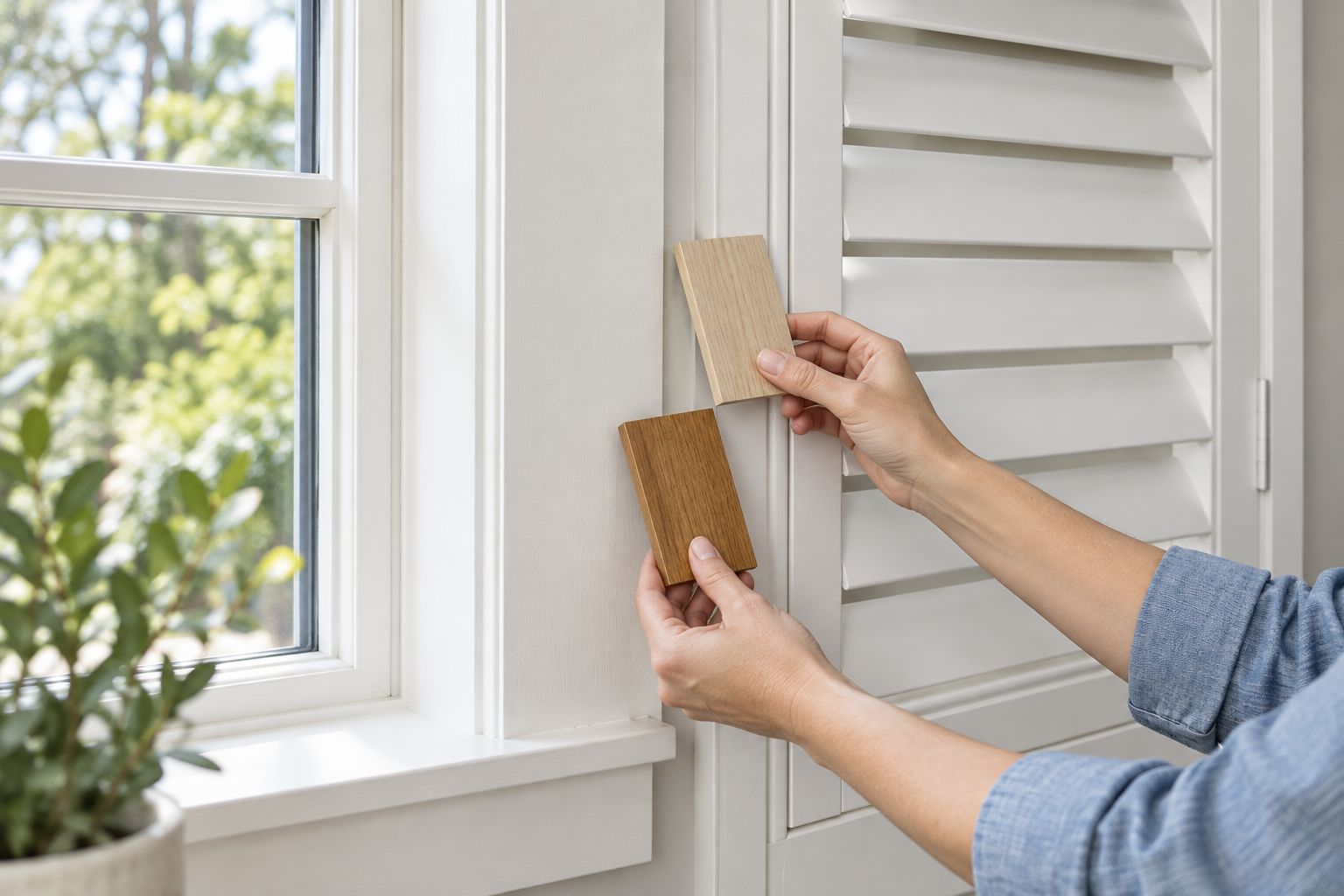
Is an exact match better than a coordinating finish?
An exact match is useful when you want shutters and trim to read as one continuous feature. A coordinating finish works when you prefer a visible distinction or want to keep natural wood grain.
Neither choice is automatically better. The problem is an accidental near-match: two finishes that are close enough to invite comparison but different enough to look unintended. Compare them side by side and decide whether the difference feels deliberate.
For a 2026 room update, choose the relationship before choosing the finish name. Tell your installer whether you want the shutters to blend into the trim or stand apart from it. That gives the sample discussion a clear purpose.
Should you repaint the trim before ordering shutters?
Repaint the trim first if its current color is not the color you intend to keep. Otherwise, you are approving shutters against a temporary reference.
If painting the trim is already part of your project, settle the trim color and sheen before final shutter finish approval. Coordinate the work with your installer so paint preparation, measurements, and installation do not conflict.
For older painted shutters or trim, address the possibility of lead-based paint before sanding or stripping. The U.S. Environmental Protection Agency advises lead-safe practices when disturbing lead-based paint; an unknown older coating deserves assessment before you create dust.
What should you ask during an in-home consultation?
Ask Olsson Smart Shades about an in-home consultation or request a quote for custom plantation shutters. Explain whether you want to match existing painted trim, coordinate with stained wood, or compare a contrasting finish.
Use 1 representative window as your starting point, then identify any rooms with different trim. That keeps the discussion focused without assuming the same finish belongs everywhere.
Bring these questions:
- What shutter materials are being proposed for this room?
- Which physical finish samples can I compare against the trim?
- Does the sample represent the final sheen and surface texture?
- Is the finish a standard selection or a custom request?
- What finish information will appear in the written quote?
- What care instructions apply to the finished shutters?
For a 2026 consultation, keep your questions about finish separate from questions about installation. You need a clear answer on appearance and a clear answer on fit. Do not authorize refinishing existing shutters on the assumption that a new-shutter consultation includes that service.
FAQ
Can shutters be painted to match trim exactly?
Suitable wood shutters can be painted to coordinate closely with trim, but an identical color name does not guarantee an identical appearance. Compare the finished surface, sheen, and texture beside your actual trim before approving it.
Can I stain shutters that are already painted?
Conventional penetrating stain cannot produce a bare-wood stained finish over an intact paint coating. The paint must be removed and the underlying wood assessed before that type of staining is considered.
Can composite plantation shutters be repainted?
Composite plantation shutters should be repainted only according to the specific manufacturer's guidance. Confirm the material, permitted preparation, approved coating, and warranty implications before starting.
Should shutters be the same white as the window trim?
Shutters can match white trim or use an intentionally different finish. Compare physical samples beside the casing because undertone and sheen can make similar whites look different.
Will the same stain match shutters and wood trim?
The same stain does not guarantee matching shutters and trim. Wood species, grain, preparation, and the protective topcoat all influence the finished appearance.
Can I paint shutters without removing them?
The right preparation and disassembly depend on the shutter construction and coating instructions. Protect hinges, moving joints, and contact surfaces, and do not let paint bridge parts that must move independently.
Who can help me choose shutters that coordinate with my trim in Columbus?
Olsson Smart Shades provides custom-measured, professionally installed plantation shutters for homeowners in Columbus and Central Ohio. Ask about an in-home consultation and explain the trim finish you want to coordinate with before making your selection.
One last thing
Approve the frame-to-trim match before judging the louvers alone. The frame sits directly against the casing, so that boundary deserves a close look even when the shutter panel looks right from across the room.
Keep your approved physical sample until installation is complete. It gives you a practical reference without relying on a remembered shade of white or a photo on your phone.