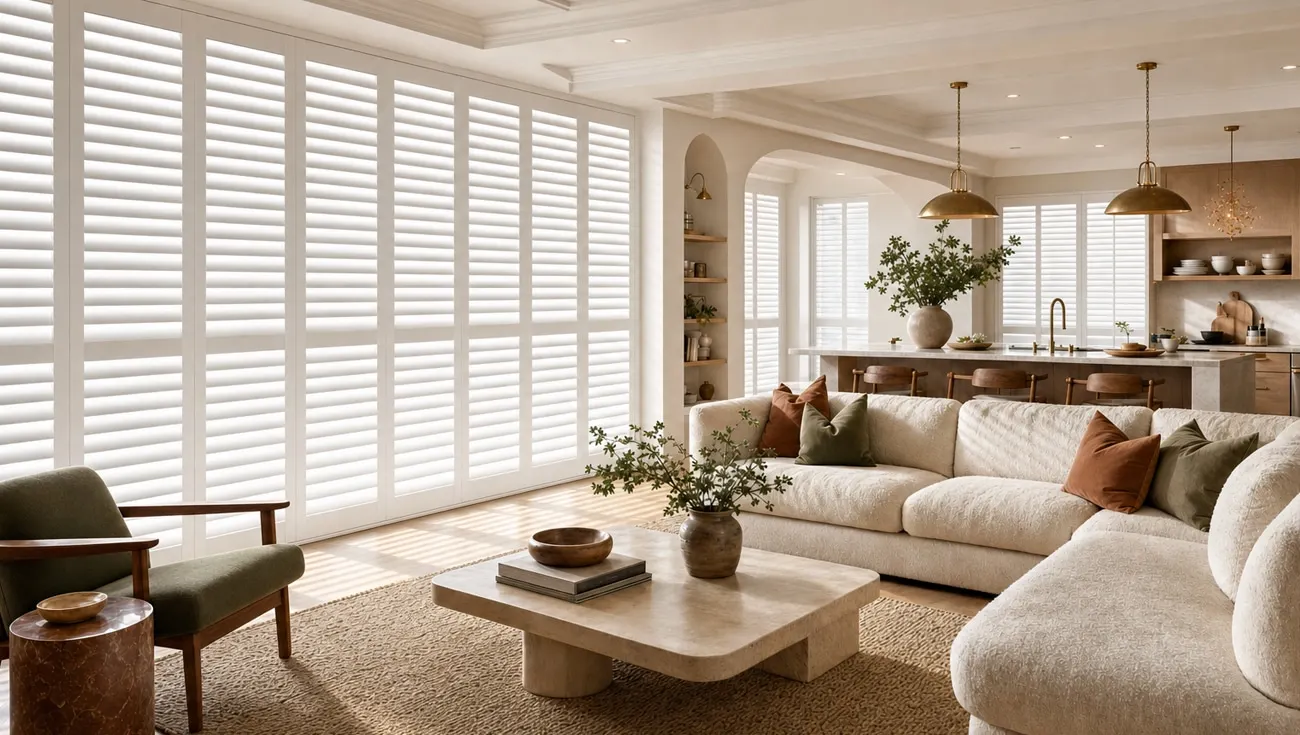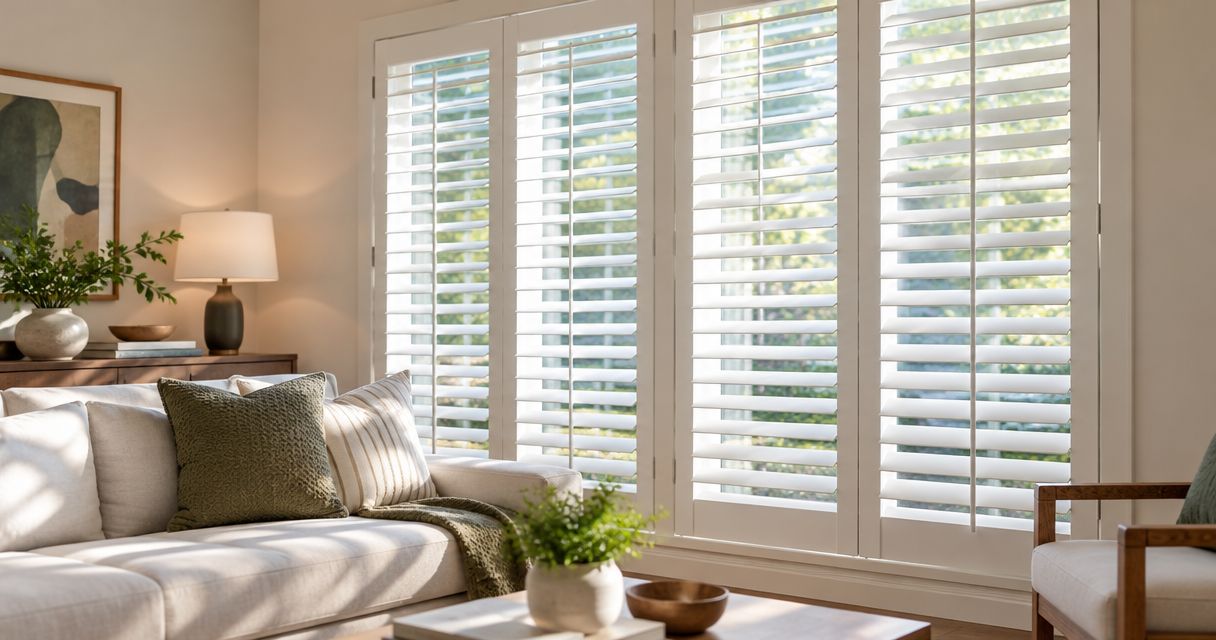
Plantation shutters can last for decades when the material suits the room, the frame fits correctly, and the moving parts stay in good condition. There is no single replacement age: moisture damage, loose hardware, and poor alignment matter more than the installation date, so judge the whole shutter—not just its finish.
- How long do plantation shutters last? Potentially decades, with lifespan determined by material, installation, moisture exposure, and care.
- Keep plantation shutters that open smoothly, hold their louver position, and have sound frames.
- Repair loose hardware before replacing an otherwise sound shutter; investigate swelling, splitting, or persistent binding.
- Olsson Smart Shades serves Columbus and Central Ohio homeowners seeking custom-measured, professionally installed plantation shutters.
How long do plantation shutters typically last?
Plantation shutters do not have a universal expiration date. A well-maintained shutter can remain useful for decades, while a damaged or poorly fitted shutter needs attention much sooner. A lifespan estimate is useful only when it accounts for the material, construction, room conditions, and installation.
For homeowners considering plantation shutters in 2026, the practical question is whether the assembly still works as intended. The frame should stay secure. Panels should open without dragging, and louvers—the horizontal slats—should tilt and hold their position.
Olsson Smart Shades is best for Columbus and Central Ohio homeowners who want custom-measured, professionally installed window treatments. An in-home consultation gives you a chance to discuss the room, compare materials, and request a quote before choosing shutters.
| Shutter condition | What it means | Best next step |
|---|---|---|
| Sound frame, smooth movement, intact finish | Age alone does not justify replacement | Best for keeping: continue routine care |
| Loose hinge or uneven louver tension | A localized adjustment or repair needs assessment | Best for repair assessment: identify the affected part |
| Peeling finish with a sound structure | Appearance and structural condition are separate issues | Best for finish assessment: check the cause before refinishing |
| Swollen rails, split joints, or recurring binding | Damage extends beyond ordinary surface wear | Best for replacement assessment: inspect the frame and panels |
A repair assessment is not a promise that every part can be replaced. Hardware design, material condition, and access to matching components determine what work is practical.
Why this matters
Replacing functioning shutters because they look old can mean removing a useful window treatment. Keeping damaged shutters without checking the cause creates a different problem: a new hinge will not correct a swollen panel or an insecure frame.
Separate appearance, operation, and structural condition before deciding. In 2026, use that same distinction whether you are maintaining existing shutters or comparing a new installation. A shutter that works well does not need replacement simply because you are updating the room.
This also makes a consultation more useful. Instead of asking only how many years a shutter should last, show the installer what sticks, sags, rattles, or no longer closes properly.
Wood plantation shutters: protect the material from moisture
Wood plantation shutters suit homeowners who want the appearance of real wood and can keep it in appropriate indoor conditions. Their service life depends on sound construction, a protective finish, and control of moisture exposure.
Wood responds to changes in moisture. Persistent dampness and repeated wetting can lead to swelling, movement, or finish damage. Look closely at lower rails and areas near condensation, where a problem can develop without being obvious from across the room.
Best for: rooms where you want real wood and can keep the shutters dry. The trade-off is that wood needs attention to moisture and finish condition; it is not a fit-and-forget material for every window.
Do not assume repainting will solve sticking panels. Check alignment and moisture first, because a fresh surface does not correct an underlying fit problem.
Composite plantation shutters: check the exact construction
Composite plantation shutters are not one uniform material. The term covers different manufactured constructions, so the label alone does not establish water resistance, repairability, or expected lifespan.
Ask what the shutter is made from and how its edges and joints are protected. Also ask whether the proposed product is intended for the room where you plan to use it. A bathroom and a dry living room present different conditions.
Best for: homeowners who want a painted shutter appearance and are willing to compare construction details. The limitation is that broad terms such as composite or engineered do not tell you how a specific shutter handles damage.
For a 2026 purchase, request care instructions for the actual product rather than applying advice written for another material. Sanding, soaking, or refinishing without checking those instructions can create a problem instead of fixing one.
Vinyl plantation shutters: inspect the structure as well as the surface
Vinyl plantation shutters offer a nonwood option, but material alone does not determine how the complete shutter performs. Panel construction, reinforcement, hinges, and fit still matter.
Check whether panels stay square and whether louvers move consistently. A surface that wipes clean does not tell you whether the frame is secure or a hinge is carrying its load correctly.
Best for: homeowners considering a nonwood shutter whose stated specifications suit the room. The trade-off is that surface damage and structural distortion do not have the same repair options as a loose screw or adjustable hinge.
Avoid treating vinyl as a blanket guarantee against wear. Ask about the proposed shutter's limitations, especially around heat exposure and the size of the opening.
How do shutter materials compare for long-term use?
No material wins on lifespan in every home. Choose the material around the room's conditions, then check construction and installation separately.
| Material | Best for | Useful quality | Limitation to check |
|---|---|---|---|
| Wood | Homeowners who want real wood in suitable indoor conditions | Natural wood appearance and finishing options | Moisture exposure and finish maintenance |
| Composite | Homeowners comparing painted, manufactured shutters | Different constructions can serve different needs | The exact composition and product-specific care rules |
| Vinyl | Homeowners considering a nonwood option | A nonwood surface with product-specific cleaning instructions | Panel construction, heat limits, and repair options |
Buy for the room, not for an unsupported lifespan claim. Before ordering, ask what care the product requires and what happens if a louver, hinge, or panel is damaged.
Why plantation shutter lifespan varies
The same material can perform differently at different windows. These factors explain why a calendar-based replacement rule falls short:
- Moisture exposure. Condensation, leaks, and repeated splashing affect materials and finishes differently. Address the source rather than repeatedly treating the visible damage.
- Fit and installation. A poorly aligned frame can make panels drag or prevent them from closing correctly. Repeatedly forcing them does not solve the fit.
- Panel construction. Joints, rails, louvers, and reinforcement work together. A familiar material name is not a substitute for checking the complete assembly.
- Hardware condition. Hinges, fasteners, and tilt connections need to remain secure. Localized wear deserves an assessment before you condemn the entire shutter.
- Handling and cleaning. Pulling on louvers to swing a panel or using unsuitable cleaners can cause avoidable damage. Follow the operating and care instructions supplied with the shutter.
- Changes around the window. New handles, trim work, or changes to the opening can interfere with a shutter that previously operated correctly. Check clearance before changing nearby fittings.
How do you check whether existing shutters are still sound?
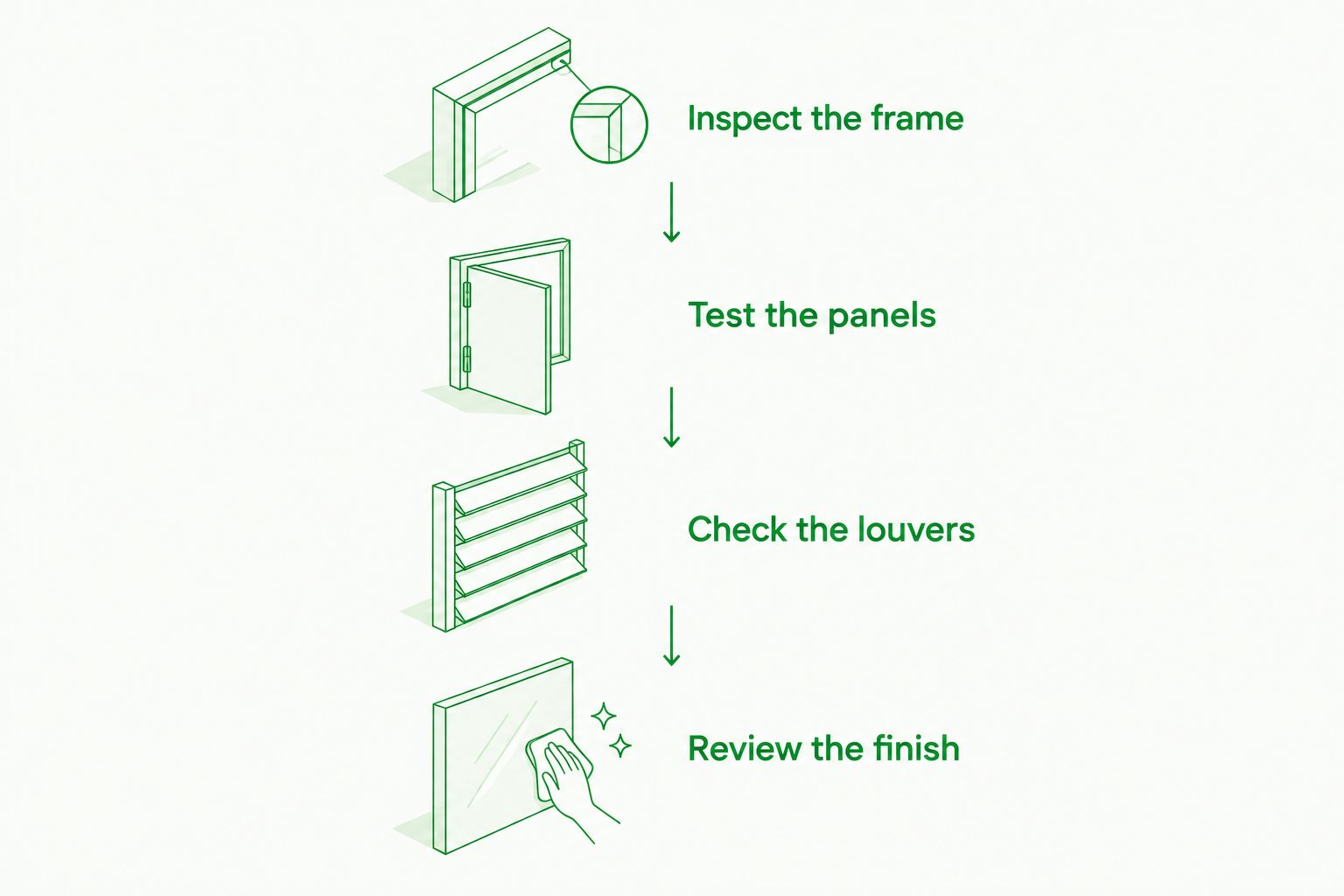
Use a simple inspection before deciding between keeping, repairing, and replacing. You do not need to dismantle the shutters to notice the main warning signs.
Inspect the frame
Look for gaps opening at joints, movement where the frame attaches, and visible splitting or swelling. Do not tighten unfamiliar fixings blindly; the cause of movement matters more than making the screw feel tight.
Test the panels
Open and close each panel gently. Notice dragging, scraping, or a panel that needs lifting to close. Check for an obstruction before assuming the shutter itself has failed.
Check the louvers
Tilt the louvers through their normal movement. They should move without force and hold the intended position. Report a loose connection or uneven movement rather than forcing the whole group to move together.
Review the finish
Look for peeling, bubbling, staining, and exposed material. Surface damage deserves attention, but it does not automatically mean the structure is beyond repair.
For a 2026 maintenance review, take clear photos of any problem and note when it happens. Binding only after a damp period is a different clue from a panel that has dragged since installation.
Should you repair or replace old plantation shutters?
Repair is the first question when the damage is local and the surrounding structure is sound. A loose hinge, damaged connection, or isolated finish issue does not establish that every panel needs replacing.
Replacement deserves closer consideration when there is widespread distortion, repeated joint failure, or damage that prevents normal operation. First identify the cause. Installing new shutters without addressing a leak or an unsuitable mounting surface leaves the underlying problem in place.
Keep appearance separate from function. If you dislike the color but the shutters work, ask what finishing options are appropriate for that material. If you want a different way to control light or open the window, discuss that change directly rather than describing it as a lifespan problem.
How do you help plantation shutters last longer?
Dust gently and follow the product's cleaning instructions. Avoid soaking shutters, leaving liquid at joints, or using an abrasive cleaner without confirmation that it is suitable for the finish.
Use the intended operating points when opening panels and tilting louvers. Keep furniture and other objects clear of the swing path, and investigate new resistance instead of pushing harder.
The guide to cleaning plantation shutters covers the care question in more detail. The main rule is simple: cleaning should preserve the material and mechanism, not just remove a visible mark.
You do not need an arbitrary replacement deadline on your 2026 home checklist. Inspect the shutters when you clean them, and respond when their condition changes.
What should you ask before ordering new shutters?
Ask the installer to explain the proposed material, panel layout, and opening clearance at your actual windows. Then ask how you should clean the shutters and which components can be adjusted or repaired.
Olsson Smart Shades provides custom-measured plantation shutters for homeowners in Columbus and Central Ohio. To arrange an in-home consultation or request a quote, use the website and describe the rooms, your light-control needs, and any existing window problems.
Bring questions, not a commitment to replace everything. Ask for the scope of the proposed installation and written care information before deciding.
Discuss shutters for your home
Ask about custom measurement, material choices, installation, and a quote for your windows.
FAQ
How long do plantation shutters last in a typical home?
Plantation shutters can last for decades, but there is no universal replacement age. Material, moisture exposure, construction, installation, and care determine how long a particular shutter remains useful.
Should I replace plantation shutters just because they are old?
No—age alone is not a reason to replace plantation shutters. Keep shutters that have sound frames, operate smoothly, and still meet your needs.
Do wood plantation shutters last longer than composite shutters?
Wood does not automatically outlast composite shutters. Compare the actual construction, room suitability, installation, and care requirements rather than choosing by material name alone.
Can plantation shutters be repaired instead of replaced?
Plantation shutters can sometimes be repaired when the problem is localized and the surrounding structure is sound. The repair depends on the damage, hardware design, and whether suitable components can be obtained.
What are the signs that plantation shutters need replacing?
Widespread distortion, split joints, and damage that prevents normal operation justify a replacement assessment. Check the underlying cause before ordering new shutters.
Does cleaning help plantation shutters last longer?
Appropriate cleaning helps preserve plantation shutters without damaging their surfaces or mechanisms. Follow the product's instructions, avoid soaking, and investigate moisture damage rather than covering it up.
Who can help me choose plantation shutters in Columbus?
Olsson Smart Shades provides custom-measured, professionally installed plantation shutters for Columbus and Central Ohio homeowners. Use the website to request a consultation and discuss the windows, material choices, and installation scope.
One last thing
Check the window before blaming the shutter. Condensation, a leak, or a new obstruction can explain a problem that looks like ordinary aging. Fixing the source is part of protecting either the existing shutters or their replacements.