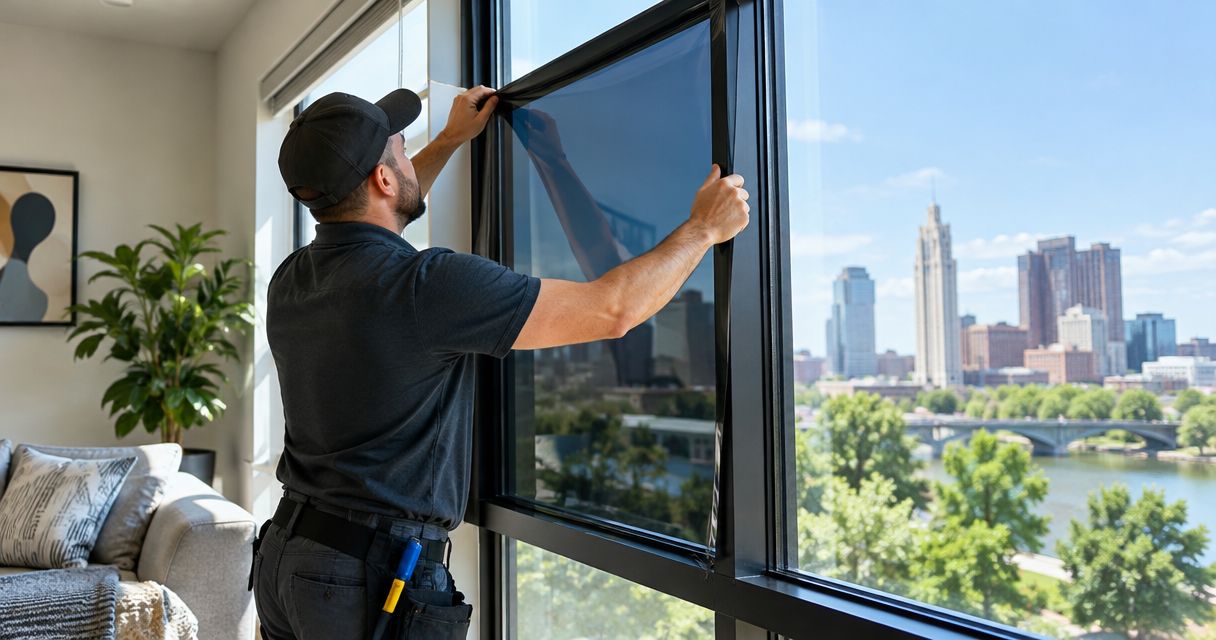
Residential window tinting in Columbus requires a measured, film-specific installation quote; a citywide average does not establish what your home will cost in 2026. Ask whether the written total includes glass preparation, existing-film removal, difficult access, and installation—not just the film itself.
- Residential window tinting cost Columbus comparisons need matching glass measurements, film specifications, and installation scope.
- Window film suits homeowners seeking fixed solar control; shades suit homeowners who want adjustable coverage.
- Olsson Smart Shades offers custom-measured window treatments, an alternative to film when adjustable light control matters.
- Confirm glass compatibility and nighttime privacy before approving residential window film.
Why this matters
A sunny room can have several different problems: screen glare, uncomfortable afternoon heat, exposed windows after dark, or too much light for sleep. Choose the treatment for the problem before comparing installation quotes. Film and a shade do not perform the same job.
Start with the room you actually use. Note when the problem happens, whether you want to preserve the view, and whether privacy matters after sunset. The guide to window film options for Columbus homes provides another starting point for comparing the category.
A useful 2026 quote should connect the proposed film to your goal. A darker-looking sample alone does not tell you enough about solar performance, appearance, or suitability for your glass.
How much does residential window tinting cost in Columbus?
Your residential window tinting cost in Columbus depends on the glass being covered, the selected film, and the work required to install it. Compare complete, written installation quotes rather than an isolated material rate. A quote is useful only when you know which windows and services it covers.
Ask the installer to separate the following parts of the scope. These are quote categories, not a claim that every company bills each item separately.
| Quote component | What to have documented | Why it matters |
|---|---|---|
| Glass coverage | Rooms, panes, and measured glass area | Keeps different quotes tied to the same windows |
| Film specification | Manufacturer and exact film identification | Prevents comparisons between different materials |
| Preparation | Cleaning and any existing-film removal | Clarifies what happens before installation |
| Installation | Labor and access requirements | Identifies work beyond supplying film |
| Finishing and care | Cleanup and written care instructions | Explains what happens after the film goes on |
| Total scope | Included work and exclusions | Shows what you are approving |
Ask how the installer handles a change discovered during preparation. You want to know who approves extra work before it happens, not after the original film has been removed.
For a 2026 project, keep the dated proposal and its product documentation together. If the film selection changes, ask for an updated proposal rather than relying on a verbal substitution.
Window film: best for fixed solar control
Window film is worth comparing when you want solar control without operating a separate window covering. Different films have different light-transmission and solar-performance characteristics. Ask for the specification sheet for the exact film proposed for your home.
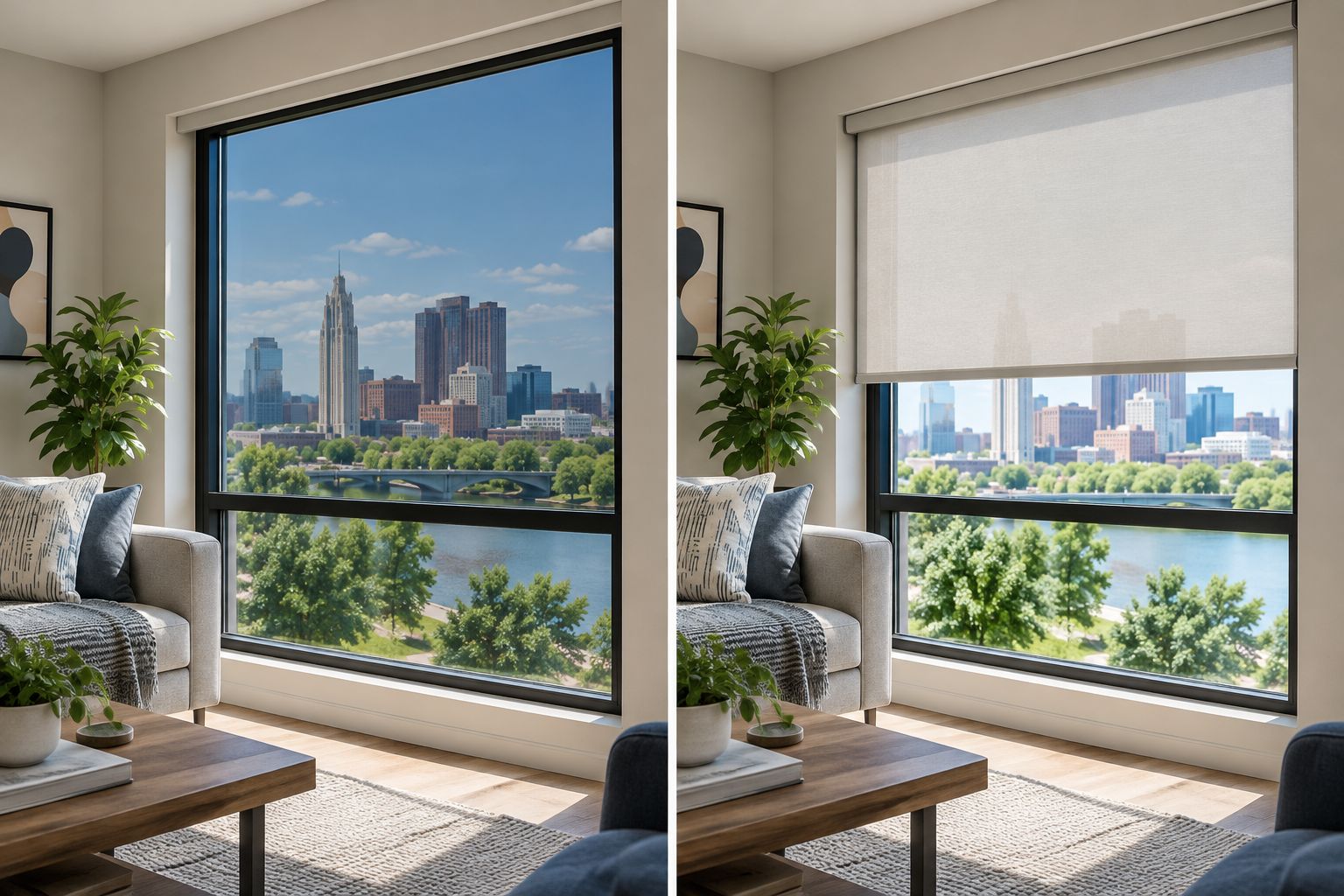
The benefit is that film remains on the glass while you use the room. The limitation is the same: you cannot raise it out of the way when you want untreated daylight or an unobstructed glass appearance.
Choose film based on documented performance and glass compatibility, not tint darkness alone. Ask to see a sample against the actual window so you can judge the appearance from indoors and outside.
Do not treat UV reduction, glare control, and heat control as interchangeable promises. Ask the installer to explain each relevant specification in plain language and identify which one addresses your room's problem.
Adjustable window treatments: best for changing needs
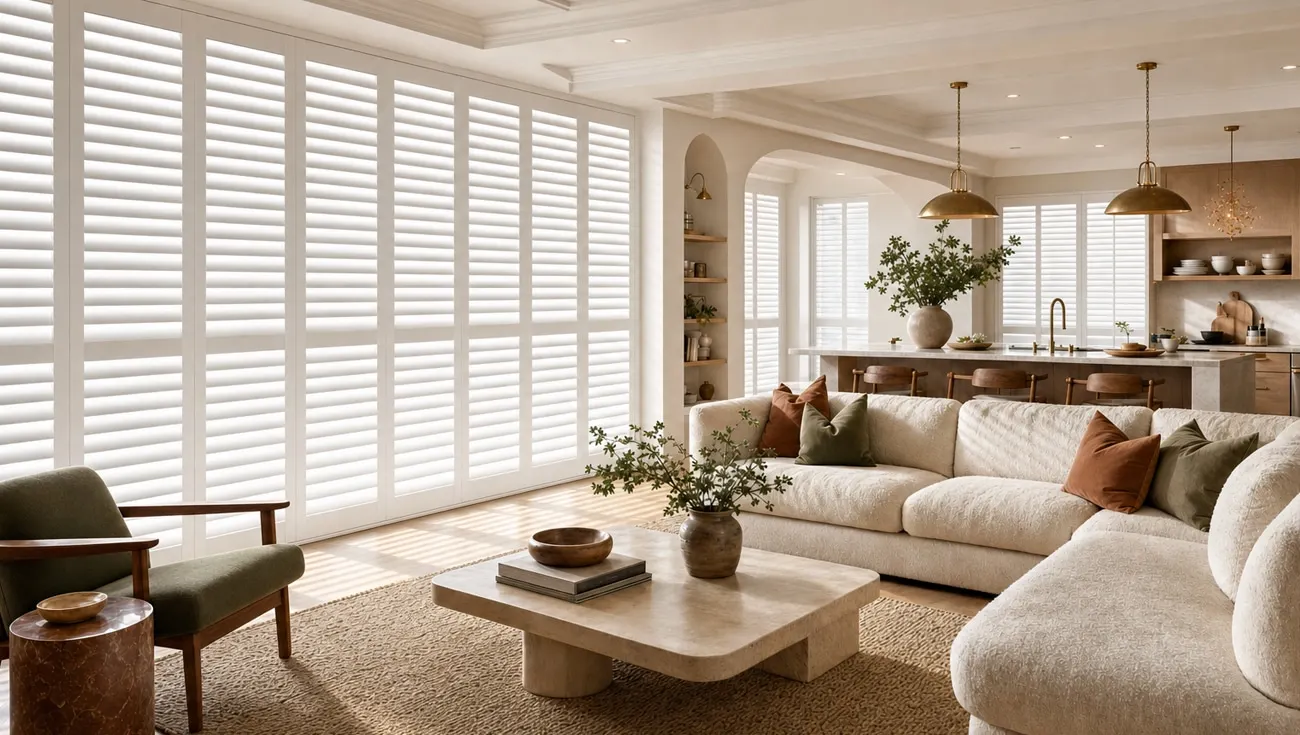
Shades, blinds, shutters, and drapes let you change coverage as daylight and privacy needs change. You can open a treatment for the view, then close it when direct sun or indoor lighting changes the room.
Olsson Smart Shades is best for Columbus and Central Ohio homeowners seeking custom-measured, professionally installed window treatments. Its stated offering includes blinds, shades, plantation shutters, drapes, and motorized smart shades; do not assume that a window-treatment quote includes film installation.
Adjustability has a trade-off. A closed covering changes the view, and the material, fit, and mounting method affect the result. Motorized operation changes how you move a shade; it does not, by itself, determine how much light the fabric blocks.
How the main options compare
| Option | Best for | Main advantage | Main limitation |
|---|---|---|---|
| Window film | Fixed solar control at the glass | Works without opening or closing a covering | Cannot be raised away from the glass |
| Shades | Adjustable coverage | Open or close to suit the room | Fabric and fit affect light and privacy |
| Blinds | Adjustable slat control | Tilt slats to redirect light | Gaps can admit light |
| Plantation shutters | Adjustable louvers and a framed finish | Change light with the louvers | Frames and panels occupy window space |
| Drapes | Fabric coverage and layered rooms | Draw open or closed | Need room for fabric and hardware |
There is no single winner for every window. Compare what each option does during the hours you use the room, including after dark.
Why residential window tinting quotes vary
A useful comparison accounts for the work and the material, not just the number of windows. A wide picture window and a small divided window create different installation tasks.
Ask each installer to explain these factors:
- Glass area and layout. Record the panes included, their measurements, and whether divided sections require separate pieces.
- Film selection. Compare exact specifications rather than broad descriptions such as clear, dark, or reflective.
- Existing surface condition. Identify old film, adhesive, or other preparation work before approving installation.
- Access. Flag tall windows, stairwells, furniture, and other conditions that affect reaching the glass safely.
- Glass compatibility. Have the installer identify the glazing and confirm that the proposed film is suitable for it.
- Installation scope. Check whether preparation, application, cleanup, and any removal work are included.
Use this checklist for every 2026 proposal. If a quote leaves a factor unresolved, ask for clarification before treating it as equivalent to another offer.
You do not need to diagnose the glass yourself. Share any window documentation you have, then ask the installer how compatibility will be verified.
How do I get a useful window tinting quote?
Start with the rooms, then narrow the scope to the windows causing the problem. You can gather useful information without trying to replace professional measurements.
- Name the problem. Describe glare, heat, daytime visibility, nighttime privacy, or sleep-related light separately.
- Identify the windows. Take room photos and note which panes need attention. Include nearby doors and anything that obstructs access.
- Share glass information. Provide window labels or paperwork when you have them. Ask the installer to verify suitability before applying film.
- Review the sample. Look through the proposed film in the room rather than judging it only against a display card.
- Request the written scope. Confirm film identification, covered panes, preparation, installation, exclusions, and care instructions.
- Compare like for like. Resolve differences in scope before choosing between proposals.
A room-by-room approach also helps you avoid treating windows that do not need the same solution. A bedroom's nighttime needs can be very different from a bright living room's afternoon glare.
If adjustable coverage fits better, you can request a quote from Olsson Smart Shades for custom window treatments. Describe your rooms and ask about arranging an in-home consultation; you do not need to settle on a fabric or operating method first.
Will window tint give me privacy at night?
Do not assume residential window tint provides nighttime privacy. Reflective privacy depends on lighting conditions, and a bright interior changes what someone outside can see.
Ask the installer what the proposed film does after dark with the room lights on. If the answer concerns daytime privacy only, plan a separate nighttime covering or discuss an obscuring film that meets your needs.
That distinction belongs in your 2026 buying decision, not in a conversation after installation. A film selected to preserve a clear view is not the same choice as a treatment selected to obscure it.
Is window film better than shades for a sunny room?
Window film suits fixed solar control; shades suit adjustable coverage. The better choice depends on whether you want the treatment to remain in place or change with the room's use.
For screen glare, consider where the screen sits and when direct sun reaches it. For a bedroom, include nighttime privacy and unwanted light rather than judging the solution only during a daytime appointment.
Olsson Smart Shades offers custom window treatments for homeowners who want that adjustable approach. Its motorized smart shades are relevant when operating the covering is part of the problem, but confirm the proposed fabric, controls, and installation details in the quote.
Can I combine window film with shades or drapes?
Window film and an adjustable covering can serve different purposes on the same window. Film can address a glass-level solar-control goal while a shade or drape supplies adjustable coverage.
Have the film installer confirm compatibility with the glazing and discuss the planned covering. Do not assume that combining treatments removes the need to check manufacturer guidance or potential heat-related concerns.
Choose each layer for a clear reason. If both proposals promise to solve the same problem, ask what the additional layer contributes before adding it to the project.
FAQ
What's the average residential window tinting cost in Columbus?
A measured installation quote is the reliable basis for your Columbus project. Compare the same panes, exact film specification, preparation, access requirements, and included installation work rather than treating a general average as your home's total.
Does a window tinting quote include removing old film?
Old-film removal is included only when the written scope says so. Ask whether adhesive removal and glass preparation are covered before approving the work.
Is darker window tint better at keeping a room comfortable?
Darkness alone does not establish a film's solar performance. Compare the proposed film's documented specifications and confirm its suitability for your glass.
Can I still see outside after residential window tinting?
Your view depends on the selected film and lighting conditions. Review a sample at the actual window and ask how it affects indoor and outdoor appearance.
Will reflective window film keep people from seeing in at night?
Reflective window film should not be assumed to provide nighttime privacy. Ask what happens with interior lights on and discuss a separate covering if privacy after dark is essential.
Does Olsson Smart Shades install residential window tint?
Olsson Smart Shades lists custom-measured blinds, shades, plantation shutters, drapes, and motorized smart shades as its offering. Ask directly about any film inquiry rather than assuming film installation is included.
What should I ask about my window warranty before adding film?
Ask the window manufacturer how applying the proposed film affects your existing warranty. Have the film installer confirm glass compatibility and explain any separate written coverage without assuming the policies are interchangeable.
One last thing
Check the room after sunset before making your final choice. Turn on the lights you normally use and think about what you want covered, not just what feels too bright during the day.
Ask your installer to write down the problem the proposed treatment is meant to solve. For your 2026 project, that short description makes the quote easier to evaluate: a glare solution, a privacy solution, and a room-darkening solution are not interchangeable.